
June has three modern birthstones, more than any other month: pearl, moonstone, and alexandrite. Each one is beloved for a different reason and each fills a different budget. Pearl is the classic organic gem and carries millennia of tradition. Moonstone is a feldspar with a shimmering inner glow called adularescence.
Alexandrite is a rare chromium-bearing chrysoberyl that changes color from green in daylight to purplish red under incandescent light, and it is one of the most prized and expensive gems on the market.
For a June birthday, the choice depends on budget and taste. This page covers all three, how they differ, and how to shop for each.
The three modern June birthstones
Top June gemstone picks


Pearl
Pearl is an organic gem formed inside molluscs, primarily oysters and mussels. Saltwater pearls (Akoya, South Sea, Tahitian) and freshwater pearls cover nearly the whole market.
Natural pearl, which forms spontaneously without human intervention, is now rare; virtually every pearl sold today is cultured, grown by inserting a small nucleus or tissue graft into the mollusc. Cultured pearl is still a real pearl. Colours range from white and cream through pink, lavender, silver, and Tahitian black.
- Akoya: small, round, high lustre, classic white cultured pearl from Japan.
- Freshwater: Chinese freshwater pearls are affordable and come in many shapes and colours.
- South Sea: large (10 to 15 mm) silvery or golden pearls from Australia, Indonesia, and the Philippines.
- Tahitian: naturally dark gray, green, or black pearls from French Polynesia.
Moonstone
Moonstone is an orthoclase feldspar that shows adularescence, a floating blue or white sheen that seems to roll across the surface of the stone as it moves. It is softer (Mohs 6) and cleaves easily, so it is better suited to pendants and earrings than to daily rings.
Rainbow moonstone is a related variety of labradorite with a similar play.
Alexandrite
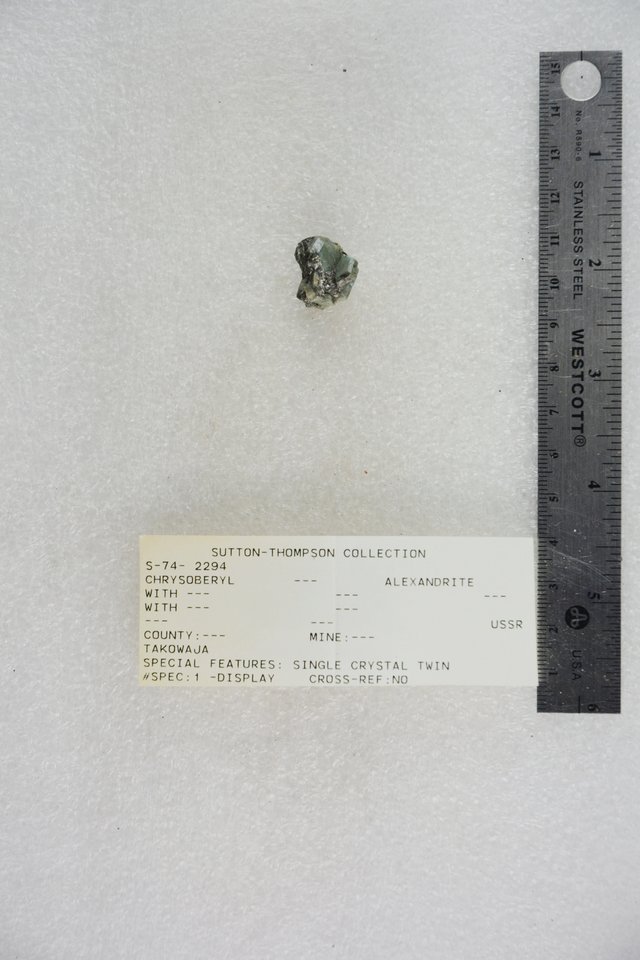
Alexandrite is a chromium-bearing variety of chrysoberyl (Mohs 8.5). Its color shifts from bluish or yellowish green in daylight to a purplish red under incandescent light, an effect caused by its absorption spectrum interacting with different light temperatures.
Natural alexandrite is one of the rarest and most expensive gems; synthetic alexandrite produced by Czochralski and flux methods fills most of the consumer market and is disclosed in trade.
A short history of the June stone
Pearl is the oldest of the three as a named gem, mentioned in early Chinese texts and in Roman writing; the Tang dynasty and the Roman Empire both carried it as a luxury. Moonstone has a strong place in Indian tradition and in Art Nouveau jewelry in Europe.
Alexandrite was first described in the 1830s in the Urals and named after the young tsar Alexander II. The American jewelers list added alexandrite and then moonstone as modern June alternates in the twentieth century to broaden the option set.
Meaning and tradition
Pearl is traditionally associated with purity, feminine wisdom, and long life. Moonstone is linked with intuition and lunar cycles and is often carried by practitioners of dream work. Alexandrite is a newer stone but has quickly become associated with adaptability and balance because of its dual nature.
- Traditional associations are not medical advice.
- Pearl and moonstone are soft and require care: no ultrasonic, no harsh chemicals, wipe after wear.
- Pearl should be the last thing on and the first thing off, so perfume and lotion do not contact it.
Is June your stone?
- You love soft organic looks (pearl, moonstone).
- You want something rare and dramatic (alexandrite).
- You like stones that flatter both cool and warm metals.
- You want a gift with quiet elegance.
- You need a hard daily ring stone (skip pearl and moonstone for a ring; alexandrite is the durable pick).
- You want bright saturated color (these are soft or shifting colours).
Gift ideas and pairings
For a June birthday, a strand of Akoya pearls is the classic gift. A pair of South Sea pearl studs in yellow gold is an enduring piece that is worn for decades. Moonstone works best in pendants and earrings; a cabochon moonstone in silver suits a more romantic recipient.
Alexandrite is the ultra tier gift; for a daily wear ring, synthetic alexandrite is an honest disclosed alternative at a very different price.
Zodiac overlap for June
June spans Gemini (through June 20) and Cancer (from June 21). Gemini traditionally pairs with agate and citrine; some Gemini readers choose those over pearl. Cancer is a water sign that lines up beautifully with pearl and moonstone, both of which have strong lunar and oceanic associations.