Traditional use | Protective amulets + grounding rituals
Crystals for protection
“Protection” is one of the oldest stated uses of stones across cultures. Egyptians tucked carnelian amulets into funeral wrappings. Ancient Persians carried turquoise against falls from horseback. Medieval Europeans wore toadstones set in rings to detect poison.
Modern crystal writing has distilled this tradition into a shorter list of stones practitioners use for energetic and psychological protection.
In this guide, we gather the 10 stones most cited in protection-themed crystal writing, with hedged use notes throughout. Nothing here replaces actual safety measures. Protection stones are tradition, not security products.
10 stones traditionally associated with protection
The following list combines ancient amulet traditions with modern crystal writing. Black and dark stones dominate the list for their long-standing association with absorbing difficult energies. Turquoise and carnelian appear via ancient Egyptian and Persian traditions. Clear quartz is the universal amplifier used in protective grids.
Black tourmaline (schorl) is the most-cited protection stone in modern crystal writing. Practitioners place it at entrances, in bags, or near desks as what they describe as an energetic boundary. Mohs 7 to 7.5. Widely available.
Black obsidian, volcanic glass, is paired with protection for its mirror-like surface and ancient use in scrying. Aztec Tezcatlipoca tradition features obsidian mirrors prominently. Mohs 5 to 5.5. Handle knapped edges with care.
Hematite, an iron oxide with metallic polish, is paired with protection in crystal writing for its grounding weight and what practitioners describe as bouncing difficult energy back to source. Mohs 5 to 6.
Turquoise was the travel amulet of Persian caravans and Native American Southwest traditions both. Practitioners cite it for safe travel especially. Mohs 5 to 6.
Black onyx, a dyed chalcedony, has been associated with Saturn and protection across European lapidaries. Practitioners use it for what they call boundary work. Mohs 6.5 to 7.
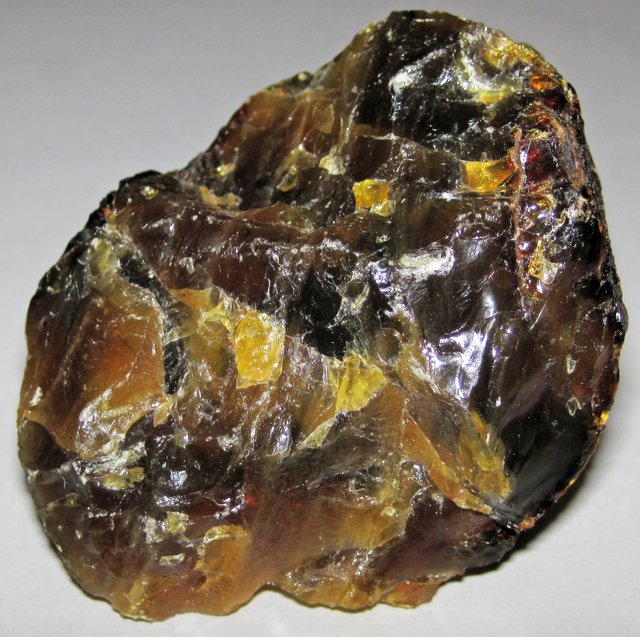
Amber has a long Baltic amulet tradition, especially for children, believed to ward off illness and misfortune. Soft (Mohs 2 to 2.5), heat-sensitive. Note: amber teething necklaces pose choking and strangulation risks in infants; pediatric medical consensus is against use.
Labradorite appears on protection lists in modern crystal writing for what practitioners describe as deflecting unwanted psychic or emotional projections. Mohs 6 to 6.5.
Shungite is a carbon-rich rock from Karelia, Russia. Popular in modern crystal writing for claims around “EMF protection” from devices. Important: those claims are not supported by peer-reviewed evidence. Scientific studies on shungite focus on its fullerene chemistry, not on electromagnetic shielding. Mohs 3.5 to 4.
How practitioners work with protection crystals
Identify what you are actually protecting from. Psychological stress, social anxiety, intrusive thoughts, a difficult family gathering: name it specifically.
Choose one or two stones. Black tourmaline alone is the common starting point.
Cleanse on arrival. Running water works for black tourmaline, smoky quartz, and hematite (brief only). Avoid water on shungite and carnelian for extended periods.
Place where the concern sits. Desk, entrance, bedside, or in a small bag you carry.
Pair with a grounding practice. Practitioners describe protection stones as more effective paired with deliberate breath or movement.
Refresh regularly. Many practitioners cleanse protection stones weekly or after intense situations.
When practitioners turn to protection crystals
For you if...
Navigating a difficult family holiday or social event
High-stress periods at work
Travel, especially long-distance or solo
Transitions after breaking ties with a difficult person
Consider other options if...
In place of actual safety measures (locks, lights, police, professional help)
For situations of ongoing abuse or stalking (please seek professional help)
As a substitute for conflict resolution conversations
Traditional placements for protection crystals
By the front door, at shoe level (common Feng-Shui-adjacent placement)
In the car, in the glove compartment or console
In a travel bag, as a tumbled stone wrapped in cloth
Under the pillow or bedside table for sleep-anxiety practice
At the desk at work during high-stress projects
Protection crystals and honest practice
Crystal tradition around protection is grounded in attention and intention. The stone is a reminder to breathe, hold a boundary, and stay in your own body. It is not an energetic barrier in any scientifically demonstrated sense.
If you feel unsafe in a situation, the most protective action is usually physical movement: leaving, getting help, or calling someone. The stone supports your choice. It does not replace it.
Protection crystal pairings
Black tourmaline with clear quartz (the classic “grounding plus amplification” pair)
Obsidian with hematite (doubled dark grounding)
Turquoise with carnelian (travel plus courage)
Labradorite with selenite (deflection plus clearing)
Frequently asked questions
What is the best crystal for protection?
Black tourmaline is the most-cited protection stone in modern crystal writing. Black obsidian and hematite are the next most consistent picks. Practitioners describe them as companions to emotional and psychological grounding, not as physical security.
Can a crystal protect me from bad energy?
Practitioners describe stones as supports for intentional boundary-holding. There is no scientific mechanism for a stone to block energy in the way physical barriers block physical force. The practice is about your own focus and attention.
Does shungite really block EMFs?
No, not in any peer-reviewed sense. Claims of EMF protection are widespread in commercial shungite marketing but have not been demonstrated in controlled scientific studies. The stone has interesting carbon chemistry but no measurable shielding effect against device radiation at practical jewelry quantities.
Should a baby wear amber?
Pediatric medical consensus advises against infant amber teething necklaces due to strangulation and choking risks. If you wish to honor the amber tradition, keep amber at a distance (in the nursery shelf, not on the baby's body).
How often should I cleanse my protection stones?
Practitioners commonly cleanse weekly or after any particularly difficult event. Sound, moonlight, and (for water-safe stones) a brief rinse are the most-cited methods.