
Emerald
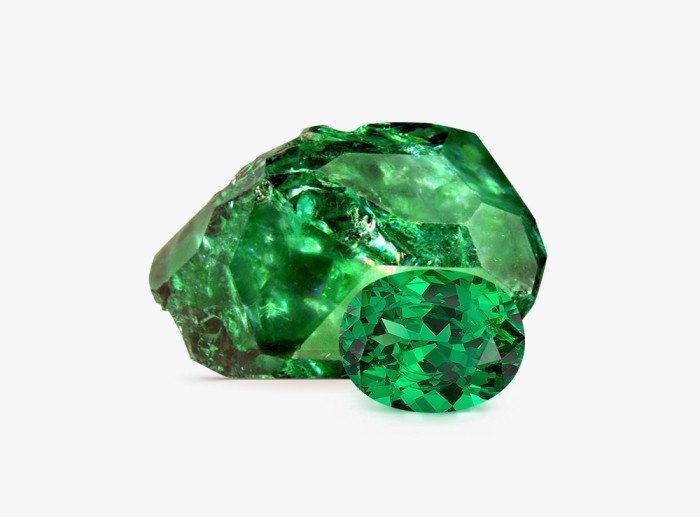
Born in Colombian black shales and Zambian mica schists, emerald is the green beryl of wisdom, patient growth, and enduring love.
- Emerald shares the mineral species beryl with aquamarine, morganite, and heliodor; only chromium or vanadium colored green beryl is called emerald.
- The Duke of Devonshire emerald, an uncut 1,383-carat crystal from Muzo, is one of the finest untreated rough emeralds ever found.
- Emerald internal inclusions are poetically called jardin, French for garden, because they resemble mossy foliage.
- Untreated emerald with fine color can reach higher per-carat prices than diamond at the top of the market.
- Emerald is softer than ruby and sapphire but is still durable enough for careful daily ring wear in a protected setting.
- May birthstone seekers wanting classic heirloom green
- Heart chakra practitioners drawn to a time-honored healing stone
- Collectors fascinated by Colombian muzo-green color standards
- Engagement ring buyers willing to accept careful daily wear for vivid color
- Readers seeking a stone traditionally linked with wisdom and patience
- Rough-wear jewelry buyers who need maximum toughness (try tsavorite garnet or green sapphire)
- Budget buyers under $200 per carat (try tsavorite, chrome diopside, or peridot)
- Those who dislike visible inclusions (most emeralds show a characteristic jardin)
What Is Emerald?
Emerald is the green variety of the mineral beryl, colored by trace chromium, vanadium, or both in the crystal lattice. Pale green beryls without chromium or vanadium are called green beryl or simply beryl, not emerald, in the fine-jewelry trade. It rates 7.5 - 8 on the Mohs hardness scale.
At Mohs 7.5 to 8, emerald is hard but not tough; its abundant internal inclusions make it more vulnerable to chipping than ruby or sapphire.
The name emerald traces through Latin smaragdus and ultimately from an ancient Semitic root meaning shine. Emerald forms in two main geological environments: hydrothermal veins in black shale (the Colombian type) and metamorphic mica schists where beryllium-rich fluids meet chromium-bearing host rock (the Zambian and Brazilian type).
Colombian emeralds typically show pure green color with a slight bluish tint; Zambian emeralds lean slightly darker with more bluish-green, and Brazilian stones often carry a yellowish cast.
Nearly all commercial emeralds are oil-treated to fill surface-reaching fractures and improve apparent clarity. Cedar oil and modern polymer fillers are the standards, and the trade accepts minor oiling without discount. Untreated emeralds with good color and clarity are exceptionally rare and carry significant premiums.
The classic emerald cut, a rectangular step cut with clipped corners, was developed specifically to reduce stress on the stone's brittle corners during setting.
How Emerald Compares
| Property | Emerald | Tsavorite Garnet | Green Sapphire |
|---|---|---|---|
| Hardness | 7.5 - 8 | 7 - 7.5 | 9 |
| Price / carat | $$$ Premium | $$$ Premium | $$$ Premium |
| Rarity | Moderate (fine color rare) | Rare | Moderate |
| Best For | Heirloom jewelry, healing | Durable green alternative | Daily-wear engagement rings |
Meaning and Symbolism
Emerald has been mined and treasured for more than four thousand years. Egyptian dynasties worked emerald mines at Sikait and Zabara in the Eastern Desert, and Cleopatra herself claimed the Egyptian emerald mines in her personal inventory.
Greek texts linked emerald to Hermes and to the goddess of truth, and Roman authors described staring into emerald as a remedy for tired eyes.
The Spanish conquest of South America brought Colombian emeralds into the European market in the 1500s, and the Muzo mine quickly set the global benchmark for top color. Mughal emperors in India, already familiar with Egyptian stones, prized Colombian emeralds above nearly all other gems, carving many with Persian and Quranic inscriptions.
Emerald is the traditional gift for the 20th, 35th, and 55th US wedding anniversaries.
In crystal healing tradition, emerald is associated with the heart chakra and the capacity for patient, steady love. Practitioners describe it as a stone of wise compassion, said to support both giving and receiving with equanimity.
Many readers pair emerald with rose quartz for softer heart work or with malachite for more protective, boundary-oriented green energy. The stone has long been used in rites of commitment, long partnership, and friendship.
Historical Timeline
Healing Tradition
Emotional
Practitioners believe emerald is the classic stone of open-hearted compassion, traditionally associated with patient love and emotional renewal. In crystal healing tradition, it is said to support the slow work of forgiveness, both of self and others, and is often recommended during long recoveries from heartbreak or betrayal.
Many readers wear emerald after major relationship transitions, with the stone framed as a reminder that green growth returns. Crystal workers often pair emerald with rose quartz for gentler heart-opening or with rhodonite for active emotional repair.
Unlike lighter pink stones, emerald is described as a mature heart stone, one that holds space for complicated feelings without urgency. Practitioners sometimes recommend it for people in long caregiving roles, with the stone considered a steady support for giving without burning out.
Spiritual
In crystal healing tradition, emerald is linked with the heart chakra and the capacity for truthful expression rooted in love. Practitioners describe it as a stone of wisdom, said to support honest counsel and the patience required for slow growth.
Many readers keep emerald near journaling spaces and meditation cushions, especially during practices focused on integrity, promise-keeping, and long friendships. The stone has long been used in vows of partnership and has a reputation for strengthening faithful commitment over years.
Crystal workers often place emerald at the heart of a crystal grid with green aventurine along the edges for opportunity and clear quartz for amplification. Emerald is traditionally considered a daytime stone and is associated in several astrological traditions with Mercury, a planet of clear speech.
Physical
Practitioners believe emerald supports what they describe as eye comfort and cardiovascular ease, connections that trace back to Greek and Roman texts framing the stone as a remedy for tired eyes.
Crystal healing tradition associates emerald with overall cardiovascular vitality and restful breathing, with the stone often worn as a pendant near the sternum. Many readers place a tumbled emerald on the desk during long screen sessions, a modern echo of the ancient eye-rest tradition.
Emerald is not a substitute for medical care, and practitioners frame its role as supportive rather than therapeutic. Crystal workers sometimes suggest pausing emerald during acute illness and returning to it during recovery, treating it as a stone of steady rather than intense support.
Zodiac, Birthstone and Gifts
Emerald is the modern US birthstone for May, shared by late Taurus and early Gemini. Astrologers traditionally associate emerald with Mercury and Venus, a combination practitioners describe as echoing the May temperament of warm sensory presence paired with clear speech.
For Taurus, emerald is said to support patience during long projects and the sign's appreciation for growing, living beauty. For Gemini, the Mercury connection is considered especially apt, with practitioners suggesting emerald for writers, teachers, and those whose work depends on honest articulation.
Cancer is a secondary association through the heart chakra and emerald's long link with nurturing partnerships. In Vedic tradition, emerald (panna) is typically set in gold and worn on the little finger during Mercury cycles.
Care and Cleansing
Emerald requires gentler cleaning than most fine gems. Warm (not hot) soapy water with a soft cloth is safe for brief, careful cleaning. Avoid any detergent, solvent, or ultrasonic method because these can strip the oil or resin filling that nearly every commercial emerald carries in its surface-reaching fractures.
Steam cleaning, ultrasonic baths, and prolonged soaking should all be avoided. Many practitioners reoil their emeralds every few years through a qualified gemologist to restore clarity lost when the original filler evaporates. Warm tap water rinses are fine if brief, but the stone should be dried immediately with a soft cloth.
Moonlight and smoke cleansing with palo santo or sage are safe and are often the preferred methods. Dry salt cleansing is safe if brief; saltwater should be avoided entirely. Many readers charge emerald in morning sunlight because the green color is stable and practitioners describe sunrise light as supportive for heart-chakra stones.
- DO clean emerald only with warm soapy water and a soft cloth, never with detergent or solvent.
- DO NOT use ultrasonic or steam cleaners on emerald; they can damage oil or resin fillers.
- DO have your emerald reoiled periodically by a qualified gemologist to maintain clarity.
- DO NOT soak emerald in hot water for extended periods.
- DO remove emerald rings before housework and manual labor to prevent chipping.
- DO ask your seller for a disclosure of clarity treatment (oil, Opticon, polymer) before purchase.
- Note: emerald should be stored separately from harder gems to protect its edges.
Real vs Fake
A genuine emerald almost always shows internal inclusions visible to the naked eye, collectively called the jardin. Typical natural inclusions include three-phase inclusions (a gas bubble, a liquid droplet, and a tiny crystal), feathers along fracture planes, and small mineral crystals.
A faceted emerald that appears completely clean with no inclusions is either an exceptional specimen worth laboratory verification or a synthetic or imitation.
Common imitations include green glass, dyed beryl, dyed quartz, green cubic zirconia, and green garnet doublets. Glass often shows curved gas bubbles and swirl patterns under magnification, while natural emerald inclusions are angular or elongated.
Synthetic emeralds grown by flux or hydrothermal methods can be chemically identical to natural stones and require laboratory testing for separation.
Practical at-home checks include looking for natural jardin under a 10x loupe, checking color stability under different light sources, and examining color distribution for uneven zoning that natural stones typically show.
Chelsea filter testing can distinguish many natural emeralds from glass imitations because chromium-colored emeralds often appear red or pink through the filter.
For any stone over a few hundred dollars, a report from an independent gemological lab is the most reliable confirmation of natural origin and treatment status.
Emerald Jewelry & Gifts
Emerald pricing spans a huge range. Commercial oiled emeralds from Brazil and Ethiopia start around $200 to $800 per carat in small sizes, with mid-grade Zambian stones running $1,000 to $4,000 per carat.
Top Colombian emeralds from Muzo, Chivor, or Coscuez with vivid grass-green color and minimal treatment reach $10,000 to $40,000 per carat, and exceptional untreated Colombian stones can exceed $100,000 per carat at auction.
Oil treatment is standard and accepted in the trade at minor-to-moderate levels. Disclosure should note the degree of clarity enhancement (none, minor, moderate, significant) and the type of filler (cedar oil vs. polymer resin).
For engagement rings and heirloom pieces, request a report from an independent gemological lab confirming species, country of origin, and treatment level. Color is the primary price driver, with vivid saturation and a slightly bluish-green hue commanding the highest premiums.
Where to Buy Emerald
Affiliate disclosure: Some links below earn us a small commission at no extra cost to you. See our affiliate disclosure page.
Handmade, raw, and tumbled pieces from independent sellers worldwide.
Shop Emerald on Etsy →Accessories, tools, and specimen sets with fast Prime delivery.
Shop Emerald on Amazon →Certified loose gemstones graded and photographed for online buyers.
Shop Emerald on GemSelect →Pairs Well With


Where Emerald Is Found


