Green gemstones occupy the middle of the visible spectrum, and the mechanisms behind green in minerals are among the most varied of any gem color. Chromium can produce green in one crystal structure (emerald) and red in another (ruby). Iron alone produces the yellow-green of peridot. Copper colors malachite and chrysocolla.
Nickel, vanadium, and mixed-valence iron all show up in different greens.
In this guide, we cover the 14 most important green gemstones, the optics behind the color, the mineral families involved, and the cultural history of green itself, from ancient Egyptian regenerative symbolism to Islamic Paradise imagery and the modern environmental movement.
Green in gemstones comes from several mechanisms. Emerald's green is chromium in beryl; tsavorite garnet is vanadium or chromium in grossular. Peridot's green is iron alone in forsterite-olivine. Malachite is a copper carbonate, colored by its inherent copper structure. Jadeite's green is chromium in jadeite; nephrite's is iron.
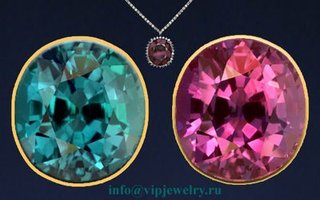
Chrome diopside is chromium in diopside. Color-change alexandrite (green in daylight, red in incandescent) owes its shift to trace chromium in chrysoberyl.
Emerald is the green variety of beryl (Be3Al2Si6O18), colored by chromium and sometimes vanadium. Mohs 7.5 to 8. Colombia (Muzo, Chivor), Zambia, and Brazil are primary sources. Almost all emeralds have internal fractures oil-filled or resin-filled; this is industry-standard and disclosed.
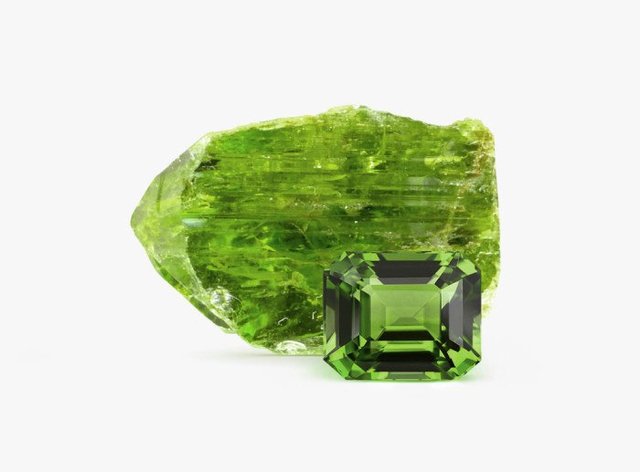
Peridot is the gem variety of forsterite-olivine (Mg2SiO4). Mohs 6.5 to 7. Egypt's St. John's Island has been a source since at least 1500 BCE; today Pakistan, Myanmar, and the US (San Carlos, Arizona) are major sources.
J
3
Jade (jadeite and nephrite)
Two minerals are both “jade.” Jadeite (NaAlSi2O6), Mohs 6.5 to 7, is the more valuable and brightly colored; top material (“imperial jade”) comes from Myanmar. Nephrite (a tremolite-actinolite amphibole), Mohs 6 to 6.5, is more common, tougher against impact, and historically favored in Chinese carving.
Tsavorite is the vivid green variety of grossular garnet, colored by vanadium or chromium. Mohs 7 to 7.5. Kenya and Tanzania are the primary sources. Generally untreated, making it one of the cleanest colored stones in commerce.
Chrome diopside is calcium magnesium silicate pyroxene with trace chromium. Mohs 5.5 to 6.5. A durability-limited but affordable intense-green option from Russia (Inagli) and Pakistan.
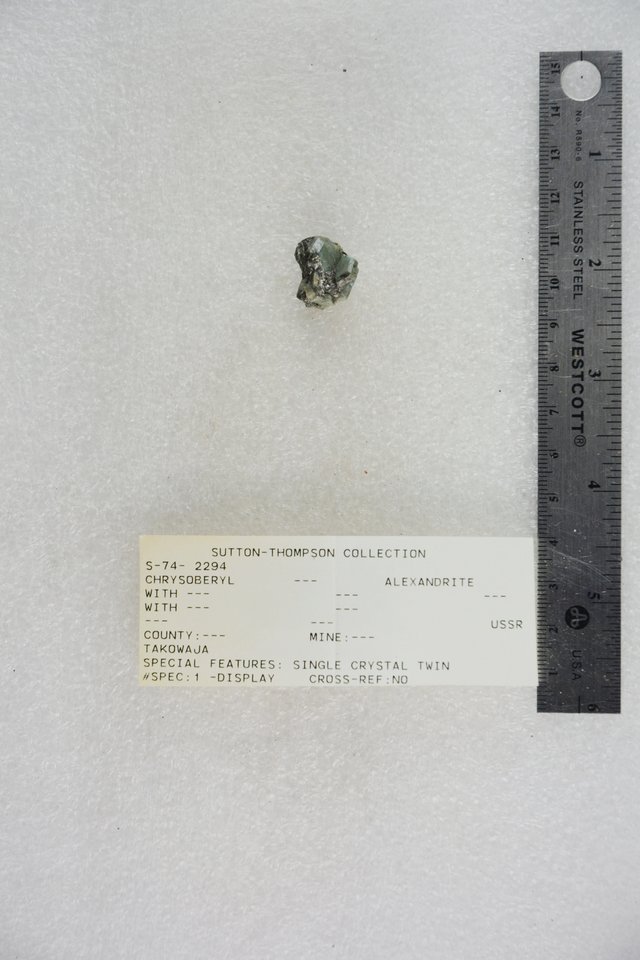
Alexandrite is chromium-bearing chrysoberyl (BeAl2O4) with a characteristic daylight-green to incandescent-red color change. Mohs 8.5. Natural alexandrite is rare and expensive; lab-grown is chemically identical and disclosed.
Green aventurine is a quartz with fuchsite or mica inclusions that give it a subtle shimmer (aventurescence). Mohs 7. Widely used in beads and tumbles.
Moldavite is a tektite, a natural glass formed around 15 million years ago by a meteorite impact in central Europe. Mohs 5.5 to 6.5. Popular in modern crystal practice; imitations are common.
Demantoid is the green variety of andradite garnet, with the highest dispersion of any garnet (fire comparable to diamond). Mohs 6.5 to 7. Russian Ural Mountains material with horsetail inclusions is historically the most prized.
Amazonite is the blue-green variety of microcline feldspar. Mohs 6 to 6.5. Colorado and Russia are major sources.
Cultural history of green
Green has been the color of regeneration and paradise across many cultures. Ancient Egyptians associated green with Osiris and the rebirth of the Nile. In Islamic tradition, green is the color of Paradise, drawn from Quranic references; it appears on the flags of several Muslim-majority states.
In medieval Europe, green was the color of Eros and youth (Chaucer's “green sickness”). Today green is the universal color of environmental movements, traffic “go,” and financial currency in the United States.
Green gemstones by intent
For engagement rings: emerald (with careful setting), tsavorite, chrome tourmaline, or alexandrite.
For birthstone jewelry: emerald (May) and peridot (August) cover the calendar.
For daily pendants: jade (tough against impact), green aventurine, green tourmaline.
For meditation and display: malachite, moldavite, green calcite, raw emerald crystals.