Chrysoprase
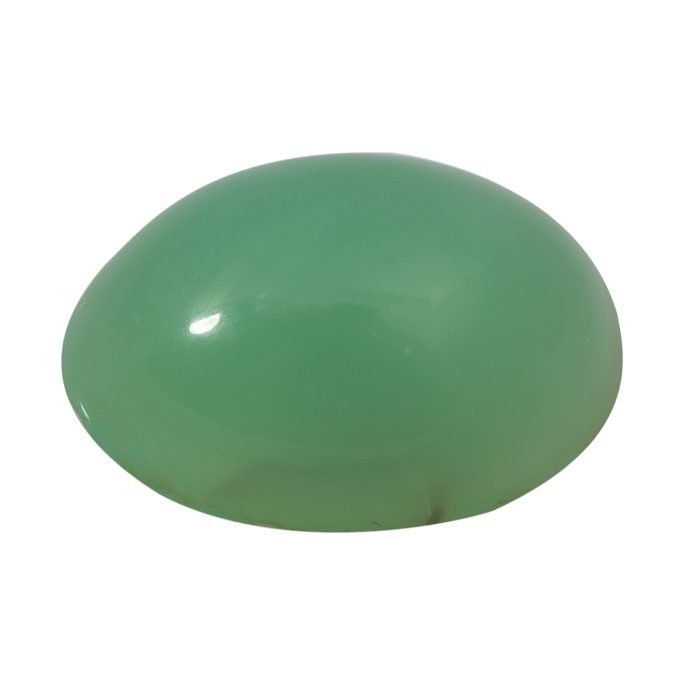
An apple-green chalcedony colored by trace nickel, chrysoprase is the heart-chakra stone of hopeful renewal.
- The name chrysoprase comes from Greek chrysos (gold) and prason (leek), referring to its translucent golden-green color.
- Chrysoprase was more valuable than emerald in ancient Rome because fine translucent green chalcedony was relatively rare before American emerald entered the market.
- Frederick the Great of Prussia favored chrysoprase for his personal signet rings and clocks.
- The Wawel Cathedral in Krakow contains chrysoprase in its Saint Wenceslas Chapel, carved from Polish Szklary material.
- The color in chrysoprase comes from trace nickel, a rare coloring agent in gemstones.
- Practitioners working with heart chakra renewal and self-forgiveness
- Buyers drawn to translucent apple-green tones
- Readers wanting a daily-wear alternative to opaque jade
- Collectors of chalcedony varieties with specific color traditions
- Gift givers shopping for spring-themed or hope-focused presents
What Is Chrysoprase?
Chrysoprase is the apple-green variety of chalcedony (cryptocrystalline quartz), colored by trace nickel silicate in the micro-porous quartz structure. The name comes from the Greek chrysos (gold) and prason (leek), a reference to the translucent yellow-green color of top specimens. It rates 6.5 - 7 on the Mohs hardness scale.
At Mohs 6.5 to 7, chrysoprase is durable enough for daily jewelry wear and is traditionally cut as cabochons, beads, cameos, and tumbled stones rather than faceted because its opacity scatters light. Chrysoprase was one of the most valued gem stones of ancient Rome and medieval Europe.
It was more highly prized in those eras than it is today because the bright translucent green was relatively rare compared to darker greens like serpentine or malachite, and the discovery of American emerald in the 1500s and Australian chrysoprase in the 1960s changed the supply and demand dynamics dramatically.
Major modern sources include Australia (the Marlborough deposits in Queensland are the premier commercial source), Poland (the Szklary mine produced the historical European material), Russia (Urals), Brazil, Tanzania, and the United States (California, Arizona). Some chrysoprase is actually prase, chromium-colored chalcedony, or dyed chalcedony, and reputable sellers disclose the exact variety.
How Chrysoprase Compares
| Property | Chrysoprase | Jadeite | Aventurine |
|---|---|---|---|
| Hardness | 6.5 - 7 | 6.5 - 7 | 7 |
| Price / carat | $ Budget | $$ Mid-range | $ Budget |
| Appearance | Translucent apple green | Translucent to opaque green | Green w/ mica sparkle |
| Best For | Pendants, cabochons | Imperial jewelry, investment | Beads, budget jewelry |
Meaning and Symbolism
Chrysoprase was among the most highly valued gem stones in the ancient Roman and medieval European worlds. Roman writers and Byzantine historians described it as the most precious green stone, and medieval European cathedrals set chrysoprase into reliquaries, altar crosses, and royal jewelry.
Frederick the Great of Prussia reportedly favored chrysoprase for rings and mantel clocks, and the Wawel Cathedral in Krakow contains chrysoprase in its historic chapel decoration. The primary historical source was the Szklary mine in Silesia (modern Poland), which operated intermittently from the Middle Ages through the twentieth century.
The discovery of major Australian deposits in Queensland in the 1960s transformed chrysoprase from a scarce European specialty into a widely available commercial gem. Australian chrysoprase (often called Australian jade or chryso) now supplies the majority of the global market.
The commercial shift reduced chrysoprase's per-carat price significantly while making it broadly available as an affordable alternative to true jade.
In modern crystal healing tradition, chrysoprase is associated with the heart chakra and with what practitioners call hopeful renewal, self-forgiveness, and recovery after disappointment.
Its reputation is gentler than malachite but more active than aventurine, making it a classic middle-path heart stone. It pairs naturally with rose quartz for combined tenderness and renewal and with clear quartz for amplified heart intention.
Historical Timeline
Healing Tradition
Emotional
Practitioners believe chrysoprase supports emotional renewal, self-forgiveness, and hopeful recovery after disappointment or setback. In crystal healing tradition, it is often recommended for people processing heartbreak, recovering from job loss, or working through self-blame and perfectionism.
Many readers wear chrysoprase jewelry during recovery periods and describe a gentle sense of renewed possibility during these weeks. Practitioners pair chrysoprase with rose quartz when the emotional work involves tender self-love, or with aventurine for combined heart-renewal and opportunity work.
Because chrysoprase's reputation is oriented toward gentle renewal rather than dramatic transformation, it is often described as a spring-energy stone for new beginnings after difficult winters. Readers sometimes describe chrysoprase as particularly helpful during recovery from long-term criticism or self-judgment, offering an anchor for kinder self-perception.
Spiritual
Chrysoprase is traditionally associated with the heart chakra and with what crystal workers call the green ray of renewal and hopeful emergence. Practitioners describe chrysoprase as a stone of forgiveness and second chances rather than dramatic heart work.
In modern crystal healing tradition, chrysoprase is sometimes called the stone of renewal because of its association with the beginning of new chapters after difficult seasons.
Many readers keep a tumbled chrysoprase on a meditation altar during transition periods, and some practitioners use small pieces in grids focused on self-forgiveness and fresh starts.
It pairs readily with clear quartz for amplified intention and with moonstone for feminine receptive renewal. The stone's translucent apple green is visually associated with spring and new growth, making it a natural focus for seasonal renewal meditation.
Physical
Practitioners believe chrysoprase supports what they describe as heart-area circulation, emotional-physical recovery, and gentle cellular renewal. Folk tradition links chrysoprase with relief from stress-related tension and with general support during physical recovery from illness or surgery.
In modern crystal healing practice, chrysoprase is most often placed over the heart or carried as a pocket stone during recovery periods.
Many readers wear chrysoprase jewelry during convalescence, therapy periods, or life-transition recovery. It is not a substitute for medical care, and practitioners frame its role as supportive alongside proper treatment.
Because chrysoprase is hard (Mohs 6.5 to 7) and chemically stable, it is practical for daily wear in ring, pendant, or bracelet form without special handling. Prolonged direct sunlight can fade some chrysoprase slightly, so careful storage extends the stone's color life.
Zodiac, Birthstone and Gifts
Chrysoprase is traditionally associated with Venus-ruled signs in Western astrology, particularly Libra and Taurus. Practitioners describe chrysoprase as an ally for Libra's pursuit of harmonious recovery and for Taurus's patient approach to renewal.
Although chrysoprase is not on the formal US birthstone list, it is often given as a gift for Mother's Day, recovery milestones, spring birthdays, and anyone beginning a new chapter after difficult times. The stone's apple-green color makes it a popular spring and Easter gift regardless of birth month.
Care and Cleansing
Chrysoprase tolerates most common cleansing methods. Running lukewarm water for under a minute is safe, as is a gentle wash in mild soapy water with a soft brush.
Moonlight cleansing is traditional and safe. Smoke cleansing with sage, palo santo, or cedar is effective, and sound cleansing with a singing bowl also carries no risk. Brief saltwater exposure is acceptable for the stone itself but should be limited for jewelry because metal settings can corrode.
Ultrasonic cleaners are generally safe for untreated chrysoprase, but should be used carefully for stones with visible fractures.
The one method to approach with care is prolonged direct sunlight. Some chrysoprase fades slightly with months of strong UV exposure, so storing jewelry in a soft pouch when not worn preserves color saturation over the long term.
Because chrysoprase is often worn during recovery and transition periods, many practitioners cleanse it at the completion of significant life phases rather than on a fixed weekly schedule.
- DO rinse chrysoprase jewelry in warm soapy water and dry with a soft cloth.
- DO store chrysoprase out of prolonged direct sunlight to preserve color.
- DO NOT soak chrysoprase in harsh chemicals or acidic solutions.
- DO store chrysoprase separately from harder stones to prevent surface scratches.
- DO ask about dyeing disclosure; some commercial chrysoprase is dyed green.
- DO use ultrasonic cleaners carefully on fractured stones.
- Note: the apple-green color of top chrysoprase comes from trace nickel; other green chalcedonies may be dyed or contain different coloring agents.
Real vs Fake
Genuine chrysoprase shows a translucent apple-green color with soft natural variation rather than uniform saturated green. Under 10x magnification, the stone has a fine granular cryptocrystalline texture, and the green color typically shows subtle zoning or cloudiness in high-quality specimens.
Common imitations include dyed green chalcedony (bright uniform color that may transfer on an acetone swab), dyed quartzite, green glass, and plastic composites. A basic hardness test helps separate chrysoprase (Mohs 6.5 to 7) from softer imitations.
The most important distinction is between natural nickel-colored chrysoprase and dyed chalcedony. Natural chrysoprase shows subtle color variation and cloudiness; dyed chalcedony tends to be brighter and more uniformly colored. An acetone swab test reveals dye transfer on many dyed imitations.
Chrysoprase is sometimes confused with prase (chromium-colored green chalcedony) or with chrysoprase matrix (green chalcedony embedded in a parent rock), and reputable sellers specify the exact variety and color origin.
For significant purchases, ask about origin (Australia, Poland, Russia, Brazil) and treatment disclosure. Australian Marlborough material commands a premium for its saturation and consistency. Polish Szklary material is a historical collector specialty.
Chrysoprase Jewelry & Gifts
Chrysoprase prices range from $30 per carat for small, pale, or dyed commercial cabochons to over $200 per carat for top Australian Marlborough material with saturated apple-green color and fine translucency.
Standard Australian chrysoprase cabochons in 5-10 carat sizes typically run $40 to $120 per carat. Exceptional high-translucency material with vivid apple green reaches $150 to $300 per carat. Polish Szklary historical specimens command collector premium for their provenance.
The main buying concerns are color saturation, dye disclosure, and source transparency. Some commercial chalcedony is dyed green and sold as chrysoprase, which should be disclosed. Natural chrysoprase from Australian, Polish, or Russian sources is more expensive than dyed chalcedony, and reputable sellers specify origin in writing.
When buying, look for translucent apple-green color with subtle natural variation, check for eye-clean clarity (chrysoprase is typically included with small inclusions), and choose cabochon cuts that show color and translucency face-up. For significant purchases, ask about origin documentation and whether the piece is nickel-colored chrysoprase or dyed chalcedony.
Australian sources often provide provenance certificates for collector-grade material.
Where to Buy Chrysoprase
Affiliate disclosure: Some links below earn us a small commission at no extra cost to you. See our affiliate disclosure page.
Handmade, raw, and tumbled pieces from independent sellers worldwide.
Shop Chrysoprase on Etsy →Accessories, tools, and specimen sets with fast Prime delivery.
Shop Chrysoprase on Amazon →Certified loose gemstones graded and photographed for online buyers.
Shop Chrysoprase on GemSelect →Pairs Well With


Where Chrysoprase Is Found


