The crown chakra, called Sahasrara in Sanskrit, sits at the top of the head. It is the seventh and uppermost of the classical chakras. In modern crystal healing tradition, practitioners associate it with spiritual connection, spaciousness, and what they describe as a sense of the larger whole.
In this guide, we gather the 9 stones most often paired with the crown chakra, with hedged use notes and mineralogy cited throughout. This is documented tradition. Stones are used as supports for reflection and ritual, not as medical tools. Mineralogy is factual; symbolism is hedged.
Crown chakra at a glance
Sanskrit name
Sahasrara
Location
Top of head, crown
Element
Thought / pure consciousness (some systems: ether)
Color association
Violet, pure white, gold
Number of petals
1,000 (the “thousand-petaled lotus”)
Seed sound (bija)
Silent Om / no sound in some traditions
Theme
Connection, spaciousness, universality
Zodiac cross-reference
Pisces, Aquarius
9 stones traditionally associated with the crown chakra
The crown chakra list is dominated by clear, violet, and white stones. Clear quartz and selenite hold the white-light end. Amethyst and charoite hold the violet end. A few modern additions (moldavite, herkimer diamond) are included for practitioners who favor high-clarity or dramatic-source stones.
Selenite, a transparent gypsum, is named for Selene, Greek goddess of the moon. Its luminous clarity makes it a signature crown stone. Mohs 2; water-soluble. Use for charging plates, wands, and meditation, not jewelry in humidity.
Lepidolite, a lilac-pink mica, contains lithium in its structure (the same element used in mood-stabilizing medication, though crystal writing does not claim therapeutic transfer from the stone). Mohs 2.5 to 3; soft.
Charoite, a deep violet complex silicate found only in Siberia, is a premium crown stone. Mohs 5 to 6. Its swirled lavender and white pattern makes it visually distinctive.
Moldavite, a green tektite formed by a meteorite impact around 15 million years ago in central Europe, is popular among modern practitioners for what they describe as intense transformation work. Mohs 5.5 to 6.5. Verify origin, as imitations are common.
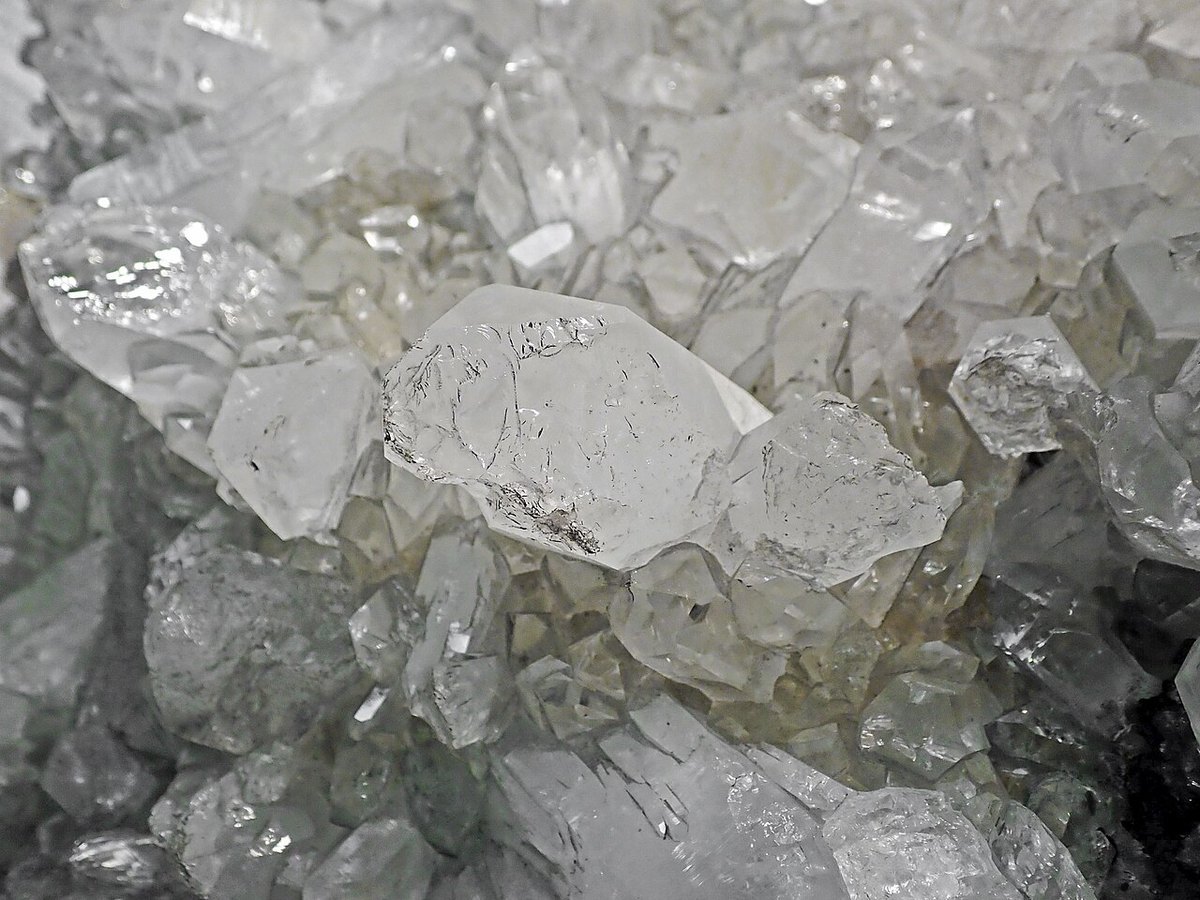
Herkimer diamond is a doubly terminated quartz crystal from Herkimer County, New York, not a true diamond. Its clarity and natural faceting made it a popular modern crown stone. Mohs 7 to 7.5.
Howlite, a white calcium borosilicate with gray veining, is often sold dyed blue and labeled as “turquoise howlite” (not real turquoise). Undyed white howlite is paired with crown for its pure color. Mohs 3.5.
Sugilite, a purple-to-magenta manganese silicate, is a modern crown stone used in pendants and cabochons. Mohs 6 to 6.5.
How practitioners place crown chakra stones
Lie flat on the back, a small cushion behind the head.
Place one small smooth stone on the pillow just above the crown, so it does not touch the scalp.
Optional: hold a second stone in each hand for grounding (hematite, smoky quartz).
Breathe slowly and softly. Set a hedged intention such as “I am willing to feel connected to something larger than this day.”
Stay 5 to 15 minutes.
Close by lifting the stone, thanking the practice, and returning attention to the feet and hands before sitting up.
Cleanse after: sound bath is safest. Avoid water on selenite, lepidolite, and howlite.
When practitioners turn to crown chakra stones
For you if...
Meditation deepening
Spiritual-seeking seasons (new faith, returning practice, or exploration)
End-of-life rituals (vigil, hospice space preparation)
Creative retreats
Consider other options if...
In place of clinical care for dissociation or spiritual crisis
Expecting medical outcomes
Wetting selenite or lepidolite
Crown chakra stones for jewelry
Crown-chakra-aligned jewelry is more ritual than daily wear: small silver-set amethyst studs, crown-ring circlets for ceremonial use, and long pendant chains with clear quartz or herkimer. Many practitioners prefer to keep crown stones on altars rather than the body.
Crown chakra stone pairings
Common pairings include clear quartz with amethyst (white with violet), selenite with lepidolite (two softs for gentle meditation), and clear quartz with hematite (crown plus root, for a full-body vertical grid).
Frequently asked questions
What is the main crown chakra stone?
Clear quartz is the most-cited crown stone for its amplifier role. Amethyst and selenite follow close behind.
Is selenite safe to wash?
No. Selenite (gypsum, Mohs 2) is water-soluble. It will gradually dissolve and lose its finish. Wipe with a dry cloth, cleanse with sound or moonlight only.
Is moldavite dangerous?
Moldavite is safe to handle but is popularly associated in practitioner circles with rapid life change, which some people find disorienting. Start with short sessions and note how you feel.
Why is sugilite on a crown list?
Its deep violet color and relative rarity made sugilite a popular modern crown stone for meditation work since the 1980s.
What color is the crown chakra?
Violet is traditional; many systems extend to pure white or gold to represent transcendence beyond color.