Lepidolite
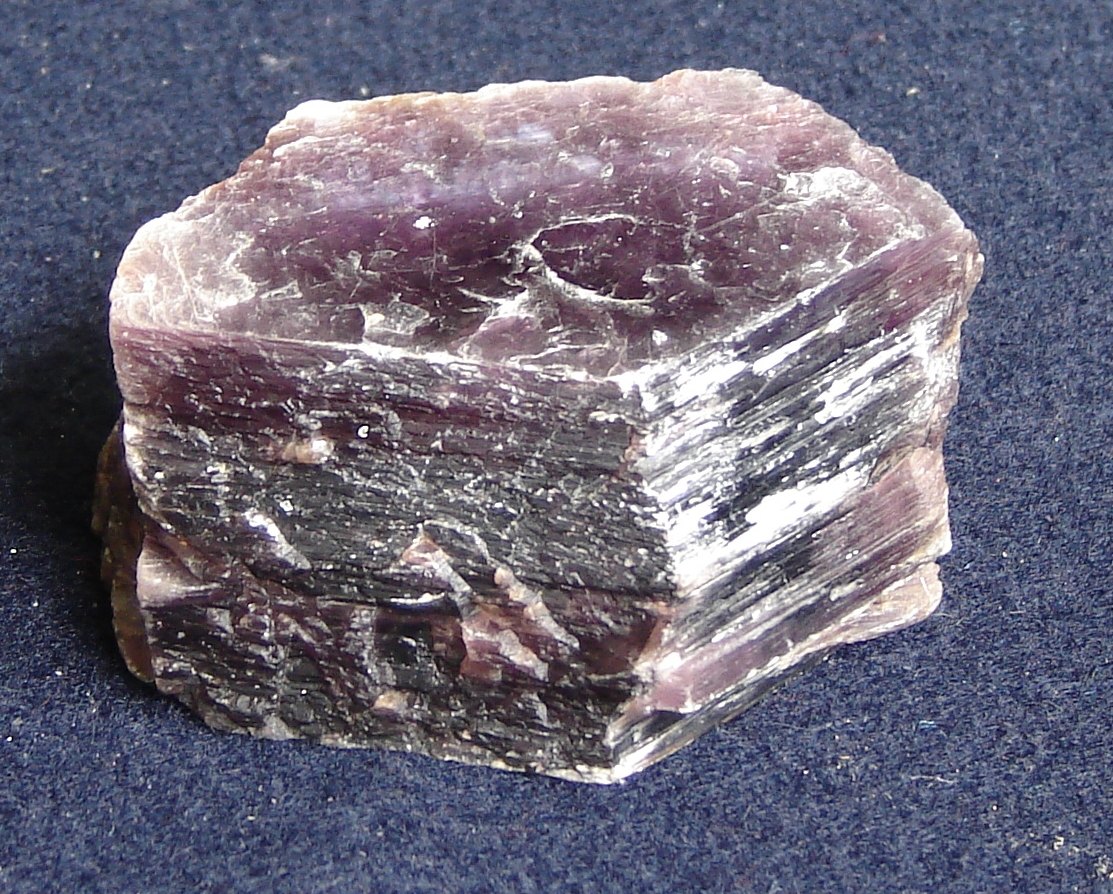
Lithium mica in lilac scales, lepidolite is the soft purple crystal that crystal writers call the calm stone.
- Lepidolite is an industrial source of lithium, the element used in rechargeable batteries and mood-stabilizing medications.
- The name comes from the Greek lepidos, meaning scale, reflecting the mineral's flaky mica structure.
- Lepidolite specimens often include embedded pink tourmaline crystals, making them prized collector pieces.
- Brazilian Minas Gerais produces some of the world's most intensely purple lepidolite.
- Lepidolite sheds microscopic mica flakes when handled; this is normal but means it should not be rubbed directly on skin.
- Practitioners working with anxiety, sleep support, and emotional calm
- Beginners building a first crystal kit for stress and overwhelm
- Meditation practitioners drawn to soft purple stones
- Pocket-stone users who want a gentle daily companion
- Readers interested in the lithium mineral family and crystal healing
- Jewelry buyers who want durable daily-wear rings (lepidolite is too soft)
- Shoppers looking for faceted stones (lepidolite is cut only as cabochons)
- Readers seeking stones for physical rather than emotional support
What Is Lepidolite?
Lepidolite is a lithium-rich mica mineral with the formula K(Li,Al)₃(Si,Al)₄O₁₀(F,OH)₂. It crystallizes in the monoclinic system as scaly aggregates of thin, flexible mica layers that peel apart along perfect basal cleavage. The stone's characteristic lilac-purple color comes from small amounts of manganese substituting into the crystal structure alongside lithium, potassium, and aluminum.
The name lepidolite comes from the Greek lepidos, meaning scale, referencing the flaky appearance of mica layers.
Mineralogically, lepidolite belongs to the mica group and forms in lithium-bearing pegmatites, often alongside tourmaline, spodumene, and beryl. The IMA classifies lepidolite as a series including polylithionite and trilithionite; the trade name covers the entire purple-to-lilac mica range.
Commercial gem-quality lepidolite is found in Brazil (Minas Gerais pegmatites), Madagascar, Russia (Ural Mountains), Afghanistan, and the United States (California, Maine).
Hardness is only 2.5 to 3.5 on the Mohs scale, making lepidolite one of the softer crystals commonly used in jewelry and crystal healing. Specific gravity is approximately 2.80 to 2.90.
Because of its softness and perfect cleavage, lepidolite is almost always cut as cabochons (rather than faceted), polished as tumbled stones, or kept as mineral specimens. Some specimens include embedded pink or watermelon tourmaline crystals, making them especially prized collector pieces.
How Lepidolite Compares
| Property | Lepidolite | Amethyst | Charoite |
|---|---|---|---|
| Hardness | 2.5 - 3.5 | 7 | 5 - 6 |
| Price / carat | — | $ Budget | $ Budget |
| Rarity | Common | Common | Moderate |
| Best For | Calm, anxiety, pocket carry | Meditation, daily wear | Healing cabochons |
Meaning and Symbolism
Lepidolite was first described as a mineral in 1792 by Abbot Poda, and the lithium content was later identified in 1817 by Johan August Arfwedson while analyzing petalite, establishing the element's existence.
For most of its history, lepidolite was studied by mineralogists rather than used in jewelry, and it has served as a primary industrial source of lithium alongside spodumene.
The stone's entry into crystal healing is entirely modern, dating to the late twentieth century when American and European crystal writers adopted it as a calming stone.
The contemporary association with calm is driven in large part by the lithium content. Lithium has a well-known medical role as a mood stabilizer, and crystal writers have drawn a metaphorical (not medical) connection between the element's clinical use and the stone's traditional reputation.
Practitioners believe lepidolite supports gentle emotional settling, reduced agitation, and easier sleep, framing the stone as a modern anti-anxiety companion rather than a stone of ancient tradition.
In contemporary crystal tradition, lepidolite is traditionally associated with the heart, third eye, and crown chakras together, a broad range that reflects its general calming reputation rather than a narrow energetic focus.
Many practitioners recommend lepidolite for readers who are working through long anxious seasons, grief, sleep difficulty, or hormonal transitions, and the stone has become a staple of beginner crystal kits marketed for stress relief.
Because the stone is soft and fragile, its role in contemporary practice is more often as a pocket stone or meditation anchor than as jewelry.
Historical Timeline
Healing Tradition
Emotional
Practitioners believe lepidolite is a stone of gentle emotional calm, particularly well suited to readers carrying long anxious seasons. In crystal healing tradition, it is said to support a wearer who needs to step down from chronic overactivation.
Sleep more deeply, or settle into a slower rhythm after a period of high stress.
Many find lepidolite a useful daily carry during grief seasons, postpartum recovery, major life transitions, or sustained work pressure where nervous-system relief is the main task.
Lepidolite is often paired with rose quartz for heart-centered self-compassion alongside calm, with smoky quartz when old anxiety patterns need grounding before new calm can take hold, and with amethyst when the work includes sleep support or active meditation.
Practitioners tend to describe lepidolite as soft and steady rather than fast or dramatic.
Spiritual
In crystal healing tradition, lepidolite is said to bridge the heart, third eye, and crown chakras with a broad, gentle calm rather than a targeted energetic shift.
Practitioners believe the stone supports readers whose spiritual path emphasizes nervous-system regulation alongside contemplative practice, which has made it popular in yoga, mindfulness, and somatic crystal kits.
Because lepidolite is a modern stone in crystal tradition, it has no classical planetary assignment; contemporary practitioners often associate it with Neptune for its watery, dreamy energy.
Many readers keep a lepidolite palm stone on a meditation cushion, a yoga mat, or a bedside altar, and use it as a physical anchor during restorative practice. Holding lepidolite during therapy preparation or journaling is another common ritual.
Physical
Practitioners believe lepidolite supports what they describe as nervous-system calm and gentler sleep, with folklore drawing a metaphorical link between the stone's lithium content and the element's clinical role in mood stabilization.
Crystal healing tradition associates lepidolite with the general sense of settling after long stress, rather than with any specific organ or acute condition. Many find carrying a lepidolite palm stone during high-pressure weeks, placing one near the bed at night, or keeping a tumbled piece in a therapy bag supportive.
Lepidolite is not a substitute for medical care or for prescribed psychiatric medication, and practitioners are careful to frame its role as supportive rather than therapeutic.
Readers with diagnosed anxiety, depression, or insomnia are encouraged to rely on qualified medical guidance and treat crystal work as one gentle element of a broader routine.
Zodiac, Birthstone and Gifts
Lepidolite has no traditional birthstone role and is adopted in contemporary astrology based on color and temperament. Libras often drawn to balanced, calming stones find lepidolite a natural fit for its gentle energy and lilac color.
Pisceans tuned to soft, dreamy, emotionally attentive stones also frequently adopt lepidolite for daily carry, especially during overwhelming work weeks or during times of emotional sensitivity. Modern Western astrology associates lepidolite with Neptune for its watery calm and its reputation for easing agitation.
Because lepidolite is a modern crystal-tradition stone, it has no Vedic assignment and is used by contemporary practitioners on an intention basis rather than a chart-driven prescription.
Care and Cleansing
Lepidolite requires careful, dry cleansing because of its softness and perfect cleavage. Dry cloth wiping handles most daily maintenance, and a soft brush can be used to dust between mica layers.
Avoid water, soap, ultrasonic cleaners, steam cleaners, saltwater, and any harsh household cleaners, all of which can damage or degrade the stone over time. Dry salt placement is also discouraged because salt grains can abrade the surface.
Smoke cleansing with palo santo or sage is the most commonly recommended method for lepidolite. Moonlight cleansing is safe and gentle; sunlight should be limited because prolonged UV exposure can slightly fade some specimens. Sound cleansing with a singing bowl placed near rather than under the stone is appropriate.
Many practitioners recharge lepidolite by resting it on a clear quartz cluster or selenite slab overnight, a passive method that avoids any water, vibration, or abrasion.
- DO store lepidolite in a padded box separate from harder crystals.
- DO NOT soak lepidolite in water, saltwater, or cleaning solutions.
- DO handle lepidolite gently; the mica layers can separate along cleavage planes.
- DO NOT use ultrasonic or steam cleaners on lepidolite.
- DO wash hands after handling raw or broken lepidolite (mica flakes can cling to skin).
- DO ask whether a lepidolite piece has been stabilized with resin; stabilization is common for jewelry-grade cabochons.
- Note: lepidolite contains lithium but does not release medically meaningful amounts; it is not a substitute for prescribed lithium therapy.
Real vs Fake
Genuine lepidolite shows a characteristic lilac to pink-purple color, scaly mica structure visible under 10x magnification, and the distinctive feel of mica sheets that peel at edges.
Common substitutes include purple fluorite (much harder and glassier), dyed calcite (softer and reacts to acid), purple sodalite (different texture and denser), and resin or glass imitations. Most lepidolite sold is genuine because the material is abundant and inexpensive, which reduces incentive to fake it.
Under 10x magnification, real lepidolite shows fine laminated mica layers that can be separated with a fingernail along the perfect basal cleavage; no imitation replicates this layered structure.
The stone has a slightly pearly to vitreous luster on cleaved surfaces, distinct from the glassy shine of fluorite or the earthy matte of dyed stones.
A scratch test with a copper coin (Mohs 3) will lightly mark lepidolite, while harder substitutes such as fluorite (Mohs 4) or sodalite (Mohs 5.5) will resist the same test.
Practical at-home clues include checking whether the color fades slightly along edges (real lepidolite often shows color gradient as layers expose different lithium content), looking for embedded tourmaline crystals (these are a positive identification marker seen in many Brazilian specimens), and confirming the stone's relatively light weight for its size.
Stabilized lepidolite cabochons set in jewelry are often impregnated with clear resin for durability, which is a legitimate treatment that reputable dealers disclose.
Lepidolite Jewelry & Gifts
Lepidolite is one of the most affordable gemstones on the market. Tumbled stones sell for $1 to $5 each, palm stones $5 to $25, cabochons $5 to $40, and mineral specimens $10 to $100 depending on size and quality.
Lepidolite-in-matrix specimens with visible pink or green tourmaline crystals can reach $100 to several hundred dollars for exceptional pieces. Bead strands and finished bracelets typically sell for $15 to $80.
Brazilian lepidolite from Minas Gerais is the traditional benchmark for saturated lilac-purple color and often carries a modest premium. Madagascar material supplies much of the mid-market tumbling and cabochon rough. Russian and American (California, Maine) specimens are more often sold as mineral collector pieces rather than jewelry.
Stabilization with clear resin is a common treatment for jewelry-grade lepidolite cabochons, and reputable dealers disclose it. For buyers, look for strong color without visible dye pooling, clear mica structure, and (if set) bezel rather than prong settings.
Where to Buy Lepidolite
Affiliate disclosure: Some links below earn us a small commission at no extra cost to you. See our affiliate disclosure page.
Handmade, raw, and tumbled pieces from independent sellers worldwide.
Shop Lepidolite on Etsy →Accessories, tools, and specimen sets with fast Prime delivery.
Shop Lepidolite on Amazon →Certified loose gemstones graded and photographed for online buyers.
Shop Lepidolite on GemSelect →Pairs Well With




Where Lepidolite Is Found


