Watermelon Tourmaline
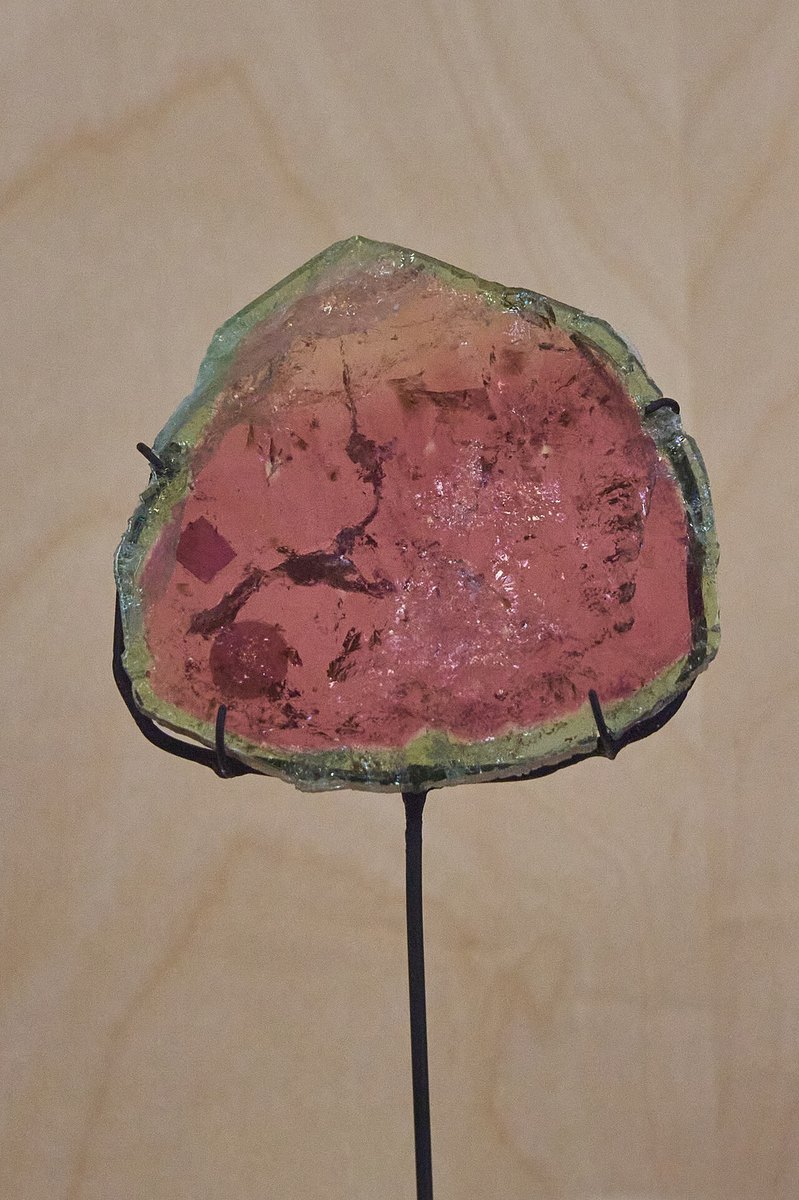
Ringed like its namesake fruit in pink and green, watermelon tourmaline is the bicolor elbaite cherished by heart-chakra practitioners.
- The bicolor effect in watermelon tourmaline comes from changing fluid chemistry as the crystal grew, not from any treatment.
- A single watermelon tourmaline crystal can contain pink, white, and green zones when sliced along its length.
- Tourmaline is pyroelectric; a warm watermelon slice will attract dust and small paper fragments.
- Watermelon tourmaline is often set as a single slice in silver or gold bezels that frame the full cross-section.
- The stone is traditionally associated with the heart chakra more than any other tourmaline color.
- Heart-chakra practitioners drawn to a single stone that blends pink and green
- Crystal collectors who prize natural cross-section slices for display
- Jewelry buyers looking for a soft, romantic alternative to ruby and emerald
- Readers working with emotional balance, self-love, and compassion practices
- Art lovers who value the stone's painterly color transition
- Buyers under $30 per carat (look at pink tourmaline or green aventurine)
- Shoppers who want one solid saturated color (try rubellite or chrome diopside)
- Readers who need extreme durability for heavy daily ring wear (try sapphire)
What Is Watermelon Tourmaline?
Watermelon tourmaline is a bicolor variety of elbaite tourmaline in which a single crystal shows a pink center surrounded by a green outer rim, echoing the cross-section of a watermelon. It rates 7 - 7.5 on the Mohs hardness scale.
The effect is caused by changing chemistry during crystal growth: the initial core forms in manganese-rich fluids that produce pink color, and the outer layer forms later in iron-rich fluids that produce green.
When the crystal is sliced perpendicular to its c-axis, the result is the classic circular bicolor design that has made the stone an icon of crystal kits.
Mineralogically, watermelon tourmaline belongs to the elbaite species within the tourmaline supergroup. Elbaite is the lithium-rich end member of the group, and the IMA recognizes it as a formal species; watermelon simply denotes the color configuration.
Watermelon tourmaline forms in lithium-bearing pegmatites, and notable sources include the Minas Gerais region of Brazil, the Nuristan and Kunar provinces of Afghanistan, Madagascar, and more recently Nigeria.
Hardness ranges from approximately 7 to 7.5 on the Mohs scale, which is suitable for most jewelry. The stone's refractive index (1.624 to 1.644) and specific gravity (3.02 to 3.10) match other elbaites.
Tourmaline is pyroelectric and piezoelectric, which means it generates a tiny charge when warmed or pressed; a clean tourmaline crystal will pick up dust and lint shortly after gentle handling. Most watermelon tourmaline is untreated; heat treatment is not typically used to maintain the bicolor effect.
How Watermelon Tourmaline Compares
| Property | Watermelon Tourmaline | Pink Tourmaline | Green Tourmaline |
|---|---|---|---|
| Hardness | 7 - 7.5 | 7 - 7.5 | 7 - 7.5 |
| Price / carat | $ Budget | $$ Mid-range | $$ Mid-range |
| Rarity | Moderate | Common | Common |
| Best For | Heart chakra, display | Daily wear | Daily wear |
Meaning and Symbolism
Because watermelon tourmaline is a modern collector favorite, most of its meaning has been shaped in the last hundred years by gemologists, jewelers, and contemporary crystal writers.
Tourmaline itself has a much older history: Sri Lankan (Ceylonese) traders exported tourmaline to Dutch merchants in the early eighteenth century, and the name comes from the Sinhalese turmali, a word used for mixed-color stones.
The first commercial pink tourmaline mining in the US took place in California in the 1890s, including material for the Chinese Empress Dowager Cixi.
In contemporary crystal tradition, watermelon tourmaline is overwhelmingly associated with the heart chakra. Practitioners believe the pink center supports self-love and emotional tenderness, while the green outer layer is traditionally associated with protection, compassion toward others, and steady heart-centered growth.
Many find watermelon tourmaline a useful first stone for readers who want a single crystal that honors both inward and outward heart work.
The slice format of watermelon tourmaline has given the stone a distinctive role in visual and altar practice. Unlike most crystals, which are prized in three dimensions, watermelon tourmaline is often displayed as a flat cross-section that reads almost like a painting.
This has made it a favorite in modern crystal shops and on social platforms, where the circular pink-green design is easy to photograph. Practitioners often treat these slices as small emotional icons rather than active working stones.
Historical Timeline
Healing Tradition
Emotional
Practitioners believe watermelon tourmaline is a stone of balanced heart work, offering gentle support for both self-love and compassion toward others. In crystal healing tradition, the pink center is said to warm the personal heart, while the green rim is traditionally associated with an outward, protective kindness.
Many find watermelon tourmaline a useful companion during long relational transitions, such as post-breakup reflection, parenting challenges, or caregiving seasons, where keeping one's own heart tender without closing off to others is the main work.
The stone is often paired with rose quartz for deeper self-love emphasis, with green aventurine for lighter outward kindness, and with rhodonite when old emotional injuries need steady, patient attention. Practitioners traditionally describe watermelon tourmaline as a bridging stone rather than a powerful single-purpose crystal.
Spiritual
In crystal healing tradition, watermelon tourmaline is said to align the heart chakra in its fullest sense, which many practitioners describe as both giving and receiving love with the same ease.
Because the stone displays pink and green together, it is traditionally read as an image of integration: inward tenderness and outward kindness held in a single field.
Practitioners working with loving-kindness meditation (metta) sometimes choose watermelon tourmaline as a physical anchor, and many find slice specimens useful for display on an altar during long-term compassion practice.
The stone is commonly associated with Venus in modern Western astrology, and practitioners sometimes use it around the times of love-related ceremonies, anniversaries, or renewals of personal commitments.
Physical
Practitioners believe watermelon tourmaline supports what they describe as heart-centered physical vitality, and crystal tradition ties the stone to gentle warming of the chest and upper torso. Folklore around elbaite tourmalines generally emphasizes circulation, lymphatic balance, and nervous-system calm, and watermelon tourmaline inherits those associations through its heart-chakra identity.
Many find wearing a watermelon pendant near the sternum comforting during emotionally tender weeks, long caregiving periods, or post-illness recovery. Watermelon tourmaline is not a substitute for medical care, and practitioners frame its role as supportive rather than curative.
Readers with cardiac concerns, blood pressure issues, or chronic stress are encouraged to rely primarily on qualified medical guidance and treat crystal practice as one piece of a broader routine.
Zodiac, Birthstone and Gifts
Watermelon tourmaline is a modern alternative October birthstone, shared among the tourmaline family alongside opal. Astrologers often suggest it for Libras drawn to balance and partnership work, since the stone's simultaneous pink and green is read as an image of relationship.
Virgos and Geminis who gravitate toward harmonious, multi-layered stones also frequently adopt watermelon tourmaline. In modern Western astrology, the stone is primarily associated with Venus for its heart-centered qualities.
Vedic astrology (Jyotish) treats tourmaline as a secondary or substitute stone rather than a primary birth gem, and watermelon is typically chosen there for intention-based rather than chart-based purposes.
Care and Cleansing
Watermelon tourmaline cleanses easily with gentle methods. Lukewarm soapy water and a soft brush remove skin oils and cosmetics, and short water rinses are safe for unset stones.
Avoid ultrasonic and steam cleaners, since they can stress internal inclusions and damage the thin slice format; cracks running parallel to the pink-green boundary are a known weak point that vibration can open.
Moonlight is traditionally recommended, and short morning sun exposure is considered safe because the stone is color-stable. Smoke cleansing with palo santo or sage is common, as is sound cleansing with a singing bowl placed near rather than on the slice. Dry salt placement is acceptable, but saltwater soaks should be avoided.
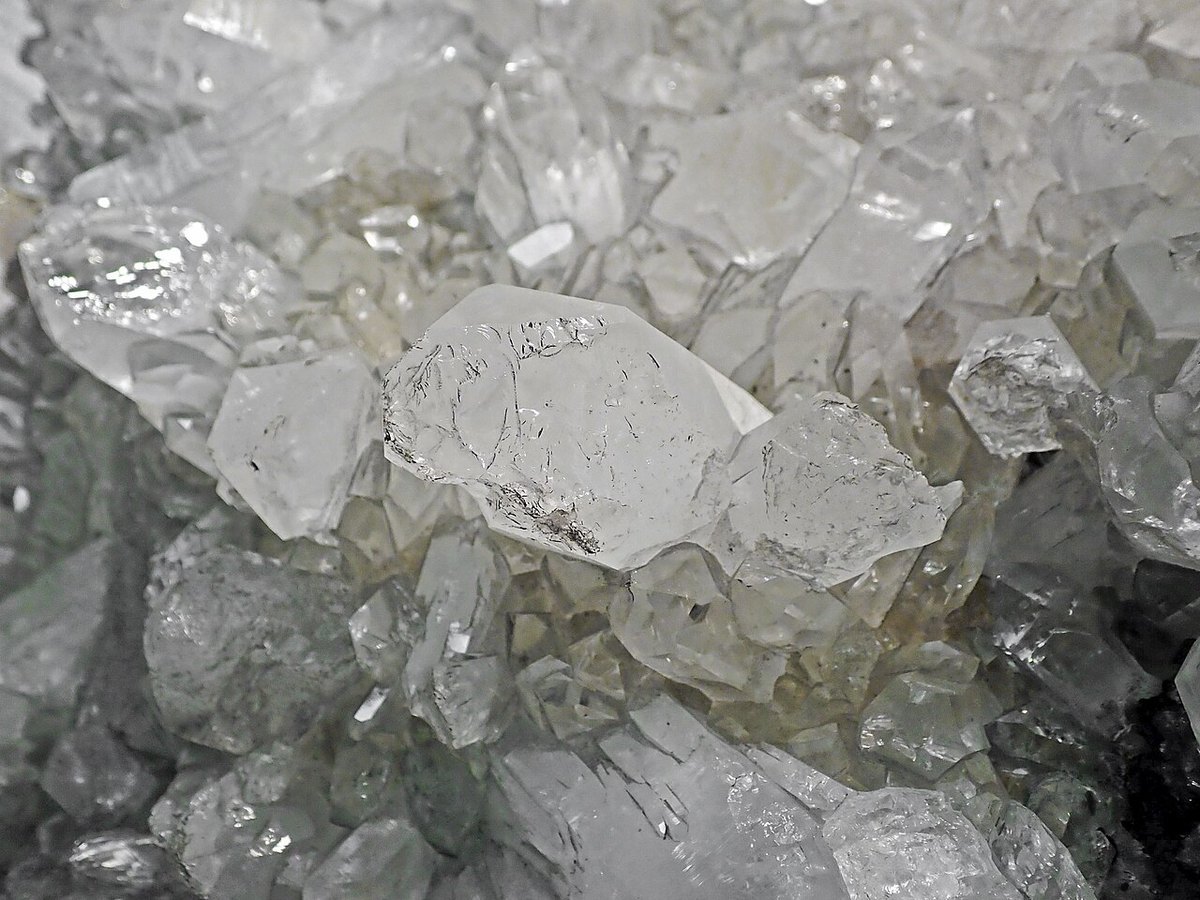
Many practitioners recharge watermelon tourmaline by resting it on a clear quartz cluster or selenite slab overnight, which is passive and safe for both faceted and slice forms.
- DO handle watermelon slices by the edges to avoid oils on the cross-section.
- DO NOT use ultrasonic or steam cleaners on watermelon tourmaline, especially on slice specimens.
- DO store slices flat between soft cloths so they cannot be snapped along the pink-green boundary.
- DO NOT expose watermelon tourmaline to sudden temperature changes that can stress internal tensions.
- DO remove watermelon rings before sports and heavy housework; settings are often delicate.
- DO ask whether the slice is natural or if the cross-section has been stabilized with resin.
- Note: dyed imitations exist; prefer dealers who disclose natural vs enhanced status in writing.
Real vs Fake
Genuine watermelon tourmaline shows a gradual, slightly uneven transition between the pink core and the green rim, often with thin pale or clear bands at the boundary.
The colors are within the stone, not on its surface, and natural tourmaline crystals are strongly pleochroic: the same stone looks different along its c-axis than across it. Common substitutes include dyed quartz, dyed agate, glass slices, and assembled doublets that glue a pink and green piece together at a central seam.
The best at-home check is magnification. Under a 10x loupe, a real watermelon slice shows natural growth lines, faint tubes, and small fingerprint inclusions typical of elbaite tourmaline, while dyed imitations often show dye concentration along fractures or cleavage planes.
A seam along the boundary where colors meet suggests a doublet; natural transitions are diffuse, not sharp. A scratch test with quartz will distinguish glass imitations, since tourmaline (Mohs 7 to 7.5) scratches glass (Mohs 5.5) readily.
Laboratory confirmation is inexpensive for watermelon tourmaline and worthwhile for any stone above about one hundred dollars. Reports from an independent gemological lab, AIGS, or similar labs confirm species and identify treatments. Untreated natural status carries a modest premium among collectors, since most watermelon tourmaline reaching the market is untreated.
Be cautious of unusually large, perfectly round slices at low prices; these are often dyed agate or resin imitations targeted at social-media gift markets.
Watermelon Tourmaline Jewelry & Gifts
Watermelon tourmaline pricing is driven by color balance, clarity, size, and cut. Small tumbled stones and thin slices under one inch sell from $10 to $50 each. Larger polished slices with strong color contrast run $50 to $300, and collector-grade slices with crisp pink-green boundaries and clean crystal termination can exceed $500.
Faceted watermelon tourmaline in bicolor cuts typically runs $100 to $500 per carat depending on size and color balance.
Most watermelon tourmaline is untreated, and natural untreated status is standard for the variety; heat treatment would tend to collapse the bicolor into a single color, which is why the trade avoids it.
Clarity enhancement with resin is occasionally applied to slices to prevent cracks from opening during cutting, and reputable dealers disclose this. Afghan material often shows crisp pink-green contrast and commands a modest premium, while Brazilian stones cover the widest range of sizes and prices.
Nigerian and Malagasy stones fill the middle and budget tiers.
Where to Buy Watermelon Tourmaline
Affiliate disclosure: Some links below earn us a small commission at no extra cost to you. See our affiliate disclosure page.
Handmade, raw, and tumbled pieces from independent sellers worldwide.
Shop Watermelon Tourmaline on Etsy →Accessories, tools, and specimen sets with fast Prime delivery.
Shop Watermelon Tourmaline on Amazon →Certified loose gemstones graded and photographed for online buyers.
Shop Watermelon Tourmaline on GemSelect →Pairs Well With



Where Watermelon Tourmaline Is Found


