Top 3 Crystals for Focus


Other stones traditionally used




9 stones traditionally associated with focus and concentration
Focus stones in modern crystal writing tend toward three visual types: structured bands (fluorite, sodalite, tiger's eye), metallic weight (hematite, pyrite), and clear clarity (quartz). Practitioners describe these textures as supporting mental organization, though we note the mechanism is attention-anchor, not brain chemistry.

Fluorite is nicknamed the “study stone” in modern crystal writing for what practitioners describe as mental organization. Purple, green, and rainbow-banded varieties are most common. Mohs 4; soft and cleavage-prone, best for desk display or handheld tumbles.

Hematite, an iron oxide with metallic polish, is paired with focus in crystal writing for its grounding weight. Practitioners describe it as pulling attention back to the body and the page. Mohs 5 to 6.

Clear quartz is the universal amplifier and a common focus pick for its simple transparent presence on the desk. Mohs 7.

Tiger's eye, a chatoyant golden-brown quartz, is paired with focus for what practitioners describe as hunter-like concentration. Mohs 7.

Amethyst appears on focus lists for meditation and mental-clearing work. Practitioners describe it as calming the over-busy mind. Mohs 7.

Sodalite is cited in crystal writing as the “scholar's stone.” Deep royal blue, Mohs 5.5 to 6. Practitioners describe it as supporting clear thought in study and debate.

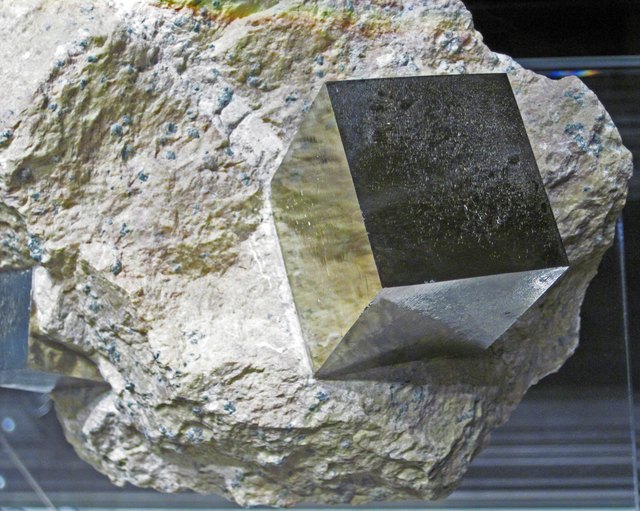
Pyrite's metallic gold luster is paired with focus for what practitioners describe as confident, directional action. Mohs 6 to 6.5. Keep dry to prevent oxidation.

Lapis lazuli has long been tied in classical sources to scholarship, clear thought, and judgment under oath. Mohs 5 to 6.

Blue apatite is paired with focus for what practitioners describe as articulation of ideas. Mohs 5.
How practitioners work with focus crystals
- Pick one task for the session. Focus stones are more effective paired with a single specific objective.
- Choose one stone, not three. Overstocking is the most common beginner mistake in focus practice.
- Cleanse on arrival. Running water works for quartz and tiger's eye; avoid water on fluorite (cleavage) and pyrite (oxidation).
- Place the stone at eye level or in the off-hand. Practitioners describe touching the stone as a return-to-task cue.
- Pair with a simple ritual. A three-breath pause before each focused block is common.
- Break honestly. Focus practice breaks down if you do not rest. Stones do not bypass human attention limits.
When practitioners turn to focus crystals
For you if...
- Deep work sessions (writing, coding, research)
- Study for exams or certifications
- Meditation deepening
- Transition blocks when returning to a project after a break
Consider other options if...
- In place of medical care for persistent attention problems
- As a substitute for sleep, hydration, or a quiet environment
- Expecting the stone to override caffeine crashes or hunger
Traditional placements for focus crystals
- Desk, in the line of sight above the monitor
- Near the keyboard or mouse, in reach of the off-hand
- On the study table as a timer-start cue
- Pocket carry during exam or presentation stretches
- Pendant as a touchpoint during long meetings
Focus crystals and honest practice
Crystal tradition around focus is at its most useful as a visual and tactile cue. The stone anchors attention; it does not generate it. Most successful focus work combines any ritual (stone, breath, coffee, music) with the three fundamentals: enough sleep, a suitable environment, and a clearly named task.
The stone can be a lovely part of the ritual. It cannot carry the practice alone.
Focus crystal pairings
- Fluorite with clear quartz (mental organization + amplification)
- Hematite with tiger's eye (grounding + focused action)
- Amethyst with sodalite (calm plus clear thought)
- Lapis with pyrite (scholarly + confident)
Frequently asked questions
What is the best crystal for focus?
Fluorite is the most-cited focus stone in modern crystal writing. Hematite and clear quartz are the next most consistent. Choose based on what you find visually and tactilely appealing, since the practice is about attention anchoring.
Can a crystal help me study for exams?
Practitioners describe focus stones as helpful cues during study sessions. They do not change your memory or comprehension. Good sleep, spaced repetition, and active recall do more for exam performance than any stone.
Do crystals help with ADHD?
No stone is a substitute for ADHD care. Some practitioners with diagnosed ADHD describe crystals as companions to other strategies (medication, therapy, environmental adjustments). Always work with a qualified provider for persistent attention concerns.
Should I hold the stone or just look at it?
Both. Many practitioners favor tactile contact (handheld tumble) for deep work, with the stone visible on the desk between sessions as a visual reminder.
How often should I cleanse focus crystals?
Common practice is a cleansing at the start of a new project or study block. Sound, moonlight, and (for water-safe stones) brief running water are the common methods.