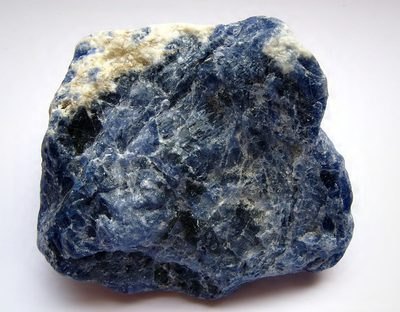
Sodalite
A royal-blue feldspathoid mineral often mistaken for lapis, sodalite is the logic stone of throat-chakra thinking.
- Sodalite is named after its sodium content; the mineral formula is heavy in Na (sodium).
- Canadian sodalite from the Princess Sodalite Mine in Ontario was popularized by Princess Margaret in 1901.
- Sodalite is one of the minerals that make up lapis lazuli; they are chemically related.
- Some sodalite fluoresces bright orange under UV light, a collector favorite.
- A rare variety called hackmanite changes color when exposed to light, shifting between pale and deep purple.
- Students, writers, and researchers seeking a logic stone
- Practitioners working with throat and third eye analytical clarity
- Budget shoppers wanting a lapis-look alternative
- Beginners starting with blue-family crystals
- Gift givers shopping for teacher or academic presents
- Buyers wanting top-grade royal blue with gold flecks (consider lapis lazuli)
- Daily-wear ring buyers (sodalite is soft)
- Those preferring uniform color (try azurite)
What Is Sodalite?
Sodalite is a sodium aluminum silicate mineral of the feldspathoid group, closely related to lapis lazuli (which contains sodalite as one of its major components). It rates 5.5 - 6 on the Mohs hardness scale.
The name comes from the sodium content, and the stone typically shows a deep royal-blue color with white streaks of calcite or other feldspar and occasional darker veins.
At Mohs 5.5 to 6, sodalite is moderate in hardness and suitable for pendants, earrings, and protective ring settings. It is cut primarily as cabochons, beads, carved shapes, and tumbled stones rather than faceted because its opacity and internal texture scatter light.
Sodalite is commonly confused with lapis lazuli because the two share similar royal-blue color and both contain sodalite-family minerals. The distinguishing feature is lapis's gold-metallic pyrite flecks, which are absent in pure sodalite. When buyers see royal blue without pyrite sparkle, the stone is usually sodalite.
Sodalite is significantly less expensive than lapis at similar size and color depth.
Major commercial sources include Canada (the world-famous Princess Sodalite Mine in Ontario), Brazil (Bahia), Namibia, Madagascar, Italy (Vesuvius ejecta), Greenland, and the United States (Arkansas, Montana). Canadian sodalite was popularized in 1901 when Princess Margaret of Connaught chose the material for royal jewelry, giving the Ontario mine its enduring name.
How Sodalite Compares
| Property | Sodalite | Lapis Lazuli | Azurite |
|---|---|---|---|
| Hardness | 5.5 - 6 | 5 - 5.5 | 3.5 - 4 |
| Price / carat | $ Budget | $ Budget | $ Budget |
| Visual marker | Royal blue + white veins | Royal blue + pyrite gold | Deep azure blue |
| Best For | Budget beads, carvings | Premium cabochons, Egyptian look | Collector specimens |
Meaning and Symbolism
Sodalite is a relative newcomer to the gem trade despite having been described mineralogically in 1811.
The mineral was first recognized as a gemstone in the late 1890s, and it gained significant commercial popularity after 1901 when Canadian sodalite from Ontario was used in jewelry commissioned by Princess Margaret of Connaught during her visit to Canada.
The deposit that supplied the royal commission still operates today as the Princess Sodalite Mine.
Ancient and classical cultures did not distinguish sodalite from lapis lazuli because the two stones share similar appearance and often occur together. Much of what historical texts describe as lapis may include sodalite-family material, and ancient Egyptian, Greek, and Roman jewelry likely contained both species treated as a single royal-blue stone.
Modern gemological distinction has only existed since the mid-1800s.
In modern crystal healing tradition, sodalite is known as the logic stone and is associated with rational analysis, clear thinking, and balanced intellectual work.
Practitioners associate it with the throat and third eye chakras, and they often recommend it for students during exam preparation, writers navigating research projects, and professionals balancing analytical work with intuitive insight.
The stone pairs naturally with fluorite for combined focus work, with amethyst for calmer intuition, and with lapis lazuli as its premium blue cousin.
Historical Timeline
Healing Tradition
Emotional
Practitioners believe sodalite supports emotional steadiness during analytical work and intellectual stress. In crystal healing tradition, it is often recommended for students, writers, and researchers navigating extended mental projects where clarity matters more than passion.
Many readers keep a tumbled sodalite on a study desk and describe a sense of calm analytical focus during long work sessions. Practitioners pair sodalite with rose quartz when the intellectual work involves emotionally sensitive topics, or with fluorite for amplified focus.
Because its reputation is analytical rather than soothing, sodalite is often described as a work-day stone rather than a bedtime companion. Readers sometimes describe sodalite as helpful for avoiding emotional-versus-logical imbalance, particularly during periods when difficult decisions need both careful analysis and honest self-awareness.
Spiritual
Sodalite is traditionally associated with the throat and third eye chakras, with emphasis on analytical insight and articulate expression rather than ecstatic vision. In modern crystal healing tradition, sodalite is sometimes called the stone of the scholar because of its reputation for supporting balanced intellectual-spiritual work.
Many readers keep a tumbled sodalite on a writing desk or library shelf during extended research projects, and some practitioners use small pieces in grids focused on clear analytical thinking. It pairs readily with clear quartz for amplified intention and with amethyst for calming restless thought.
The stone is said to support truth-telling about what is actually known versus what is assumed, which is why practitioners often recommend it for academic writing, journalism, and non-fiction research.
Physical
Practitioners believe sodalite supports what they describe as throat-area balance and general nervous-system regulation during intense thinking. Folk tradition links sodalite with relief from tension headaches during extended mental work and with general stress reduction.
In modern crystal healing practice, sodalite is most often placed on the brow or throat during sessions focused on calm analytical work.
Many readers keep a cool tumbled sodalite near the computer during long writing and research sessions. Some practitioners use the stone alongside fluorite as a classic study duo.
It is not a substitute for medical care, and practitioners frame its role as supportive alongside proper treatment. Because sodalite is moderately hard and chemically stable, it is practical for daily wear as a pendant or carried as a pocket stone.
Zodiac, Birthstone and Gifts
Sodalite is traditionally associated with Sagittarius and Virgo in Western astrology.
Practitioners describe sodalite as an ally for Sagittarius's philosophical teaching temperament and for Virgo's careful analytical mindset. Both signs benefit from the stone's reputation for balancing analytical and intuitive work.
Although sodalite is not on the formal US birthstone list, it is often given as a gift for teachers, students entering graduate school, writers, researchers, and anyone beginning extended intellectual work. Canadian sodalite particularly makes a meaningful gift for readers with Canadian heritage or interests.
Care and Cleansing
Sodalite is moderately sensitive to water because of its sodium content and porous structure.
Dry cleansing methods are preferred. Smoke cleansing with sage, palo santo, or cedar is the traditional favorite and carries no risk. Sound cleansing with a singing bowl is safe. A short session of moonlight on a windowsill is also effective.
Brief rinses under lukewarm water are acceptable for occasional refresh, but prolonged soaking should be avoided because water can work into hairline fractures and leach sodium. Salt, saltwater soaks, ultrasonic cleaners, and steam cleaners should all be avoided.
Many practitioners refresh sodalite after completing major research projects or intensive analytical work periods rather than on a fixed schedule. A night on a selenite plate after long writing sessions is a common refresh practice that avoids water contact.
- DO NOT soak sodalite in water, saltwater, or cleaning chemicals.
- DO NOT use ultrasonic or steam cleaners on sodalite.
- DO store sodalite separately from harder stones to prevent surface scratches.
- DO remove sodalite rings before heavy manual work.
- DO wipe sodalite with a soft dry cloth after wearing.
- DO ask about dye disclosure for suspiciously bright royal-blue material.
- Note: sodalite has perfect cleavage; sharp impacts can split the stone along natural planes.
Real vs Fake
Genuine sodalite shows royal-blue color with irregular white veining of calcite or other feldspar. Under 10x magnification, the stone has a slightly granular texture with distinct crystal boundaries visible in some specimens.
A stone with perfectly uniform color and no natural white veining is suspicious and may be dyed howlite, magnesite, or synthetic material.
The most important distinction is between sodalite and lapis lazuli. Lapis contains gold-metallic pyrite flecks that are absent in pure sodalite. Price is another clue: sodalite typically sells for $1 to $10 per carat, while lapis sells for $10 to $150 per carat at similar color grades.
A royal-blue stone priced like lapis but without pyrite is likely mislabeled sodalite.
Other imitations include dyed howlite (often showing dark web matrix pattern), dyed magnesite, blue-dyed chalcedony, and blue glass. A basic hardness test separates most imitations: sodalite at Mohs 5.5 to 6 will scratch glass but not steel, while howlite and plastic imitations are much softer.
An acetone swab test reveals dye transfer on dyed imitations.
For significant purchases, buy from sellers who can identify origin (Canada, Brazil, Namibia, Madagascar) and disclose any dye or stabilization treatment. The rare hackmanite variety (which changes color when exposed to light) is a collector specialty and commands premium prices.
Sodalite Jewelry & Gifts
Sodalite is one of the most affordable royal-blue gemstones. Tumbled stones cost a few dollars each, standard cabochons run $1 to $8 per carat, and large polished palm stones or carved pieces cost $10 to $60.
Canadian Princess Sodalite Mine material with documented provenance commands a premium over commercial Brazilian or Namibian sodalite. Rare hackmanite (color-changing sodalite) can reach $50 to $200 per carat for well-documented specimens.
Treatment concerns center on occasional dyeing and surface stabilization used to enhance or uniform color in cheap commercial material. Reputable sellers disclose dye in writing, and genuine natural color is the default for most mid-market sodalite.
Because sodalite is often sold alongside lapis lazuli at similar appearance but very different price, buyers should confirm material identification for any royal-blue stone priced over $30 per carat.
When buying, look for natural white veining (indicating genuine sodalite), check for reasonable pricing, and ask about origin. Beaded bracelets and mala jewelry are particularly vulnerable to dyed howlite mislabeling, so buy from sellers willing to confirm sodium-aluminum silicate identity.
Where to Buy Sodalite
Affiliate disclosure: Some links below earn us a small commission at no extra cost to you. See our affiliate disclosure page.
Handmade, raw, and tumbled pieces from independent sellers worldwide.
Shop Sodalite on Etsy →Accessories, tools, and specimen sets with fast Prime delivery.
Shop Sodalite on Amazon →Certified loose gemstones graded and photographed for online buyers.
Shop Sodalite on GemSelect →Pairs Well With



Where Sodalite Is Found


