Fluorite
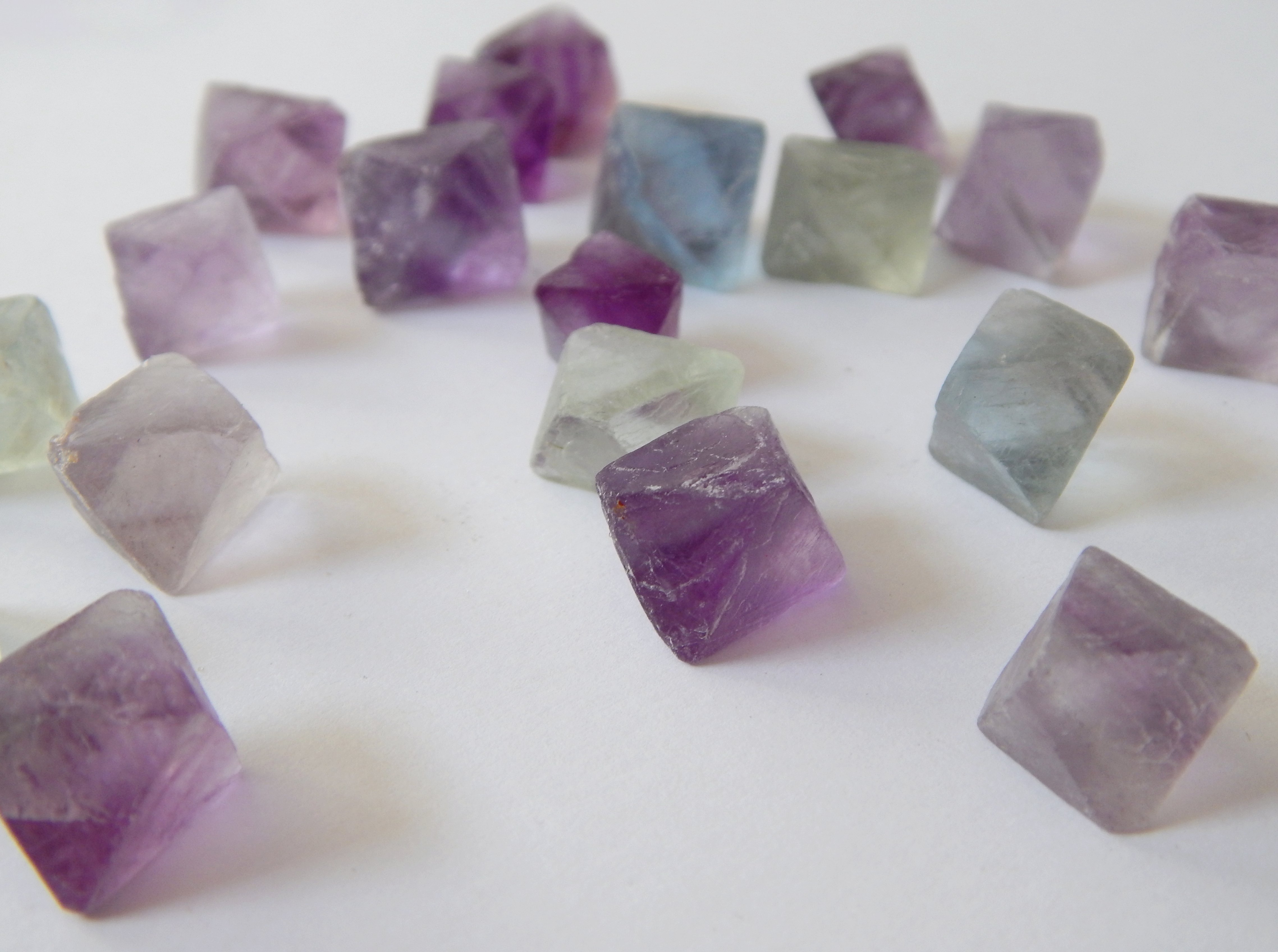
Blooming in purple, green, and rainbow-banded octahedral crystals, fluorite is the focus stone of third-eye clarity.
- Fluorite gave its name to both the element fluorine and the phenomenon of fluorescence.
- Blue John fluorite from Derbyshire, England is a uniquely banded purple-yellow variety still mined in tiny quantities.
- Optical-grade fluorite is used in specialized camera and microscope lenses because it reduces chromatic aberration.
- Some fluorite glows bright blue or purple under UV light, an effect named after the mineral itself.
- Fluorite crystallizes in perfect cubes and octahedrons, one of the few minerals commonly found as geometric shapes.
- Students, writers, and learners seeking a focus stone
- Practitioners working with third eye clarity and decision-making
- Collectors who love octahedral crystals and rainbow color banding
- Budget shoppers building a first crystal collection
- Readers drawn to translucent color layers and gentle optical effects
What Is Fluorite?
Fluorite is calcium fluoride, a mineral that crystallizes in perfect cubes and octahedrons. It gave its name to the phenomenon of fluorescence because some specimens glow bright blue or violet under UV light. It rates 4 on the Mohs hardness scale.
The mineral comes in more colors than almost any other gem-grade species: purple, green, blue, yellow, pink, colorless, and combinations thereof.
At Mohs 4, fluorite is soft and cleaves easily along four perfect directions. This makes it a difficult gem for daily-wear jewelry but a rewarding specimen to collect, carve, and display.
Faceted fluorite is sold mostly to collectors because it scratches quickly in standard ring settings. Cabochons, carvings, and palm stones are more common in the crystal market.
Fluorite forms in hydrothermal veins, often alongside galena, calcite, and barite. Major deposits occur in China (now the largest producer), Mexico, the United Kingdom, the United States (especially Illinois and Kentucky), and Germany.
Rainbow fluorite, which shows bands of purple, green, and yellow in a single piece, is a particular favorite of carvers and the crystal healing market.
Fluorite has important industrial uses well beyond jewelry. It is the primary source of fluorine for hydrofluoric acid, and optical-grade colorless fluorite is used in specialized camera lenses because its unusual dispersion properties reduce chromatic aberration.
How Fluorite Compares
| Property | Fluorite | Amethyst | Kunzite |
|---|---|---|---|
| Hardness | 4 | 7 | 6.5 - 7 |
| Price / carat | $ Budget | $ Budget | $ Budget |
| Color range | Multiple colors | Purple only | Pink only |
| Best For | Meditation, carvings | Jewelry, rings | Pendants, collectors |
Meaning and Symbolism
Fluorite has a relatively short history as a named gemstone despite its dramatic natural appearance. The Romans used fluorite vessels called murrhine ware carved from banded material, and Pliny the Elder wrote about their value.
Most fluorite history, however, is tied to its industrial role rather than its ornamental use. The mineral gave its name to both fluorine (the element) and fluorescence (the optical phenomenon), and the 1852 discovery of fluorescence by British physicist George Gabriel Stokes was made using a specimen of green fluorite.
Fluorite became a widely collected ornamental mineral in the eighteenth century, when English Blue John from the Castleton deposit in Derbyshire was carved into vases and inlay work prized by Georgian collectors.
Blue John fluorite (a banded purple-yellow variety) remains a specialty of the Peak District and is still mined in small quantities today.
In modern crystal healing tradition, fluorite is associated with mental clarity, focus, and orderly thinking. Practitioners describe it as a stone for students, writers, and decision-makers, often recommending it during exam preparation, creative projects, or any work requiring sustained concentration.
Different colors are traditionally linked with specific qualities: purple for third eye intuition, green for heart-centered discernment, blue for calm communication, and rainbow for combining all these.
Historical Timeline
Healing Tradition
Emotional
Practitioners believe fluorite is an emotional-clarifying stone that helps a wearer sort tangled feelings into distinct threads. In crystal healing tradition, it is often recommended during periods of decision-making, creative block, or information overload.
Many readers keep a tumbled fluorite on a study desk or writing table, and some describe a subtle sense of ordered thinking during focused work.
Practitioners pair fluorite with amethyst when the emotional work involves calming anxious thoughts, or with rose quartz when the clarity needed is about relationships.
Because its reputation is focused and organizing rather than expansive, fluorite is often described as a day-work stone rather than a sleep or evening stone. Green fluorite specifically is traditionally associated with emotional detoxification and with releasing stagnant feelings that a person has been carrying too long.
Spiritual
Fluorite is traditionally associated with the third eye and heart chakras, with specific color varieties tied to specific chakras. Practitioners describe it as a stone that supports clear spiritual vision and disciplined meditation practice.
In modern metaphysical tradition, fluorite is sometimes called the genius stone because of its reputation for supporting focused thought.
Many readers keep a fluorite octahedron or palm stone at a meditation altar during periods of serious study or spiritual research, and some practitioners use rainbow fluorite specifically for what they call multi-chakra alignment.
It pairs readily with clear quartz and selenite for combined clarity and cleansing practice. Practitioners sometimes describe fluorite as a stone that filters out distractions, which is why it is popular among students and researchers.
Physical
Practitioners believe fluorite supports what they describe as mental concentration and general nervous-system regulation. Folk tradition links fluorite with relief from headache, eye strain, and stress-related tension, particularly during long study or work sessions.
In modern crystal healing practice, fluorite is most often placed on the brow or held in the non-dominant hand during focus-oriented sessions.
Many readers keep a cool tumbled fluorite near the computer during long work sessions, and some report placing a small piece on the temples during headache-prone afternoons. It is not a substitute for medical care, and practitioners frame its role as supportive alongside proper treatment.
Because fluorite is soft and can release small amounts of fluoride if damaged, it should be handled with care and should not be used in direct gem elixirs or ingested in any form.
Zodiac, Birthstone and Gifts
Fluorite is most often associated with Capricorn in Western astrology because the sign's Saturn rulership aligns with fluorite's reputation for disciplined focus.
For Pisces, fluorite is said to support clear thinking as a counterweight to the sign's watery emotional openness, and for Gemini it is recommended for sustained attention beyond the sign's natural quick-shift tendencies.
Although fluorite is not on the formal US birthstone list, it is sometimes suggested as an alternative stone for winter and early-spring birthdays and is popular as a gift for students entering college or graduate school.
Care and Cleansing
Fluorite is sensitive to heat, prolonged water contact, salt, and harsh chemicals. Dry methods are strongly preferred.
Smoke cleansing with sage, cedar, or palo santo is the traditional favorite and carries no risk of damage. Sound cleansing with a singing bowl is also safe, as is a short session of moonlight on a windowsill.
A brief rinse under lukewarm running water is acceptable for occasional refresh, but prolonged soaking should be avoided because fluorite can slowly dissolve in water and can crack under sudden thermal shock.
Salt, saltwater soaks, ultrasonic cleaners, and steam cleaners should all be avoided. Prolonged direct sunlight can also fade fluorite color, particularly purple and green varieties.
Many readers place fluorite on a selenite plate overnight for routine refresh because selenite transfers no moisture and fluorite benefits from regular cleansing after focus-intensive work.
- DO NOT soak fluorite in water, saltwater, or harsh chemicals.
- DO NOT ingest or use fluorite in direct gem elixirs; the stone can release fluoride.
- DO store fluorite out of prolonged direct sunlight to preserve color.
- DO NOT use ultrasonic or steam cleaners on fluorite.
- DO remove fluorite jewelry before exercise and manual work.
- DO store fluorite separately from harder stones to prevent scratches.
- Note: fluorite scratches easily; handle polished pieces carefully.
Real vs Fake
Genuine fluorite shows color zoning, small natural inclusions, and often visible cleavage planes under a 10x loupe. Faceted fluorite has a distinctive glassy luster with a slight oily quality, and many specimens fluoresce bright blue or violet under UV light.
The mineral also has a noticeable softness that distinguishes it from most imitations: a steel knife scratches fluorite easily, while harder imitations resist the scratch.
Common imitations include glass (cold to touch, often shows gas bubbles), dyed or heat-treated quartz, and synthetic spinel in purple or green colors. Glass imitations often lack the characteristic color banding of rainbow fluorite and do not fluoresce the same way.
Synthetic spinel is harder than fluorite and will scratch a steel knife rather than being scratched by it.
For rainbow and banded fluorite specifically, look for irregular natural transitions between color zones with some mottling. Synthetic and glass imitations typically show either too-smooth or too-geometric color patterns. Blue John fluorite from Derbyshire has an extremely distinctive banding pattern that is difficult to imitate and commands premium prices.
For significant purchases, a basic gemological refractometer quickly identifies fluorite (RI around 1.434) and a UV lamp reveals characteristic fluorescence. Most fluorite on the commercial crystal market is genuine because the natural material is abundant and inexpensive.
Fluorite Jewelry & Gifts
Fluorite is one of the most affordable ornamental gemstones. Tumbled stones cost a few dollars each, polished octahedrons and palm stones run $8 to $40, and carved spheres and statement pieces reach $50 to $300.
Faceted fluorite in collector sizes typically runs $5 to $30 per carat, while exceptional colorless or blue faceted stones (used for specialist collector pieces and optical research) can reach $50 to $80 per carat.
Rainbow fluorite with strong color banding is priced higher than single-color material. Blue John fluorite from Derbyshire is the premium specialty at $50 to $200 per piece for small carvings, with larger antique pieces reaching several thousand dollars.
Treatment is uncommon in the fluorite market because natural colors are already vivid. Some commercial tumbled stones are occasionally coated with thin polymer to enhance luster, and this should be disclosed.
When buying, look at color saturation, check for obvious cleavage cracks or chipped edges (common in fluorite because of its perfect cleavage), and handle the piece carefully because the stone can scratch in casual handling. For significant purchases, buy from sellers who can identify origin.
Where to Buy Fluorite
Affiliate disclosure: Some links below earn us a small commission at no extra cost to you. See our affiliate disclosure page.
Handmade, raw, and tumbled pieces from independent sellers worldwide.
Shop Fluorite on Etsy →Accessories, tools, and specimen sets with fast Prime delivery.
Shop Fluorite on Amazon →Certified loose gemstones graded and photographed for online buyers.
Shop Fluorite on GemSelect →Pairs Well With




Where Fluorite Is Found


