Blue John Fluorite
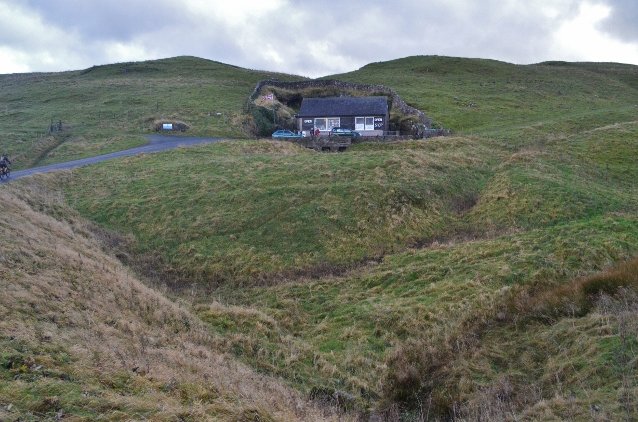
Blue John is the world's rarest and most distinctively banded fluorite - found only in Blue John Cavern and Treak Cliff Cavern near.
- Blue John exists in only 2 caverns in the entire world - Blue John Cavern and Treak Cliff Cavern in Castleton, Derbyshire - making it the world's most geographically restricted gemstone.
- Roman artefacts incorporating Blue John have been found at multiple British sites, suggesting 2,000 years of continuous use from a single Derbyshire hillside.
- The Georgian furniture maker Matthew Boulton created Blue John ornaments for aristocratic clients across Europe in the 1760s-1790s - arguably Blue John's most celebrated era.
- Total annual production of Blue John rough material is typically only a few tons; by comparison, common purple fluorite is produced in thousands of tons globally.
- Treak Cliff Cavern in Castleton actively limits annual Blue John extraction to preserve the remaining deposits for future generations.
- Collectors seeking the world's most geographically restricted gemstone - Blue John exists nowhere outside 2 Derbyshire caves
- Those drawn to the extraordinary historical tradition of English ornamental stone working dating to Roman occupation
- Practitioners working with rare, place-specific earth energies and Third Eye and Crown chakra activation
- Jewelry buyers wanting a genuinely unique English heritage stone unlike any other fluorite in the world
- Anglophiles and British heritage collectors who appreciate the deep connection to Castleton and the Peak District
- Those wanting an affordable stone - authentic Blue John from its single source is expensive and supply is strictly controlled
- Those wanting a durable everyday gemstone - fluorite Mohs 4 scratches easily and requires careful handling
- Those who cannot verify genuine Blue John provenance - widespread imitation with regular fluorite means authentication matters enormously
What Is Blue John Fluorite?
Blue John is an extraordinary variety of banded fluorite (CaF₂) found exclusively in two caverns - Blue John Cavern and Treak Cliff Cavern - in the hillside above Castleton in the Peak District of Derbyshire, England. It rates 4 on the Mohs hardness scale.
Its most distinctive feature is its concentric banding pattern of deep purple-blue, pale yellow, cream, and white - arranged in flowing curved bands that are unique to this single geological location. Mohs hardness of 4 (the same as all fluorite) and specific gravity of 3.18 are standard for the fluorite mineral group.
The banding pattern in Blue John results from the same process as other banded fluorites: hydrothermal fluoride-rich solutions depositing calcium fluoride in successive layers within limestone cavities. The specific color sequence - the distinctive purple-yellow-cream combination - reflects trace element variations and radiation exposure unique to the Castleton geology.
The name 'Blue John' is believed to derive from the French *bleu jaune* (blue-yellow) describing the color combination, though alternative folk etymology exists.
Blue John has been worked for decorative objects since at least Roman occupation of Britain (vases and objects from the 1st century CE have been found in Roman sites).
The 18th-century furniture maker Matthew Boulton popularized Blue John extensively in Georgian England, creating vases, ornaments, and decorative pieces that became fashionable in aristocratic households.
Today, a small number of craftspeople in Castleton continue working Blue John according to traditional methods, and the caverns produce only a few tons of rough material per year.
How Blue John Fluorite Compares
| Property | Blue John Fluorite | Regular Purple Fluorite | Charoite Purple |
|---|---|---|---|
| Source | Castleton, Derbyshire only | Worldwide | Siberia only |
| Banding | Distinctive purple-yellow-cream | Uniform or simple banding | Swirling purple patterns |
| Hardness | 4 (all fluorite) | 4 (all fluorite) | 5 - 6 |
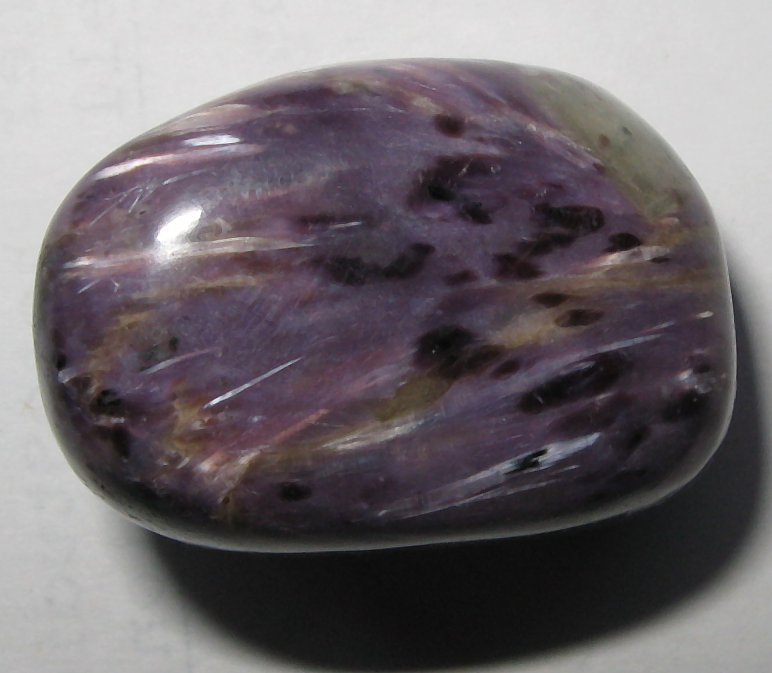
| Best For | English heritage, rarity | Affordable fluorite healing | Russian rare collector |
Meaning and Symbolism
Blue John's history spans nearly 2,000 years of documented use. Roman artefacts incorporating Blue John have been found at several English Roman sites, suggesting the stone was valued and traded in Roman Britain.
The Castleton caverns were worked during this period, and Blue John was apparently traded widely enough to reach Roman settlements throughout England. This represents one of the longest uninterrupted traditions of using a single, geographically specific stone in European decorative arts.
The Georgian period of the 18th century was Blue John's most celebrated era. Matthew Boulton's workshops in Birmingham produced Blue John vases, urns, and ornaments set in gilded ormolu mounts that graced the drawing rooms of English aristocracy and were exported across Europe.
The fashion for Blue John paralleled the broader Georgian passion for natural history and the geological curiosities of the Peak District. Duke of Devonshire connection to Chatsworth House and the nearby Castleton area made Blue John a symbol of Peak District aristocratic heritage.
In contemporary crystal healing, Blue John carries all the healing properties of purple fluorite - mental clarity, focus, Third Eye and Crown chakra activation, and the structured ordering of thought and intuition.
The rarity and geographic specificity add a layer of place-based earth energy: a stone that exists only in one hillside in Derbyshire carries the geological identity of that specific landscape, its limestone caves, and the hydrothermal history of the Peak District.
Historical Timeline
Healing Tradition
Emotional
Blue John shares the emotional healing associations of purple fluorite: mental clarity, the ordering of scattered thoughts, and the calming of mental anxiety through structured awareness.
Practitioners find fluorite family stones particularly helpful for overwhelm from information overload, the emotional exhaustion of prolonged decision-making, and the cognitive fog that accompanies chronic stress.
The rarity of Blue John is sometimes described as adding an additional quality of reverent presence - an awareness that this stone exists in such limited quantity that each piece deserves attention.
Spiritual
In spiritual practice, Blue John's Third Eye and Crown chakra associations support the development of clear spiritual perception and the integration of intellectual understanding with intuitive knowing.
The purple-yellow banding is symbolically interpreted in some traditions as the marriage of spiritual vision (purple) with solar wisdom (yellow) - the integration of intuition and intellect into unified understanding. The stone's 2,000-year history of valued use is sometimes described as contributing a quality of accumulated human reverence to its energetic field.
Physical
Crystal healing practitioners associate Blue John, like all fluorite, with mental focus, nervous system support, and the physical manifestations of mental clarity - reduced headaches from mental tension, better sleep when the mind can be quieted, and improved concentration.
The fluorite family is generally associated with bone and dental health in some traditions through its calcium fluoride composition. These are experiential practitioner associations; Blue John is not a medical treatment.
Zodiac, Birthstone and Gifts
Blue John's Capricorn connection comes through its long tradition of skilled, patient craftsmanship - the Georgian vase-makers and their careful artisanship aligns with Capricorn's themes of excellence through disciplined work and legacy.
Pisces resonates with Blue John's deep geological mystery, its connections to ancient sacred landscape, and the dreaming, visionary quality of its Third Eye and Crown chakra energy. Both signs appreciate Blue John's combination of earthy physical heritage with ethereal spiritual aspiration.
Care and Cleansing
Blue John requires very gentle cleansing. Moonlight is ideal - the cool lunar light and the stone's Third Eye and Crown associations make moonlight cleansing both safe and symbolically appropriate. Sound cleansing with a singing bowl placed near (not touching) the stone is gentle and effective. Selenite charging plates work well.
Avoid water beyond the briefest possible rinse - fluorite's cubic cleavage and Blue John's specific resin treatment (traditional Blue John is stabilized with resin before working) mean moisture can affect treated pieces. Avoid salt entirely - it etches fluorite surfaces.
Avoid extended sunlight which can fade purple fluorite colors over months of exposure. Never use ultrasonic cleaners - fluorite's perfect octahedral cleavage makes it highly vulnerable to vibration-induced cleavage fractures.
- DO handle with extreme care - Mohs 4 means Blue John scratches from contact with keys, coins, other stones, or most hard surfaces.
- DO NOT expose to extended sunlight - ultraviolet light can slowly fade the purple coloration in fluorite over months.
- DO NOT expose to water beyond very brief rinsing - traditional Blue John is stabilized with resin that can be affected by moisture.
- DO NOT use salt cleansing - salt etches fluorite surfaces.
- DO NOT use ultrasonic cleaners - fluorite's perfect cleavage causes fracturing under vibration.
- CRITICAL: Purchase only from documented Castleton craftspeople or certified dealers - widespread Blue John imitation makes provenance verification essential.
Real vs Fake
Blue John counterfeiting with regular purple-yellow banded fluorite from China or other sources is the primary authenticity concern. Genuine Blue John has a specific banding pattern unique to the Castleton geology - the characteristic sequence of deep purple, cream, and pale yellow in flowing curved bands.
However, distinguishing genuine from imitation without expert knowledge and provenance documentation is challenging for buyers, as the color combinations can be approximated.
Authentic Blue John should come with documentation from Castleton sources - certificates from Blue John Cavern, Treak Cliff Cavern, or the small number of certified Castleton craftspeople (Ollerenshaw's, etc.) who work the stone. Prices for genuine Blue John are substantially higher than generic banded fluorite.
Suspiciously cheap 'Blue John' from online marketplaces without provenance documentation should be treated as imitation until proven otherwise. The blue-yellow-cream banding is necessary but not sufficient for authentication; documentation is required.
Blue John Fluorite Jewelry & Gifts
Authentic Blue John is priced as a rare heritage gemstone. Small tumbled pieces or modest ornaments begin at $30-$80 from certified Castleton sources. Good quality carved ornaments, vases, or jewelry-grade pieces run $80-$300. Fine decorative pieces with excellent banding pattern and quality craftsmanship by established Castleton makers can reach $300-$1,000+.
Georgian antique Blue John pieces in ormolu mounts are museum-quality antiques priced as antiques rather than minerals.
Always purchase from certified Castleton sources - Blue John Cavern gift shop, Treak Cliff Cavern shop, or the certified craftspeople in Castleton village. Online purchases require full provenance documentation. Price is a useful guide: genuine Blue John is never cheap.
The annual production limit and the historical tradition justify prices that seem high compared to ordinary fluorite.
Where to Buy Blue John Fluorite
Affiliate disclosure: Some links below earn us a small commission at no extra cost to you. See our affiliate disclosure page.
Handmade, raw, and tumbled pieces from independent sellers worldwide.
Shop Blue John Fluorite on Etsy →Accessories, tools, and specimen sets with fast Prime delivery.
Shop Blue John Fluorite on Amazon →Certified loose gemstones graded and photographed for online buyers.
Shop Blue John Fluorite on GemSelect →Pairs Well With



Where Blue John Fluorite Is Found


