Multi-colored gemstones are the showcase pieces of the mineral kingdom. The category splits into several optical mechanisms: color zoning (different colors in different growth zones of one crystal, like ametrine and watermelon tourmaline).
Pleochroism (one crystal showing different colors at different viewing angles, like iolite and tanzanite); phenomena (color play in opal, star asterism in sapphire, labradorescence in labradorite); and multi-color-change (alexandrite, color-change garnet).
In this guide, we cover the 10 most important multi-colored gemstones, the optics behind each variety, the mineral families involved, and the appeal of gems whose single answer to “what color?” is “it depends.”
Multi-color arises from four main mechanisms. (1) Color zoning: compositional changes during crystal growth, giving distinct bands. (2) Pleochroism: the crystal absorbs light differently along different crystallographic axes, showing different hues at different viewing angles. (3) Phenomena: physical light-play effects (diffraction.
Scattering, asterism, chatoyancy, adularescence). (4) Color change: different apparent color under different light sources (sunlight vs incandescent), due to specific absorption patterns that interact with the spectral composition of the light source.
Opal (hydrated silica) produces its play-of-color through ordered arrays of silica spheres that diffract light. Mohs 5.5 to 6.5. Types: black opal (Lightning Ridge), white opal (Coober Pedy), fire opal (Mexico), boulder opal (Queensland), Welo opal (Ethiopia).
Watermelon tourmaline is elbaite with a pink-red core and green rind, colored by manganese core and iron rind. Mohs 7 to 7.5. Brazil and Nigeria are major sources. Famously sliced in cross-section to display the watermelon-like color pattern.
Ametrine is quartz with distinct zones of amethyst purple and citrine yellow-orange. Mohs 7. The Anahi mine in Bolivia is the only commercial source; the color zoning forms during natural oxidation at specific temperatures of iron impurities.
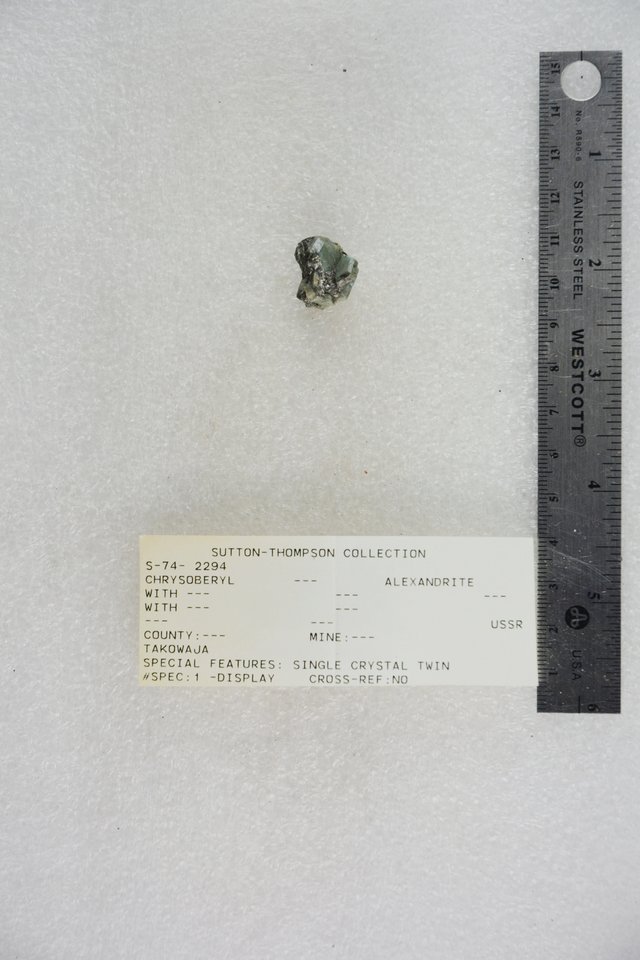
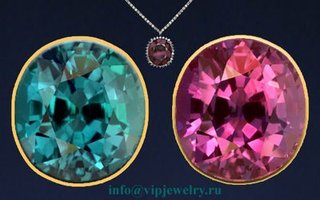
Alexandrite is chromium-bearing chrysoberyl (BeAl2O4) showing a daylight-green to incandescent-red color change. Mohs 8.5. Natural alexandrite is rare; Russian Ural, Brazilian, and Sri Lankan sources. Lab-grown is chemically identical and disclosed.
Labradorite is a feldspar (plagioclase, andesine-labradorite series) with interference from alternating compositional lamellae producing vivid blue, green, gold, and sometimes purple flash (labradorescence). Mohs 6 to 6.5. Labrador (Canada), Finland (spectrolite), Madagascar.
Ammolite is the gem variety of fossil ammonite shell, preserved as aragonite platelets that produce interference color. Mohs 3.5 to 4. Found almost exclusively in the Bearpaw Formation of Alberta, Canada. Fragile; usually sold as doublets or triplets.
“Rainbow moonstone” is a trade name for white labradorite showing multicolor iridescent flash over a translucent base, distinct from classical moonstone's blue-white adularescence. Mohs 6 to 6.5.
B
8
Bi-color sapphire
Bi-color sapphire (and tricolor in some stones) has distinct zones of different colors in one crystal, commonly blue-yellow or green-yellow. Mohs 9. Montana and Sri Lanka are known sources.
Fluorite can exhibit rainbow zoning with bands of purple, green, blue, and colorless in one crystal. Mohs 4. Soft and cleavage-prone, best for display.
Fire agate is a brown chalcedony with internal thin-film iron oxide layers producing iridescent flashes of red, orange, and green. Mohs 6.5 to 7. Mexican Baja and US Southwest are primary sources.
Why multi-colored gemstones matter
Multi-colored gems sit at the aesthetic intersection of science and art. Each specimen is essentially unique, which gives them collector cachet beyond purely color-graded single-color stones.
Their optical mechanisms are also among the most scientifically interesting phenomena in gemology, which is why opal, alexandrite, and labradorite all feature prominently in introductory gemology curricula.
For statement jewelry: opal pendants, ammolite pendants, labradorite drops.
For birthstone jewelry: opal (October) and alexandrite (June alternate).
For collectors: ametrine carvings, fire agate cabochons, natural color-change sapphire.
Buying notes and care
Opal: avoid dryness, heat, and ultrasonic cleaning; Ethiopian Welo is hydrophane and should not be submerged.
Alexandrite: verify natural vs lab-grown; lab alexandrite is disclosed at reputable sellers.
Ammolite: typically sold as triplet (stabilized); disclose.
Rainbow moonstone: mineralogically labradorite, not classical moonstone.
Frequently asked questions
What is the most famous multi-colored gemstone?
Opal is the most recognizable multi-color gem in the Western jewelry tradition; alexandrite is the most famous for color change; watermelon tourmaline is the most famous for zoning.
Is watermelon tourmaline natural?
Yes. The color zoning is natural, produced by trace-element gradients during crystal growth.
What causes opal's play-of-color?
Ordered arrays of silica spheres diffract white light into spectral colors. The size of the spheres determines which colors are prominent.
Is ammolite the same as ammonite?
Ammolite is the gem-quality colored shell of specific ammonite fossils, mainly from Alberta. Ammonite refers to the fossil itself; ammolite is the polished iridescent material.
Does multi-color affect chakra pairing?
Crystal tradition sometimes pairs multi-color stones with multiple chakras or treats them as “all-chakra” stones. Opal is commonly associated with third eye for insight; labradorite with third eye and crown.