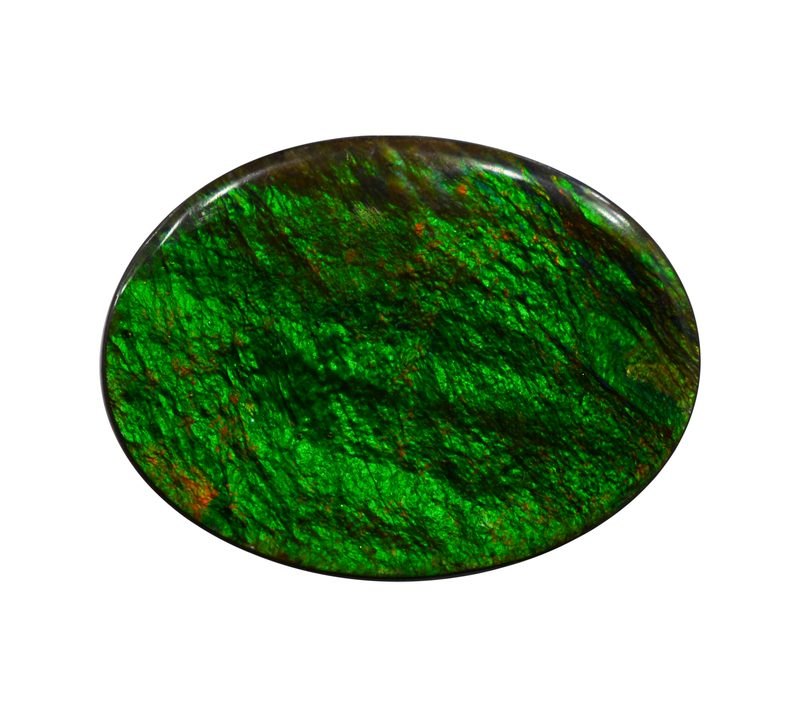
Ammonite
Spiraled into stone a hundred million years ago, ammonite is the ocean fossil turned gemstone, flashing with iridescent ammolite color.
- Ammonites are extinct cephalopod mollusks, distant relatives of modern squid, octopus, and nautilus.
- The name comes from the Egyptian god Ammon, whose ram-horn symbol echoes the shell's spiral.
- Canadian ammolite is one of only three officially recognized biogenic gemstones (alongside pearl and amber).
- The Blackfoot First Nations of Alberta traditionally call ammolite iniskim, meaning buffalo stone.
- Some of the largest ammonite fossils, from the Cretaceous period, measured over six feet across.
- Fossil collectors building a gemstone-and-specimen cabinet
- Buyers attracted to Canadian ammolite for iridescent jewelry
- Readers drawn to spiral symbolism in meditation and personal growth
- Gift buyers for naturalists, geologists, and ocean enthusiasts
- Beginners in crystal practice looking for a grounding pocket stone
- Buyers who want hard daily-wear ring stones (ammonite is soft)
- Readers seeking consistency of color (each ammonite is unique)
- Shoppers who specifically want faceted transparent gems (try opal or labradorite)
What Is Ammonite?
Ammonite is the fossilized shell of extinct marine cephalopods that lived from roughly 400 million to 65 million years ago, disappearing at the same end-Cretaceous extinction that ended the non-avian dinosaurs. It rates 3.5 - 4 on the Mohs hardness scale.
The spiral shell was originally built from aragonite (calcium carbonate), and in the best-preserved specimens the shell material is retained as fossilized gem-quality aragonite that shows optical iridescence, called ammolite.
Canadian ammolite from Alberta's Bearpaw Formation is the premier source of gem-quality iridescent ammonite and was officially named a biogenic gemstone by the World Jewelry Confederation in 1981.
Most ammonite sold in crystal shops and fossil galleries is polished whole or half-shell material from Morocco, where the Middle Atlas deposits produce abundant brown-to-gold ammonite with visible suture patterns (the wavy lines where chamber walls met the outer shell).
Canadian ammolite is sold specifically for its iridescence, typically as polished plates, set in silver or gold, or backed with shale and protected by a quartz or glass triplet to preserve the delicate color.
Ammonite hardness is modest (Mohs 3.5 to 4 for the shell material) and specific gravity is about 2.70 to 2.85. Because the fossil is a biogenic aragonite aggregate, it reacts to acids, is sensitive to humidity and temperature swings, and can crack or flake along ancient bedding planes.
Most ammolite jewelry is sold as stabilized or triplet material, with the iridescent layer protected between a shale backing and a transparent cap. Un-stabilized natural ammolite is prized by collectors but requires careful handling.
How Ammonite Compares
| Property | Ammonite (Moroccan) | Ammolite (Canadian) | Opal |
|---|---|---|---|
| Hardness | 3.5 - 4 | 3.5 - 4.5 | 5 - 6.5 |
| Price / carat | $ Budget | $ Budget | $ Budget |
| Rarity | Common (polished fossil) | Rare (iridescent) | Common to rare |
| Best For | Display, beginner kits | Jewelry, collector | Jewelry, heirloom |
Meaning and Symbolism
Ammonite carries one of the most distinctive cultural histories in the gem world because it is unmistakably a fossil rather than a conventional mineral. The name comes from the ancient Egyptian god Ammon, whose ram-horn symbol resembles the spiral shell, and Pliny the Elder documented the resemblance in the first century CE.
Ancient Greek, Celtic, and Native North American traditions all used ammonite fossils in various ceremonial and protective contexts, often linking the spiral to ocean, renewal, and time.
The Blackfoot First Nations of the Canadian Prairies have a specific relationship with ammolite (gem-quality iridescent ammonite from Alberta), traditionally calling the stone iniskim (buffalo stone) and treating it as a powerful talisman of prosperity and protection.
The Blackfoot name and ceremonial role predate European gem recognition by centuries, and modern Canadian ammolite mining operates under agreements that acknowledge this traditional significance.
In contemporary crystal tradition, ammonite is traditionally associated with the spiral symbol as a representation of cyclical time, personal growth, and evolution. Practitioners believe the stone supports readers who are navigating long transitions, ancestral healing, or themes of continuity across generations.
Because ammonite was a living creature that died and transformed into stone over geological time, many practitioners also work with the fossil in meditations on change, mortality, and the relationship between endings and beginnings. The spiral itself is treated as a teaching in contemporary crystal writing about unfolding wisdom.
Historical Timeline
Healing Tradition
Emotional
Practitioners believe ammonite is a stone of patient emotional growth and cyclical movement. In crystal healing tradition, it is said to support a wearer moving through long personal transitions, grief seasons, or extended periods of waiting for change to unfold.
Many find ammonite a useful companion during life-stage shifts such as aging, parenting transitions, or career endings, where the spiral symbolism helps frame slow change as evolution rather than stagnation.
Ammonite is often paired with moonstone when the work involves cyclical rhythms, with smoky quartz when old grief needs grounding to release, and with rose quartz when self-compassion must pace with change. Practitioners tend to describe ammonite as quiet and contemplative rather than energizing, which matches the fossil's long geological history.
Spiritual
In crystal healing tradition, ammonite is said to ground the root and sacral chakras while opening awareness of time, lineage, and cycles of personal evolution.
Practitioners believe the spiral form is a physical map of unfolding wisdom, and many use the fossil in meditations on ancestry, reincarnation (in traditions that hold it), and the sense of being part of something larger than a single lifetime.
Because ammonites were living creatures, practitioners often treat the fossil with a certain reverence, and some contemporary crystal literature emphasizes gratitude practices when working with the stone.
Traditional associations with the Moon and Saturn reflect the watery origin and the deep geological time the fossil represents, and many practitioners display ammonite on ancestor altars during significant family anniversaries.
Physical
Practitioners believe ammonite supports what they describe as steady physical rhythm and cellular renewal, with folklore tying the fossil to the lymphatic and circulatory systems in gentle metaphorical terms. Crystal healing tradition associates ammonite with aging well, bone health, and stamina in ways that echo the fossil's bone-like mineral composition.
Many find carrying a small polished ammonite during long periods of physical change, convalescence, or pregnancy comforting. Ammonite is not a substitute for medical care, and practitioners frame its role as supportive rather than curative.
Readers with chronic conditions, pregnancy, or age-related health concerns are encouraged to rely on qualified medical guidance and treat crystal practice as one piece of a broader routine.
Zodiac, Birthstone and Gifts
Ammonite holds no traditional birthstone role and is adopted in contemporary astrology based on its watery origin and fossil symbolism. Many astrologers suggest ammonite for Cancers and Pisces, both water signs tied to the ocean and emotional depth, since the fossil was originally a sea creature.
Scorpios interested in transformational stones sometimes adopt ammonite for its themes of death-and-renewal. Modern Western astrology associates ammonite with the Moon for the watery, cyclical energy and with Saturn for the deep geological time the fossil represents.
Because ammonite is a biogenic material rather than a mineral, Vedic astrology (Jyotish) does not include it among classical gem prescriptions.
Care and Cleansing
Ammonite requires gentle cleansing because the fossil is soft and reactive to acids and strong cleaners. Dry cloth wiping handles most daily maintenance, and a soft brush can be used to remove dust from the spiral's interior chambers if accessible.
Avoid ultrasonic and steam cleaners, saltwater, strong household cleaners, and prolonged water contact. Brief lukewarm water rinses are acceptable for polished surface maintenance but should be followed by immediate drying.
Smoke cleansing with palo santo or sage is the most commonly recommended method. Moonlight cleansing is traditionally appropriate and fits the fossil's watery origin. Sound cleansing with a singing bowl placed near the stone is safe. Dry salt placement is not recommended because salt can corrode the aragonite surface.
Many practitioners recharge ammonite by resting it on a clear quartz cluster or selenite slab overnight, a passive method that protects the fragile structure.
- DO NOT soak ammonite in water; the aragonite content reacts slowly with water over time.
- DO NOT expose ammonite to saltwater, acids, or strong household cleaners.
- DO store ammonite in a padded, dry box away from humidity extremes.
- DO NOT use ultrasonic or steam cleaners on ammonite.
- DO handle polished ammonite by the edges and avoid pressure on internal chambers.
- DO ask whether an ammolite piece is a triplet construction or solid natural ammolite.
- Note: ammolite is one of three officially recognized biogenic gemstones, alongside pearl and amber.
Real vs Fake
Genuine ammonite shows the unmistakable spiral structure of a fossilized cephalopod shell, with visible suture lines where chamber walls met the outer shell. Polished half-shells reveal the interior chambers separated by suture patterns, and these features are almost impossible to replicate in synthetic imitations.
Common substitutes include resin casts (visible mold seams, light weight), printed or carved stone imitations (no genuine chamber structure), and dyed or painted reproductions aimed at decorative rather than collector markets.
Under magnification, real ammonite shows natural mineral crystalline structure in the shell layer and often fine fossil detail in the chambers. Resin imitations appear plasticky and lightweight, and printed reproductions show flat, uniform patterns without the three-dimensional depth of real fossil shells.
A drop of dilute hydrochloric acid on natural ammonite produces a small fizz (because the shell is calcium carbonate), while most resin imitations do not react; however, this test permanently marks the specimen and should only be done on inconspicuous areas.
For ammolite specifically (the iridescent Canadian gem variety), look for strong color play that shifts with viewing angle and authentic triplet construction disclosed by the seller. Fake iridescent ammolite is rare because synthetic reproduction of the genuine color play is difficult and expensive.
Practical clues include the weight of the piece (genuine ammonite is denser than resin), natural imperfections and small voids along suture lines, and the characteristic sulfurous or mineral scent of genuine fossil material. Always buy ammolite from dealers with Korite, Aurora, or similar certified ammolite sources to ensure authenticity.
Ammonite Jewelry & Gifts
Ammonite pricing spans a wide range. Polished Moroccan ammonite half-shells run $5 to $50 for small specimens, $50 to $300 for medium specimens, and several hundred dollars for large display-grade pieces. Tumbled ammonite pieces for crystal kits run $3 to $15.
Canadian ammolite is priced much higher for its iridescence: small cabochons run $30 to $150 per carat, larger fine color-play pieces $150 to $500 per carat, and exceptional museum-grade ammolite pieces can reach several thousand dollars.
Morocco is the dominant source of polished ammonite for display and fossil markets, with the Middle Atlas deposits producing abundant brown-to-gold material with clear suture patterns. Canadian ammolite from Alberta's Korite and Aurora operations sets the benchmark for iridescent jewelry ammonite. Madagascar supplies secondary fossil material.
UK Jurassic ammonites are prized by collectors for historical provenance. Treatments are uncommon for natural ammonite; polishing and occasional stabilization with clear resin are the main interventions, and reputable dealers disclose these.
For ammolite jewelry, triplet construction (ammolite layer between shale and clear cap) is standard and should be noted on the invoice.
Where to Buy Ammonite
Affiliate disclosure: Some links below earn us a small commission at no extra cost to you. See our affiliate disclosure page.
Handmade, raw, and tumbled pieces from independent sellers worldwide.
Shop Ammonite on Etsy →Accessories, tools, and specimen sets with fast Prime delivery.
Shop Ammonite on Amazon →Certified loose gemstones graded and photographed for online buyers.
Shop Ammonite on GemSelect →Pairs Well With




Where Ammonite Is Found


