Brown in gemstones is underappreciated but underpinned by some of the most interesting mineralogy: irradiation-produced color centers (smoky quartz), complex chromophores (brown diamond), and iron-oxide coatings (many jaspers). Brown gemstones have had a commercial renaissance since the early 2000s when marketing rebranded some brown diamonds as “champagne” and “cognac.”
In this guide, we cover the 12 most important brown gemstones, the optics and mineralogy involved, and the cultural history of brown, which has signaled earth, humility, and durability across cultures and periods.
Brown in gemstones comes from various mechanisms. Smoky quartz's brown is a color center created by aluminum impurities plus natural gamma irradiation. Tiger's eye is chatoyant yellow-brown quartz replacing fibrous crocidolite (a process called pseudomorphism). Brown diamond's color is from lattice distortion; natural champagne browns are fairly common.
Brown zircon is heat-untreated or partially metamict material. Jaspers often get their browns from iron oxides and clays.
Smoky quartz is brown-to-gray transparent quartz. Mohs 7. Color from aluminum color centers plus natural gamma irradiation. Morion is very dark brown to black smoky quartz. Most commercial smoky quartz is artificially irradiated from colorless rough; the color is stable and does not transfer radioactivity.
Tiger's eye is quartz that has pseudomorphically replaced fibrous crocidolite asbestos, retaining the fibrous structure that produces chatoyancy. Mohs 7. South Africa and Western Australia are major sources.
Brown diamond (“champagne” or “cognac” in trade marketing) is colored by lattice distortion during growth. Mohs 10. Australia's Argyle mine produced vast quantities of brown diamonds historically; mine closure in 2020 has tightened supply.
B
4
Bronzite
Bronzite is an iron-rich orthopyroxene (enstatite-ferrosilite series). Mohs 5 to 6. Metallic bronze sheen (submetallic schiller) is the diagnostic visual feature.
Petrified wood is chalcedony or opal that has replaced organic tree tissue during fossilization. Mohs 6.5 to 7. Arizona (Petrified Forest) is protected; commercial material comes from Madagascar, Indonesia, and Argentina.
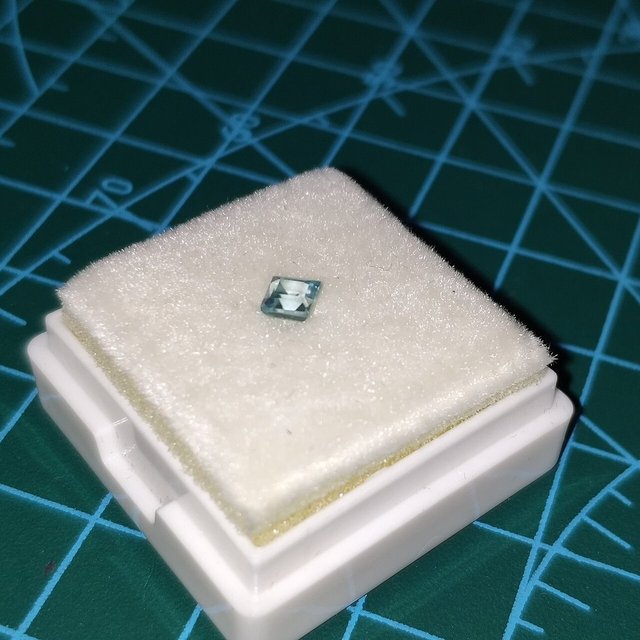
Brown zircon (ZrSiO4) is often untreated or partially metamict (radiation-damaged). Mohs 6 to 7.5 depending on metamict state. Heat treatment produces blue or colorless zircon from brown rough.
Pietersite is a chalcedony-bound tempest of brown, blue, and gold fibers, primarily from Namibia. Mohs 7. Sometimes called “tempest stone” in crystal writing.
Cultural history of brown
Brown has signaled humility and earth across religious traditions: Franciscan monastic robes, Buddhist forest monk attire, Quaker simple dress. In medieval Europe, brown homespun distinguished peasant from noble. Late 20th-century fashion rehabilitated brown for high-end contexts (LVMH's Louis Vuitton monogram, 70s-revival branded luxury).
Brown gemstones followed a similar trajectory: cognac and champagne diamond marketing turned previously-discounted brown stones into premium product.
Brown gemstones by intent
For engagement rings: champagne diamond, brown zircon (if careful), andalusite.
Brown diamond: natural champagne is more valuable than HPHT or irradiation-treated stones; disclose treatment.
Chocolate opal: hydrophane behavior means do not wet, store away from heat.
Pietersite: disclose origin (Namibia vs Chinese material); quality varies significantly.
Frequently asked questions
Is smoky quartz radioactive?
No. The radiation that produced the color (natural or artificial gamma) does not remain in the crystal. Smoky quartz is safe to wear and handle.
What is the difference between champagne and cognac diamond?
Trade terms for lighter and darker brown, respectively. An independent gemological lab grades by color intensity; champagne corresponds roughly to C1 to C4, cognac to C5 to C7.
Is petrified wood a gemstone?
Yes, it is classified as a gem material. Its chalcedony or opal composition makes it durable enough for cabochons and carvings.
How is tiger's eye formed?
Tiger's eye forms when silica replaces fibrous crocidolite asbestos, a process called pseudomorphism. The original fiber structure survives, producing the chatoyant (moving light) effect.
What chakra is brown linked to?
Crystal tradition pairs brown with the root chakra for grounding. See our root chakra stones page.