
December has three modern birthstones and they share a cool blue palette without looking alike. Turquoise is the oldest, a sky-blue to blue-green opaque stone with millennia of use in Persian, Egyptian, and North American native jewelry.
Tanzanite is a late twentieth century addition, a violet-blue variety of zoisite found only near Mount Kilimanjaro in Tanzania. Zircon, often misunderstood as a cheap stone, is in fact a natural mineral with high refractive index and fire, coming in blue, white, and warm earth colors.
For a December birthday, each of the three has a clear audience. This page covers all three with the practical shopping notes that matter.
The three December birthstones
Top December gemstone picks


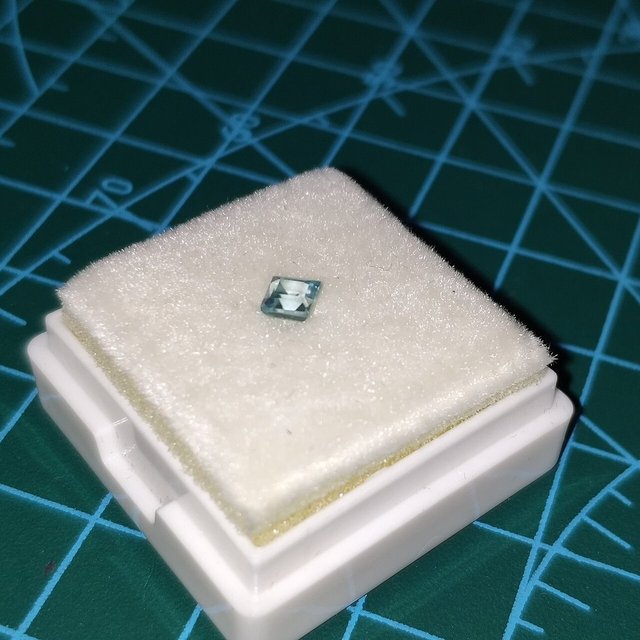


Turquoise
Turquoise is a hydrated copper aluminium phosphate, opaque, colored sky blue when copper dominates and more greenish when iron is present. Persian turquoise from Nishapur gave its name to the color we still call “turquoise” today.
North American turquoise, particularly from Arizona, New Mexico, and Nevada, is central to Native American jewelry and carries distinctive matrix patterns of black, brown, or tan veining. Most commercial turquoise is stabilised with a clear resin to harden the stone for jewelry use; untreated natural turquoise carries a premium.
Tanzanite
Tanzanite is the blue-violet variety of the mineral zoisite, colored by trace vanadium. It was discovered in 1967 near Mount Kilimanjaro by local prospectors and brought to the international market by Tiffany & Co., who coined the trade name tanzanite.
It is pleochroic, showing different colors (usually blue, violet, and sometimes burgundy) along different crystal axes, and nearly all tanzanite is heat treated (a gentle heating) to bring out the purple-blue from the natural brownish material.
The entire world supply comes from a small area in Tanzania, making it rarer than sapphire and likely to become harder to find as the deposit is worked.
Zircon
Zircon is zirconium silicate and is not to be confused with cubic zirconia, a synthetic lab creation that shares only the zirconium element. Natural zircon is Mohs 7 to 7.5, has very high refractive index (higher than sapphire), and strong dispersion that gives it noticeable fire.
Blue zircon is heat treated from brown zircon, mostly in Cambodia. Natural zircon in white, honey, and warm orange is an underappreciated and affordable category.
A short history of the December stone
Turquoise is among the oldest gem materials in human use, with Egyptian jewelry from around 3000 BCE and Persian turquoise carried along ancient trade routes. Native American traditions in the southwestern United States have worked turquoise for at least a thousand years.
Tanzanite is the newcomer, found in 1967 and popularized by Tiffany & Co. Zircon has been mined in Sri Lanka for centuries and was an important Victorian stone before cubic zirconia partially stole its name.
Meaning and tradition
Practitioners have long associated turquoise with protection, good fortune, and safe travel; it is one of the most widely documented protective stones in world folklore. Tanzanite is a newer stone with modern associations of transformation and spiritual insight. Zircon is traditionally a stone of mental clarity and a practical grounding presence.
- Traditional associations are not medical advice.
- Turquoise is porous and should never contact perfume, lotion, or harsh cleaners.
- Tanzanite has perfect cleavage; avoid ultrasonic and steam cleaning.
- Zircon is brittle on facet edges; bezel settings help protect the girdle.
Is a December stone right for you?
- You love the warmth and tradition of turquoise.
- You want a rare violet-blue with strong pleochroism (tanzanite).
- You want affordable fire in an underrated natural stone (zircon).
- You appreciate stones with distinctive origin stories.
- You want the hardest possible daily ring stone (all three are softer than sapphire).
- You dislike matrix patterns (skip natural turquoise).
- You want a stone that can take ultrasonic cleaning without issue.
Gift ideas and pairings
For a December birthday, a Sleeping Beauty turquoise pendant in sterling silver reads classic southwestern. Tanzanite in an oval cut with a thin diamond halo is a modern romantic pick. Zircon in blue or white makes a tremendously affordable earring set that shows extraordinary fire.
Turquoise pairs with coral (a traditional Navajo color pair), with silver, and with lapis for deeper blue combinations.
Zodiac overlap for December
December spans Sagittarius (through December 21) and Capricorn (from December 22). Sagittarius leans into turquoise and citrine; a December Sagittarius has strong turquoise tradition. Capricorn is traditionally given garnet and onyx; some Capricorn readers prefer the January garnet to the December turquoise.