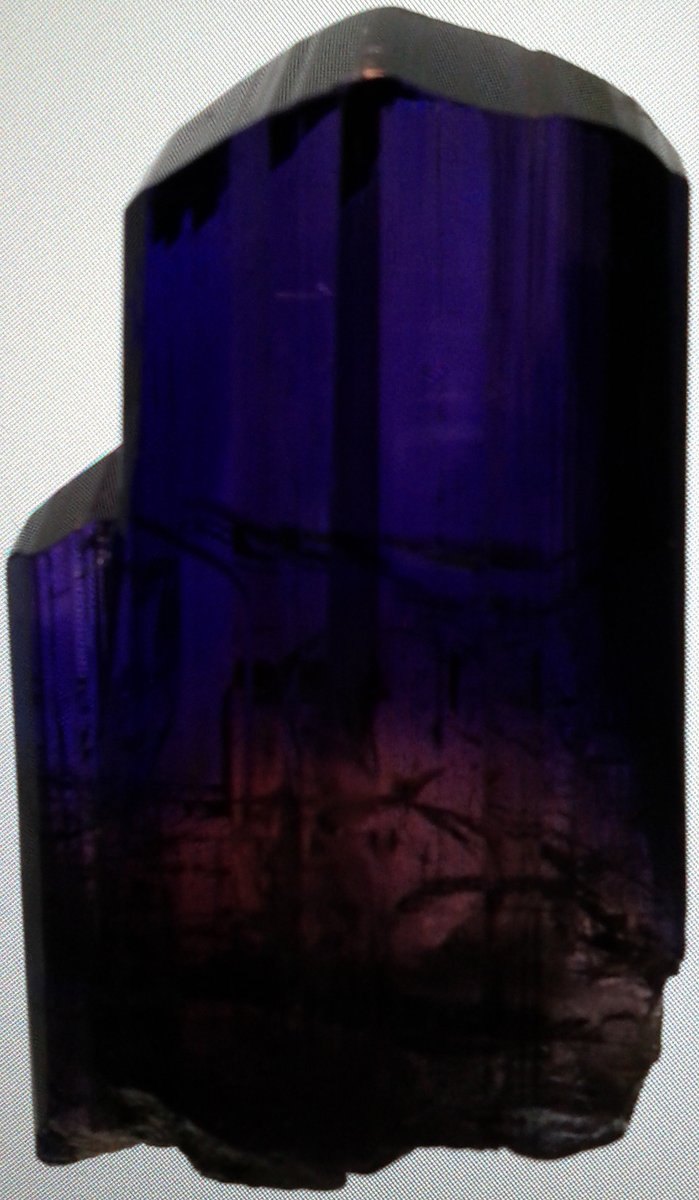
Tanzanite
Discovered in Tanzania in 1967 and mined nowhere else, tanzanite is the blue-violet zoisite of singular origin and single-source rarity.
- Tanzanite is found in only one place on earth: the Merelani Hills of northern Tanzania.
- The name tanzanite was created as a marketing term because the mineral name zoisite was considered difficult for American consumers.
- Tanzanite is strongly trichroic, showing blue, violet, and burgundy in different crystal directions before cutting.
- The largest cut tanzanite on record, the Queen of Kilimanjaro, weighs 242 carats.
- Tanzanite has been named by the American Gem Trade Association as one of the rarest gems on earth and a top investment-grade colored stone.
- December birthstone seekers wanting a rich blue-violet statement stone
- Collectors drawn to a gem found in only one place on earth
- Buyers seeking an alternative to blue sapphire at moderate price
- Practitioners working with third eye perception and crown awareness
- Heirloom investors interested in a gem with finite natural supply
- Those needing maximum toughness for daily ring wear (try sapphire)
- Shoppers who prefer cool-only or warm-only tones (tanzanite shifts between blue and violet)
- Buyers avoiding heat treatment (over 95 percent of tanzanite is heat-treated)
What Is Tanzanite?
Tanzanite is the blue-to-violet trade name for the mineral zoisite, specifically the variety colored by trace vanadium. The gem is found commercially in only one location on earth, the Merelani Hills of northern Tanzania near Mount Kilimanjaro. It rates 6 - 7 on the Mohs hardness scale.
The name tanzanite was coined in 1968 by American luxury jewelers who immediately recognized its commercial potential, shortly after the deposit's 1967 discovery by Maasai herder Ali Juuyawatu and local prospector Manuel de Souza.
At Mohs 6 to 7, tanzanite is softer than sapphire and has perfect one-direction cleavage that requires careful handling in jewelry settings. The stone is strongly pleochroic, showing blue, violet, and burgundy in different directions through the crystal.
Most rough tanzanite comes out of the ground a brownish color; heat treatment (typically 500 to 600 degrees Celsius) drives off the brown tone and reveals the blue-violet color that defines the gem.
The Merelani Hills deposit is estimated to have only one to two decades of commercial production remaining at current mining rates. This finite supply from a single location gives tanzanite a distinctive status among colored gems.
Block C of the Merelani mining area is run by TanzaniteOne and its successor companies, while other blocks are worked by smaller local operations. The Tanzanian government regulates export and has established local cutting and polishing industries to retain more value domestically.
How Tanzanite Compares
| Property | Tanzanite | Blue Sapphire | Iolite |
|---|---|---|---|
| Hardness | 6 - 7 | 9 | 7 - 7.5 |
| Price / carat | $$$ Premium | $$$ Premium | $$ Mid-range |
| Rarity | Rare (single source) | Moderate | Common |
| Best For | Statement jewelry, heirloom | Daily-wear engagement ring | Budget violet-blue alternative |
Meaning and Symbolism
Tanzanite's history is very short. The gem was discovered in 1967 when lightning-struck vegetation around the Merelani Hills revealed blue crystals in the blackened soil. Local herders and small-scale prospectors brought samples to Manuel de Souza, an Indian-Goan tailor and part-time prospector in Arusha, who recognized the material's potential.
Within a year the stone had received its commercial name tanzanite, and a major marketing campaign was launched introducing the stone to American consumers.
The stone has become the second most popular blue gem in the US behind sapphire. In 2002, tanzanite was added as a modern third birthstone for December, alongside turquoise and blue zircon, reflecting the gem's rapid cultural adoption.
Maasai tradition regards tanzanite as a sacred stone, and some Maasai mothers now give tanzanite to newborns as a blessing for successful life passage, a modern adaptation of older traditions.
In crystal healing tradition, tanzanite is associated with third eye and crown chakras, unified perception, and conscious awakening. Practitioners describe it as a stone of accelerated clarity, said to support readers in rapid spiritual transitions and heightened intuitive work.
Many readers choose tanzanite specifically for ceremonial use, wearing the stone during important life thresholds such as graduations, weddings, and vow renewals rather than as daily companions.
Historical Timeline
Healing Tradition
Emotional
Practitioners believe tanzanite is a stone of accelerated clarity, traditionally associated with breakthrough insight during periods of emotional confusion. In crystal healing tradition, it is said to support readers navigating major life transitions where intuition and intellect need to work together.
Many wear tanzanite pendants during threshold periods rather than for continuous daily use, with the stone framed as a special-occasion companion. Crystal workers often pair tanzanite with rose quartz when insight needs to be held gently, or with amethyst for combined crown-chakra support.
The stone is generally described as a bridge between everyday consciousness and expanded awareness, suitable for readers already established in meditation or reflective practice rather than complete beginners. Tanzanite is also traditionally associated with communication between the heart and mind, helping readers articulate what they sense intuitively.
Spiritual
In crystal healing tradition, tanzanite is linked with third eye and crown chakras and with the elements of air and water. Practitioners often describe it as a stone of conscious awakening, said to support readers in meditative work focused on insight, perception, and threshold experiences.
Many use tanzanite in meditation during new moon or new year periods, when practitioners traditionally set major intentions. The stone pairs readily with clear quartz for amplification, with moonstone for lunar perception work, and with amethyst for crown-chakra support.
Crystal workers sometimes describe tanzanite as a stone of compressed time, meaning that spiritual work with the stone can progress faster than with gentler crystals, which is one reason practitioners often recommend tanzanite for specific ceremonial use rather than daily wear.
Physical
Practitioners believe tanzanite supports what they describe as nervous system clarity and steady perception, with folklore framing the stone as a support for concentration during periods of information overload.
Crystal healing tradition associates tanzanite with eye comfort, headache tension, and steady focus, and some readers wear a tanzanite pendant during demanding reading or research sessions. Tanzanite is not a substitute for medical care, and practitioners frame its role as supportive rather than therapeutic.
Because the stone is relatively soft and has cleavage planes, readers are typically advised to wear tanzanite carefully and remove it for heavy activity.
Zodiac, Birthstone and Gifts
Tanzanite is one of three modern US birthstones for December alongside turquoise and blue zircon, shared by late Sagittarians and early Capricorns. Astrologers link tanzanite with Mercury and Saturn, a combination many find echoes the December temperament of expansive thought paired with disciplined focus.
For Sagittarius, practitioners suggest tanzanite as a stone that supports the sign's natural philosophical reach with clearer structure. For Capricorn, the stone is said to balance the sign's practical focus with intuitive breadth.
In Vedic tradition, tanzanite has no established role because of its recent discovery, though some modern Indian astrologers use it as a substitute for sapphire during Saturn cycles.
Care and Cleansing
Tanzanite requires gentler cleaning than harder gems. Warm (not hot) soapy water with a soft cloth or brush is safe. Avoid sudden temperature changes because they can initiate cleavage splits. Skip ultrasonic and steam cleaners entirely.
Moonlight, smoke cleansing with sage or palo santo, and sound cleansing with a singing bowl are all safe and traditional. Dry salt cleansing is fine; saltwater soaks should be avoided because of metal setting corrosion. Tanzanite is generally low-demand energetically compared with very absorbent soft crystals.
Direct sunlight is safe for tanzanite because the heat-treated color is stable under ordinary UV. Brief morning charging poses no risk. Prolonged summer windowsill exposure is not recommended primarily because the stone's brittleness makes thermal cycling risky for settings rather than for the color itself.
- DO favor protected bezel or halo settings for tanzanite rings.
- DO NOT use ultrasonic or steam cleaners on tanzanite.
- DO clean with warm (not hot) soapy water and a soft brush.
- DO NOT subject tanzanite to sudden temperature changes because of cleavage risk.
- DO remove tanzanite rings before impact activities and heavy housework.
- DO ask your seller about treatment (over 95 percent of tanzanite is heat-treated; disclosure should be standard).
- Note: untreated tanzanite is rare and commands a premium when verified.
Real vs Fake
Genuine tanzanite shows strong pleochroism (different colors in different crystal directions) visible through a dichroscope, with blue, violet, and burgundy tones depending on orientation. The stone's refractive index of 1.691 to 1.700 and specific gravity of 3.35 are also diagnostic. Natural inclusions can include graphite needles, mineral crystals, and fluid fingerprints.
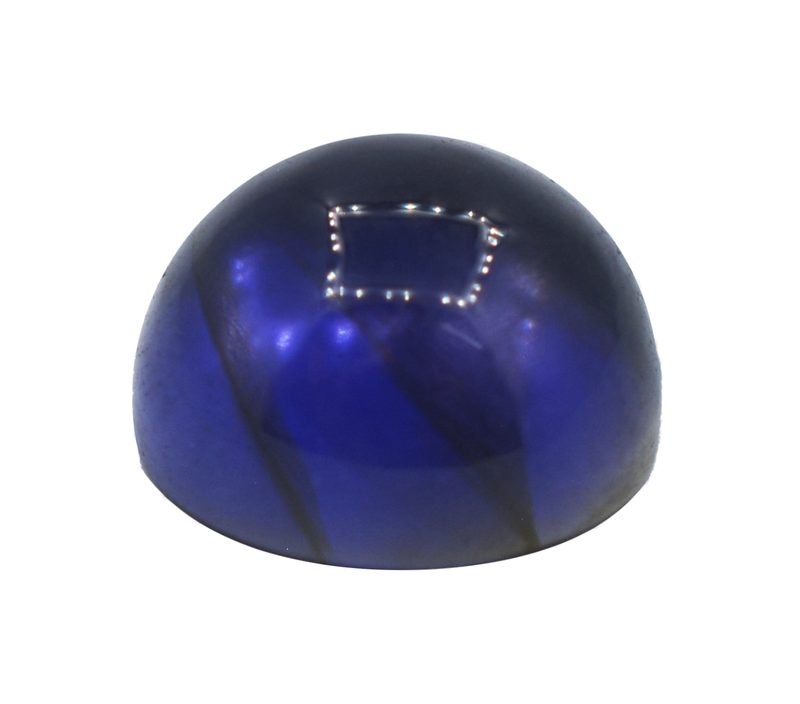
Common imitations include blue-violet synthetic spinel (Tanzanite Light in some trade names), blue cubic zirconia, tanzanine glass, and coated topaz. Synthetic forsterite, marketed sometimes as Tanzanique or similar names, is a common tanzanite simulant with similar color but different optical properties.
Blue-violet iolite is sometimes substituted but shows weaker color saturation and different pleochroism.
Practical at-home checks include examining for pleochroism under a dichroscope, testing hardness (tanzanite scratches glass easily), and checking color behavior under daylight and incandescent light (tanzanite shifts toward more violet under incandescent). For valuable stones, a report from a gemological laboratory confirms species, any treatment, and ideally origin (effectively always Merelani, Tanzania).
Tanzanite Jewelry & Gifts
Tanzanite pricing follows a 4Cs-like framework with an emphasis on color saturation. Commercial pale stones run $100 to $400 per carat. Mid-grade stones with good blue-violet saturation sit at $400 to $1,500 per carat.
Fine Block C material with vivid saturation and good clarity reaches $1,500 to $4,000 per carat, and top exceptional stones above five carats can exceed $5,000 per carat. Color preference varies: AAA grade emphasizes deep violet-blue; AAAA targets a more pure blue reminiscent of sapphire.
Heat treatment is standard and disclosed. Untreated tanzanite is rare and commands a premium when verified by laboratory report. Focus on color saturation first (deep rich blue-violet, even throughout the stone), then on clarity (eye-clean is the standard), and then on cut.
Because tanzanite has strong pleochroism, cut orientation significantly affects face-up color. For any significant purchase, request a report from GIA, Mindat, and USGS confirming species, treatment, and ideally grade. Tanzanite secondary market liquidity is moderate, stronger than many colored gems but weaker than sapphire or diamond.
Where to Buy Tanzanite
Affiliate disclosure: Some links below earn us a small commission at no extra cost to you. See our affiliate disclosure page.
Handmade, raw, and tumbled pieces from independent sellers worldwide.
Shop Tanzanite on Etsy →Accessories, tools, and specimen sets with fast Prime delivery.
Shop Tanzanite on Amazon →Certified loose gemstones graded and photographed for online buyers.
Shop Tanzanite on GemSelect →Pairs Well With




Where Tanzanite Is Found
