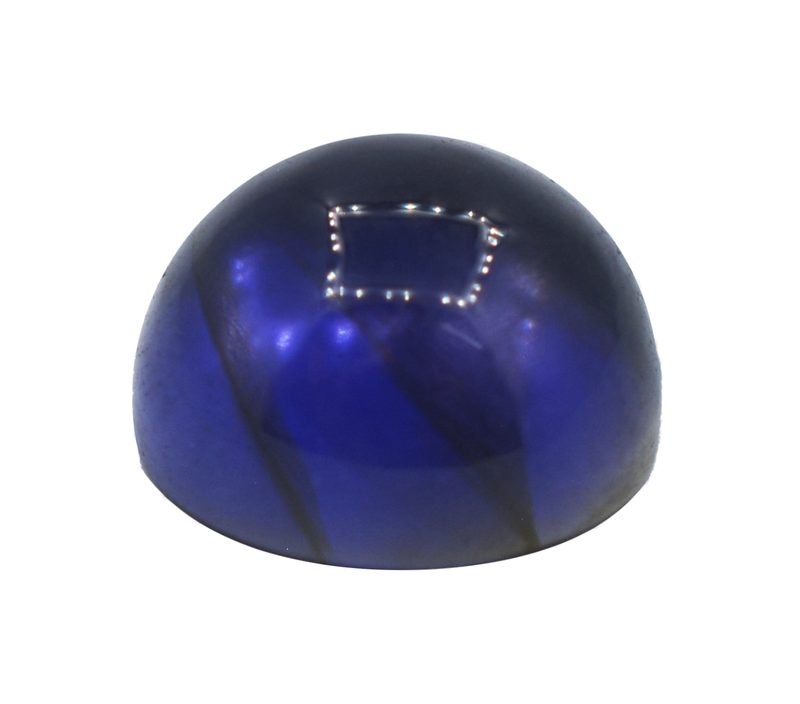
Iolite
The legendary Viking compass stone, iolite shifts from violet blue to pale yellow as you turn it, a pleochroism unlike any other.
- Iolite is the gem name for the mineral cordierite, the same species that forms thermally stable pottery kiln shelves.
- Viking navigators may have used iolite to locate the sun through clouds because of the stone's polarizing optics.
- The same iolite stone can look deep violet-blue from one angle and pale yellow from another as you rotate it.
- Iolite was historically marketed as water sapphire before the modern gem name was standardized.
- Skilled lapidaries can increase a stone's apparent value 3-4x by cutting iolite with correct pleochroic orientation.
- Budget buyers seeking a sapphire-alternative violet-blue
- Collectors fascinated by extreme pleochroism and historical navigation lore
- Practitioners working with third eye intuition and inner guidance
- Gift givers shopping for a Viking-themed or travel-related present
- Shoppers wanting a durable daily-wear pendant stone on a moderate budget
- Those who want saturated royal blue at any price (consider blue sapphire)
- Buyers seeking investment-grade rarity (consider tanzanite)
- Shoppers who prefer warmer color palettes (try citrine)
What Is Iolite?
Iolite is the gem name for transparent cordierite, a magnesium-iron aluminum silicate that forms in metamorphic rocks. The name comes from the Greek ios, meaning violet, a reference to its signature blue-violet color. It rates 7 - 7.5 on the Mohs hardness scale.
At Mohs 7 to 7.5, iolite is hard enough for most jewelry settings and is considered a practical daily-wear stone.
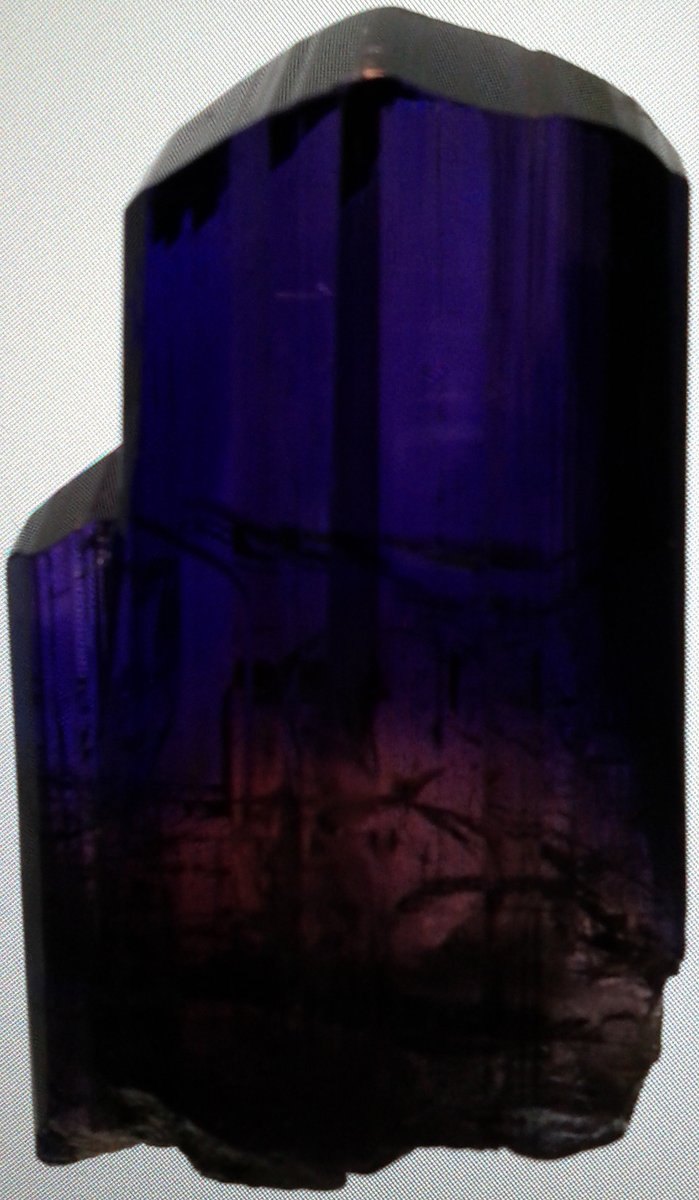
What makes iolite gemologically unique is its extraordinary pleochroism. Depending on viewing angle, the same stone can appear violet blue, pale smoky yellow, or nearly colorless. Skilled cutters orient the rough so the best blue direction faces up through the table of the finished gem.
A poorly oriented iolite can look washed out or grayish, which is one reason the stone rewards buying from cutters and dealers who understand its optics.
Iolite forms in metamorphic rocks, particularly in granite gneiss and schist, and is produced commercially from Sri Lanka, India (Orissa and Tamil Nadu), Madagascar, Tanzania, Brazil, Myanmar, and small US deposits in Wyoming and Connecticut.
The most celebrated historical association is the Viking sunstone legend. Norse navigators reportedly used a solarsteinn to locate the sun through clouds and fog, and some scientists propose that iolite's polarization-filter properties would have made it ideal for this purpose.
This theory remains unproven but adds romantic resonance to a modern commercial gem.
How Iolite Compares
| Property | Iolite | Blue Sapphire | Tanzanite |
|---|---|---|---|
| Hardness | 7 - 7.5 | 9 | 6 - 6.5 |
| Price / carat | $ Budget | $$$ Premium | $$$ Premium |
| Rarity | Uncommon | Rare (fine) | Rare |
| Best For | Affordable alternative, pendants | Heirloom rings | Special occasion |
Meaning and Symbolism
Iolite has a quieter place in gem history than sapphire or amethyst but a more romantic one. The Viking sunstone legend, recorded in medieval Icelandic sagas, describes Norse navigators using a solarsteinn to locate the position of the sun through cloud cover.
Modern proposals identify this stone as iolite (or possibly Iceland spar calcite), based on the crystal's ability to polarize light and reveal the sun's direction even when the sky is overcast. This compass association gave iolite a quiet presence in Scandinavian culture for centuries before it entered the commercial gem trade.
The modern gem name iolite was popularized in the mid-1800s. Before that, the mineral was known as cordierite (named for French geologist Pierre Louis Antoine Cordier) or dichroite (for its two-color property) or simply as water sapphire when marketed as a cheaper substitute for blue sapphire.
In modern crystal healing tradition, iolite is associated with inner vision, intuitive navigation, and what practitioners call sobriety of spirit. The stone's Viking compass lore makes it a natural choice for travelers and anyone facing a major life direction choice.
Practitioners often pair iolite with moonstone for combined feminine-intuition work, or with clear quartz for amplified decision-making practice.
Historical Timeline
Healing Tradition
Emotional
Practitioners believe iolite supports emotional clarity during major life decisions. In crystal healing tradition, it is often recommended for people facing job changes, relationship transitions, or geographic moves, because the Viking compass lore ties directly into the modern theme of finding one's direction.
Many readers wear iolite jewelry during extended decision periods, and practitioners describe the stone as a visual anchor for direction-finding. Practitioners pair iolite with rose quartz when the decision involves relationships, or with citrine when confidence for a career move is needed.
Because its reputation is oriented toward navigation rather than soothing, iolite is sometimes described as a working stone for active life phases. Some practitioners also describe iolite as supportive for people working on sobriety or addiction recovery, a traditional association that echoes the amethyst tradition of clear-mindedness.
Spiritual
Iolite is traditionally associated with the third eye chakra and with what crystal workers call inner vision. Practitioners describe it as a stone that supports intuitive decision-making and dream recall.
In modern crystal healing tradition, iolite is sometimes called the stone of the sky-gods because of its Viking compass lore and its violet-blue color that shifts with the light.
Many readers keep a tumbled iolite on a meditation altar during periods of spiritual seeking or vocational discernment, and some practitioners use small pieces in grids focused on finding one's path.
It pairs readily with clear quartz and moonstone for combined vision and intuition practice. The stone is said to quiet mental chatter during decision-making, which is why it is often worn during prayer or journaling about direction.
Physical
Practitioners believe iolite supports what they describe as eye health and clear vision, a folk association that echoes the stone's name from the Greek word for violet and its use in navigation.
In modern crystal healing practice, iolite is most often placed on the brow or held in the non-dominant hand during sessions focused on clear perception.
Some readers wear iolite during travel (a traditional Viking association) and describe a sense of steady orientation during disorienting journeys. Practitioners also sometimes associate iolite with liver health and with relief from hangover symptoms, in connection with its sobriety lore.
It is not a substitute for medical care, and practitioners frame its role as supportive alongside proper treatment. Because iolite is hard and chemically stable, it is a practical daily-wear stone for readers who want a blue-gem ally without the price tag of sapphire.
Zodiac, Birthstone and Gifts
Iolite is most often associated with Libra and Sagittarius in Western astrology. Practitioners describe iolite as an ally for Libra's pursuit of balanced decisions and for Sagittarius's travel-loving exploration. For Taurus, iolite is recommended as a supporting stone for thoughtful long-term direction.
Although iolite is not a formal US birthstone, it is sometimes suggested as an alternative September stone and as a sentimental gift for travelers regardless of birth month. In Vedic tradition, iolite is occasionally used as a substitute for blue sapphire when that stone is financially out of reach.
Care and Cleansing
Iolite is one of the easier stones to maintain because of its Mohs 7-7.5 hardness and chemical stability. Warm soapy water and a soft brush are safe for most stones. Ultrasonic and steam cleaners are generally safe for untreated iolite, although they should be avoided for stones with visible inclusions or cracks.
Moonlight cleansing is a traditional method that carries no risk. Smoke cleansing with sage, palo santo, or cedar is effective and popular. Sound cleansing with a singing bowl is also safe. Saltwater soaks are safe for the stone itself but should be limited for jewelry because metal settings can corrode.
Because iolite's reputation is direction-finding and decision-oriented, many practitioners cleanse iolite at the end of each major decision rather than on a weekly schedule. A night on a selenite plate after a life transition is a common refresh practice.
- DO rinse iolite jewelry in warm soapy water and dry with a soft cloth.
- DO NOT use ultrasonic cleaners on included or fractured stones.
- DO remove iolite rings before rough manual work or sports.
- DO store iolite separately from harder stones to prevent surface scratches.
- DO NOT expose iolite to sudden temperature changes.
- DO ask the seller about origin and cutting orientation for significant purchases.
- Note: poorly oriented iolite can look washed out; buy from dealers who understand pleochroic cutting.
Real vs Fake
Genuine iolite shows dramatic pleochroism: the stone shifts from violet blue through smoky yellow to nearly colorless as you rotate it. This three-direction color shift is one of the strongest pleochroic effects in any gem and is a reliable identification feature.
A blue stone that shows no color change as you turn it is likely sapphire, spinel, synthetic material, or glass rather than iolite.
Common imitations and confusions include blue glass (cold, lightweight, gas bubbles), synthetic blue spinel (different RI, no pleochroism), tanzanite (different RI and color shift pattern), and light sapphire (harder, no violet-to-yellow color shift). A basic refractometer test quickly distinguishes iolite (RI around 1.542-1.551) from most other blue gems.
Synthetic iolite is very rare because the natural material is moderately priced. The main quality distinction in the iolite market is cutting orientation rather than natural-versus-synthetic. A well-oriented iolite shows vivid violet-blue face-up; a poorly oriented stone can look gray or washed out even though it is the same mineral.
For any significant purchase, examine the stone under daylight from multiple angles to confirm the full pleochroic range and ask about the cutter's orientation choices. A laboratory report is rarely needed for iolite purchases but can be useful for stones priced above $1,000 per piece.
Iolite Jewelry & Gifts
Iolite prices range from $40 per carat for small pale commercial stones to over $200 per carat for top violet-blue material with excellent pleochroism and clean clarity.
A standard 1-2 carat faceted iolite typically runs $60 to $120 per carat. Larger 3-5 carat stones with deep violet-blue color and fine cutting reach $150 to $250 per carat. Iolite is significantly more affordable than blue sapphire or tanzanite at similar color grades, which is one of its commercial advantages.
Treatment is minimal in the iolite market. Some stones are gently heated to improve clarity or color, and this should be disclosed.
The biggest buying variable is cutting orientation. A skilled cutter aligns the rough so the best violet-blue direction faces up; a poorly oriented stone can look grayish even with good rough material.
When buying, examine the stone under daylight and incandescent light from multiple angles, check for eye-clean clarity under a 10x loupe, and prefer oval, emerald, and cushion cuts which typically carry iolite's color best. Reputable sellers disclose origin (Sri Lanka, India, Madagascar, Tanzania) and cutting choices.
Where to Buy Iolite
Affiliate disclosure: Some links below earn us a small commission at no extra cost to you. See our affiliate disclosure page.
Handmade, raw, and tumbled pieces from independent sellers worldwide.
Shop Iolite on Etsy →Accessories, tools, and specimen sets with fast Prime delivery.
Shop Iolite on Amazon →Certified loose gemstones graded and photographed for online buyers.
Shop Iolite on GemSelect →Pairs Well With


Where Iolite Is Found


