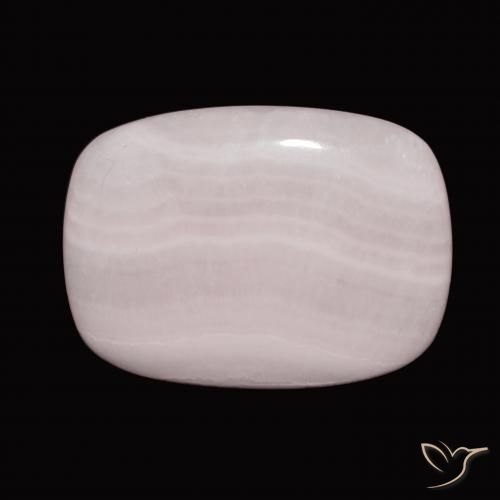
Aragonite
Famous for its rust-colored star clusters, aragonite is a warm earth-tone mineral practitioners associate with grounding and patience.
- Mother-of-pearl and most natural pearls are made of microscopic aragonite platelets glued with protein.
- Aragonite and calcite share the same chemical formula but different crystal structures.
- Warm tropical seawater naturally produces aragonite sand on Caribbean beaches.
- Aragonite's name predates the element argon but shares no linguistic connection.
- Ocean acidification threatens shells made of aragonite more than those made of calcite because aragonite dissolves more easily.
- Meditation practitioners seeking grounding stones
- Crystal collectors drawn to star clusters
- Altar builders wanting warm earth tones
- Gardeners interested in mineral gifts
- Children learning about crystals (with supervision)
- Jewelry makers wanting daily-wear rings (try tiger's eye)
- Anyone needing a waterproof stone (try quartz)
- Shoppers seeking flashy sparkle (try sphene)
What Is Aragonite?
Aragonite is calcium carbonate, CaCO₃, crystallizing in the orthorhombic system. It shares its chemical formula with calcite but differs in crystal structure, making the two minerals polymorphs. The name comes from Molina de Aragón in Spain, where the mineral was first described scientifically in 1797.
Aragonite forms in a variety of geological settings, from hot-spring sinter deposits and cave formations to the shells of mollusks, where its biological variant gives pearls and nacre their structural integrity.
The aragonite most commonly sold as a gem specimen is the sputnik-shaped brown and rust-orange star cluster from Morocco and Spain. These clusters form radiating aggregates of pseudo-hexagonal prisms that grew through cyclic twinning.
Less commonly, aragonite appears in colorless, white, yellow, blue, or green varieties, and the biological aragonite in nacre and pearls is the same mineral species as the mineral cluster.
At Mohs 3.5 to 4, aragonite is much softer than quartz and cannot survive daily-wear jewelry without protection. Its perfect cleavage and relatively high solubility in acid and fresh water also limit it to display pieces, meditation clusters, and occasional set pendants.
Specific gravity ranges from approximately 2.93 to 2.95, placing aragonite among the lighter carbonates. Its refractive index varies from 1.530 to 1.686 with strong birefringence.
How Aragonite Compares
| Property | Aragonite | Calcite | Tiger's Eye |
|---|---|---|---|
| Hardness | 3.5 - 4 | 3 | 7 |
| Price / specimen | $ Budget | $ Budget | $ Budget |
| Best Use | Meditation, display | Altar work | Daily jewelry |
| Water Safe | No | No | Yes |
Meaning and Symbolism
In crystal healing tradition, aragonite is regarded as a grounding and stabilizing stone, with practitioners linking its warm earth tones and radiating star shape to the idea of rootedness in the physical world.
Many readers use aragonite during periods of stress or overwhelm, describing the stone as a reminder to slow down and return attention to the body. The star cluster form is often read symbolically as spreading roots: one center anchored deep, many arms reaching out.
Historically, aragonite had no widespread folk tradition because it was only formally identified in the 18th century. Most of its spiritual meaning comes from 20th- and 21st-century crystal literature, which draws on the stone's Earth-element symbolism and its appearance in caves and mineral springs.
Practitioners believe aragonite supports patience with slow projects, making it a favorite among gardeners, teachers, and caregivers. It is also commonly recommended for anyone struggling to feel present.
Historical Timeline
Healing Tradition
Emotional
Practitioners believe aragonite helps readers feel anchored during emotional turbulence, and many find its heavy, cool touch settling when held in both hands. In crystal healing tradition the stone is said to encourage patience with slow processes, whether a therapy journey, a recovery from illness, or a long creative project.
Many readers keep an aragonite cluster on a bedside table as a visual cue to slow down at the end of the day. Some crystal workers pair aragonite with rose quartz in grief work, letting the earth-colored stone hold the gravity while the rose stone holds tenderness.
Others recommend aragonite during periods of job change or relocation, times when a sense of stable footing is especially welcome. These effects are subjective and traditional; aragonite is not a replacement for mental health care.
Spiritual
Aragonite is traditionally associated with the root and sacral chakras and with the Earth element. Practitioners believe it carries a grounding current that moves down through the body toward the feet, helping readers complete energetic circuits that stall in the lower chakras.
Many use aragonite at the start of meditation to settle the body, and some add it to crystal grids intended for home blessings. In folk revival practice, aragonite clusters are placed in the four corners of a room during smudging rituals.
Because each radiating arm of a cluster points outward from a center, practitioners sometimes read the shape as a sigil for self-containment and outward generosity held in balance. These associations are contemporary crystal practice rather than ancient tradition.
Physical
Practitioners believe aragonite offers a sense of physical steadiness and is traditionally held during recovery from long illness as a symbol of returning strength.
In crystal healing literature the stone is said to support the skeletal system because of its calcium content, though this association is symbolic rather than biochemical: holding a calcium carbonate stone does not deliver calcium to bones.
Many find the weight and cool temperature of aragonite calming during anxiety episodes, which can slow breathing by focus alone. Aragonite must never be ingested or used to make gem elixirs by soaking in drinking water, as it is water-soluble and its mineral dust is irritating.
Any physical health concern should be addressed by a qualified clinician rather than through crystal work alone.
Zodiac, Birthstone and Gifts
Aragonite has no traditional zodiac ruler, but modern crystal practitioners associate it most strongly with Capricorn because both the sign and the stone share an earth-element, patient-work quality. Capricorn readers often appreciate aragonite on the desk during long professional projects. Taurus readers are also drawn to aragonite for its grounding warmth.
Astrologers sometimes suggest aragonite for earth signs facing transitions, because the stone's symbolism of rooted stability translates well to periods of change. No sign is excluded from working with the stone; aragonite is one of the most widely recommended general-grounding crystals in modern practice.
Care and Cleansing
Never clean aragonite with water, vinegar, or any acidic cleaner. The stone is soluble enough that even brief wet cleaning can dull the surface and over time dissolve fine crystal tips. Instead, use a dry soft brush or compressed air to remove dust from between the cluster arms.
Avoid the ultrasonic and steam cleaners that suit harder gems.
For energetic cleansing, practitioners recommend moonlight overnight, sound cleansing with a singing bowl, or a brief smoke cleanse with sage, palo santo, or sweetgrass. Placing aragonite on a selenite plate for a few hours is a widely used method.
Never use salt directly on aragonite, as the ionic exchange can damage the surface. Cleanse after grounding sessions or after placement in high-traffic rooms. With dry-only care, an aragonite cluster can last decades on display.
- DO NOT rinse aragonite with water; it is soluble.
- DO NOT use salt, vinegar, or acidic cleaners.
- DO dust with a dry soft brush only.
- DO NOT place aragonite outdoors in rain or humidity.
- DO store clusters upright and padded; the arms break easily.
- Note: do not ingest; aragonite contributes no bioavailable calcium.
- DO keep away from children too young to handle fragile crystals.
Real vs Fake
Genuine aragonite star clusters show radiating bundles of pseudo-hexagonal prisms with an orange-brown to honey color and often a matrix of limestone or marl attached.
A simple acid test using a drop of dilute hydrochloric acid produces vigorous fizzing because aragonite is a carbonate, though this test also marks and damages the stone, so it should be reserved for a tiny inconspicuous area. Specific gravity of 2.93 to 2.95 separates aragonite from most plastic and resin imitations.
Resin and plastic imitations of aragonite stars exist in novelty markets and are identifiable by their lighter weight, warm-to-the-touch feel, and lack of crystal transparency at the edges. Natural aragonite feels cool, is noticeably denser than a visual match in plastic, and shows small cleavage lines and natural growth variation between arms.
Dyed calcite has been sold as aragonite occasionally; calcite's lower hardness (Mohs 3) and different cleavage help distinguish it, though the separation requires a trained eye.
For most buyers, reputable rock shops and wholesalers from Morocco and Spain offer reliably natural aragonite at modest prices, making elaborate synthetic fakes uneconomic. Ask the seller for country of origin and check that the cluster arms emerge from a single natural center.
Artificially assembled aragonite glued from separate pieces exists but is uncommon; look for continuous matrix and consistent color across arms.
Aragonite Jewelry & Gifts
Aragonite is one of the most affordable crystal specimens on the market. Small Moroccan star clusters under three inches commonly sell for $5 to $20. Medium clusters of three to six inches run $20 to $60, and large display pieces over eight inches with intact arms can reach $80 to $250.
Unusual colors such as blue aragonite from Peru or green aragonite from specific Chinese deposits carry a modest premium.
When buying, inspect arm tips for breaks and regluing. Authentic natural clusters have asymmetrical growth, with arms of varying length; perfectly symmetrical clusters may be assemblages. Warm orange-brown color is typical and desirable; very pale or uniformly white pieces may have been bleached.
Aragonite is generally untreated, but some suppliers lightly polish broken ends with acid. Ask for provenance and store-handled specimens, as in-person handling reveals quality quickly.
Where to Buy Aragonite
Affiliate disclosure: Some links below earn us a small commission at no extra cost to you. See our affiliate disclosure page.
Handmade, raw, and tumbled pieces from independent sellers worldwide.
Shop Aragonite on Etsy →Accessories, tools, and specimen sets with fast Prime delivery.
Shop Aragonite on Amazon →Certified loose gemstones graded and photographed for online buyers.
Shop Aragonite on GemSelect →Pairs Well With




Where Aragonite Is Found


