
Black Tourmaline
Born in granitic pegmatites, black tourmaline is the protective rod-crystal of schorl, grounding the body and clearing harmful currents.
- Black tourmaline is pyroelectric, generating small voltages when heated or cooled.
- Schorl is the most common tourmaline species, far more abundant than colored varieties.
- Benjamin Franklin commented on tourmaline's unusual electrical behavior in the 1700s.
- Black tourmaline often grows in the same pegmatite veins as green, pink, and watermelon tourmaline.
- Striated rod-shaped crystals can reach several feet in length, though most commercial pieces are palm-sized.
- Practitioners seeking the classic protection and grounding stone for daily wear
- Readers drawn to stone work for empathic sensitivity or emotional boundaries
- Crystal workers needing a root chakra anchor in any grid
- Gift buyers looking for an affordable, widely recognized metaphysical staple
- Anyone setting up a new home, office, or doorway grid
- Buyers seeking sparkle or transparency (black tourmaline is opaque; consider black spinel)
- Shoppers wanting a colored stone (try green tourmaline or pink tourmaline)
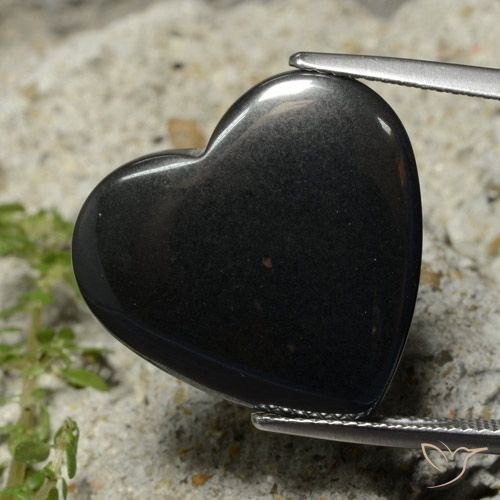
- Readers who prefer carved statement pieces over natural raw rods
What Is Black Tourmaline?
Black tourmaline, mineralogically called schorl, is the iron-rich variety of the tourmaline group. It is the most abundant tourmaline species and the form most often encountered in natural raw crystal shops. Rod-shaped crystals show vertical striations along their length, a diagnostic feature of the tourmaline group.
At Mohs 7 to 7.5, black tourmaline is durable enough for everyday jewelry wear.
Tourmaline is a complex boron silicate mineral with trigonal crystal symmetry. Schorl's iron content is responsible for the deep black to very dark blue-black color, and natural crystals often occur as clusters or parallel groupings in host granite or pegmatite.
Some specimens show faint translucency at the thin edges, and the mineral is pyroelectric and piezoelectric, meaning it generates small electrical charges under heat or pressure.
Major sources include Brazil, Madagascar, Pakistan, and Namibia, with smaller commercial production in Afghanistan, Nigeria, and the United States. Schorl often occurs alongside colored tourmalines in the same pegmatite veins, and a single pocket can yield black, green, pink, and watermelon tourmaline together.
Commercial black tourmaline for jewelry and metaphysical use is typically supplied as natural rough rods, cut cabochons, tumbled stones, and occasionally as small faceted accent pieces.
How Black Tourmaline Compares
| Property | Black Tourmaline | Onyx | Obsidian |
|---|---|---|---|
| Hardness | 7 - 7.5 | 7 | 5 - 5.5 |
| Price / carat | $ Budget | $ Budget | — |
| Rarity | Common | Common | Very Common |
| Best For | Protection grids, jewelry | Carved beads, rings | Tool-use, scrying mirrors |
Meaning and Symbolism
Black tourmaline has one of the deepest modern crystal healing reputations of any stone. European miners and metalworkers have worked with schorl for centuries, and the mineral was used in early electrical experiments because of its piezoelectric properties.
Its modern metaphysical status as the premier protection stone grew primarily during the twentieth century and has become nearly universal in crystal practice.
Traditional folklore describes black tourmaline as a stone that absorbs dense or harmful energies rather than reflecting them. Practitioners in many modern traditions recommend black tourmaline for empaths, healthcare workers, therapists, and anyone who feels drained by social or public environments.
The stone has long been placed at doorways, computer desks, and bedsides as a household staple. Its role as a grounding anchor is so widespread that few crystal practitioners build a starter kit without it.
In more recent decades, black tourmaline has also been associated with electromagnetic field clearing, a modern application reflecting its piezoelectric properties. Crystal workers place black tourmaline near electronics, Wi-Fi routers, and workstations as what they describe as a filter for ambient charge.
This application is not scientifically documented but is widely practiced in contemporary crystal grid work, and the stone's association with protection has broadened to include digital environments.
Historical Timeline
Healing Tradition
Emotional
Practitioners believe black tourmaline is the classic protection and grounding stone, traditionally associated with emotional boundaries, stability, and relief from dense social atmospheres. In crystal healing tradition, it is said to support empaths, caretakers, and anyone who feels overwhelmed by other people's emotional weather.
Many readers carry a small tumbled black tourmaline in a pocket during crowded events, therapy sessions, or difficult family gatherings. Practitioners often pair black tourmaline with rose quartz when the grounding needs to meet softness, and with selenite for the stone's own cleansing.
Crystal workers typically describe black tourmaline as a quiet absorber rather than an amplifier, which suits readers seeking steady shelter rather than dramatic energy shifts.
The stone's long history as a baseline protection tool has made it one of the first crystals most readers acquire, and it is considered essential in many starter kits alongside clear quartz, amethyst, and rose quartz.
Spiritual
In crystal healing tradition, black tourmaline is linked with the root chakra and the Earth Star chakra below the feet, zones practitioners associate with fundamental grounding. The stone's dense opacity is read as a symbol of deep earth connection, making it the go-to placement at the base of seated meditation grids.
Many readers set four small pieces at the corners of a bed or desk as a protective perimeter.
Practitioners often describe black tourmaline as a filter rather than a mirror, suggesting it takes in dense energy rather than bouncing it back. This is why crystal workers recommend frequent cleansing, particularly with selenite plates or moonlight.
Black tourmaline is also traditionally placed near entry doors, between hostile neighbors, in bedrooms, and at workstations. Pairings with smoky quartz and hematite are common in comprehensive grounding grids, while clear quartz amplifies the protective intention.
Physical
Practitioners believe black tourmaline is traditionally associated with spinal alignment, electromagnetic balance, and what they describe as restored grounding in the body.
Folklore links the stone with stamina, relief from muscular tension, and steady energy during long workdays or travel, though crystal workers are careful to frame these as supportive companionship rather than medical intervention.
Many readers wear black tourmaline as pendants, rings, or anklets during commuting or in environments with significant screen exposure, treating the stone as a daily grounding anchor.
Some crystal workers also suggest black tourmaline for people recovering from burnout or extended illness, often paired with hematite for iron-symbolism grounding. The stone is not a substitute for healthcare and practitioners consistently describe its role as accompanying rather than treating.
Because of its role in modern EMF-clearing practices, readers often keep small pieces near bedside electronics.
Zodiac, Birthstone and Gifts
Black tourmaline is sometimes offered as a modern October alternative alongside traditional opal, and astrologers often pair it with Capricorn and Scorpio for their depth and discipline.
For Capricorn readers working through demanding professional seasons, black tourmaline is often recommended as an anchor stone for steadiness. For Scorpio readers navigating intense emotional landscapes, the stone's absorbing quality complements the sign's depth. Practitioners sometimes pair black tourmaline with garnet for Capricorn and with obsidian for Scorpio in zodiac kits.
Care and Cleansing
Black tourmaline is one of the easiest stones to maintain. Lukewarm running water is safe for natural rough and tumbled pieces, and a soft brush with mild soap handles set jewelry without risk. Avoid prolonged soaking of vintage mountings, and skip ultrasonic cleaners on fractured natural rods.
Because practitioners consider black tourmaline a high-absorption stone, it benefits from frequent cleansing, often weekly or after any demanding use.
Moonlight, smoke cleansing with palo santo or sage, and sound cleansing with a singing bowl are traditional and safe. Dry salt cleansing for a few hours is fine. Many practitioners rest black tourmaline on selenite plates overnight as a preferred method, particularly after periods of heavy protective use.
Ultraviolet fluorescence is rare in schorl and does not figure in standard cleansing routines.
Sunlight is tolerated and does not fade black tourmaline, so brief sun bathing is sometimes described as a recharging practice by crystal workers. Long-term storage in direct sunlight is not necessary and adds no benefit.
Crystal workers often recommend cleansing black tourmaline more frequently than other stones because of its traditional role as a dense energy absorber.
- DO cleanse black tourmaline frequently given its role as a high-absorption protection stone.
- DO rinse under lukewarm running water and dry with a soft cloth after heavy use.
- DO NOT use ultrasonic cleaners on fractured natural rod crystals.
- DO store black tourmaline separately to avoid scratching softer stones like pearl.
- DO place black tourmaline near electronics, doorways, and bedsides for grid work.
- DO NOT confuse schorl with obsidian; tourmaline is harder and denser.
- Note: black tourmaline is pyroelectric; avoid extreme temperature swings.
Real vs Fake
Genuine black tourmaline shows characteristic vertical striations along the length of rod-shaped crystals, a diagnostic feature of the tourmaline group. The material feels dense and cool to the touch and scratches glass easily at Mohs 7 to 7.5. Raw rods often have distinct triangular or hexagonal cross-sections.
Under a 10x loupe, natural schorl shows liquid or mineral inclusions and occasionally faint translucency at thin edges.
Common confusions include black obsidian, hematite, black glass, and magnetite. Obsidian is softer (Mohs 5 to 5.5) and does not show crystal striations. Hematite has a metallic luster and is magnetic on some tests. Glass feels warm, lacks striations, and often shows gas bubbles under magnification.
Magnetite shows strong magnetic response that schorl does not display.
Dyed stones and resin composites are occasionally sold as tumbled black tourmaline in cheap jewelry. Plastic resin feels warm and lightweight, and dyed stones may show color where the surface has been scratched.
Reputable sellers offer natural schorl crystals with visible striations, and buyers should ask specifically whether material is natural tourmaline or a cheaper substitute.
Black Tourmaline Jewelry & Gifts
Black tourmaline is widely available at affordable prices. Small tumbled pieces typically cost $2 to $10 each, natural rod crystals run $10 to $75 depending on size and quality, and larger museum-grade specimens from Brazilian or Madagascan pegmatites can reach $100 to $500 or more.
Faceted accent pieces for jewelry sit at $5 to $30 per carat, though faceted black tourmaline is less common than cabochons and beads.
Treatment is essentially not a factor for schorl because the natural iron-rich color requires no enhancement. For jewelry, focus on the quality of the natural striations, the crystal shape for raw rods, and the smoothness of polish for tumbled pieces.
Ask reputable sellers whether the stone is natural schorl or a lookalike like obsidian or black glass, and expect honest identification for any significant purchase.
Where to Buy Black Tourmaline
Affiliate disclosure: Some links below earn us a small commission at no extra cost to you. See our affiliate disclosure page.
Handmade, raw, and tumbled pieces from independent sellers worldwide.
Shop Black Tourmaline on Etsy →Accessories, tools, and specimen sets with fast Prime delivery.
Shop Black Tourmaline on Amazon →Certified loose gemstones graded and photographed for online buyers.
Shop Black Tourmaline on GemSelect →Pairs Well With



Where Black Tourmaline Is Found


