
Green Tourmaline
Born in lithium pegmatites, green tourmaline (verdelite) is the heart-chakra companion of growth, prosperity, and renewal.
- Green tourmaline is often called verdelite in European historical and trade literature.
- Chrome tourmaline colored by chromium commands premium prices over iron-colored green tourmaline.
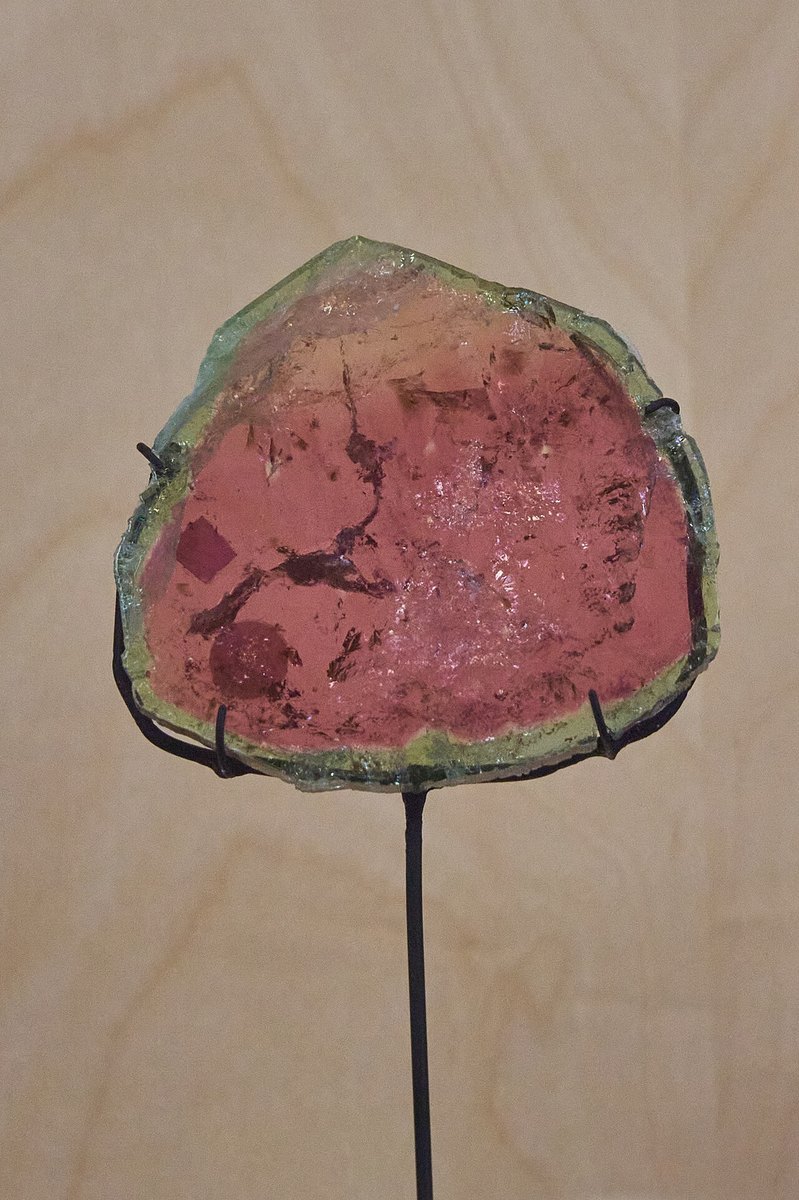
- Green tourmaline often forms alongside pink tourmaline creating watermelon tourmaline bi-color crystals.
- Green tourmaline is piezoelectric, generating small voltages when subjected to pressure.
- October birthstone lists include green tourmaline as an alternative to pink tourmaline and opal.
- Heart chakra practitioners wanting a durable alternative to emerald
- October birthstone seekers drawn to green over classic opal
- Crystal workers pairing green with pink tourmaline for yin-yang heart work
- Collectors of chrome tourmaline with vivid emerald color
- Gift buyers for prosperity milestones and heart-centered growth
- Buyers seeking emerald-tier color saturation at emerald-tier prices
- Readers wanting bright color stability in very dark stones (some dark green can look black)
- Shoppers preferring single-origin traceable stones (verdelite comes from many sources)
What Is Green Tourmaline?
Green tourmaline is the grass-green to forest-green elbaite variety of the tourmaline group, colored primarily by iron and vanadium. The richly saturated chromium-colored green variety is called chrome tourmaline and commands premium prices. Historical trade name verdelite (from Latin green) is still widely used for all green tourmaline.
At Mohs 7 to 7.5, green tourmaline is durable for everyday jewelry including rings.
Tourmaline is a complex boron silicate with trigonal symmetry. Green tourmaline crystals show distinctive vertical striations on their faces and are often found in the same pegmatites as pink tourmaline, resulting in watermelon tourmaline combinations. The stone's refractive index of 1.614 to 1.666 gives well-cut stones good brilliance.
Major sources include Brazil (Minas Gerais, Paraiba), Afghanistan (Nuristan), Mozambique, Tanzania, Madagascar, and the United States (California, Maine). Chrome tourmaline from East Africa commands premium prices, while commercial verdelite from Brazil supplies most of the mid-tier market. Heat treatment is occasional and should be disclosed when applied.
How Green Tourmaline Compares
| Property | Green Tourmaline | Emerald | Tsavorite |
|---|---|---|---|
| Hardness | 7 - 7.5 | 7.5 - 8 | 7 - 7.5 |
| Price / carat | $$ Mid-range | $$$ Premium | $$$ Premium |
| Rarity | Moderate | Moderate | Rare |
| Best For | Daily-wear jewelry | Heirloom, engagement | Untreated natural luxury |
Meaning and Symbolism
Green tourmaline shares the broader tourmaline family's long jewelry history, though it was often confused with emerald in older trade records. The name verdelite entered European lapidary vocabulary in the 1700s alongside other tourmaline trade names. Chinese Empress Tz'u Hsi collected pink tourmaline extensively but also kept green specimens.
Modern tourmaline is piezoelectric and pyroelectric, a property commercially exploited since the early 1900s.
In modern crystal healing tradition, green tourmaline is associated with heart-centered growth, renewal, and prosperity. Practitioners often describe it as a stone for readers pursuing meaningful career or creative growth rather than mere accumulation. Its green color places it in the heart chakra family alongside emerald, jade, and green aventurine.
The pairing with pink tourmaline is classic in modern practice.
Crystal workers often pair green and pink tourmaline as a yin-yang heart combination, with watermelon tourmaline (pink-green bi-color) representing their natural combination. Green tourmaline is also traditionally associated with male energy and active compassion, balancing pink tourmaline's receptive feminine-energy associations. Modern tradition has extended these themes into contemporary heart-chakra practice.
Historical Timeline
Healing Tradition
Emotional
Practitioners believe green tourmaline is a stone of heart-centered growth, traditionally associated with renewal, gentle healing after heartbreak, and the courage to pursue meaningful growth. In crystal healing tradition, it is said to support readers expanding their capacity for love without losing personal boundaries or direction.
Many readers wear green tourmaline as a pendant near the heart during growth seasons. Practitioners often pair green tourmaline with pink tourmaline for yin-yang heart work and with rose quartz for compound tenderness.
Crystal workers frequently describe green tourmaline as active and growth-oriented rather than purely calming, which suits readers pursuing career advancement, creative expansion, or relational development. Its durability also makes green tourmaline a practical everyday heart-chakra stone.
Spiritual
In crystal healing tradition, green tourmaline is linked with the heart chakra, placing it alongside other green and pink heart stones. Practitioners often describe green tourmaline as a masculine heart stone, balancing the receptive feminine energy attributed to rose quartz and pink tourmaline.
Many readers use green tourmaline in heart-chakra meditation with a clear intention to grow outwardly rather than only process inwardly.
Chrome tourmaline specifically carries high-vibration associations in modern practice because of its intense saturation. Crystal workers place green tourmaline in prosperity grids with citrine and in heart-growth layouts with clear quartz amplifiers. The pairing with pink tourmaline as watermelon tourmaline represents integrated heart wholeness in many modern traditions.
Physical
Practitioners believe green tourmaline is traditionally associated with heart muscle health, immune function, and what they describe as overall body vitality. Folklore links the stone with cardiovascular support, steady blood pressure, and general resilience through demanding seasons, framed as supportive accompaniment rather than medical intervention.
Many readers wear green tourmaline during recovery periods or demanding professional work. The stone is not a substitute for healthcare and practitioners are consistent in describing its role as accompanying rather than treating.
Some crystal workers suggest green tourmaline for people working through body-mind patterns related to cardiovascular stress, often paired with rose quartz. Because green tourmaline is chemically stable and moderately hard, direct-contact practices including gem elixirs are tolerated.
Zodiac, Birthstone and Gifts
Green tourmaline is sometimes offered as an October alternative alongside traditional opal, and astrologers often pair it with Capricorn for steady growth work, Libra for heart balance, and Virgo for service-oriented expansion.
For Capricorn readers pursuing long-term career growth, green tourmaline is often recommended as a professional pendant. Libra readers seeking relational renewal appreciate the stone's heart-chakra associations. Virgo readers doing service work find green tourmaline supportive for sustained caring. Practitioners pair green tourmaline with rose quartz or citrine in zodiac kits.
Care and Cleansing
Green tourmaline is easy to maintain. Warm soapy water and a soft brush handle body oils and dust without risk, and the stone tolerates ultrasonic cleaning in unfractured form. Avoid steam and ultrasonic methods on fractured stones because vibration can propagate inclusions.
Saltwater should be avoided on set pieces because of metal mounting concerns.
Moonlight, sound cleansing with a singing bowl, and smoke cleansing with palo santo or sage are all traditional and safe. Dry salt cleansing for a few hours is acceptable. Many practitioners rest green tourmaline on selenite plates overnight as a gentle energetic reset.
Sunlight is fully tolerated and does not fade green tourmaline. Brief sun bathing is safe and sometimes described as recharging. Long-term storage in direct sunlight causes no harm. Professional jewelers recommend routine inspection of prong settings and regular cleaning in warm soapy water to maintain brilliance.
- DO clean green tourmaline in warm soapy water with a soft brush regularly.
- DO use ultrasonic cleaners on unfractured natural green tourmaline.
- DO NOT use ultrasonic or steam cleaners on heavily included or fractured stones.
- DO have prong settings inspected annually by a qualified jeweler.
- DO store green tourmaline separately to avoid scratches from harder stones.
- DO remove green tourmaline rings before heavy sports or housework.
- Note: chrome tourmaline is the premium green variety colored by chromium.
Real vs Fake
Genuine green tourmaline shows characteristic vertical striations along crystal faces, a diagnostic feature of the tourmaline group. The stone's refractive index of 1.614 to 1.666 and specific gravity of 3.06 confirm identification. Under a 10x loupe, natural green tourmaline often shows liquid inclusions or needle-like growth tubes.
Common confusions include emerald, peridot, tsavorite garnet, green sapphire, and green glass. Emerald is more included and often oil-treated. Peridot shows distinctive double refraction. Glass lacks striations and often shows gas bubbles under magnification.
Chrome tourmaline is distinguished from iron-colored green tourmaline by spectroscopic testing rather than visual inspection, and laboratory confirmation of chromium content is standard for premium chrome tourmaline purchases. For significant purchases, a lab certificate confirms origin, natural versus synthetic status, and treatment disclosure.
Reputable sellers provide this documentation for any stone above roughly $500.
Green Tourmaline Jewelry & Gifts
Green tourmaline spans a wide price range. Commercial pale-green stones under one carat typically cost $50 to $150 per carat. Mid-grade stones with good saturation run $150 to $400 per carat, and top-quality chrome tourmaline above one carat reaches $500 to $1,500 per carat or more.
Stones above five carats are rarer and command significant premiums. Heat treatment is occasional and should be disclosed.
For jewelry, focus on color saturation first (vivid emerald-green commands a premium over pale green), eye-clean clarity second, and well-cut proportions for brilliance. Chrome tourmaline specifically commands top pricing.
Ask reputable sellers about origin (Brazilian, Afghan, Mozambican, Tanzanian), treatment status, and whether a stone is specifically chrome tourmaline or standard green tourmaline. Lab certificates are standard for purchases above $500.
Where to Buy Green Tourmaline
Affiliate disclosure: Some links below earn us a small commission at no extra cost to you. See our affiliate disclosure page.
Handmade, raw, and tumbled pieces from independent sellers worldwide.
Shop Green Tourmaline on Etsy →Accessories, tools, and specimen sets with fast Prime delivery.
Shop Green Tourmaline on Amazon →Certified loose gemstones graded and photographed for online buyers.
Shop Green Tourmaline on GemSelect →Pairs Well With


Where Green Tourmaline Is Found


