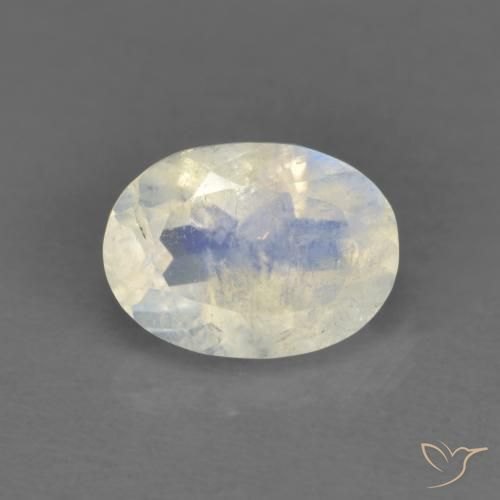
Rainbow Moonstone
White labradorite with electric blue and rainbow flash, often sold as moonstone for its luminous, otherworldly play of color.
- Rainbow moonstone is technically a variety of white labradorite, not true moonstone, though the trade name is universally accepted.
- Roman naturalist Pliny the Elder believed moonstone was solidified moonlight that changed appearance with the lunar phases.
- The blue flash in rainbow moonstone is caused by light interference between submicroscopic layers within the crystal, an effect called adularescence.
- Madagascar produces the highest-quality rainbow moonstone with the most vivid blue and full-rainbow flash.
- Moonstone became hugely popular during the Art Nouveau period and was a favorite of Belgian jewelry designer Henri Vever and French designer René Lalique.
- Practitioners working with intuition, divine feminine energy, and lunar cycles
- Pendant and earring shoppers wanting affordable iridescent statement stones
- Spiritual readers cultivating dream practice or new beginnings
- Gift givers seeking a romantic alternative June birthstone option
- Cancers, Pisces, and Libras drawn to lunar and watery symbolism
- Daily-wear ring buyers without bezel settings; the cleavage and 6-6.5 hardness make prong settings risky
- Anyone wanting strong color saturation (rainbow moonstone is white-bodied with flash)
- Practitioners seeking grounding earth energy (try smoky quartz or hematite)
What Is Rainbow Moonstone?
Rainbow moonstone is, despite its trade name, technically a variety of white labradorite rather than true orthoclase moonstone. The stone shows a luminous body color with strong adularescence (the moonstone effect) and additional flashes of blue, violet, gold, and green caused by light interference between thin internal layers.
The IMA classifies the parent species as labradorite within the plagioclase feldspar group, with mineral symbol Lbd; true moonstone is the sodium-potassium feldspar adularia.
The trade name rainbow moonstone became standard in the 1970s when Indian and Madagascan material with both adularescence and full-spectrum flash began reaching Western markets. Mineralogists generally accept the name as a commercial term, though some lab reports identify the material more precisely as labradorite or white labradorite.
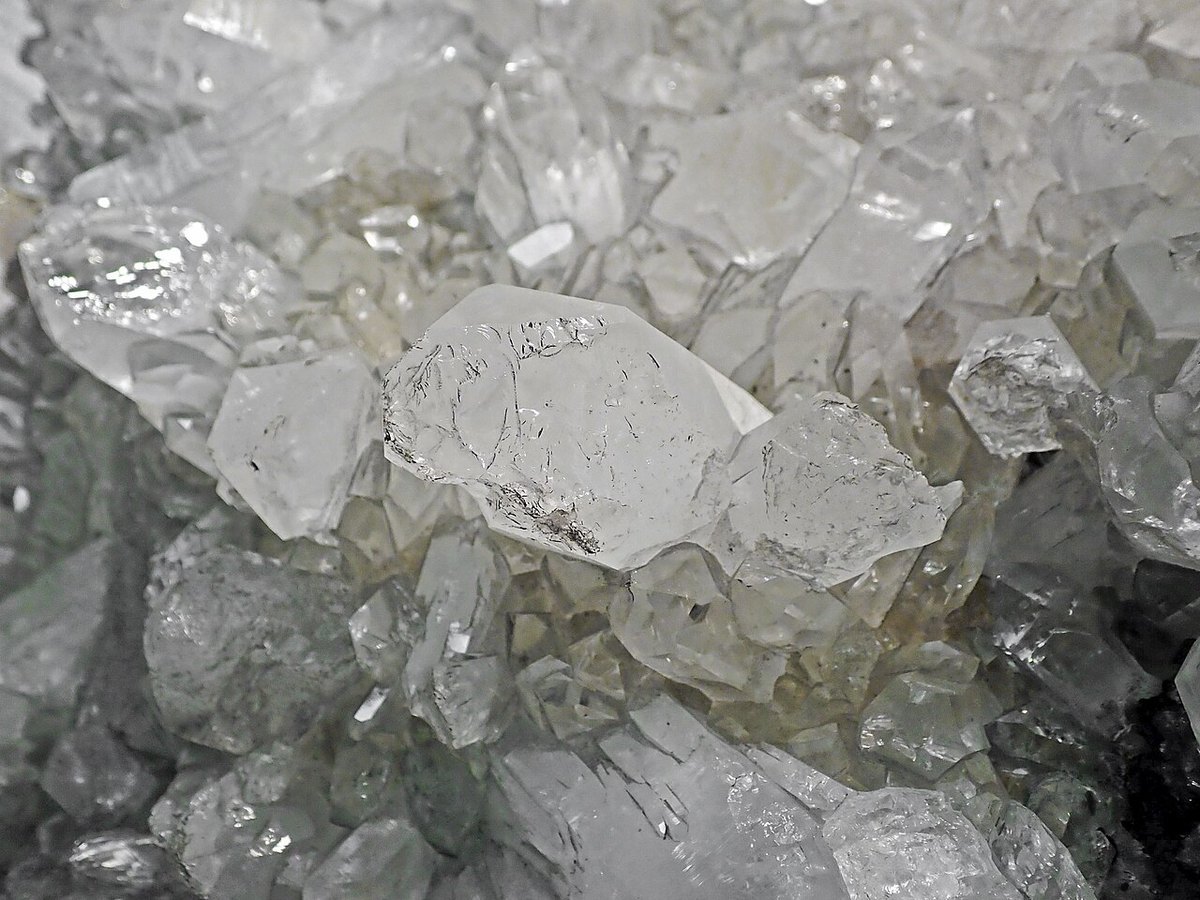
The stone forms in feldspar-rich igneous and metamorphic rocks where slow cooling allows fine alternating layers to develop within the crystal.
India is the among the largest known commercial source, with material from Tamil Nadu and other southern states dominating the global supply for affordable cabochons, beads, and jewelry. Madagascar produces some of the highest-quality material with vivid blue and full-rainbow flash.
Rainbow moonstone has a Mohs hardness of 6 to 6.5 and perfect cleavage in two directions, which makes it more vulnerable than harder gems. The stone is well suited to pendants, earrings, and protective bezel ring settings, with most commercial production focused on cabochons that show off the iridescent flash.
How Rainbow Moonstone Compares
| Property | Rainbow Moonstone | True Moonstone | Labradorite |
|---|---|---|---|
| Hardness | 6 - 6.5 | 6 - 6.5 | 6 - 6.5 |
| Price / carat | $ Budget | $ Budget | $ Budget |
| Body color | White | Cream to gray | Gray to dark gray |
| Best For | Pendants, lunar work | Engagement, intuition | Daily wear, transformation |
Meaning and Symbolism
Rainbow moonstone shares the broader moonstone family's deep ancient associations with the moon, divine feminine energy, and the cycles of intuition and renewal. The Romans believed moonstone was solidified moonlight, and Roman naturalist Pliny the Elder wrote that the stone changed appearance with the lunar phases.
Hindu mythology associates moonstone with the moon god Chandra, while in many cultures the stone has been considered sacred to goddesses of the moon, fertility, and intuitive perception.
The specific rainbow moonstone variety entered Western markets in the late twentieth century as Indian and Madagascan supply expanded. The full-spectrum flash distinguished it from cream-colored Sri Lankan true moonstone, which had dominated earlier Western markets, and the visual drama made rainbow moonstone an immediate favorite in modern crystal practice.
The stone's commercial recognition grew rapidly through the 1990s and 2000s alongside the broader popularization of crystal healing.
In modern crystal practice, rainbow moonstone is traditionally associated with the divine feminine, lunar cycles, and the kind of intuitive perception that bypasses analytical thinking. Practitioners believe it activates the third eye and crown chakras while opening receptivity to dream work and subtle guidance.
Many find rainbow moonstone useful during periods of new beginnings, fertility work (literal or metaphorical), and the navigation of major life transitions that call for intuitive rather than logical decision-making.
Historical Timeline
Healing Tradition
Emotional
Practitioners believe rainbow moonstone is a stone of intuition, gentle emotional opening, and divine feminine energy. In crystal healing tradition, it is said to soothe the kind of emotional restlessness that comes from being out of touch with one's own subtle inner signals, and to support readers learning to trust intuitive guidance.
Many find rainbow moonstone especially useful during major life transitions, particularly those that call for intuitive rather than purely logical decisions.
The stone has long been used for hormonal cycles in women's wellness traditions, with practitioners often recommending it during menstruation, pregnancy, perimenopause, and other reproductive transitions. It is traditionally associated with the principle of emotional fluidity, said to help readers move with rather than against their emotional currents.
Practitioners often pair rainbow moonstone with rose quartz for amplified heart-and-intuition work or with clear quartz when focused intention setting is needed.
Spiritual
Rainbow moonstone is traditionally associated with the third eye and crown chakras together in modern crystal practice. Practitioners believe its luminous body and rainbow flash support psychic perception, dream work, and connection to subtle guidance from intuitive or spiritual sources.
It has long been considered one of the premier stones for divine feminine work and lunar cycle practice.
Many find rainbow moonstone useful in meditation focused on the moon's phases, especially work that aligns personal intention with new moon and full moon energies. The stone pairs well with clear quartz in moon-themed crystal grids and with labradorite as a sister stone for deeper transformation work.
Practitioners often place rainbow moonstone on a windowsill during full moon nights to charge it with lunar energy, and the stone is sometimes worn or carried during women's circles, fertility ceremonies, and rites of passage marking life transitions.
Physical
Practitioners believe rainbow moonstone supports what they describe as the body's hormonal and reproductive systems, an association that goes back to the broader moonstone family's ancient connection to lunar cycles and the divine feminine.
In folklore the stone is associated with menstrual regulation, fertility, and the various physical aspects of women's reproductive health. Many find it useful as a pocket or pendant companion during reproductive cycles.
The stone is also traditionally associated with the digestive and lymphatic systems in modern crystal healing practice. Practitioners sometimes recommend rainbow moonstone for readers managing seasonal sensitivities or general emotional-physical fluctuations connected to weather and lunar cycles.
Rainbow moonstone is not a substitute for medical care, and practitioners are careful to frame its role as supportive rather than curative. The stone is sometimes worn as a pendant near the womb or carried in a pocket during specific reproductive cycles.
Zodiac, Birthstone and Gifts
Rainbow moonstone is most often associated with Cancer, the water sign ruled by the Moon. Practitioners believe the stone resonates with Cancer's natural emotional sensitivity and lunar attunement, which is why it has long been recommended as a personal talisman for the sign.
It supports Cancer readers cultivating intuitive practice and emotional flow.
Pisces is the secondary association because of the stone's water-element character and dream-work support. Libra is sometimes associated with rainbow moonstone for its romantic, beauty-affirming character. Astrologers often suggest the stone as a daily-wear talisman during major life transitions for any of these signs.
Care and Cleansing
Rainbow moonstone tolerates most gentle cleansing methods, though its cleavage and softer hardness require some care. Running cool tap water for under thirty seconds is safe for both loose and set stones, as is a brief rinse in lukewarm soapy water with a soft cloth to remove skin oils.
Avoid ultrasonic and steam cleaners, which can stress cleavage planes, and avoid hot water that could cause thermal shock.
Moonlight is the most aligned cleansing method for rainbow moonstone, with full moon nights traditionally preferred. Practitioners often place the stone on a windowsill or outdoor altar during the full moon to recharge it. Sunlight is acceptable but not preferred, since the stone's symbolism is so strongly lunar.
Smoke from sage or palo santo and sound cleansing with a singing bowl are widely used. Avoid prolonged salt contact and recharge by resting on a selenite plate.
- DO NOT use ultrasonic or steam cleaners on rainbow moonstone, since the cleavage planes are sensitive.
- DO use bezel rather than prong settings for rainbow moonstone in ring jewelry.
- DO store separately from harder gems to prevent scratches.
- DO NOT subject rainbow moonstone to sudden temperature changes or impact.
- DO charge rainbow moonstone under the full moon for traditional alignment with its lunar character.
- DO ask whether the stone is natural Indian, Madagascan, or another source for grade reference.
- Note: stones marketed as moonstone but priced very low may be opalite glass or other glassy substitutes.
Real vs Fake
Genuine rainbow moonstone shows a luminous white body with adularescence (the diagnostic moonstone effect, a soft inner glow that moves as the stone is rotated) and additional sharp flashes of blue, violet, gold, and green from internal layers.
Under magnification you may see typical inclusions such as fine cracks, fluid bubbles, or twinning patterns characteristic of plagioclase feldspar. The blue flash and the soft inner glow appear at different angles, which distinguishes rainbow moonstone from imitations.
Common imitations include opalite (a man-made glass with milky appearance and weak flash), white agate (no flash), and synthetic moonstone (rare in the trade). A reputable independent gemological lab can confirm the species using refractive index and density measurements; rainbow moonstone has refractive index 1.559 to 1.568 and specific gravity around 2.69.
Glass imitations show curved gas bubbles under magnification, while natural rainbow moonstone shows angular inclusions.
At home, look for the diagnostic adularescence (the soft inner glow that moves as the stone rotates), the sharp blue or rainbow flash from specific angles, and the cool feel of true feldspar. Watch for stones marketed as moonstone at suspiciously low prices, since many are opalite glass or dyed substitutes.
Reputable sellers disclose the country of origin (India, Madagascar, or Sri Lanka are most common) and confirm that the material is natural feldspar rather than glass. Madagascan stones command premiums for their vivid blue flash.
Rainbow Moonstone Jewelry & Gifts
Rainbow moonstone is one of the most affordable iridescent gemstones on the market. Tumbled stones run $1 to $5 each, standard cabochons in pendant or ring sizes typically cost $5 to $30, and high-grade Madagascan stones with vivid blue and full-rainbow flash reach $50 to $200 per cabochon.
Faceted stones are uncommon but can run $20 to $100 per carat for clean material, and exceptional large cabochons with strong flash can exceed $300.
Rainbow moonstone is rarely treated, which is one of its appeals as a natural stone. Reputable sellers disclose the country of origin (India for affordable commercial supply, Madagascar for premium material, Sri Lanka for occasional collector pieces).
Watch for opalite glass and dyed substitutes at very low prices; these are man-made and lack the diagnostic adularescence.
For jewelry, bezel-set pendants and earrings are the safest applications given the stone's cleavage. Madagascan rainbow moonstone with vivid full-rainbow flash remains a strong value for buyers seeking affordable iridescent statement stones.
Where to Buy Rainbow Moonstone
Affiliate disclosure: Some links below earn us a small commission at no extra cost to you. See our affiliate disclosure page.
Handmade, raw, and tumbled pieces from independent sellers worldwide.
Shop Rainbow Moonstone on Etsy →Accessories, tools, and specimen sets with fast Prime delivery.
Shop Rainbow Moonstone on Amazon →Certified loose gemstones graded and photographed for online buyers.
Shop Rainbow Moonstone on GemSelect →Pairs Well With




Where Rainbow Moonstone Is Found


