Howlite
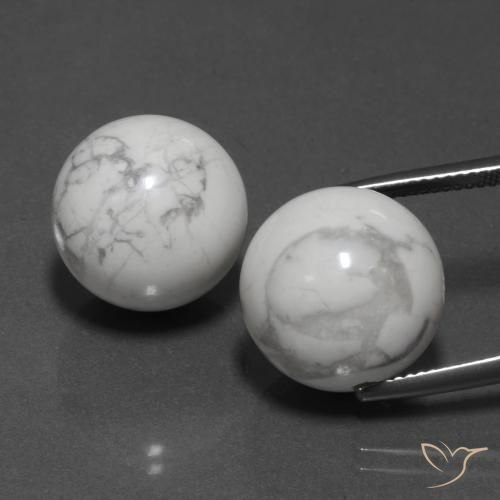
Born in calcium-rich borate veins, howlite is the porcelain-white calming stone, traced with charcoal webs like marble in miniature.
- Howlite is named after Henry How, the Canadian mineralogist who first described it in 1868.
- Most blue or green howlite on the market is dyed to imitate turquoise, often sold as turquenite.
- A single howlite nodule can exceed 250 kilograms in weight when mined from Californian deposits.
- Howlite's distinctive gray webbing comes from mineral impurities deposited during crystallization.
- At Mohs 3.5, howlite can be scratched by a copper coin and is too soft for ring-level daily wear.
- Practitioners seeking a calming stone for anxiety, overthinking, and sleep work
- Gift buyers looking for an affordable meditation or crystal starter piece
- Readers drawn to a white-and-gray aesthetic for tumbled or beaded jewelry
- Crystal workers wanting a clean-energy stone for crown chakra alignment
- Budget-conscious shoppers seeking an alternative to dyed turquoise
- Buyers seeking daily-wear rings (Mohs 3.5 is too soft; consider moonstone or white sapphire)
- Collectors of rare crystal species (howlite is abundant)
- Shoppers wanting authentic turquoise (be wary of dyed howlite marketed as turquenite)
What Is Howlite?
Howlite is a calcium borosilicate hydroxide mineral, typically found as porcelain-white nodules with distinctive gray or charcoal veining that resembles marble. It forms in evaporite borate deposits, where ancient saline lakes concentrated the calcium and boron needed for crystallization. It rates 3.5 on the Mohs hardness scale.
The stone was first described by Canadian mineralogist Henry How in the mid-nineteenth century, from a locality in Nova Scotia that still bears his name.
At Mohs 3.5, howlite is relatively soft and unsuitable for daily-wear rings. It is most often carved, tumbled, or polished into beads, cabochons, and carvings, where its marbled pattern is most visible.
The crystal structure is monoclinic but rarely grows as well-formed crystals; most commercial material is massive, nodular, or vein-filling. Facet-grade transparent howlite is essentially unknown in the trade.
The largest commercial deposits are in Canada and the United States, where borate mining for industrial and agricultural uses incidentally yields jewelry-quality material. Because howlite takes dye exceptionally well, large quantities are tinted blue-green and sold as imitation turquoise under names like turquenite.
Dyed howlite is chemically and physically still howlite, just with a coat of coloring agent, and a reputable seller discloses the treatment rather than misrepresenting the material.
How Howlite Compares
| Property | Howlite | Magnesite | White Agate |
|---|---|---|---|
| Hardness | 3.5 | 3.5 - 4.5 | 7 |
| Price / carat | — | — | — |
| Rarity | Very Common | Common | Common |
| Best For | Beads, tumbles, calming work | Similar look, slightly harder | Durable jewelry |
Meaning and Symbolism
Howlite's modern crystal meaning is centered on calm, patience, and mental quiet. Because the stone was only described scientifically in the mid-1800s, it lacks ancient folklore and instead carries a newer set of associations built primarily in twentieth-century crystal practice.
Practitioners often describe howlite as a stone for overthinkers, with its white color linked to mental clarity and its gentle marbling linked to grounded steadiness.
The stone is also traditionally associated with sleep support, and many crystal workers keep a small howlite cluster near the bed or under the pillow. This practice reflects a broader pattern in modern crystal healing where white and pale stones are assigned to crown chakra work and quiet perception.
Howlite's affordability has made it one of the most widely recommended entry crystals for readers new to the tradition.
In folklore developed during the mid-twentieth century, howlite was also positioned as a stone that is said to absorb emotional intensity from its wearer, which is why practitioners often cleanse it frequently.
Its association with patience has earned howlite a reputation as a traveler's companion and a gift for readers navigating long recovery periods or life transitions. Some traditions link howlite to the Virgo and Gemini signs because of their analytical temperaments.
Historical Timeline
Healing Tradition
Emotional
Practitioners believe howlite is a quintessential calming stone, traditionally associated with mental quiet, patience, and emotional steadiness. In crystal healing tradition, it is said to help readers slow a racing mind, soften reactive anger, and release repetitive worry before sleep.
Many readers keep a small tumbled howlite on a nightstand or in a pocket during anxious periods, describing it as a grounding companion during transitions. Practitioners often pair howlite with amethyst for deeper sleep support, and with rose quartz when the calm needs to meet tenderness.
Unlike stimulating stones, howlite is typically described as a quiet presence rather than an energizing one. Crystal workers suggest it for difficult conversations, test preparation, and recovery from burnout, framing the stone as a soft anchor rather than a strong corrective force.
Its affordability also makes howlite a practical choice for giving away or gifting in small sets.
Spiritual
In crystal healing tradition, howlite is linked with the crown and third eye chakras, zones many practitioners associate with connection to higher awareness and inner vision. The stone's white color and gentle marbling are read as signs of clear, steady perception.
Many readers place howlite at the top of a seated meditation layout, with darker grounding stones like black tourmaline at the feet.
Practitioners describe howlite as a stone for quiet spiritual work rather than dramatic ritual, and it is often used in mindfulness practice, journaling, and dream work. Because howlite is considered highly absorbent in modern crystal tradition, practitioners recommend frequent cleansing with smoke or selenite.
Howlite also pairs with clear quartz as an amplifier in simple calming grids, where the two stones are said to reinforce each other's quiet receptive qualities during extended meditation sessions.
Zodiac, Birthstone and Gifts
Howlite is not a traditional birthstone, but many modern astrologers suggest it for Gemini and Virgo, signs commonly associated with overactive thinking and worry. The stone's reputation for calming the mind aligns with these temperamental patterns.
For Gemini readers who juggle many projects, howlite is often recommended as a desk stone to ease scattered attention. Virgo readers drawn to analytical work tend to find howlite a soothing companion during long research sessions.
Practitioners sometimes pair howlite with citrine for Gemini and with amazonite for Virgo in small zodiac kits.
Care and Cleansing
Howlite is soft and slightly porous, so careful cleansing is essential. Wipe with a dry soft cloth to remove dust, or brush gently with a barely damp cloth and mild soap for deeper cleaning.
Avoid soaking, saltwater, ultrasonic cleaners, and any harsh chemicals, which can dull the surface or attack the binding minerals. Moonlight, smoke cleansing with palo santo or sage, and sound cleansing with a singing bowl are traditional and safe.
Many practitioners rest howlite on a bed of selenite overnight as a preferred cleansing method, which avoids water entirely. Dry salt cleansing for a few hours is acceptable, but prolonged salt contact can etch the surface, so brief sessions are safer.
Because howlite is considered highly absorbent in crystal tradition, practitioners recommend cleansing more frequently than for harder stones.
Sunlight should be limited because prolonged UV exposure can slowly gray the white surface and fade any dye on treated pieces. A brief morning sun bath is acceptable for natural undyed howlite, but dyed turquenite and other tinted forms should be kept out of direct sun entirely to preserve their color.
- DO NOT soak howlite in water or saltwater; it is soft and slightly porous.
- DO wipe howlite with a dry or barely damp cloth and mild soap only.
- DO NOT use ultrasonic or steam cleaners on howlite under any circumstances.
- DO keep dyed howlite (turquenite, blue howlite) away from direct sunlight to preserve color.
- DO store howlite separately in a soft pouch to avoid scratches from harder stones.
- DO remove howlite jewelry before hand washing, showering, or swimming.
- Note: much blue or green howlite is dyed to imitate turquoise; ask sellers for treatment disclosure.
Real vs Fake
Genuine howlite shows porcelain-white to light gray base color with distinctive dark gray or charcoal veining that resembles marble. The webbing pattern is irregular and organic, never perfectly uniform. Under a 10x loupe the surface is slightly porous and takes on a matte finish after extended handling, unlike hard polished stones.
Howlite is soft enough to scratch with a copper coin, a quick at-home test.
The most common confusion is with dyed howlite sold as turquoise. Genuine turquoise is considerably harder (Mohs 5 to 6) and has a different porosity pattern under magnification. A small drop of acetone on an inconspicuous spot will often pull dye from treated howlite, while real turquoise is colorfast.
The trade name turquenite is an accepted label for dyed howlite.
Plastic imitations and resin castings are also sold as howlite in cheap bead strands. These feel warm to the touch, are lighter than genuine stone, and often show visible seam lines or mold artifacts under a loupe.
Reputable sellers disclose whether beads are natural howlite, dyed howlite, or synthetic composite, and price tiers should reflect the difference.
Howlite Jewelry & Gifts
Howlite is one of the most affordable stones on the market. Tumbled pieces typically cost $1 to $5 each, beaded strands run $5 to $30, and carved palm stones or skulls sit in the $10 to $50 range depending on size and craftsmanship. Cabochons for jewelry typically run $2 to $15.
Dyed howlite sold as faux turquoise is usually even cheaper, though disclosure varies widely.
For jewelry, focus on the pattern of the veining first (organic and varied is preferred), then on the smoothness of the polish, and then on any treatment. Ask any reputable seller whether the stone is natural white howlite or dyed turquenite.
Because howlite is soft, it is sold primarily as beads, cabochons, and carvings rather than faceted gems, and jewelry should be constructed in protective bezel or bead-wrap styles.
Where to Buy Howlite
Affiliate disclosure: Some links below earn us a small commission at no extra cost to you. See our affiliate disclosure page.
Handmade, raw, and tumbled pieces from independent sellers worldwide.
Shop Howlite on Etsy →Accessories, tools, and specimen sets with fast Prime delivery.
Shop Howlite on Amazon →Certified loose gemstones graded and photographed for online buyers.
Shop Howlite on GemSelect →Pairs Well With



Where Howlite Is Found


