
Rhodonite
The pink stone with black lightning across its surface, rhodonite has long been used by practitioners as a.
- Rhodonite is the state gem of Massachusetts, designated in 1979.
- Transparent rhodonite is among the rarest of faceted gems; most specimens are opaque.
- Empress Maria Alexandrovna’s sarcophagus in St. Petersburg weighs over 7 tons and is carved from a single block of rhodonite.
- The black veins in rhodonite are usually manganese oxide, not a separate mineral species.
- Rhodonite and rhodochrosite are often confused but are different minerals with different hardnesses.
- Readers drawn to heart chakra work and emotional repair practices
- Jewelry shoppers wanting a pink stone alternative to rose quartz
- Gift givers looking for an affordable compassion-themed stone
- Collectors of Russian and Australian mineral history
- Taurus and Scorpio birthdays looking for sign-aligned stone options
- Daily-wear ring buyers who want top hardness: choose pink sapphire
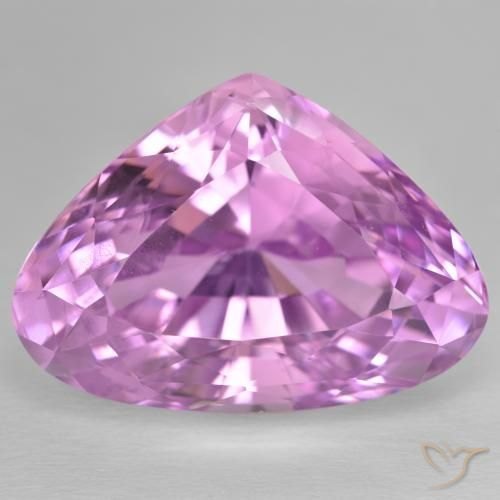
- Transparent pink gemstone lovers: try kunzite or pink tourmaline
- Buyers wanting uniform color: rhodonite’s black veins are its signature
What Is Rhodonite?
Rhodonite is a manganese silicate mineral with the formula (Mn,Fe,Mg,Ca)SiO3 and a characteristic rose-pink to raspberry color laced with black manganese oxide veins. The name comes from the Greek “rhodos” (rose). It rates 5.5 - 6.5 on the Mohs hardness scale.
It was first described from the Ural Mountains of Russia in 1790, where it became so associated with Russian imperial decorative arts that it was declared a national stone and used in the 7-ton sarcophagus of Empress Maria Alexandrovna and the columns of the Hermitage Museum.
Rhodonite ranges from Mohs 5.5 to 6.5 in hardness, making it harder than many competing pink stones and suitable for most jewelry applications other than the most punishing daily-wear ring settings. Specific gravity runs approximately 3.57 to 3.76, and refractive index sits between 1.733 and 1.747.
Transparent, gem-quality rhodonite is rare and highly collectible; most commercial material is translucent to opaque and sold as cabochons, carvings, and beads.
The stone forms in manganese-rich metamorphic rocks, often near zinc and lead sulfide deposits. As the outer layers oxidize, characteristic black dendritic veins of pyrolusite and other manganese oxides develop, giving rhodonite its distinctive lightning-bolt pattern.
Major sources today include Russia’s Ural Mountains, New South Wales (Australia), Peru, Sweden’s historic Langban district, and Massachusetts in the United States.
How Rhodonite Compares
| Property | Rhodonite | Rose Quartz | Rhodochrosite |
|---|---|---|---|
| Hardness | 5.5 - 6.5 | 7 | 3.5 - 4 |
| Price / carat | $ Budget | $ Budget | $ Budget |
| Transparency | Mostly opaque | Translucent | Translucent |
| Best For | Daily jewelry | Everyday wear | Display pieces |
Meaning and Symbolism
Rhodonite has long carried the meaning of emotional repair and compassionate action. In Russian imperial tradition it was a stone of nobility and love, set in jewelry for royal women and used in interior architecture of palaces.
The stone’s pink heart paired with its black veins has been read across cultures as a symbol of love that has weathered difficulty, which is why many practitioners call it the stone of the wounded healer, of grief resolved, and of forgiveness chosen rather than forced.
In crystal healing tradition, rhodonite is said to support heart chakra work, particularly the portions of that work dealing with self-forgiveness, processing old hurts, and steady love practices rather than honeymoon-phase romance.
Practitioners often recommend it for readers rebuilding after heartbreak, mending friendships, or learning to extend care to themselves with the same patience they give others. It is traditionally paired with journaling, therapy, and slow breathing practices.
Rhodonite also carries a lineage as a mineralogical symbol of place. For Russians, Australians (particularly New South Wales), and Swedes, the stone represents regional pride and deep mining history.
Many modern collectors seek specimens with documented locality because rhodonite from different deposits shows distinct color and vein patterns, making it a rewarding stone to study visually as well as spiritually.
Historical Timeline
Healing Tradition
Emotional
Practitioners believe rhodonite is said to support emotional repair, self-forgiveness, and the slow work of rebuilding trust after hurt. In crystal healing tradition, it has long been used as the stone of the wounded healer, recommended for readers who tend to care for others while neglecting themselves.
Many find rhodonite is associated with a feeling of compassionate steadiness, as if the stone holds a patient space for sadness without rushing it. Practitioners often recommend it alongside journaling, long walks, and therapy for readers working through grief, betrayal, or the end of a long relationship.
The stone’s pink-and-black pattern is traditionally read as a visual reminder that love can contain shadow and still be whole. As with all crystal work, rhodonite is offered as a supportive ritual object, not a replacement for mental health care.
Spiritual
Rhodonite is traditionally associated with the heart chakra, with some traditions extending it to the root for its grounding, steady energy. Practitioners believe the stone is said to anchor heart work in practical action, making it useful during rituals of forgiveness, commitment, or closure.
Many crystal workers carry rhodonite in a pocket during difficult conversations, place it on the heart during meditation, or set it on an altar alongside rose quartz and black tourmaline for balanced heart and protection energy.
In folklore, rhodonite is considered a stone that accompanies the soul through difficult passages and is said to remind the wearer that steadiness is its own kind of magic.
Physical
In crystal healing tradition, rhodonite has long been used as a companion stone during recovery from physical strain, long illness, or exhaustion. Practitioners believe it is said to support a sense of groundedness during healing and is sometimes held during restorative practices such as gentle stretching or breathwork.
Some traditions extend its associations to circulatory vitality because of its manganese content and pink color, though this is symbolic rather than biomedical. None of these associations are medical claims; rhodonite is offered as a traditional ritual companion and should never replace medical care.
Any ongoing physical symptom should be discussed with a qualified healthcare professional.
Zodiac, Birthstone and Gifts
Rhodonite is often recommended for Taurus, the sensual earth sign ruled by Venus, because of its steady pink-earth energy and traditional association with love that lasts. Practitioners believe the stone is said to support Taurus in slowing down and savoring relationships rather than retreating when conflict rises.
For Scorpio, the intense water sign, rhodonite is traditionally offered as a companion for the deep emotional excavation Scorpios tend toward, and is said to help process old pain without drowning in it. Readers of any sign who are recovering from a breakup, difficult family season, or burnout often keep rhodonite close.
Care and Cleansing
Rhodonite tolerates a range of cleansing methods. Brief rinsing under cool tap water for thirty seconds and patting dry with a soft cloth works well. Moonlight exposure on a windowsill during a full moon is a popular energetic method and safe for the stone.
Sound cleansing with a singing bowl is also well suited, as is smoke cleansing with rosemary or cedar. Sunlight is generally safe for rhodonite in short periods, though prolonged exposure can slightly fade the pink over years.
Avoid salt burial because salt can dull the polish of cabochons and beads and may corrode any silver settings. Skip ultrasonic cleaners, which can destabilize included manganese oxide veins, and strong chemical cleaners. A simple selenite plate or a soft dry cloth offers the gentlest routine for daily jewelry maintenance.
- DO store rhodonite separately from harder stones like quartz and sapphire.
- DO NOT use ultrasonic or steam cleaners on rhodonite cabochons.
- DO remove rhodonite rings before heavy manual work or sports.
- DO NOT leave rhodonite in salt burial for extended periods.
- DO use warm soapy water and a soft brush for routine cleaning.
- DO NOT expose rhodonite to strong household chemicals or bleach.
- Note: thin veins can be fragile on carved pieces - handle gently.
Real vs Fake
Real rhodonite shows a pink to raspberry body color crossed by black manganese oxide veins in organic, irregular patterns. Under a loupe, the veins appear as fine dendritic branches and lines rather than the uniform dots or grids of a printed or dyed imitation.
A streak test on unglazed porcelain gives a white streak. The stone feels heavy for its size due to a specific gravity near 3.57 to 3.76.
Common imitations include dyed howlite and dyed magnesite, both of which show fine gray veining quite different from rhodonite’s black manganese streaks. Color on dyes can be rubbed off with acetone on a cotton swab, while natural rhodonite color is stable.
Rhodonite is often confused with rhodochrosite (a manganese carbonate), which is softer (Mohs 3.5 to 4), more translucent, and typically shows banded or agate-like patterns rather than random black veins.
Reconstituted rhodonite (pressed powder with resin binder) appears on lower-priced markets and should be disclosed. It usually shows a more uniform color with black veins that look digitally drawn rather than organically grown.
For high-quality cabochons above roughly $100, ask the seller about mine locality and whether the stone is natural, dyed, or stabilized. Top-quality Australian and Russian material carries locality premiums worth verifying.
Rhodonite Jewelry & Gifts
Rhodonite is one of the more affordable collectible stones. Expect to pay approximately $2 to $10 per carat for commercial cabochons with pleasant pink and clean veining, $10 to $30 per carat for high-grade cabochons with vivid raspberry color and artistic vein patterns.
$50 to $200 per carat for rare transparent faceted rhodonite. Tumbled stones sell for $1 to $5 each. Pricing is driven by color saturation first, vein pattern and clarity second, and origin third.
Look for consistent pink color, intact cabochon polish, and attractive rather than muddy vein patterns. Russian and Australian material carries collector premiums when provenance is verified.
Rhodonite is rarely treated; dyed imitations are usually sold as other stones rather than as rhodonite, but stabilization with resin exists for crumbly specimens and should be disclosed. Avoid dim, brownish material unless priced as a budget piece.
Where to Buy Rhodonite
Affiliate disclosure: Some links below earn us a small commission at no extra cost to you. See our affiliate disclosure page.
Handmade, raw, and tumbled pieces from independent sellers worldwide.
Shop Rhodonite on Etsy →Accessories, tools, and specimen sets with fast Prime delivery.
Shop Rhodonite on Amazon →Certified loose gemstones graded and photographed for online buyers.
Shop Rhodonite on GemSelect →Pairs Well With




Where Rhodonite Is Found


