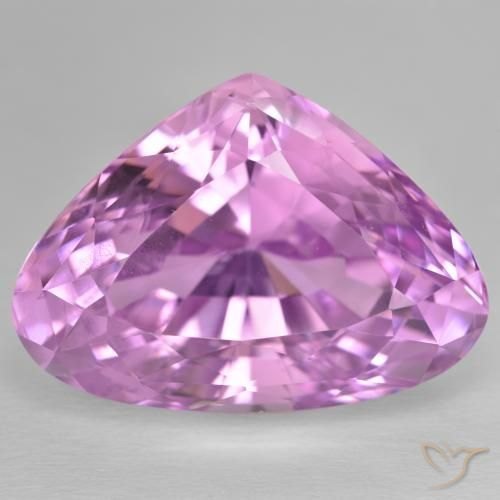
Kunzite
A soft pink-to-violet spodumene, kunzite is the evening-pink stone of heart-chakra self-love and quiet devotion.
- Kunzite was named in 1902 after George Frederick Kunz, one of America's foremost gemologists of the era.
- Jacqueline Kennedy Onassis's kunzite pendant, a gift from JFK, sold at auction in 1997 for over $400,000.
- Kunzite is sometimes called the evening stone because prolonged sunlight can fade its pink color.
- The same mineral species (spodumene) is also mined industrially as the world's primary source of lithium for batteries.
- Kunzite crystals from Afghanistan sometimes exceed a kilogram in weight, producing statement faceted stones over 100 carats.
- Practitioners working with heart chakra self-love and compassionate self-care
- Buyers drawn to pastel pink and lavender faceted gems
- Gift givers shopping for engagement alternatives or wedding-set accents
- Collectors of pegmatite gems (tourmaline, aquamarine, morganite)
- Readers seeking a gentler emotional-healing stone for sensitive work
- Daily-wear ring buyers (kunzite is cleavage-prone; consider pink sapphire)
- Those wanting saturated pink (consider morganite or pink sapphire)
- Buyers who prefer stable colors (kunzite can fade with UV exposure)
What Is Kunzite?
Kunzite is the pink-to-lilac variety of spodumene, a lithium aluminum silicate mineral. The color comes from trace manganese and ranges from very pale pink through classical soft rose to an occasional deeper violet-pink in top specimens. It rates 6.5 - 7 on the Mohs hardness scale.
The stone was first identified in 1902 from specimens in San Diego County, California, and was named after George Frederick Kunz, the prominent American gemologist.
At Mohs 6.5 to 7, kunzite has moderate hardness but strong pleochroism (color shift between viewing angles) and perfect cleavage along two directions. These properties make kunzite challenging to cut and vulnerable to chipping on sharp impacts, which is why protective bezel or halo settings are standard for kunzite rings.
Major commercial sources include Afghanistan (the Kunar and Nuristan provinces produce the largest crystals), the United States (California's Pala District, Maine, and Connecticut), Brazil (Minas Gerais), Madagascar, and Pakistan. Afghan material often reaches impressive sizes, with faceted stones over 100 carats regularly produced.
One important care consideration: kunzite is sometimes called the evening stone because prolonged UV exposure can fade the pink color to colorless. Many pieces are not exposed to direct sunlight for long periods, and some dealers recommend evening wear rather than daily outdoor wear for top-color stones.
How Kunzite Compares
| Property | Kunzite | Morganite | Pink Sapphire |
|---|---|---|---|
| Hardness | 6.5 - 7 | 7.5 - 8 | 9 |
| Price / carat | $ Budget | $$ Mid-range | $$$ Premium |
| Color origin | Manganese trace | Manganese trace | Chromium/titanium |
| Best For | Pendants, evening wear | Engagement, rose gold | Heirloom fine jewelry |
Meaning and Symbolism
Kunzite is a relatively young gem in the commercial trade, first described in 1902 by George Frederick Kunz. The stone was named in his honor by Charles Baskerville and soon became a fashionable gemstone in early twentieth-century American jewelry.
Kunz had a remarkable career in gemology, describing multiple new gem varieties including morganite (1911) as well as kunzite, both named respectively for J.P. Morgan and for Kunz himself.
Early commercial kunzite came primarily from the Pala District of San Diego County, California. Major Afghan discoveries in the 1970s and 1980s transformed kunzite into a broadly available commercial gem, often in spectacular large sizes.
Top Afghan material shows a deeper pink color than classical California kunzite and commands premium prices in the fine jewelry market.
In modern crystal healing tradition, kunzite is one of the most widely recommended heart chakra stones for gentle self-love work. Practitioners associate it with what they call divine compassion, emotional delicacy, and quiet evening reflection rather than dramatic heart-opening energy.
It is a classical recommendation for sensitive readers, for people recovering from emotional burnout, and for anyone working on self-forgiveness and tender self-care.
Kunzite pairs naturally with rose quartz as a gentler alternative form of heart work, with morganite as a pink-family companion, and with clear quartz for amplified tender intention.
Historical Timeline
Healing Tradition
Emotional
Practitioners believe kunzite supports gentle emotional self-care, compassionate self-love, and recovery from emotional overwhelm. In crystal healing tradition, it is often recommended for sensitive readers, empaths, people recovering from burnout, and anyone working through self-criticism or perfectionism.
Many readers wear kunzite during periods of intensive self-care and describe a sense of softness and relief during these weeks. Practitioners pair kunzite with rose quartz for classic self-love duo or with amethyst when calming racing thoughts alongside tenderness.
Because kunzite's reputation is gentle and evening-oriented rather than activating, it is often described as a bedtime or quiet-moment stone rather than a confrontational or transformational tool. Readers sometimes describe kunzite as particularly useful during seasonal affective periods, extended caregiving, or recovery from relationship overwhelm where softness matters more than strength.
Spiritual
Kunzite is traditionally associated with the heart chakra and with what crystal workers call divine love or higher-heart energy. Practitioners describe kunzite as a stone that opens the heart to receive love rather than demanding active expression.
In modern crystal healing tradition, kunzite is sometimes grouped with morganite and rose quartz in heart-focused grids and devotional practice.
Many readers keep a kunzite pendant or tumbled piece on a bedside table for evening heart-centered meditation. It pairs readily with clear quartz for amplified tender intention and with selenite for cleansing and clearing.
Practitioners working with self-love or devotional practice often recommend kunzite as a quiet companion for prayer, devotional reading, or contemplative journaling.
Physical
Practitioners believe kunzite supports what they describe as heart-area balance, gentle nervous-system calming, and general stress reduction. Folk tradition links kunzite with relief from anxiety-related physical tension and with supporting sleep during emotionally demanding periods.
In modern crystal healing practice, kunzite is most often placed over the heart or held during evening meditation.
Many readers wear kunzite during self-care routines, extended therapy periods, or recovery seasons and describe the stone as a gentle tactile companion. It is not a substitute for medical care, and practitioners frame its role as supportive alongside proper treatment.
Because kunzite has perfect cleavage and can chip on sharp impact, pendants, earrings, and protected bezel-set rings are safer than standard prong-set rings for active daily wear.
Zodiac, Birthstone and Gifts
Kunzite is traditionally associated with Taurus and Leo in Western astrology, two fixed signs that benefit from kunzite's gentle softening influence on intense temperaments. For Scorpio, kunzite is recommended as a balance for the sign's transformational intensity, offering tender counterweight to deep emotional work.
Although kunzite is not on the formal US birthstone list, it is sometimes suggested as an alternative for February (alongside amethyst) and as a sentimental gift for weddings, Valentine's Day, Mother's Day, and anyone beginning serious self-care work regardless of birth month.
Care and Cleansing
Kunzite tolerates most common cleansing methods but requires care around sunlight. Warm soapy water and a soft brush are safe for routine cleaning of jewelry.
Ultrasonic and steam cleaners are generally acceptable for untreated kunzite but should be avoided for stones with visible cleavage cracks because the vibration and thermal shock can extend fractures.
Moonlight cleansing is traditional and is particularly appropriate for kunzite because the stone is known as the evening stone and benefits from moon rather than sun exposure. Smoke cleansing with sage, palo santo, or cedar and sound cleansing with a singing bowl are both effective and safe.
The primary concern is prolonged direct sunlight, which can fade kunzite's pink color over months of exposure. Store kunzite jewelry in a soft pouch or box when not worn, and avoid leaving loose pieces on a sunny windowsill.
Many practitioners refresh kunzite on a selenite plate overnight rather than using any water-based cleansing.
- DO rinse kunzite jewelry in warm soapy water and dry with a soft cloth.
- DO NOT leave kunzite in prolonged direct sunlight; color fades over months.
- DO use ultrasonic cleaners carefully on fractured or included stones.
- DO remove kunzite rings before sports, rock climbing, or heavy manual work.
- DO store kunzite separately from harder stones to prevent scratches.
- DO choose protective bezel or halo settings for kunzite rings because of cleavage risk.
- Note: spodumene has perfect cleavage in two directions; sharp impacts can split kunzite along natural planes.
Real vs Fake
Genuine kunzite shows distinctive pleochroism (visible color shift between violet-pink and colorless as the stone is rotated), a refractive index of 1.660 to 1.676, and a specific gravity around 3.18. Under 10x magnification, natural kunzite often shows fine growth lines, occasional liquid inclusions, and sometimes small two-phase inclusions.
Common imitations include pink glass (cold, lightweight, gas bubbles), pink cubic zirconia (heavier and more sparkly than kunzite), synthetic pink sapphire (different RI and hardness), and morganite (beryl family; different RI and pleochroism pattern). A basic refractometer test quickly separates kunzite from most imitations.
Treatment in kunzite can include irradiation to deepen or stabilize color (should be disclosed) and occasional heat treatment (rare because heat can actually fade kunzite's color). Most commercial kunzite is untreated, and color stability is the main buyer concern rather than treatment.
For any purchase above a few hundred dollars, ask about treatment disclosure in writing. Laboratory reports are not usually required for kunzite but can add value for significant purchases, particularly large Afghan specimens where provenance documentation supports collector value.
Kunzite Jewelry & Gifts
Kunzite is a mid-market gem with prices ranging from $30 per carat for small pale commercial stones to over $300 per carat for top Afghan material with deep pink saturation and clean clarity.
Standard 1-3 carat faceted kunzite typically runs $60 to $150 per carat. Larger 10-30 carat statement stones reach $150 to $300 per carat. Exceptional specimens with deep violet-pink color and large size (above 50 carats) can exceed $400 per carat.
The main buying variables are color saturation, size, and clarity. Because kunzite is often cut in large sizes, color intensity becomes relatively more important than in smaller stones, and deeper pink commands significant premium. Afghan material typically shows the most saturated color.
Treatment concerns include occasional irradiation to deepen color; this should be disclosed, and irradiation-enhanced kunzite may fade faster under sunlight than natural-color material.
When buying, examine color from multiple angles to assess pleochroism (natural kunzite shifts color between violet-pink and paler), check for eye-clean clarity under a 10x loupe, and choose cuts that maximize color face-up. Cushion, emerald, and oval cuts are traditional favorites because they carry color well across large carat weights.
Where to Buy Kunzite
Affiliate disclosure: Some links below earn us a small commission at no extra cost to you. See our affiliate disclosure page.
Handmade, raw, and tumbled pieces from independent sellers worldwide.
Shop Kunzite on Etsy →Accessories, tools, and specimen sets with fast Prime delivery.
Shop Kunzite on Amazon →Certified loose gemstones graded and photographed for online buyers.
Shop Kunzite on GemSelect →Pairs Well With




Where Kunzite Is Found


