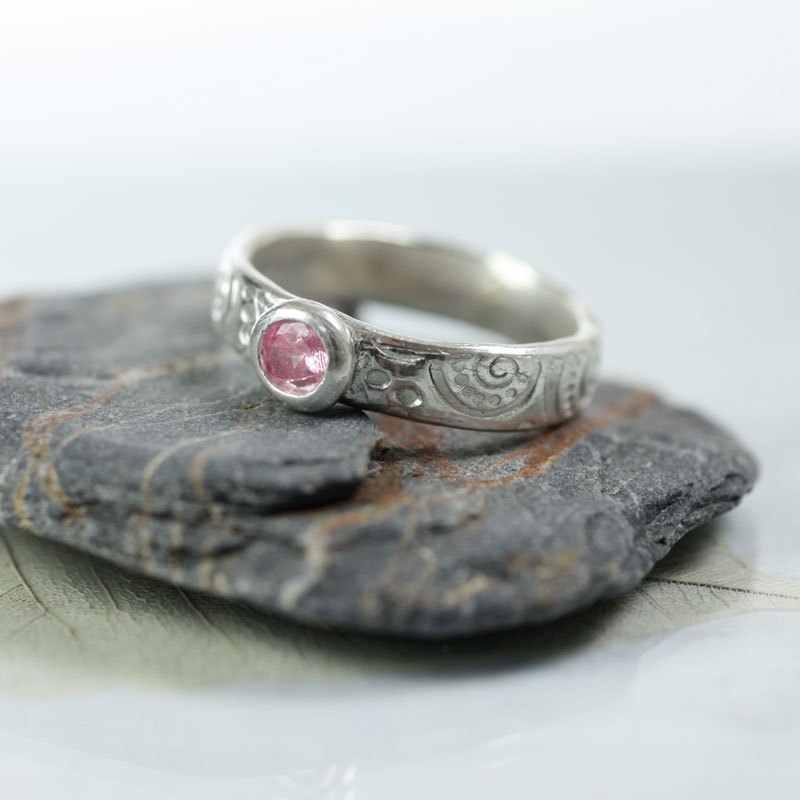
Cubic Zirconia
Born in laboratory crucibles from zirconium oxide, cubic zirconia is the brilliant simulant that brought affordable diamond-fire to.
- Cubic zirconia's dispersion of 0.060 is higher than diamond's, producing more visible rainbow fire.
- Russian scientists coined the nickname fianit for CZ, after the acronym for the Lebedev institute.
- CZ can be colored with trace metals to imitate almost any gemstone, from sapphire to peridot.
- A typical CZ stone costs around 100 times less per carat than a comparable-quality natural diamond.
- Cubic zirconia is used industrially as a refractory ceramic in furnaces and oxygen sensors as well as jewelry.
- Budget-conscious shoppers wanting a diamond-like look at a fraction of the price
- Travelers who prefer not to wear valuable jewelry in transit or crowded places
- Readers using fashion jewelry for trend pieces without long-term investment
- Stand-in settings for engagement rings while saving for a natural diamond
- Anyone seeking a colorless gem that can tolerate daily-wear activities
- Buyers seeking natural gem investment (consider natural diamond)
- Readers wanting moissanite's higher hardness and more durable wear
- Practitioners seeking traditional crystal healing stones (CZ is synthetic and recent)
What Is Cubic Zirconia?
Cubic zirconia, commonly abbreviated CZ, is a synthetic crystalline form of zirconium dioxide (ZrO2). It was first synthesized in laboratory conditions in the mid-twentieth century, and Soviet researchers at the Lebedev Physical Institute perfected commercial production in the 1970s. It rates 8 - 8.5 on the Mohs hardness scale.
The material is made by stabilizing zirconia with a small addition of calcium or yttrium, then slow-growing crystals at extremely high temperatures. At Mohs 8 to 8.5, cubic zirconia is harder than most natural gems and is durable enough for daily wear in jewelry.
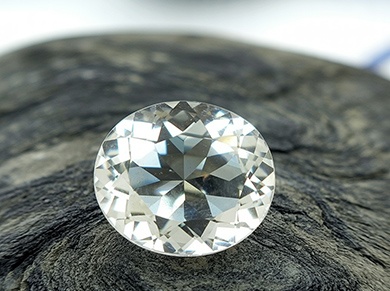
Its refractive index of 2.15 to 2.18 is close to diamond's 2.42, and its dispersion of 0.060 is higher than diamond's 0.044, giving faceted CZ a brighter fire display than natural diamond. In visual terms, a well-cut cubic zirconia is extremely convincing as a diamond substitute.
Cubic zirconia does not occur naturally on Earth in any significant quantity; the natural mineral form, called baddeleyite, has a different crystal structure. CZ is explicitly a laboratory-grown simulant rather than a gem mined from the earth.
The material can be produced in essentially any color through the addition of trace metal oxides, which makes it popular for fashion jewelry imitating sapphire, ruby, and emerald as well as diamond. Russian CZ and Chinese CZ dominate commercial supply.
How Cubic Zirconia Compares
| Property | Cubic Zirconia | Diamond | Moissanite |
|---|---|---|---|
| Hardness | 8 - 8.5 | 10 | 9.25 |
| Price / carat | $ Budget | $$$$ Luxury | $$ Mid-range |
| Rarity | Lab-made | Natural rare | Lab-made |
| Best For | Fashion jewelry, travel | Heirloom investment | Engagement rings |
Meaning and Symbolism
Cubic zirconia has no ancient folklore because it was developed only in recent decades, but it has become culturally significant as the democratization of diamond aesthetics. Before CZ, colorless gem-like jewelry at affordable prices was dominated by rhinestone glass and less convincing simulants.
CZ changed the mass-market jewelry industry by giving buyers at every price point access to genuinely brilliant faceted stones.
Practitioners in modern crystal healing often approach synthetic stones like cubic zirconia with a different framework than natural crystals. Because CZ is a human-made creation rather than an earth-formed mineral, many crystal workers consider it a stone of intention and transformation rather than traditional elemental meaning.
Some practitioners describe CZ as a neutral carrier that absorbs the wearer's energy rather than bringing preset associations.
The material's visual similarity to diamond has given it a place in modern weddings and anniversaries as a practical alternative. Couples sometimes wear CZ versions of their heirloom pieces while traveling and keep the natural stones in secure storage.
In this sense, CZ has developed a contemporary meaning around practical beauty, accessible celebration, and non-attachment to the intrinsic value of gemstones.
Historical Timeline
Healing Tradition
Emotional
Practitioners who work with synthetic stones believe cubic zirconia is a neutral carrier, traditionally considered a stone that reflects the wearer's own energy rather than imposing preset qualities. In crystal healing tradition among practitioners open to lab-grown materials, CZ is said to support clarity of intention and focused affirmation practice.
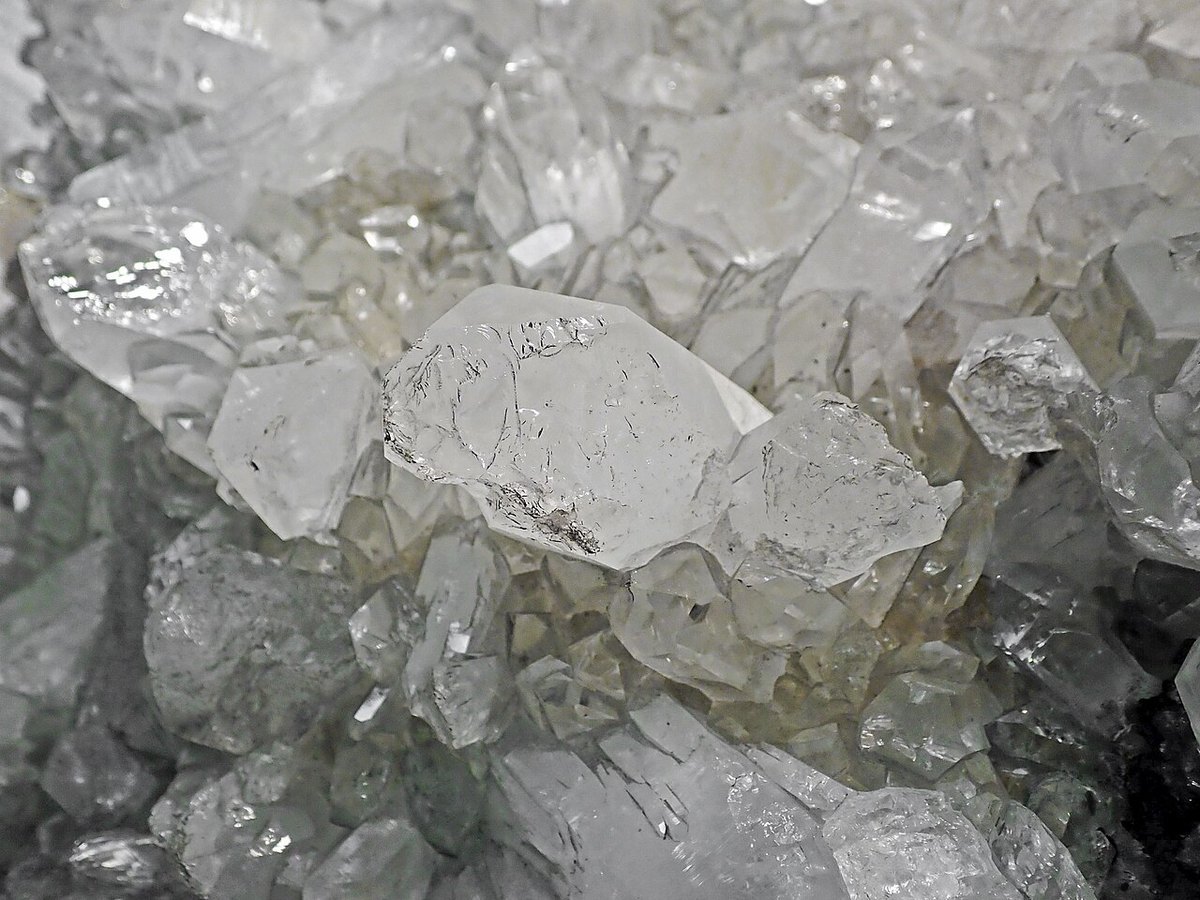
Many readers wear CZ as a companion piece during intention setting, meditation, and new-moon journaling, treating the stone as a witness rather than an active source. Crystal workers often pair CZ with natural clear quartz to combine lab-grown brilliance with traditionally sourced amplifying energy.
Practitioners typically acknowledge that CZ is not a traditional healing stone and is instead a relatively recent addition with meaning built primarily around symbol and beauty. For readers who prefer only naturally occurring minerals, substitutes include natural diamond, clear quartz, or moissanite, each of which has earth-based or lab-grown-from-natural-process context.
Spiritual
In crystal healing tradition, cubic zirconia is sometimes linked with the crown and third eye chakras, by association with its colorless clarity and diamond-like brilliance. Practitioners open to lab-grown stones often consider CZ a stone of focused mental clarity rather than deep ancestral lineage.
Some traditions describe CZ as a contemporary stone appropriate for newer spiritual practices.
Many readers use CZ in simple affirmation jewelry and daily-wear pieces, treating the stone as a bright reminder rather than a traditional carrier of elemental meaning. Crystal workers often suggest that CZ be programmed with specific intentions through visualization and repeated affirmation, since the material does not carry ancient folklore.
Purist practitioners who work only with earth-formed stones typically do not include CZ in their practice, and the tradition has evolved to respect this distinction honestly rather than blur the line between natural and synthetic gem materials.
Physical
Because cubic zirconia is a recent lab-grown material without ancient healing tradition, modern crystal workers rarely assign it specific physical associations.
Practitioners who work with CZ as a modern carrier stone sometimes describe it as a symbolic reminder of the body's capacity for clarity and renewal, rather than a tradition-based support for any particular system.
CZ is hypoallergenic and chemically stable, making it comfortable for daily wear even for readers with sensitive skin. It is not a substitute for medical care and is not used in gem elixirs by most traditional practitioners, who prefer earth-formed stones for that purpose.
Readers seeking tradition-based physical support are usually directed toward clear quartz, amethyst, or stones with established folklore.
Zodiac, Birthstone and Gifts
Cubic zirconia is considered a universal stone in modern jewelry practice, with no particular zodiac affiliation. Because it is lab-grown and relatively new, astrologers generally treat it as a neutral carrier rather than assigning it specific sign associations.
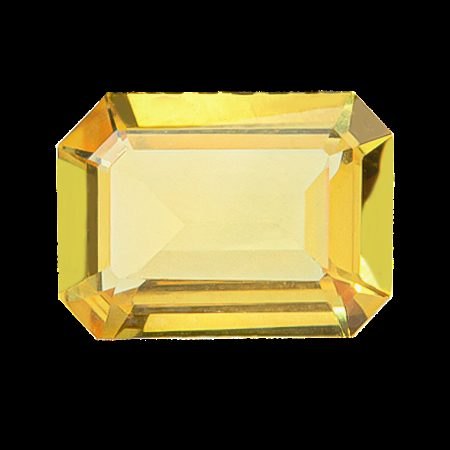
Readers who want a zodiac-matched gift sometimes choose CZ in a sign's traditional birthstone color as a budget substitute: yellow CZ for Leo birthstone traditions, blue CZ for Sagittarius alternatives, and so on.
Practitioners usually recommend natural stones for tradition-rooted astrological work, with CZ positioned as an affordable aesthetic option rather than a folklore-rich choice.
Care and Cleansing
Cubic zirconia is one of the easiest stones to maintain. Warm soapy water and a soft brush handle daily dust and body oils without risk, and CZ tolerates ultrasonic and steam cleaning in unfractured form. Simple cloth wiping also restores surface brilliance between washings.
The material is chemically stable and does not react to most household cleaners, making it far more forgiving than many natural gems.
Energetic cleansing practices for CZ typically focus on intention rather than tradition. Moonlight, sound cleansing with a singing bowl, and brief smoke cleansing with palo santo or sage are safe. Practitioners who use traditional methods on lab-grown stones often rest CZ on selenite overnight as a visual cleansing practice.
Dry salt cleansing and sunlight are both safe for CZ. Unlike many natural stones, cubic zirconia does not fade in sunlight, does not etch in mild salt, and does not require gentle handling.
Its combination of hardness and chemical stability makes CZ a practical choice for readers who want low-maintenance jewelry that can be quickly cleaned and returned to daily wear.
- DO clean cubic zirconia in warm soapy water with a soft toothbrush regularly.
- DO use ultrasonic and steam cleaners on unfractured CZ without concern.
- DO store CZ separately from softer stones to prevent scratching them.
- DO NOT store CZ loose with natural diamond because diamond will scratch CZ.
- DO remove CZ jewelry during heavy physical work to avoid facet chipping.
- DO NOT expect CZ to hold resale value the way natural gems might.
- Note: cubic zirconia is a laboratory-grown simulant, not a natural gemstone or lab-grown diamond.
Real vs Fake
Cubic zirconia is itself a simulant rather than a natural gem, so the more common question is how to distinguish CZ from diamond.
Genuine diamond shows single refraction in a loupe test and reads as diamond on a thermal tester, while CZ shows double images on closer optical inspection and reads as non-diamond on most electronic testers.
CZ also weighs more than diamond for a given size because its specific gravity (5.65 to 5.95) is higher than diamond's (3.52).
Compared to moissanite, CZ has lower hardness (Mohs 8 to 8.5 vs 9.25) and less durability in long-term ring wear. Moissanite also shows a distinctive rainbow fire that some describe as too colorful for a diamond simulant, while CZ is generally easier to pass visually as diamond at everyday viewing distances.
A jeweler's loupe and a thermal conductivity tester together distinguish all three reliably.
For buyers who want certainty, CZ is always disclosed as such by reputable sellers. Any jewelry labeled CZ or cubic zirconia is a confirmed simulant. When purchasing suspected-natural stones, a lab certificate from a recognized gemological laboratory is the only reliable confirmation of diamond versus CZ, moissanite, or other simulants.
This is especially important for resale or insurance purposes.
Cubic Zirconia Jewelry & Gifts
Cubic zirconia is one of the most affordable faceted gems on the market. Loose CZ stones typically cost $5 to $30 per carat, and mounted CZ jewelry from mass-market retailers starts around $20 for earrings and climbs to $200 for elaborate rings and pendants.
CZ is widely used in costume jewelry, bridal trend pieces, and traveler-safe replicas of more valuable original stones, with premium Russian CZ commanding a small price premium over Chinese production.
Treatment is essentially not a factor because CZ is already a laboratory-grown material, and any color is produced by deliberate trace metal doping during synthesis. Buyers should ensure that CZ is honestly labeled rather than sold as natural gem material.
Reputable sellers identify CZ clearly, and the material should never be confused with lab-grown diamond, which is a different product with natural-like crystal structure.
Where to Buy Cubic Zirconia
Affiliate disclosure: Some links below earn us a small commission at no extra cost to you. See our affiliate disclosure page.
Handmade, raw, and tumbled pieces from independent sellers worldwide.
Shop Cubic Zirconia on Etsy →Accessories, tools, and specimen sets with fast Prime delivery.
Shop Cubic Zirconia on Amazon →Certified loose gemstones graded and photographed for online buyers.
Shop Cubic Zirconia on GemSelect →Pairs Well With


Where Cubic Zirconia Is Found


