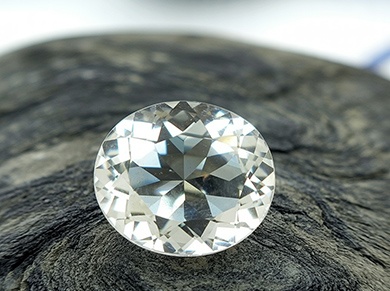
White Topaz
Born in granitic pegmatites as naturally colorless topaz, white topaz is the affordable alternative to diamond with Mohs 8 durability.
- Topaz has perfect basal cleavage, one of the most pronounced in any gem material.
- The name topaz may derive from a Red Sea island where peridot was originally mined and called topazos.
- Most commercial blue topaz starts as colorless white topaz before irradiation treatment.
- White topaz is one of the most affordable natural Mohs 8 gemstones in the market.
- The largest known faceted white topaz weighs 21,005 carats (the Braganza topaz, possibly white topaz originally).
- Budget-conscious engagement or anniversary shoppers wanting a natural colorless stone
- Readers seeking Mohs 8 durability at a fraction of diamond or white sapphire pricing
- Crystal workers using white topaz for crown chakra clarity work
- November birthstone seekers wanting a colorless alternative to citrine
- Gift buyers for graduations, milestones, and fashion-forward jewelry
- Buyers seeking diamond's signature fire (white topaz has softer brilliance)
- Readers wanting a heat-stable clear stone (white topaz is Mohs 8 but has cleavage)
- Shoppers expecting top resale value (white topaz is budget-tier)
What Is White Topaz?
White topaz is the naturally colorless variety of topaz, an aluminum silicate fluoride hydroxide mineral. Pure topaz is inherently colorless; blue, pink, yellow, and orange topaz varieties owe their colors to trace impurities or to treatment (particularly irradiation for blue topaz). It rates 8 on the Mohs hardness scale.
At Mohs 8, white topaz is harder than most natural colored gemstones, matching spinel and rivaling aquamarine.
Topaz crystallizes in orthorhombic symmetry with perfect basal cleavage, meaning sharp blows can split the stone along this plane. This property requires care in setting and wear, though white topaz's Mohs 8 hardness provides excellent resistance to scratching and abrasion.
Refractive index of 1.610 to 1.638 gives well-cut stones good brilliance, though less fire than diamond or moissanite.
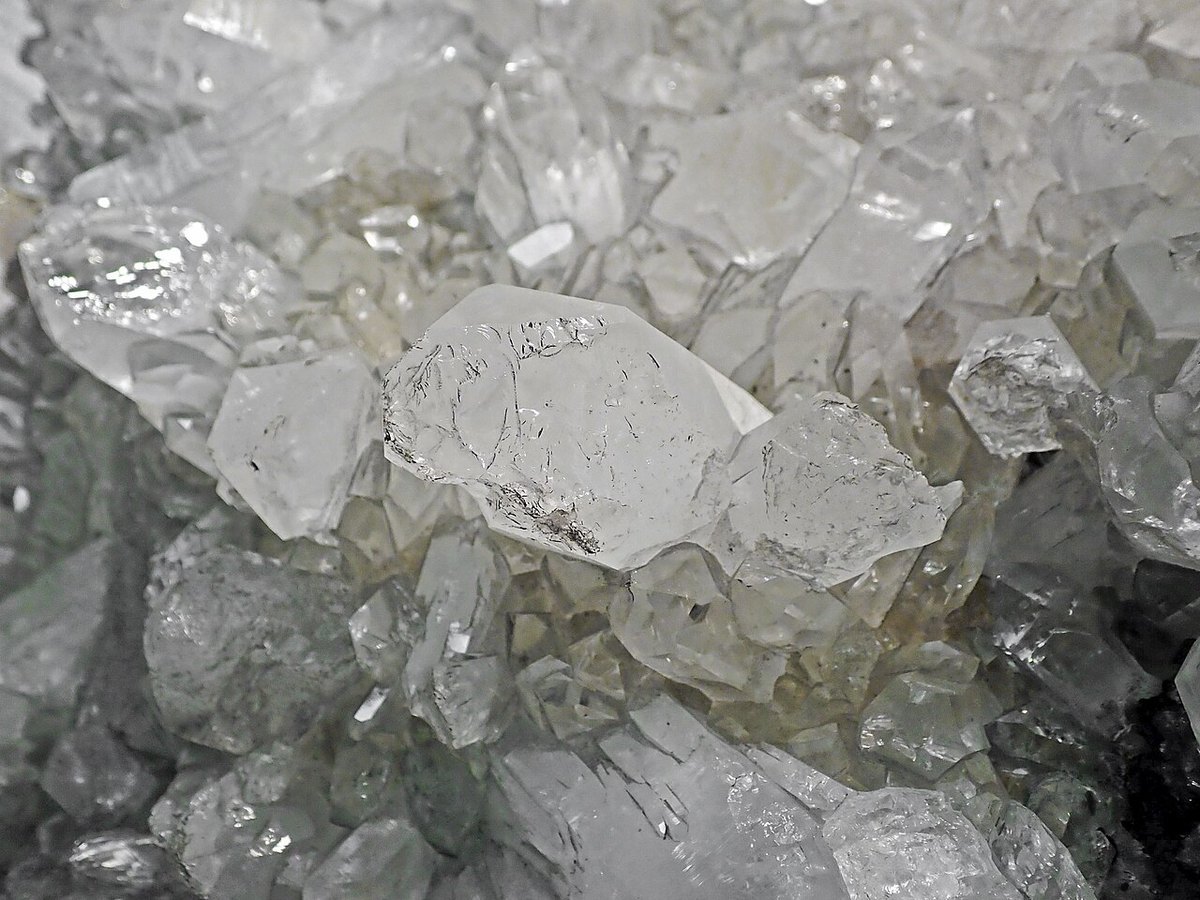
Commercial white topaz comes primarily from Brazil (Minas Gerais), Mexico, Russia (Ural Mountains), Sri Lanka, Nigeria, and Pakistan. Brazil supplies the majority of commercial volume. Because naturally colorless topaz is common, white topaz is typically sold untreated at affordable prices.
The stone is a popular choice for diamond-alternative jewelry, particularly among buyers who value natural origin over lab-grown options like cubic zirconia or moissanite.
How White Topaz Compares
| Property | White Topaz | White Sapphire | Diamond |
|---|---|---|---|
| Hardness | 8 | 9 | 10 |
| Price / carat | $ Budget | $$ Mid-range | $$$$ Luxury |
| Rarity | Common | Moderate | Rare |
| Best For | Budget jewelry, daily wear | Engagement, durability | Heirloom investment |
Meaning and Symbolism
Topaz has been used in jewelry for over 2,000 years. The name comes from ancient Greek topazos, a term originally applied to a green gem from an island in the Red Sea (likely peridot). The name transferred to modern topaz in late antiquity and medieval Europe.
Historically, yellow and orange topaz varieties have been more prominent than colorless, but white topaz has always been available as a clean pure variety.
In modern crystal healing tradition, white topaz is associated with clarity of intention, spiritual alignment, and focused mental energy. Practitioners often describe it as a stone for readers seeking clarity in decision-making or alignment between daily actions and long-term values.
Its colorless clarity places it alongside clear quartz and diamond in crown chakra practice.
White topaz is also used as a modern November birthstone alternative alongside traditional citrine, particularly for November-born readers who prefer colorless stones. The stone's affordability has made it popular for fashion jewelry at mass-market retailers.
Practitioners often recommend white topaz as an accessible starting point for readers new to clear-stone crystal work, with upgrades to white sapphire or diamond as budget allows.
Historical Timeline
Healing Tradition
Emotional
Practitioners believe white topaz is a stone of clear intention, traditionally associated with mental clarity, focused discernment, and alignment between daily actions and long-term goals. In crystal healing tradition, it is said to support readers making significant decisions or navigating periods of uncertainty.
Many readers wear white topaz during career transitions, major purchases, or significant life choices. Practitioners often pair white topaz with clear quartz for compound amplification and with amethyst when clarity needs to meet intuition.
Crystal workers frequently describe white topaz as a cool, steady presence suitable for professional decision-making or intellectual work. Its affordability also makes white topaz a practical everyday companion for readers who want continuous wear without concern for valuable jewelry loss. The stone's durability at Mohs 8 supports this daily-use practice.
Spiritual
In crystal healing tradition, white topaz is linked with the crown and third eye chakras, zones practitioners associate with spiritual connection and clear inner vision. The colorless clarity is read as a direct channel for higher awareness in modern practice.
Many readers use white topaz as a focal anchor during intention work around goal alignment, prayer, or contemplative meditation.
Practitioners often describe white topaz as a clarity stone, fitting for readers engaged in spiritual work that requires discernment rather than emotional intensity. Crystal workers pair white topaz with selenite in cleansing grids and with clear quartz for amplified intention setting.
Because white topaz is relatively affordable, it serves as an accessible entry-point for readers new to clear-stone spiritual practice, with gradual upgrades to more premium stones possible over time.
Physical
Practitioners believe white topaz is traditionally associated with mental focus, sensory clarity, and what they describe as overall body balance. Folklore links the stone with eye health, clear thought during fatigue, and steady energy through demanding professional work, framed as supportive accompaniment rather than medical intervention.
Many readers wear white topaz as rings, pendants, or earrings during professional engagements or intellectual work. The stone is not a substitute for healthcare and practitioners are consistent in describing its role as accompanying rather than treating.
Because white topaz is hypoallergenic and chemically stable, it is also comfortable for readers with sensitive skin. Some crystal workers suggest white topaz as a budget-friendly alternative for daily clarity work that might otherwise require more expensive white sapphire or diamond.
Zodiac, Birthstone and Gifts
White topaz is sometimes offered as a November alternative alongside traditional citrine, and astrologers often pair it with Sagittarius for the sign's philosophical clarity and with Virgo for analytical precision.
For Sagittarius readers drawn to big-picture thinking, white topaz is often recommended as a focused-intention stone. Virgo readers pursuing detailed work find the clarity associations resonant. Practitioners sometimes pair white topaz with amethyst for deeper contemplative work in zodiac kits.
Care and Cleansing
White topaz is easy to maintain. Warm soapy water and a soft brush handle body oils and dust without risk, and the stone tolerates ultrasonic cleaning in unfractured form. Avoid ultrasonic and steam cleaners on fracture-filled stones and on stones with visible cleavage-related inclusions, because vibration can propagate these features.
Moonlight, sound cleansing with a singing bowl, and smoke cleansing with palo santo or sage are all traditional and safe. Dry salt cleansing for a few hours is acceptable. Many practitioners rest white topaz on selenite plates overnight as a gentle energetic reset method.
Sunlight is fully tolerated and does not fade white topaz. Brief sun bathing is safe and causes no damage. Long-term storage in direct sunlight is fine.
Professional jewelers recommend annual inspection of prong settings and routine cleaning in warm soapy water to maintain brilliance. Because of topaz cleavage, avoid sharp impacts that could split set stones.
- DO clean white topaz in warm soapy water with a soft brush regularly.
- DO use ultrasonic cleaners only on unfractured natural white topaz.
- DO NOT subject white topaz to sharp impacts that could trigger cleavage.
- DO have prong settings inspected annually by a qualified jeweler.
- DO store white topaz separately in a soft pouch away from harder stones.
- DO remove white topaz rings before heavy sports or housework.
- Note: most commercial blue topaz starts as colorless white topaz before irradiation.
Real vs Fake
Genuine white topaz shows a clean, bright brilliance with refractive index 1.610 to 1.638 and specific gravity 3.49 to 3.57 confirming identification in gemological testing. The stone is harder than quartz (Mohs 7), so it scratches glass easily. Under a 10x loupe, natural white topaz may show liquid inclusions or feather-like flaws.
Common imitations and confusions include cubic zirconia, moissanite, colorless quartz, and clear glass. CZ is denser and shows different refractive behavior. Moissanite shows stronger double refraction. Quartz is softer (Mohs 7) and scratches by topaz.
Synthetic white topaz is rare in commercial markets because natural material is so affordable. For any significant purchase, a lab identification confirms natural origin. Reputable sellers disclose origin and any treatment status, though white topaz is typically untreated since natural color is standard.
White Topaz Jewelry & Gifts
White topaz is one of the most affordable natural Mohs 8 gemstones. Loose stones typically cost $10 to $40 per carat for standard commercial material.
Larger eye-clean stones above one carat run $40 to $100 per carat, and top-quality pieces with exceptional clarity and cut reach $100 to $200 per carat for large stones. Set jewelry pieces from mass-market retailers start around $30 for earrings and climb to $500 for elaborate rings and pendants.
Treatment is essentially absent in white topaz because natural colorless material is abundant and requires no enhancement. The only treatment relevant to topaz in general is the irradiation process that transforms colorless topaz into commercial blue topaz, which is a separate product.
For jewelry, favor eye-clean stones with good cut proportions for maximum brilliance. Prong settings with secure prongs or protective bezel mountings both work well for white topaz rings.
Where to Buy White Topaz
Affiliate disclosure: Some links below earn us a small commission at no extra cost to you. See our affiliate disclosure page.
Handmade, raw, and tumbled pieces from independent sellers worldwide.
Shop White Topaz on Etsy →Accessories, tools, and specimen sets with fast Prime delivery.
Shop White Topaz on Amazon →Certified loose gemstones graded and photographed for online buyers.
Shop White Topaz on GemSelect →Pairs Well With


Where White Topaz Is Found


