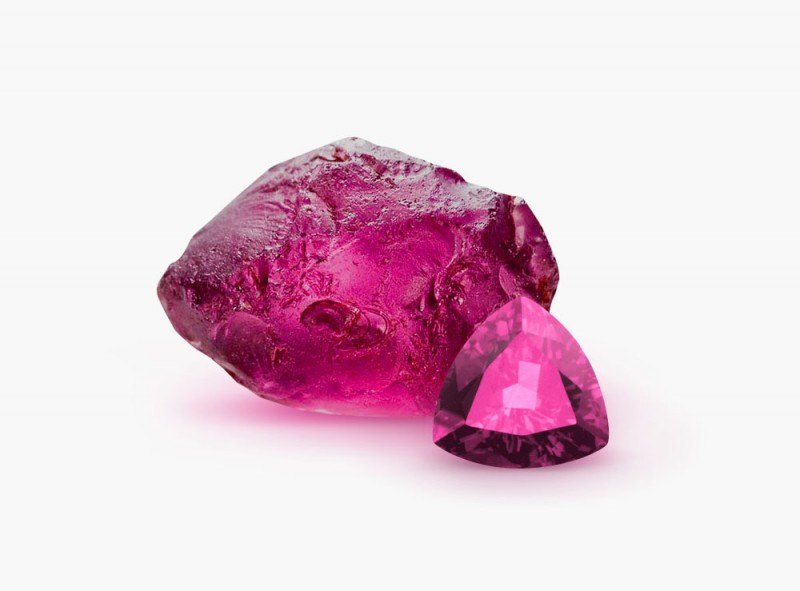
Rhodolite
Born from the union of pyrope and almandine, rhodolite is the raspberry-pink garnet that bridges the <a.
- The name rhodolite comes from Greek rhodon (rose) and lithos (stone).
- Rhodolite was first named in 1890 by prominent American gemologist George Frederick Kunz.
- Most rhodolite is a 70/30 mix of pyrope and almandine garnet end members.
- The Cowee Valley in North Carolina is the rhodolite type locality.
- Rhodolite is almost always untreated, unlike many other red and pink gems.
- January birthstone seekers wanting a pink-red alternative to classic red garnet
- Engagement ring buyers drawn to raspberry tones at mid-market prices
- Readers working with heart-root chakra passion and grounded love
- Collectors of garnet species across the solid solution series
- Jewelry buyers seeking a durable untreated colored stone
- Buyers seeking the deepest blood-red color (try almandine or pyrope)
- Shoppers under $20 per carat for fine material (try rhodonite or pink jasper)
- Readers looking for sapphire-level hardness (try pink sapphire)
What Is Rhodolite?
Rhodolite is a gemstone garnet that belongs to the pyrope-almandine solid solution series, combining the magnesium-rich pyrope end member with the iron-rich almandine end member. The name comes from the Greek rhodon (rose) and lithos (stone), reflecting the characteristic raspberry pink to pinkish-red color. It rates 7 - 7.5 on the Mohs hardness scale.
Most commercial rhodolite is about 70% pyrope and 30% almandine, a ratio that produces the hallmark raspberry hue with good transparency and an absence of the brownish tones sometimes seen in darker garnets.
Garnet is a large group of silicate minerals that share a cubic crystal structure but vary chemically. The IMA recognizes multiple end-member species (pyrope, almandine, spessartine, grossular, andradite, uvarovite); rhodolite is a trade name for the pyrope-almandine series rather than a single mineralogical species.
Major commercial sources include the Umba Valley of Tanzania, Southern India (particularly Orissa and Andhra Pradesh), Sri Lanka, Mozambique, and the Cowee Valley of North Carolina, USA.
Hardness is 7 to 7.5 on the Mohs scale, suitable for most daily-wear jewelry. Refractive index is approximately 1.745 to 1.760 and specific gravity 3.74 to 3.94. Rhodolite is almost always untreated, which is a significant selling point over many colored gemstones.
Cuts are typically standard faceted shapes, and most stones are clean enough under the loupe to show the full raspberry color without clarity issues. The 2016 trend toward untreated colored gem engagement rings has boosted rhodolite's visibility as a ruby alternative.
How Rhodolite Compares
| Property | Rhodolite | Ruby | Pink Tourmaline |
|---|---|---|---|
| Hardness | 7 - 7.5 | 9 | 7 - 7.5 |
| Price / carat | $ Budget | $$$ Premium | $$ Mid-range |
| Rarity | Moderate | Rare (fine color) | Common |
| Best For | Daily wear, engagement alt. | Heirloom, investment | Daily wear |
Meaning and Symbolism
Garnet as a broader family has a long cultural history across many civilizations, from Egyptian pharaohs who wore carnelian-red almandine garnets as amulets to medieval European knights who used garnet inlays as protection during the Crusades.
Rhodolite specifically is a more recent distinction, first identified as a separate variety from the Cowee Valley in North Carolina in the 1890s. The name rhodolite was coined by George Frederick Kunz, the prominent gemologist who formally introduced the stone to the American gem market.
In contemporary crystal tradition, rhodolite garnet is traditionally associated with the heart and root chakras together, bridging romantic warmth and grounded vitality. Practitioners believe the stone supports committed partnership, creative passion, and steady emotional intimacy rather than dramatic romantic shifts.
Because rhodolite is part of the garnet family, it inherits traditional associations with January, commitment, and protective love, while adding its own raspberry-pink softness to the harder red of classic garnet.
Rhodolite has grown in jewelry popularity since the 1990s as a mid-market engagement alternative to ruby and pink sapphire. The 1890 discovery in North Carolina gave the stone a specific American identity, and US-sourced rhodolite from the Cowee Valley carries collector interest.
In Western crystal practice, rhodolite is often used in long-partnership kits alongside rose quartz and smoky quartz to support the combined heart and root work of sustaining a committed relationship through ordinary life.
Historical Timeline
Healing Tradition
Emotional
Practitioners believe rhodolite garnet is a stone of grounded passion and steady committed love. In crystal healing tradition, it is said to support a wearer in long-term partnerships, creative relaunches, or any season where warm ambition needs to stay connected to practical daily life.
Many find rhodolite a useful companion during engagement, wedding planning, and anniversary seasons, as well as during creative recommitment to longer projects. Rhodolite is often paired with rose quartz for heart-centered self-care, with smoky quartz when old passions need grounding before new ones can settle.
With clear quartz when amplifying intentions tied to committed love or creative longevity. Practitioners describe rhodolite as warm but not dramatic, suited to steady rather than intense emotional work.
Spiritual
In crystal healing tradition, rhodolite is said to bridge the heart and root chakras with grounded pink-red energy. Practitioners believe the stone supports readers whose spiritual path values embodied love, committed partnership, and the slow work of building relationships that last.
Rhodolite is traditionally associated with Mars for its root-chakra vitality and Venus for its heart themes, drawing on garnet's broader astrological symbolism. Many use rhodolite during anniversary rituals, vow renewals, and morning meditation on partnership intentions. Holding rhodolite during relationship counseling, family negotiations, or long-distance partner work is a common contemporary practice.
Physical
Practitioners believe rhodolite supports what they describe as steady cardiac rhythm, circulation, and endocrine balance, folklore that draws on garnet's traditional association with blood and the heart. Crystal healing tradition connects rhodolite to both the physical heart and the reproductive region in gentle metaphorical terms rather than clinical senses.
Many find wearing a rhodolite pendant or ring comforting during seasonal transitions, committed-relationship stress, or long demanding work weeks. Rhodolite is not a substitute for medical care, and practitioners frame its role as supportive rather than curative. Readers with cardiovascular or hormonal concerns are encouraged to rely on qualified medical guidance.
Zodiac, Birthstone and Gifts
Rhodolite is part of the garnet family, which is the traditional January birthstone. Capricorns and Aquarians born in January often adopt rhodolite specifically for its warmer pink-red tone compared with darker almandine. In modern Western astrology, rhodolite is associated with Mars for its vitality and Venus for its heart themes.
Vedic astrology (Jyotish) treats red garnet (including rhodolite) as a substitute stone for hessonite (gomed) when working with Rahu's influence, though usage varies. The stone is often worn daily by those seeking committed partnership and steady vitality.
Care and Cleansing
Rhodolite is easy to cleanse because garnet is chemically robust. Lukewarm soapy water and a soft brush handle daily maintenance, and brief rinses under running water are safe.
Ultrasonic and steam cleaners are generally safe for natural untreated rhodolite but should be avoided for fracture-filled or glass-infilled stones, which are uncommon but do occasionally appear in lower-tier commercial material.
Sunlight, moonlight, smoke cleansing with palo santo or sage, and sound cleansing with a singing bowl are all considered safe methods. Dry salt placement is acceptable, and saltwater is unusually tolerable for rhodolite because the stone is chemically stable, though prolonged saltwater soaks are discouraged for metal settings.
Many practitioners recharge rhodolite overnight on a clear quartz cluster or selenite slab between uses.
- DO rinse rhodolite in lukewarm soapy water and dry with a soft cloth.
- DO NOT use ultrasonic cleaners on fracture-filled rhodolite if disclosed.
- DO store rhodolite separately so it does not scratch softer stones.
- DO NOT expose rhodolite to strong household cleaners or bleach.
- DO remove rhodolite rings during heavy housework to protect the setting.
- DO ask whether the stone is untreated natural (the standard) or has any disclosed enhancement.
- Note: rhodolite is among the least treated colored gemstones, making it a favorite for natural-gem purists.
Real vs Fake
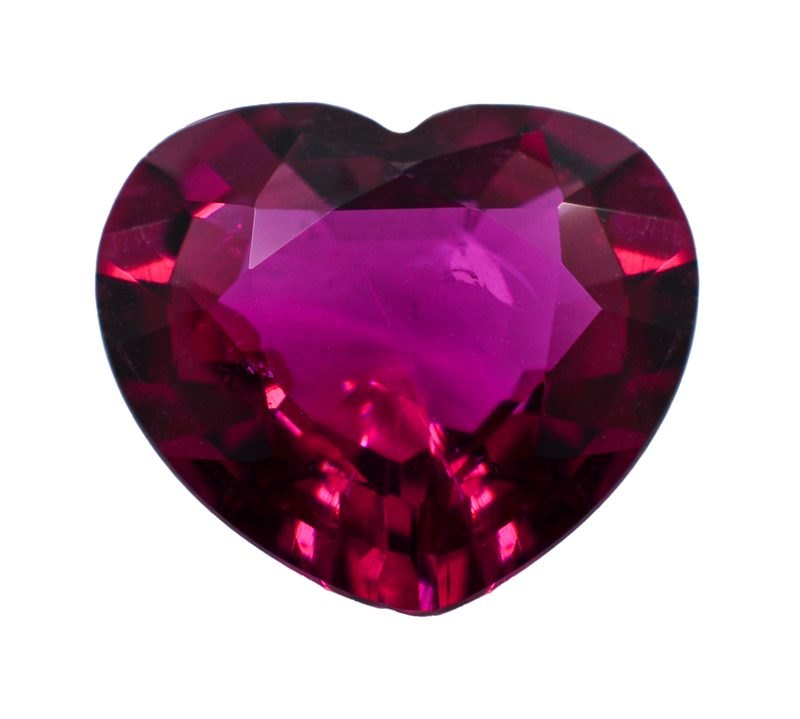
Genuine rhodolite shows raspberry pink to pinkish-red color with good transparency and the cubic crystal habit of garnet. Common substitutes and confusions include synthetic garnet, pink tourmaline, red spinel, and red glass imitations.
Natural rhodolite has a refractive index of approximately 1.745 to 1.760 and specific gravity 3.74 to 3.94, distinctly higher than tourmaline and glass.
Under 10x magnification, natural rhodolite often shows characteristic acicular (needle-like) inclusions and sometimes small mineral inclusions of apatite or zircon with tension halos. Synthetic garnet shows curved growth lines and gas bubbles.
Red glass shows swirl marks and sometimes mold seams. Specific gravity measurement is the simplest distinguishing test between garnet and most substitutes.
Practical at-home clues include the scratch test (rhodolite scratches quartz easily), the weight in hand (garnet is noticeably denser than tourmaline or glass for similar size), and the consistent raspberry color without strong pleochroism (pink tourmaline shows strong color shift with viewing angle, rhodolite does not).
A reputable gem lab report from an independent gemological lab or similar confirms species unambiguously, though for most rhodolite purchases under $500 per carat, a reputable dealer's guarantee is usually sufficient.
Rhodolite Jewelry & Gifts
Rhodolite pricing is reasonable. Small stones under one carat run $30 to $80 per carat. One to two carat stones with good raspberry color run $80 to $200 per carat. Larger clean stones above three carats with vivid raspberry color and good clarity run $200 to $500 per carat for fine material.
Exceptional stones above five carats with ideal color and clarity can reach $500 to $800 per carat in collector channels.
Tanzanian material from the Umba Valley is the most common commercial source and typically offers a good balance of color and size. Indian rhodolite from Orissa and Andhra Pradesh supplies significant supply at slightly lower price tiers. Sri Lankan stones from Ratnapura cover a quality range similar to Tanzanian.
US material from the Cowee Valley in North Carolina is prized by domestic collectors for provenance rather than volume. Treatments are uncommon; rhodolite is almost always sold untreated, which is a major selling point.
For most rhodolite purchases, a reputable dealer is sufficient; lab reports are worthwhile for stones above one carat or priced above $300 per carat.
Where to Buy Rhodolite
Affiliate disclosure: Some links below earn us a small commission at no extra cost to you. See our affiliate disclosure page.
Handmade, raw, and tumbled pieces from independent sellers worldwide.
Shop Rhodolite on Etsy →Accessories, tools, and specimen sets with fast Prime delivery.
Shop Rhodolite on Amazon →Certified loose gemstones graded and photographed for online buyers.
Shop Rhodolite on GemSelect →Pairs Well With



Where Rhodolite Is Found


