
Jade
From Burmese jadeite mines to New Zealand pounamu riverbeds, jade is the tough green stone that has carried.
- The Chinese character for emperor (yu) is the same as the character for jade, reflecting five thousand years of cultural centrality.
- Imperial jadeite is among the most expensive gemstones per carat at the top of the market, exceeding fine ruby in some auction results.
- The Han dynasty produced burial suits made of over two thousand individually carved jade tiles connected by gold or silver wire.
- Jade is one of the toughest natural materials in jewelry use, which is why Mesoamerican cultures could carve jade blades sharp enough for ceremonial use.
- New Zealand pounamu (nephrite) is protected by Maori cultural legislation; all pounamu in Te Waipounamu (the South Island) belongs to the Ngai Tahu iwi.
- Heart chakra practitioners working with patience and family-centered love
- Collectors drawn to imperial jadeite or Hetian mutton-fat nephrite
- Readers seeking a stone tied deeply to Chinese and Mesoamerican tradition
- Buyers wanting a tough stone suitable for carved pendants and bracelets
- Gift givers for Asian cultural milestones (birth, marriage, achievement)
- Buyers wanting a transparent faceted gem (jade is rarely transparent)
- Shoppers on tight budgets for imperial jadeite (top stones are among the most expensive gems)
- Those who dislike treated stones (Type B and C jadeite are common and must be disclosed)
What Is Jade?
Jade is a cultural and trade term that covers two chemically distinct minerals: jadeite (a sodium aluminum pyroxene, NaAlSi2O6) and nephrite (a calcium magnesium iron amphibole, Ca2(Mg,Fe)5Si8O22(OH)2). The two were recognized as separate species only in 1863, when French mineralogist Alexis Damour identified jadeite through density and optical testing.
Both are very tough because of their interlocking microcrystalline fibrous structure; jade is among the toughest natural materials used in jewelry, though not the hardest.
The name jade comes through Spanish piedra de ijada, meaning loin stone, because Mesoamerican peoples used jade amulets to treat what they believed were kidney and spleen ailments.
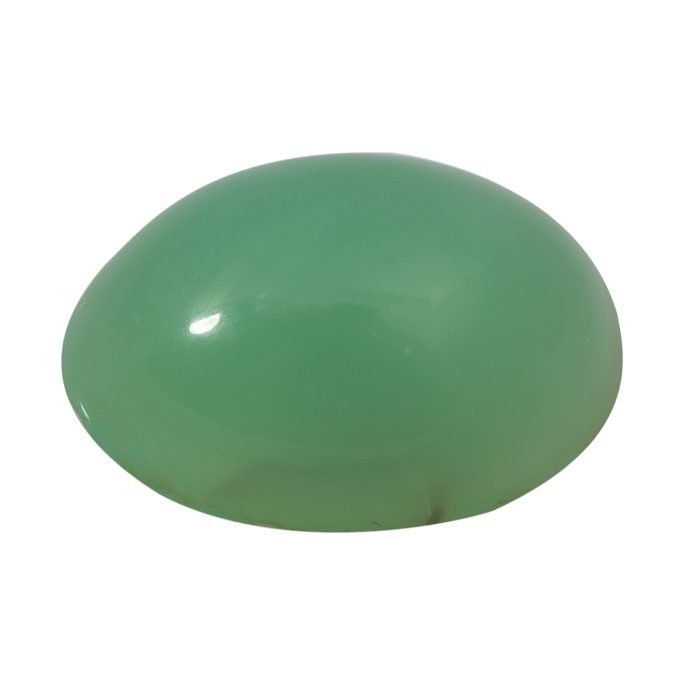
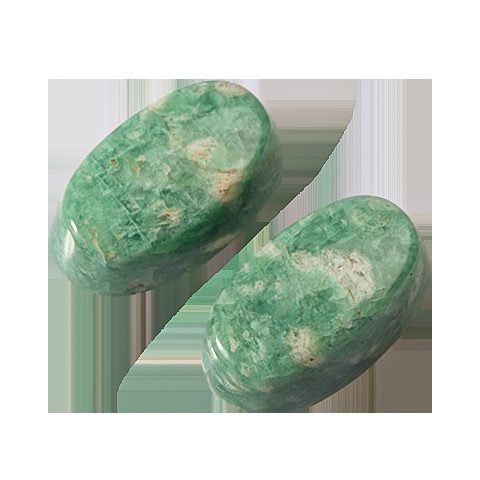
Imperial jadeite is the vivid translucent emerald-green material from Myanmar; Hetian (Khotan) nephrite from Xinjiang, China, is a white to greenish-white variety called mutton fat jade at its finest. New Zealand pounamu is a culturally protected nephrite. Guatemalan and Mexican jadeite supply Mesoamerican cultural heritage material.
Jadeite is more valuable commercially than nephrite for top colors, with vivid translucent imperial-green jadeite reaching among the highest per-carat gem prices on earth. Nephrite is more abundant and has a longer documented cultural history in China, Korea, and New Zealand.
Both jadeites and nephrites occur in many colors: green, white, lavender, yellow, orange, red, black. Treatment is a major concern for jadeite: Type A is natural and untreated; Type B is bleached and polymer-impregnated; Type C is dyed.
Only Type A commands collector prices; Type B and C are less stable and must be disclosed.
How Jade Compares
| Property | Jadeite (Imperial) | Nephrite | Serpentine |
|---|---|---|---|
| Hardness | 7 | 6 - 6.5 | 3 - 6 |
| Price / carat | $$$ Premium | $ Budget | $ Budget |
| Rarity | Rare (imperial) | Common | Common |
| Best For | Heirloom jewelry, collectors | Carved cultural pieces | Budget jade-look substitute |
Meaning and Symbolism
Jade is the most culturally significant gemstone in East Asian civilization. Chinese use of nephrite jade predates written history, with Neolithic Liangzhu culture (roughly 3300 BCE) producing highly refined jade ritual objects.
The Chinese character for jade (yu) is also the character for emperor, and Confucius described jade as the stone that expressed the five virtues of wisdom, righteousness, loyalty, trustworthiness, and compassion.
Burial suits of jade tiles were made for Han dynasty royalty, and jade seals served as imperial authority markers across multiple dynasties.
In Mesoamerica, jadeite was the most important gemstone for Olmec, Maya, and Aztec cultures, more prized than gold. Jade funerary masks, beads, and pectoral ornaments accompanied rulers, and the stone's association with water, maize, and fertility ran through three thousand years of Mesoamerican ritual.
The European encounter with Mesoamerican jade predated the recognition of jadeite as a separate species, which is why the term jade covered both materials for centuries.
In crystal healing tradition, jade is associated with the heart chakra, patient long-term well-being, and lineage. Practitioners describe it as a stone of enduring devotion, with the toughness of the material echoing its reputed role in steady daily life.
Many readers give jade as a milestone gift for marriage, graduation, and childbirth, and in Chinese tradition a jade pendant given at birth is often worn for life.
The stone has a long folk reputation for bringing good fortune and warding off harm, particularly when the jade is given rather than bought for oneself.
Historical Timeline
Healing Tradition
Emotional
Practitioners believe jade is a stone of steady, enduring devotion and deep family connection. In crystal healing tradition, it is associated with the patience required for long-term relationships, long careers, and slow-but-meaningful change.
Many readers wear jade as a pendant at the sternum for ongoing heart-chakra support, or keep a carved jade piece on a desk for sustained focus. Crystal workers often pair jade with rose quartz for softer emotional work or with clear quartz for amplified intention.
Jade is traditionally considered a gift stone in many East Asian traditions, with practitioners framing the exchange itself as part of the stone's power; a jade piece given by a loved one is said to carry additional meaning beyond an identical piece bought for oneself.
The stone is also traditionally associated with dream work, and many readers keep a small tumbled jade on a bedside altar for peaceful rest.
Spiritual
In crystal healing tradition, jade is linked with the heart chakra and the element of earth. Practitioners often describe it as a stone of measured, patient wisdom, said to support readers in long spiritual practices that require consistency over years. Many use jade in meditation on lineage, ancestors, and long-term purpose.
The stone has a long continuous tradition in Chinese and Mesoamerican spiritual practice, and crystal workers approach jade with respect for these established traditions rather than treating it as a blank symbolic slate. Jade pairs readily with clear quartz for amplification and with smoky quartz for deeper grounding.
Crystal workers sometimes place jade at the center of grids focused on family wisdom or long-term career intention, with the stone considered particularly appropriate for readers building something meant to last decades rather than months.
Physical
Practitioners believe jade supports what they describe as kidney, spleen, and overall organ vitality, associations drawn directly from Mesoamerican and Chinese folk medicine traditions that gave the stone its Western name (piedra de ijada, kidney stone).
Crystal healing tradition associates jade with steady detoxification, hydration support, and gentle endocrine balance, with the stone often worn as a pendant at the torso. Many readers use jade rollers or cold jade facial plates in skincare routines, a practice that has spread globally from Chinese tradition.
Jade is not a substitute for medical care, and practitioners frame its role as accompanying rather than curing. Crystal workers sometimes recommend jade for people in long caregiving or physically demanding roles, with the stone treated as a sustained comfort piece.
Zodiac, Birthstone and Gifts
Jade is not an official modern US birthstone but has long been associated with Venus-ruled earth signs, particularly Taurus and Libra, because of the stone's link with steady beauty, long devotion, and harmonious partnership.
Chinese astrological tradition links jade with the Mercury virtues of wisdom and steady communication, which some Western practitioners extend to Gemini as a secondary association. For Pisces, the water-element connection and the stone's traditional reputation for emotional nurture make jade a gentle choice.
In Vedic tradition, green jadeite is sometimes used as a substitute for emerald during Mercury periods, typically set in silver or white gold and worn on the little finger.
Care and Cleansing
Jade tolerates gentle cleaning. Warm soapy water with a soft cloth is safe for most jade, followed by thorough drying. Avoid harsh detergents, solvents, and household cleaners.
Ultrasonic and steam cleaners should be avoided for treated jade (Type B and C) and are generally not recommended even for untreated pieces because of the risk to any polymer fillings or dye.
Moonlight cleansing is the preferred energetic method and is traditional in both Chinese and Mesoamerican practice. Smoke cleansing with sage, palo santo, or cedar is safe at a distance. Sound cleansing with a singing bowl is also considered appropriate.
Dry salt cleansing is tolerable; saltwater should be avoided because of metal setting corrosion.
Direct sunlight is generally safe for untreated Type A jade because the color is stable. Treated Type C (dyed) jade should be kept out of prolonged UV because the dye can fade. Brief morning sun charging is traditional and considered safe for most natural jade.
Many practitioners treat jade as a stone that is worn and cleansed through daily life rather than requiring active ritual cleansing, with the connection between wearer and stone itself considered a form of gentle continuous energetic exchange.
- DO request Type A (untreated) certification for any valuable jadeite purchase.
- DO NOT expose Type B or Type C jadeite to hot water, ultrasonic cleaning, or solvents.
- DO clean jade gently with warm soapy water and a soft cloth.
- DO NOT store jade loose with harder gems that would scratch the surface.
- DO handle carved jade pendants carefully to prevent impact chipping on fine details.
- DO ask your seller whether the stone is jadeite, nephrite, or serpentine (sold as new jade).
- Note: Type B jadeite with polymer filler can degrade over decades and should be disclosed.
Real vs Fake
Genuine jade can be distinguished from imitations by density, hardness, and microscopic texture. Jadeite has a specific gravity of 3.30 to 3.38, notably heavier than serpentine, quartzite, or glass. Nephrite at 2.90 to 3.03 is also heavy but lighter than jadeite.
Under a 10x loupe, both genuine jades show a fibrous microcrystalline texture, while glass shows uniform internal structure and serpentine often shows waxy parallel fibers.
Common imitations include serpentine (sold as new jade, xiu jade, or olive jade), dyed quartzite, dyed chalcedony, glass, and plastic. Serpentine is much softer (Mohs 3 to 6) and scratches easily. Dyed quartzite often shows dye concentration in grain boundaries under magnification.
Glass imitations show conchoidal fracture patterns and often curved gas bubbles. Chinese law requires jade certification disclosure, and jadeite jewelry from reputable Chinese sources typically includes laboratory documentation.
Practical at-home checks include weighing the piece (genuine jade feels noticeably denser than imitations), tapping it lightly (jade produces a clear ringing tone, plastic a dull thud), and examining for grainy fibrous texture under a 10x loupe.
For valuable pieces, laboratory testing confirms species (jadeite vs nephrite) and treatment (Type A, B, or C for jadeite). The GIA, Mindat, and USGS Gem Testing Laboratory, HKJSL, and NGTC in China all provide recognized jade reports.
Jade Jewelry & Gifts
Jade pricing spans an enormous range. Commercial nephrite runs $5 to $100 per carat, with top Hetian mutton-fat nephrite reaching $500 to $2,000 per carat.
Commercial jadeite starts at $20 to $200 per carat, mid-grade Type A jadeite sits at $300 to $2,000 per carat, and fine imperial translucent emerald-green jadeite can exceed $10,000 to $30,000 per carat. Top historical pieces have sold for over $1 million per carat in finished bangle form at auction.
Treatment disclosure is the most important buying consideration. Type A jadeite is untreated and commands the full market price. Type B is bleached and polymer-impregnated, less stable over time, and should be priced as a separate category. Type C is dyed, with color that can fade.
For any significant purchase, request a certificate from GIA, Mindat, and USGS, HKJSL, or NGTC confirming Type A status. Cultural provenance can also affect price: Hetian nephrite, Burmese imperial jadeite, Guatemalan Olmec-style jadeite, and New Zealand pounamu all carry cultural premiums above their base mineralogy.
Where to Buy Jade
Affiliate disclosure: Some links below earn us a small commission at no extra cost to you. See our affiliate disclosure page.
Handmade, raw, and tumbled pieces from independent sellers worldwide.
Shop Jade on Etsy →Accessories, tools, and specimen sets with fast Prime delivery.
Shop Jade on Amazon →Certified loose gemstones graded and photographed for online buyers.
Shop Jade on GemSelect →Pairs Well With



Where Jade Is Found


