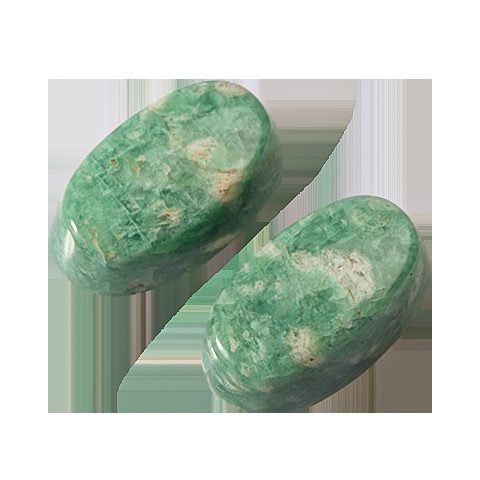
Amazonite
A blue-green microcline feldspar, amazonite is the truth stone that bridges heart and throat chakras.
- Despite its name, amazonite is not found near the Amazon River; the name comes from an eighteenth-century mistaken assumption.
- The blue-green color in amazonite comes from trace lead ions trapped in the feldspar structure.
- Colorado's Pikes Peak pegmatites produce famous specimens of amazonite with attached smoky quartz crystals.
- Amazonite was used for some of Egypt's Book of the Dead green scarab amulets.
- The white striping in amazonite comes from interleaved albite feldspar, a natural phenomenon called perthitic texture.
- Practitioners bridging heart and throat chakra work
- Readers drawn to soft turquoise-green with natural white striping
- Buyers seeking an affordable durable daily-wear pendant stone
- Gift givers shopping for honest-communication or truth-telling presents
- Collectors of feldspar family gems (labradorite, moonstone, sunstone)
- Those wanting a uniform blue (consider larimar)
- Buyers seeking transparent faceting (try aquamarine)
- Collectors wanting rare investment pieces (consider jade)
What Is Amazonite?
Amazonite is the blue-green variety of microcline feldspar, colored by trace lead and water that substitute into the potassium feldspar structure. The color ranges from pale mint green through classic turquoise-blue-green to a deeper ocean-teal, often with white streaks of albite feldspar in a pattern called perthitic texture.
At Mohs 6 to 6.5, amazonite is moderately hard and suitable for most jewelry settings. It shares the feldspar family's perfect cleavage, which makes it somewhat more fragile than quartz for ring wear but perfectly adequate for pendants and earrings.
Despite its name, amazonite is not found near the Amazon River in significant quantity. The name was applied in the eighteenth century based on an incorrect assumption that early examples came from Brazilian Amazon sources; the original material was actually Russian Ural Mountain amazonite used in jewelry by that name.
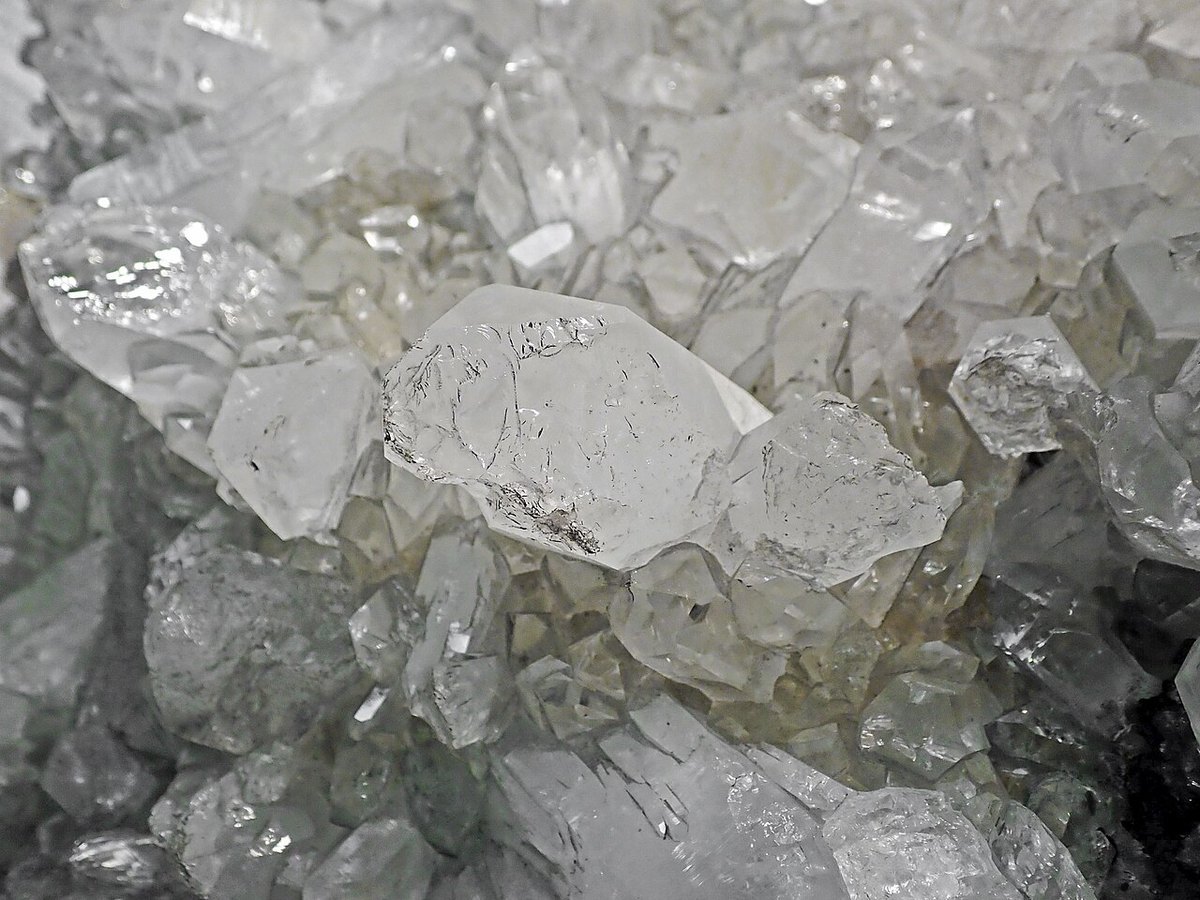
Major modern sources include Russia (the Ural Mountains and Kola Peninsula), Brazil (Minas Gerais), the United States (particularly Colorado's Pikes Peak pegmatites), Madagascar, Namibia, Canada, and Ethiopia. Colorado amazonite is particularly prized for its saturated sky-blue color and is often sold in matrix specimens with smoky quartz crystals attached.
How Amazonite Compares
| Property | Amazonite | Turquoise | Larimar |
|---|---|---|---|
| Hardness | 6 - 6.5 | 5 - 6 | 4.5 - 5 |
| Price / carat | $ Budget | $ Budget | $ Budget |
| Color | Blue-green w/ white stripe | Sky blue to green | Turquoise w/ white cloud |
| Best For | Beads, pendants, palm stones | SW jewelry, silver settings | Caribbean-style cabochons |
Meaning and Symbolism
Amazonite has been carved and worn for more than four thousand years. Ancient Egyptian tombs contained amazonite scarabs and beads, and the stone was one of the materials used in the Book of the Dead's green scarab amulets.
Pre-Columbian South American cultures and Mesoamerican artisans carved amazonite into ornamental objects, and some Russian Imperial jewelry incorporated Ural amazonite as a specialty stone.
The name amazonite comes from the eighteenth century based on the mistaken belief that early samples came from the Amazon River basin. In fact, the original European supply was Russian Ural Mountain amazonite. The historical confusion has persisted in the stone's name even though the Amazon connection was never real.
In modern crystal healing tradition, amazonite is known as the truth stone or the stone of courage and truth. Practitioners associate it with the unusual combination of heart and throat chakras, describing the stone as supporting honest expression of authentic feelings.
This bridging quality makes amazonite a classical recommendation for anyone working on speaking difficult truths, especially in family or intimate-relationship contexts.
The stone is considered gentler than lapis lazuli and warmer than aquamarine, making it a common choice for first-wave emotional-honesty work. It pairs naturally with rose quartz for heart-focused truth-telling and with clear quartz for amplified intention work.
Historical Timeline
Healing Tradition
Emotional
Practitioners believe amazonite supports emotional honesty, particularly in family and intimate-relationship contexts. In crystal healing tradition, it is often recommended for people navigating difficult conversations, setting healthy boundaries, or expressing unspoken feelings that have been accumulating.
Many readers wear amazonite during therapy periods, family mediation, or relationship-defining talks, and practitioners describe a sense of gentle courage to speak truthfully. Practitioners pair amazonite with rose quartz when the emotional work involves tender self-expression, or with aquamarine when the conversations need calming alongside clarity.
Because amazonite's reputation bridges heart and throat chakras, it is often described as particularly useful for people who feel emotions strongly but struggle to articulate them, offering support for finding language for what is felt rather than just what is thought.
Spiritual
Amazonite is traditionally associated with the heart and throat chakras simultaneously, and practitioners describe this bridging quality as its most distinctive spiritual characteristic. The stone is often called the truth stone because it is said to support alignment between authentic feelings and their honest expression.
In modern crystal healing tradition, amazonite is sometimes used in relationship grids and family-harmony work. Many readers keep a tumbled amazonite on a meditation altar during periods focused on honest self-expression, and some practitioners use small pieces in throat-and-heart dual-chakra layouts.
It pairs readily with clear quartz for amplified intention and with labradorite as a feldspar-family companion for combined throat and third-eye work.
Physical
Practitioners believe amazonite supports what they describe as nervous-system balance and throat-area expression. Folk tradition links amazonite with relief from stress-related tension in the jaw and throat area, and with general support during emotionally demanding communication periods.
In modern crystal healing practice, amazonite is most often worn as a pendant at the collarbone level (between heart and throat) or used as a palm stone during difficult conversations.
Many readers wear amazonite jewelry during therapy, mediation, or extended family-communication work. It is not a substitute for medical care, and practitioners frame its role as supportive alongside proper treatment.
Because amazonite is moderately hard and chemically stable, it is practical for daily-wear pendants and earrings. Ring settings should be protective because of feldspar cleavage, and ultrasonic cleaners should be used carefully.
Zodiac, Birthstone and Gifts
Amazonite is traditionally associated with Virgo and Aries in Western astrology. Practitioners describe amazonite as an ally for Virgo's articulate honest communication and for Aries's direct but heart-centered speech.
Although amazonite is not on the formal US birthstone list, it is often given as a gift for Mother's Day, therapy graduations, family reconciliation occasions, and anyone starting honest-communication work. The stone's association with truth-telling makes it a particularly meaningful gift for people beginning counselor training or conflict mediation careers.
Care and Cleansing
Amazonite tolerates most common cleansing methods. Running lukewarm water for under a minute is safe, as is a gentle wash in mild soapy water with a soft brush.
Moonlight cleansing is traditional and safe. Smoke cleansing with sage, palo santo, or cedar is effective, and sound cleansing with a singing bowl also carries no risk.
Brief saltwater exposure is acceptable for the stone but should be limited for jewelry because metal settings can corrode. Ultrasonic cleaners should be used carefully because of feldspar cleavage, and steam cleaners are best avoided.
The one method to approach with care is prolonged direct sunlight. Amazonite color can fade slightly with months of UV exposure, particularly in Colorado sky-blue material.
Many practitioners refresh amazonite after intense communication periods (therapy sessions, family conflicts, public speaking events) rather than on a fixed schedule. A night on a selenite plate after emotional conversations is a common refresh practice.
- DO rinse amazonite jewelry in warm soapy water and dry with a soft cloth.
- DO store amazonite out of prolonged direct sunlight to preserve color.
- DO NOT drop amazonite rings on hard surfaces; feldspar has perfect cleavage.
- DO use ultrasonic cleaners carefully on included stones.
- DO remove amazonite rings before heavy manual work.
- DO store amazonite separately from harder stones to prevent surface scratches.
- Note: some cheap amazonite is dyed green howlite or plastic; ask sellers to confirm natural feldspar origin.
Real vs Fake
Genuine amazonite shows its characteristic blue-green color with natural white streaks of albite feldspar producing a perthitic striping pattern. Under 10x magnification, the stone has a vitreous luster and shows perfect cleavage surfaces along specific crystal directions.
A stone with perfectly uniform color and no natural striping may be dyed howlite, dyed magnesite, or plastic imitation.
Common imitations include dyed howlite or magnesite (pale stones dyed green-blue, often showing dark web matrix patterns), plastic composites with painted color, and glass imitations.
A basic hardness test separates most imitations. Amazonite scratches at Mohs 6 to 6.5, which means it will scratch glass but not steel in casual tests. Plastic imitations are much softer. An acetone swab test reveals dye transfer on dyed imitations.
For significant purchases, look for the characteristic perthitic striping (irregular white streaks in blue-green background) that is unique to natural feldspar and hard to imitate accurately.
Colorado amazonite with attached smoky quartz crystals or Russian Ural material with historical provenance carries a premium for collectors, and reputable sellers provide origin documentation for such pieces.
Amazonite Jewelry & Gifts
Amazonite is one of the most affordable feldspar gems on the market. Tumbled stones cost a few dollars each, standard cabochons run $2 to $15 per carat, and large polished palm stones or carved pieces cost $15 to $80.
Top Colorado Pikes Peak amazonite with saturated sky-blue color and attached smoky quartz crystals commands collector premium, with statement pieces reaching several hundred to several thousand dollars.
Treatment concerns are minimal because natural material is so abundant and affordable. Some commercial pieces are occasionally dyed or stabilized with polymer; this should be disclosed. The main buying issue is accurate identification versus dyed imitations sold as amazonite in cheap online markets.
When buying, look for natural perthitic striping (irregular white streaks in blue-green background), check for reasonable pricing (suspiciously cheap may indicate imitation), and ask about origin. Colorado material commands premium for US-origin collector pieces. Russian Ural material is historically significant. Brazilian and Madagascan material supply the commercial mid-market.
Beaded bracelets and malas are particularly vulnerable to dyed-howlite mislabeling, so buy from sellers willing to confirm feldspar origin.
Where to Buy Amazonite
Affiliate disclosure: Some links below earn us a small commission at no extra cost to you. See our affiliate disclosure page.
Handmade, raw, and tumbled pieces from independent sellers worldwide.
Shop Amazonite on Etsy →Accessories, tools, and specimen sets with fast Prime delivery.
Shop Amazonite on Amazon →Certified loose gemstones graded and photographed for online buyers.
Shop Amazonite on GemSelect →Pairs Well With




Where Amazonite Is Found


