Prehnite
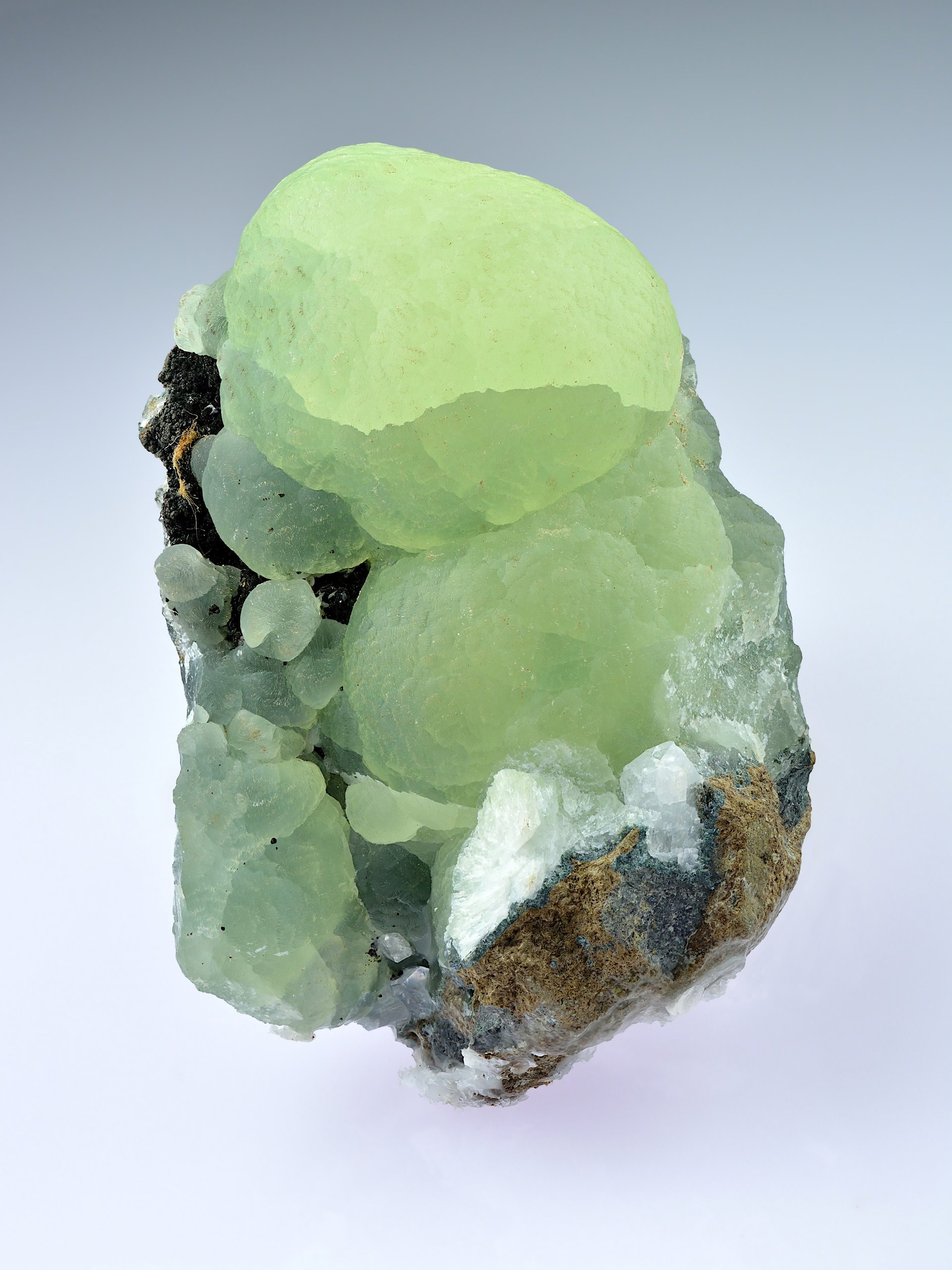
Born in volcanic cavities as soft apple-green globular masses, prehnite is the stone of dream recall and gentle emotional release.
- Prehnite was named after Hendrik von Prehn, a Dutch colonel in the 1700s Cape of Good Hope region.
- Prehnite was the first mineral species to be named after an individual person.
- Prehnite with epidote inclusions is a prized collector combination from Mali.
- The stone's characteristic grape-skin inner glow comes from radiating fibrous crystal structure.
- Prehnite is often found in the same volcanic cavities as zeolites and other cavity-fill minerals.
- Practitioners seeking a dream recall and lucid dreaming stone for bedside use
- Crystal workers bridging heart and solar plexus chakra work
- Readers drawn to soft apple-green color that feels fresh and organic
- Collectors of prehnite-with-epidote specimens for mineral displays
- Gift buyers wanting a calming yet uplifting crystal for meditation practice
- Buyers seeking faceted brilliance (prehnite is translucent not transparent)
- Shoppers wanting ring-hardness durability for hard daily wear (consider green tourmaline)
- Readers preferring clearly saturated green (try peridot or emerald)
What Is Prehnite?
Prehnite is a calcium aluminum silicate mineral that typically forms as globular or botryoidal masses in the gas cavities of volcanic basalt and amygdaloidal rock. The stone's soft apple-green color comes from trace iron, and its surface often shows a subtle internal glow when polished, sometimes called the grape skin effect.
Prehnite was first described scientifically in the late 1700s and is named after Dutch colonel Hendrik von Prehn, an early European collector of Cape of Good Hope minerals.
At Mohs 6 to 6.5, prehnite is moderately durable and is typically cut as cabochons, beads, or carvings rather than faceted stones. Its refractive index of 1.611 to 1.669 and its translucent-to-opaque character give polished material a soft, inviting luminescence.
Commercial gem prehnite often contains black acicular epidote inclusions, which are prized rather than penalized in collector pieces.
Major commercial sources include South Africa, Mali, Australia, and India. Malian prehnite from Kayes region is often the most saturated in color, while Australian prehnite from New South Wales tends to appear in larger botryoidal specimens.
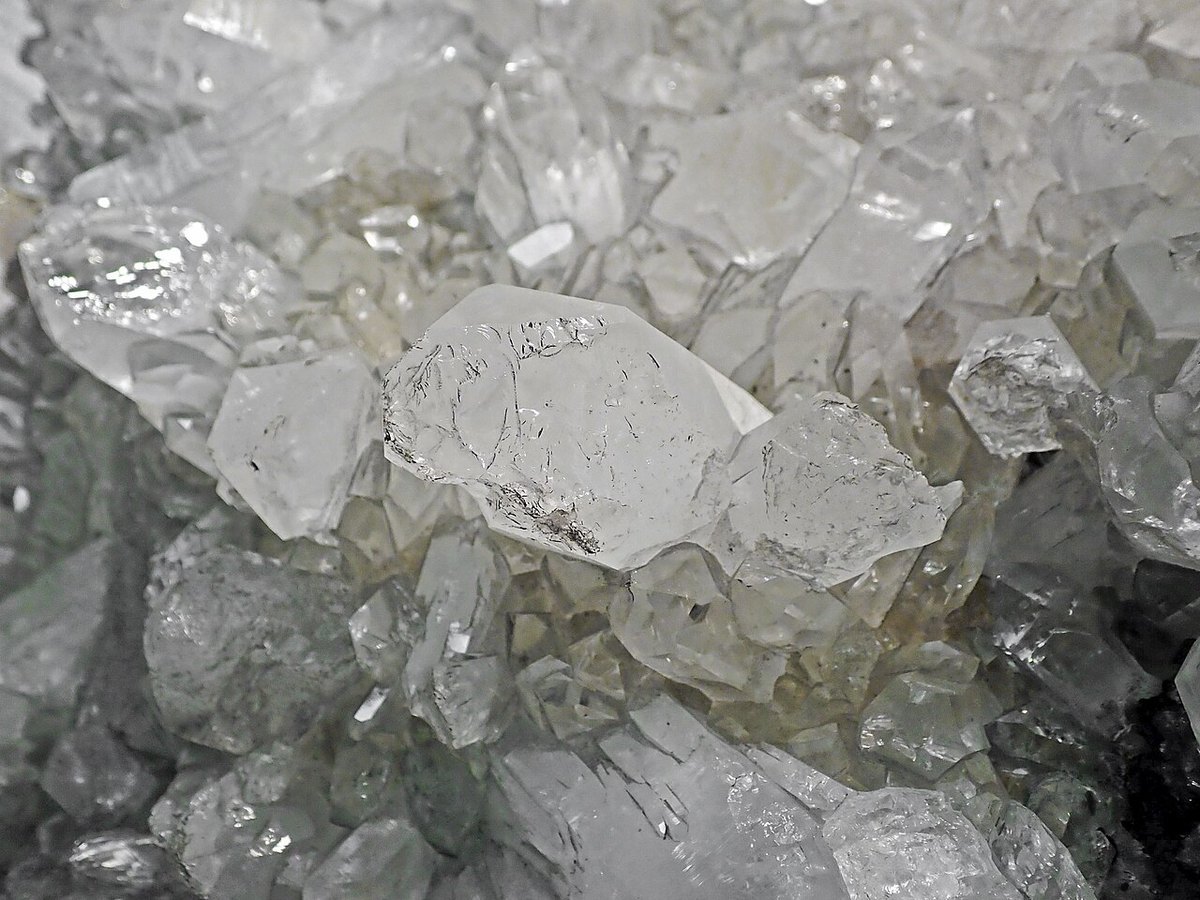
Prehnite forms in the same volcanic environments as zeolite group minerals, and collectors sometimes find prehnite in combination with apophyllite, stilbite, and datolite on a single matrix.
How Prehnite Compares
| Property | Prehnite | Peridot | Green Aventurine |
|---|---|---|---|
| Hardness | 6 - 6.5 | 6.5 - 7 | 6.5 - 7 |
| Price / carat | $ Budget | $ Budget | — |
| Rarity | Moderate | Moderate | Very Common |
| Best For | Cabochons, dream work, pendants | Faceted jewelry | Everyday tumbles |
Meaning and Symbolism
Prehnite was only identified scientifically in 1788, so it lacks ancient folklore. Its modern crystal healing meaning has been developed primarily in the last several decades, drawing on its apple-green color, soft inner glow, and formation in volcanic environments.
Practitioners often describe prehnite as a stone of unconditional love, specifically the love that arises from connection to nature and to one's own intuitive knowing.
The stone's distinctive reputation in modern crystal practice is as a dream stone. Crystal workers consistently recommend prehnite for bedside placement to support dream recall, lucid dreaming, and prophetic dream work. This association has grown alongside broader interest in sleep-related crystal practices.
Its pairing with moonstone for dream work is standard in modern traditions.
Prehnite is also associated with healing the healer, a specific metaphysical application suggesting the stone supports caregivers, therapists, and crystal workers themselves who give energy to others. Practitioners often describe prehnite as a stone that restores the giver rather than the receiver.
Modern tradition has also linked prehnite with decluttering work, both literal and energetic, making it a favored stone for readers simplifying their homes or letting go of obsolete patterns.
Historical Timeline
Healing Tradition
Emotional
Practitioners believe prehnite is a stone of gentle emotional release, traditionally associated with letting go of accumulated stress and restoring softness after long caretaking seasons. In crystal healing tradition, it is said to support readers who have been giving energy for too long and need to reconnect with their own needs.
Many readers keep a prehnite palm stone on a desk or nightstand during demanding periods, framing it as a gentle reminder to restore rather than push. Practitioners often pair prehnite with rose quartz for compound heart work and with amethyst for bedtime calm.
Crystal workers frequently describe prehnite as a healer's stone, particularly suitable for therapists, nurses, social workers, and anyone whose professional role involves holding space for others.
The stone is also traditionally linked with decluttering, both of physical objects and of outdated beliefs, and practitioners often suggest prehnite for readers undertaking significant life simplification.
Spiritual
In crystal healing tradition, prehnite is linked with the heart and solar plexus chakras, bridging the energy of willful action with compassion. The stone's apple-green color places it alongside other heart stones, but with a brightness that practitioners often describe as energizing rather than purely nurturing.
Many readers use prehnite in midday meditation or during intention setting around personal renewal.
Prehnite's strongest modern spiritual association is as a dream stone. Crystal workers recommend placing a small prehnite piece under the pillow, on the nightstand, or at the head of the bed to support dream recall, lucid dreaming, and prophetic dream practice. The pairing with moonstone is standard.
Prehnite also pairs with clear quartz in amplifying dream intention grids and with selenite for morning cleansing. Some traditions describe prehnite as a stone of prophecy, though practitioners frame this as intuitive clarity rather than literal foresight.
Physical
Practitioners believe prehnite is traditionally associated with the kidneys, bladder, and what they describe as overall gentle body detoxification. Folklore links the stone with reduced fluid retention, steady circulation in the lower torso, and general physical decluttering, framed as supportive accompaniment rather than medical intervention.
Many readers wear prehnite pendants during spring cleansing seasons or after heavy dietary periods. The stone is not a substitute for healthcare and practitioners are consistent in describing its role as accompanying rather than treating.
Some crystal workers suggest prehnite for caregivers experiencing physical exhaustion from extended helping work, often paired with hematite for grounded vitality. Because prehnite is chemically stable and has moderate hardness, it is tolerated in direct-contact practices including brief water rinses and worn pieces.
Zodiac, Birthstone and Gifts
Prehnite is not a traditional birthstone, but modern astrologers often associate it with Libra for its Venusian gentleness and with Virgo for its reputation in decluttering and service-oriented work.
For Libra readers seeking balance in relationships, prehnite is often recommended as a bedside or desk stone for gentle emotional perspective. Virgo readers drawn to service and analytical clarity tend to find prehnite supportive for caregiver burnout.
Practitioners sometimes pair prehnite with rose quartz for Libra and with amazonite for Virgo in zodiac kits.
Care and Cleansing
Prehnite is relatively easy to maintain. Lukewarm water with mild soap is safe for cabochons and set pieces, and a soft brush removes accumulated body oils without risk. Avoid ultrasonic and steam cleaners on fractured or heavily included pieces, because vibration can propagate inclusions.
Prolonged saltwater soaking should be avoided because salt can slowly etch the surface and affect metal mountings.
Moonlight, sound cleansing with a singing bowl, and smoke cleansing with palo santo or sage are all traditional and safe. Dry salt cleansing for a few hours is acceptable. Many practitioners rest prehnite on selenite plates overnight as a preferred method.
Ultraviolet fluorescence is typically weak in prehnite and does not figure in standard cleansing.
Brief sunlight is tolerated but prolonged direct sun can slowly dull the apple-green color over extended periods. Cleansing prehnite with moonlight is often preferred in crystal tradition because the stone's dream associations align with lunar energy. Prehnite is particularly popular in bedside-cleansing routines that combine overnight moonlight with morning sound cleansing.
- DO cleanse prehnite in lukewarm soapy water with a soft brush for regular care.
- DO NOT use ultrasonic or steam cleaners on heavily included or fractured prehnite.
- DO store prehnite separately in a soft pouch away from harder stones.
- DO NOT leave prehnite in direct sunlight for extended periods.
- DO set prehnite rings in protective bezel mountings rather than prong settings.
- DO remove prehnite jewelry before housework, gardening, and swimming.
- Note: prehnite with epidote inclusions is a collector-prized form and not a defect.
Real vs Fake
Genuine prehnite shows a characteristic apple-green color with subtle internal glow and often a visible radiating fibrous structure under magnification. The stone's translucent appearance, not fully transparent, is diagnostic. Refractive index of 1.611 to 1.669 and specific gravity of 2.80 to 2.95 confirm identification in gemological testing.
Common imitations and confusions include green jade, green glass, serpentine, and dyed quartz. Jade typically shows fibrous interlocking structure with higher density. Glass often shows gas bubbles and lacks the subtle radiating pattern. Dyed quartz may reveal color concentrations where the dye pooled.
Serpentine has different density and a slightly different green tone.
Synthetic prehnite is not commercially produced because the natural material is widely available at accessible prices. For significant purchases, a lab certificate confirms identity, and reputable sellers disclose origin and any inclusions.
Prehnite-with-epidote combinations are collector-prized and not considered defects, but buyers should ask about the specific country of origin for provenance-sensitive purchases.
Prehnite Jewelry & Gifts
Prehnite is reasonably affordable. Small tumbled pieces typically cost $3 to $10 each, bead strands run $15 to $50, and quality cabochons range from $10 to $75 depending on size and color saturation.
Top-quality cabochons with strong apple-green color, high translucency, and optional epidote inclusions can reach $50 to $200 for larger stones. Specimen-grade prehnite with apophyllite or stilbite associations commands a collector premium for mineral display pieces.
Treatment is typically not applied to prehnite because the natural color and translucency require no enhancement. For jewelry, favor cabochons with strong color, pleasant translucency, and well-executed cuts, and use protective bezel settings for rings.
Ask reputable sellers whether material is natural prehnite or a dyed substitute like dyed quartz or green glass, and request origin information for collector pieces.
Where to Buy Prehnite
Affiliate disclosure: Some links below earn us a small commission at no extra cost to you. See our affiliate disclosure page.
Handmade, raw, and tumbled pieces from independent sellers worldwide.
Shop Prehnite on Etsy →Accessories, tools, and specimen sets with fast Prime delivery.
Shop Prehnite on Amazon →Certified loose gemstones graded and photographed for online buyers.
Shop Prehnite on GemSelect →Pairs Well With



Where Prehnite Is Found


