
Demantoid Garnet
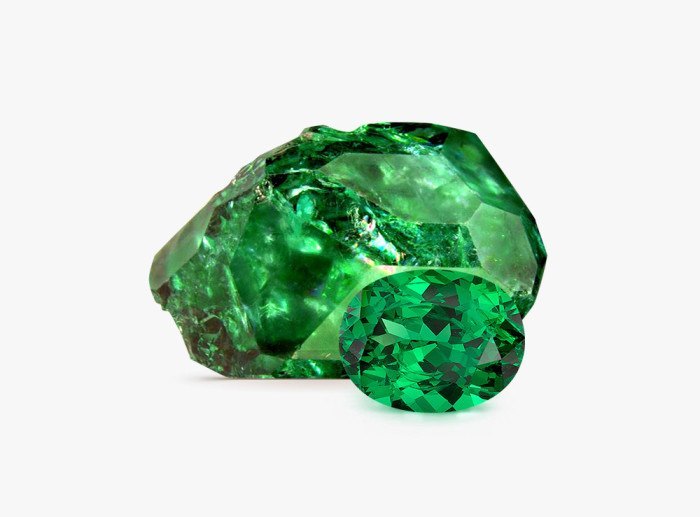
Demantoid is the rarest and most valuable garnet - a vivid grass-green andradite with fire dispersion exceeding diamond.
- Demantoid's dispersion of 0.057 exceeds diamond (0.044) - it creates more fire per unit of light than the world's most famous gemstone.
- The horsetail inclusion unique to Russian Ural demantoid is composed of byssolite, a fibrous form of actinolite, and can confirm origin.
- Faberge used demantoid extensively in his Imperial Easter Eggs - pieces now worth tens of millions of dollars at auction.
- Most commercial demantoid is under 1 carat - stones above 2 carats in fine quality are genuinely rare and command strong premiums.
- Demantoid is a calcium iron silicate, while most other green gems (emerald, tourmaline, tsavorite) are aluminum silicates - unusual chemistry for such vivid color.
- Serious collectors seeking one of the world's rarest faceted gems
- Jewelry investors looking for a historically appreciating colored gemstone
- Those wanting green gem fire that exceeds even diamond dispersion
- Lovers of Victorian and Edwardian jewelry history - demantoid was Faberge's signature gem
- Heart chakra practitioners who want the rarest and most powerful green stone available
- Everyday jewelry wearers - Mohs 6.5-7 requires protective settings and careful handling
- Budget-conscious buyers - fine demantoid costs $1,000-$10,000+ per carat
- Those wanting a large center stone - most gem-quality pieces are under 2 carats
What Is Demantoid Garnet?
Demantoid is the green variety of andradite garnet - a calcium iron silicate with the formula Ca3Fe2(SiO4)3. It is the most valuable garnet in the world per carat, and one of only a handful of gemstones to exceed diamond's fire (dispersion of 0.057 versus diamond's 0.044).
The name comes from the Dutch 'demant,' meaning diamond, reflecting the stone's extraordinary brilliance and fire. Despite this diamond-like optical performance, demantoid remained obscure until Ural Mountain deposits were discovered in Russia in the 1860s.
The vivid green color comes from chromium in Russian material and from a combination of chromium and iron in Namibian specimens. Russian demantoid is unique for its 'horsetail' inclusion - a radiating fan of byssolite (fibrous chrysotile) fibers that is prized by collectors as a diagnostic marker for Ural origin.
Unlike most gemstones where inclusions reduce value, a well-formed horsetail inclusion in Russian demantoid can actually increase it, confirming origin and serving as a natural fingerprint.
Demantoid is found in serpentinite and related metamorphic rocks, forming in hydrothermal environments where calcium, iron, and chromium are available. Gem-quality material is exceedingly scarce worldwide.
Russian Ural deposits produce the most historically significant and highest-priced material; Namibian deposits discovered in the 1990s introduced a more commercially available if slightly different character of demantoid to the market.
How Demantoid Garnet Compares
| Property | Demantoid Garnet | Tsavorite Garnet | Emerald |
|---|---|---|---|
| Fire (dispersion) | 0.057 - highest of any garnet | 0.028 | 0.014 |
| Hardness | 6.5 - 7 | 7 - 7.5 | 7.5 - 8 |
| Price / carat | $$$ Premium | $$ Mid-range | $$ Mid-range |
| Best For | Collector gem, investment | Fine jewelry green | Investment, fine jewelry |
Meaning and Symbolism
Demantoid carries the cultural weight of Imperial Russia and the golden age of European jewelry art. Carl Faberge used Russian demantoid extensively in his famous Easter Eggs and fine jewelry commissions for the Romanov court, establishing the stone's association with the pinnacle of aristocratic taste.
The Czar's jewelers sourced exclusively from the Ural Mountains, where artisanal miners worked treacherous river deposits to supply one of the most demanding gem markets in history.
The stone fell out of fashion after the Russian Revolution when Ural mining operations were nationalized and production declined sharply. For most of the 20th century, demantoid was a collector's gem - known to connoisseurs but unavailable to the broader market.
The discovery of Namibian deposits in the late 1990s revived commercial interest and introduced demantoid to a new generation of colored-gem enthusiasts.
In crystal healing tradition, demantoid is said to carry a particularly vibrant, life-affirming Heart chakra energy - the green of new growth amplified by the stone's extraordinary optical brilliance.
Practitioners believe its fire encourages the same quality in the emotional body: a spark of aliveness, enthusiasm, and creative passion that refuses to be dimmed. The rarity of the stone itself adds to its perceived energetic intensity in many healing frameworks.
Historical Timeline
Healing Tradition
Emotional
In crystal healing tradition, demantoid is said to ignite the emotional body with the energy of spring - fresh growth, new beginnings, and the courage to emerge from contraction.
Practitioners believe its exceptional fire reflects an inner quality: the ability to find brilliance within ordinary experience and to radiate warmth and vitality outward. Many healers recommend it for those recovering from prolonged depression or emotional flatness, where the need is not for soothing but for genuine rekindling of aliveness and enthusiasm.
Spiritual
Demantoid is described in crystal healing practice as a Heart chakra stone of exceptional intensity - not the gentle, nurturing heart energy of rose quartz but the fierce, joyful aliveness of a being fully committed to living.
Practitioners associate it with spiritual courage: the willingness to love without holding back, to create without guarantee of success, and to continue opening even after disappointment. Its extraordinary fire is interpreted as a physical expression of the soul's inexhaustible capacity for light.
Physical
From a crystal healing perspective, demantoid is said to support vitality, stamina, and the regenerative energy of the physical body. Its chromium-green connection is traditionally associated with cellular renewal and the life force expressed through healthy growth. These are energetic associations from crystal healing tradition and are not medical claims.
Demantoid Garnet is not a treatment for any physical condition and should not replace medical diagnosis or care.
Zodiac, Birthstone and Gifts
Demantoid's fire-element energy and fiercely vivid character resonate most strongly with Aries and Leo in crystal healing tradition. Aries benefits from demantoid's initiating, courage-forward energy and its connection to new beginnings and spring vitality.
Leo is drawn to demantoid's exceptional brilliance and the way it commands attention - a stone that matches Leo's own natural radiance. Both fire signs appreciate a gem that refuses to be subtle or overlooked.
As garnet is traditionally associated with the January birthstone (primarily almandine), demantoid represents the most elevated, collector-grade expression of that birthstone tradition.
Care and Cleansing
Demantoid tolerates water and most standard cleansing methods. Warm water with a soft brush is the recommended cleaning method for loose stones and set jewelry, avoiding temperature extremes that could stress any existing inclusions. Salt water in brief exposure is acceptable but rinse with fresh water afterward.
Ultrasonic cleaners are generally safe for clean, unfractured demantoid but should be avoided for included specimens or any stones showing visible cracks.
Moonlight cleansing is a gentle, no-contact option suitable for set demantoid jewelry. Sound cleansing with a singing bowl or tuning fork is equally effective. Because of the gem's high value, err on the side of conservative cleansing methods.
Avoid abrasive materials, harsh chemicals, or anything that could scratch the surface at Mohs 6.5-7.
- DO NOT store with diamonds, sapphires, or rubies - at Mohs 6.5-7, demantoid can be scratched by harder gems.
- DO NOT use ultrasonic cleaners on included specimens or pieces with visible fractures.
- DO remove before physical labor, sports, or activities with impact risk.
- DO NOT expose to household chemicals including bleach, acetone, or harsh cleaners.
- NOTE: Demantoid Garnet may lose color intensity when heated above 200°C - avoid exposing to flame or high heat.
- DO have jewelry inspected by a professional annually to check prong integrity - replaceable prongs protect an irreplaceable stone.
Real vs Fake
Russian demantoid with horsetail inclusions is the most positively identifiable green garnet in the market - the horsetail is a specific, documented inclusion type that occurs in Ural demantoid and is essentially impossible to fake.
Under 10x magnification, look for a starburst or fan-shaped array of yellowish fibrous inclusions (byssolite) radiating from a central point. Its presence confirms Ural Russian origin.
For Namibian demantoid without horsetails, the key test is refractive index. Demantoid has an unusually high RI of approximately 1.855-1.895, well above emerald (1.565-1.602) or green tourmaline (1.614-1.666). A standard gemological refractometer will show demantoid reading at or near the top of the scale.
Green glass (RI ~1.50) and synthetic materials will read well below.
Tsavorite garnet is the most common legitimate confusion: both are vivid green garnets. Tsavorite (grossular garnet) has a lower RI (~1.73-1.75) and lower dispersion (0.028). Under magnification, demantoid often shows characteristic curved growth features. Laboratory certification from gemological laboratories or AGL is definitive and strongly recommended for any demantoid purchase above $500.
Demantoid Garnet Jewelry & Gifts
Commercial-grade Namibian demantoid begins around $200-$500 per carat for small stones under 0.5 ct. Fine Namibian material with vivid green and good clarity runs $500-$2,000/ct. Russian Ural demantoid with documented horsetail inclusions starts at $1,000/ct for small stones and reaches $5,000-$10,000+/ct for fine pieces above 1 carat with excellent color.
Color is the primary driver - the most valuable demantoid displays pure grass-green or slightly yellowish-green without brown undertones. Dispersion fire is the secondary value factor: look for strong rainbow flashes visible in faceted stones. Always ask for treatment disclosure (demantoid is not routinely treated, making an 'untreated' certificate meaningful).
For any piece above $500, a gemological laboratories or AGL lab report is strongly recommended.
Where to Buy Demantoid Garnet
Affiliate disclosure: Some links below earn us a small commission at no extra cost to you. See our affiliate disclosure page.
Handmade, raw, and tumbled pieces from independent sellers worldwide.
Shop Demantoid Garnet on Etsy →Accessories, tools, and specimen sets with fast Prime delivery.
Shop Demantoid Garnet on Amazon →Certified loose gemstones graded and photographed for online buyers.
Shop Demantoid Garnet on GemSelect →Pairs Well With



Where Demantoid Garnet Is Found


