
Onyx
Banded chalcedony in ink black or cameo-carved contrast, onyx is the grounding stone of focus, protection, and quiet personal authority.
- The word onyx comes from the Greek word for fingernail, referencing either color translucence or an Eros-and-Aphrodite myth.
- Most commercial black onyx is gray or colorless chalcedony dyed black by a traditional sugar-and-acid process dating to Roman times.
- Sardonyx, with alternating red and white layers, is the classic cameo carving material and is the August birthstone alongside peridot.
- The United States Capitol, the Supreme Court building, and many European palaces use onyx marble (a different material) for columns and inlays.
- Victorian mourning jewelry often used polished black onyx as the acceptable black stone for formal grief wear.
- Readers seeking a grounding protection stone for daily wear
- Practitioners working with root chakra stability and boundary setting
- Minimalist jewelry buyers drawn to classic black stones
- Executives and students wanting a focused-work companion stone
- Buyers interested in carved cameos and intaglios (sardonyx)
- Shoppers seeking transparent or sparkling gems (onyx is opaque)
- Buyers wanting investment-grade rarity (onyx is common)
- Those avoiding dyed stones (most commercial black onyx is dyed)
What Is Onyx?
Onyx is a banded variety of chalcedony, a microcrystalline form of quartz (SiO2). Technically, true onyx shows parallel bands of black and white that can be cut to produce cameos with contrasting layers. It rates 6.5 - 7 on the Mohs hardness scale.
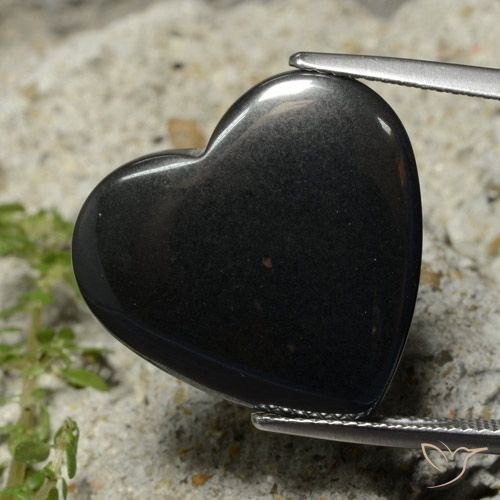
In modern commercial use, onyx most often refers to uniformly black chalcedony, typically produced by dyeing natural gray or banded chalcedony black. Sardonyx has alternating reddish-brown (sard) and white bands and is the traditional cameo carving material.
At Mohs 6.5 to 7, onyx is durable enough for daily wear in all jewelry forms. The microcrystalline structure makes it tough and shock-resistant, which is why onyx has been used for carved seals, intaglios, and cameos since antiquity.
The name onyx comes from the Greek onux, meaning fingernail, referencing either the translucence of certain banded specimens or a mythological story about Eros trimming Aphrodite's fingernails into stone.
Most black onyx on the market today is dyed gray or colorless chalcedony, a stable traditional treatment known since Roman times. The dyeing process (a sugar and acid bath followed by heat) produces permanent black color and is widely accepted in the trade. Natural uniform black chalcedony is rare.
Other onyx varieties include onyx marble (calcite banded stone used architecturally), blue onyx (dyed), and green onyx (dyed); these should be disclosed as chalcedony derivatives rather than traditional onyx.
How Onyx Compares
| Property | Black Onyx | Black Obsidian | Black Tourmaline |
|---|---|---|---|
| Hardness | 6.5 - 7 | 5 - 5.5 | 7 - 7.5 |
| Price / carat | — | $ Budget | $ Budget |
| Rarity | Common (mostly dyed) | Common | Common |
| Best For | Daily jewelry, cameos | Grounding practice | Protection and grounding |
Meaning and Symbolism
Onyx has been carved since antiquity. Egyptian scarabs, Roman intaglios, and Hellenistic cameos are among the most important early uses, with carvers working banded sardonyx to produce portraits and mythological scenes in contrasting layers.
Cameo carving remained a major European jewelry tradition through the Renaissance and into the Victorian era, with Neapolitan cameo workshops producing thousands of pieces per year.
In ancient folk tradition, onyx had an ambiguous reputation. Some Greek and Roman sources described the stone as encouraging strife, while others praised it as a warrior's amulet for courage in battle. The varying reputation likely reflects different varieties being used under the same name.
Medieval European texts associated onyx with steady fidelity and protection against negative thinking, and mourning jewelry in the Victorian period often used polished black onyx to express grief with restrained elegance.
In crystal healing tradition, onyx is associated with the root chakra, grounding protection, and the capacity to hold one's own space against energetic drain. Practitioners often describe black onyx as a steady, quiet stone, suitable for readers working in demanding environments or dealing with persistent energetic pressure from others.
Many readers wear onyx as a pendant, bracelet, or ring during challenging work periods, and the stone has a long reputation as a subtle, daily-use protection companion.
Historical Timeline
Healing Tradition
Emotional
Practitioners believe black onyx is a steady grounding stone, traditionally associated with the capacity to stay centered under pressure. In crystal healing tradition, it is said to absorb and redirect the negative emotional energy that can accumulate during long stressful periods.
Making it a classic recommendation for readers in high-conflict work environments or demanding family situations.
Many wear onyx as a ring, bracelet, or pendant during periods of intense project work. Crystal workers often pair onyx with rose quartz for softer emotional balance or with clear quartz for clarity of intention.
Onyx is generally described as a cool, restrained stone suited to steady daily wear rather than dramatic transformative work. Readers recovering from long periods of energetic drain sometimes keep onyx on a bedside table as a quiet overnight companion.
With the stone framed as a reminder of one's own capacity to hold personal space.
Spiritual
In crystal healing tradition, onyx is linked with the root chakra and the element of earth. Practitioners often describe it as a stone of disciplined focus and personal sovereignty, said to support readers in committed contemplative or meditative practice. Many use onyx during meditations on boundaries, personal authority, and quiet presence.
The stone has long been associated with Saturn in Western astrological and crystal traditions, which practitioners read as echoing the themes of patient discipline and steady structure. Onyx pairs readily with black tourmaline for additional protection and with smoky quartz for deeper grounding.
Crystal workers sometimes set onyx at the corners of a meditation space or bed, with the arrangement described as a quiet personal protection grid. The stone is traditionally considered suitable for daily use rather than reserved ritual.
Physical
Practitioners believe onyx supports what they describe as bone and foot comfort, grounding the body through the physical base. Crystal healing tradition associates onyx with stamina during long periods of standing or walking, and with steady nerve function under stressful conditions.
Many readers wear onyx rings or bracelets for sustained daily support rather than acute remedy. Onyx is not a substitute for medical care, and practitioners frame its role as accompanying rather than curing.
Because the stone is stable in water and sun, readers can wear onyx jewelry through ordinary activity without special care, and crystal workers often describe it as a low-maintenance energetic companion.
Zodiac, Birthstone and Gifts
Onyx is not an official modern US birthstone, but sardonyx is one of the traditional August birthstones alongside peridot. Astrologers often link onyx with Saturn and Mars, a combination many find echoes themes of disciplined strength and patient structure.
For Capricorn, practitioners frequently recommend onyx as a stone of sustained authority, aligning with the sign's natural preference for grounded long-term effort. For Leo, the stone is said to provide cooling counterweight to solar activity, supporting the sign's leadership with steady quiet.
In Vedic tradition, black onyx is sometimes prescribed for those working with Saturn influence, typically set in silver and worn on the middle finger during Saturn cycles.
Care and Cleansing
Onyx tolerates standard cleaning. Warm soapy water with a soft brush is safe, and brief rinses in tap water cause no damage.
Ultrasonic and steam cleaners are generally safe for clean onyx but should be avoided on any stone with visible fractures because the impurities that made it black may be concentrated along internal cracks.
Moonlight, smoke cleansing with sage or palo santo, and sound cleansing with a singing bowl are all safe and traditional for onyx. Dry salt cleansing on a small cushion is tolerable; saltwater should be avoided because of metal setting corrosion.
Many practitioners describe onyx as a self-maintaining stone that requires less active cleansing than more absorbent softer crystals.
Direct sunlight is safe because commercial dyed black onyx uses a permanent sulfuric-acid treatment that does not fade under ordinary UV exposure. Brief morning sunlight charging is traditional and poses no risk.
Prolonged heat from direct south-facing windowsills should still be moderated to prevent thermal shock on carved pieces, but this is rarely a practical concern for jewelry items.
- DO clean onyx jewelry with warm soapy water and a soft brush.
- DO NOT expose onyx to harsh solvents or prolonged bleach contact.
- DO store onyx separately from harder gems such as diamond, sapphire, and topaz.
- DO remove onyx rings before heavy impact activities to prevent chips on the girdle.
- DO ask your seller for disclosure of dyeing (most commercial black onyx is dyed).
- DO use ultrasonic cleaners only on unfractured pieces; skip them on carved cameos.
- Note: onyx marble is a different material (calcite-based) and requires different care from chalcedony onyx.
Real vs Fake
Genuine onyx, whether natural or traditionally dyed chalcedony, shows a fine microcrystalline texture with no visible internal structure and a vitreous to slightly waxy polish. Under a 10x loupe, the surface appears smooth and uniformly colored without grain patterns or embedded structures. Sardonyx shows clear banded layers visible even without magnification.
Common imitations and substitutes include dyed howlite (significantly softer at Mohs 3.5), pressed black glass, black plastic, and lower-grade black chalcedony from poor sources. Glass shows curved gas bubbles and sometimes swirl patterns under magnification. Plastic is lighter than stone and feels warm to the touch.
Dyed howlite can be detected because howlite scratches easily with a steel knife.
Practical at-home checks include testing hardness (real onyx scratches window glass easily; howlite does not), checking weight (chalcedony is heavier than plastic), and examining a freshly scratched surface for consistent black color throughout.
Traditionally dyed onyx is black to the core; newer dyed stones sometimes show lighter interior under a freshly abraded spot. For valuable pieces, especially carved cameos, a gemological laboratory confirms species and dye treatment.
Onyx Jewelry & Gifts
Onyx is one of the most affordable commercial gemstones. Dyed black onyx cabochons and beads run $0.50 to $5 per carat, with large polished statement pieces rarely exceeding $10 per carat. Sardonyx sits at $3 to $30 per carat depending on banding quality and size.
Carved cameos are priced by carving quality and artist rather than by the stone itself, with fine Neapolitan cameos reaching four to five figures for exceptional pieces.
Dyeing is standard for black onyx and should be disclosed by any reputable seller. Natural uniform black chalcedony is rare and commands a modest premium, but the dyeing process is stable and widely accepted. For cameos, focus on carving detail, the evenness and contrast of the banding, and the overall composition.
Treated onyx is considered a legitimate commercial product as long as disclosure is clear. Onyx marble (architectural material) is priced differently and should not be confused with jewelry-grade chalcedony onyx.
Where to Buy Onyx
Affiliate disclosure: Some links below earn us a small commission at no extra cost to you. See our affiliate disclosure page.
Handmade, raw, and tumbled pieces from independent sellers worldwide.
Shop Onyx on Etsy →Accessories, tools, and specimen sets with fast Prime delivery.
Shop Onyx on Amazon →Certified loose gemstones graded and photographed for online buyers.
Shop Onyx on GemSelect →Pairs Well With



Where Onyx Is Found


