
Jeremejevite
First found on a Siberian peak and now mined mostly in Namibia, jeremejevite is one of the rarest pale-blue gems on earth.
- Jeremejevite was named after Russian mineralogist Pavel Jeremejev, who first analyzed the mineral in the nineteenth century.
- The type locality is Mount Soktui in Siberia, but most gem-quality material today comes from Namibia.
- Faceted jeremejevite above two carats is rare enough that individual stones are often tracked and documented.
- The mineral is a borate; its formula includes boron, aluminum, and fluorine, a relatively unusual combination among gems.
- Jeremejevite shows strong pleochroism, moving between colorless and pale blue along different viewing axes.
- Advanced gem collectors pursuing rarest-species portfolios
- Mineralogy enthusiasts who value borate gem chemistry
- Jewelry buyers seeking pale-blue pastel alternatives to aquamarine
- Practitioners drawn to soft blue stones for throat and third eye work
- Investors in extreme-rarity gem species backed by lab reports
- Budget shoppers under $500 per carat (consider aquamarine or blue topaz)
- Buyers who want a daily-wear ring stone (protective setting essential)
- Readers who prefer saturated deep color (try sapphire or tanzanite)
What Is Jeremejevite?
Jeremejevite is a rare aluminum borate mineral with the formula Al₆B₅O₁₅(F,OH)₃. It was first described in 1883 from specimens collected at Mount Soktui in the Adun-Chilon Mountains of Transbaikalia, Siberia, and was named after Russian mineralogist Pavel Vladimirovich Jeremejev, who first analyzed the material. It rates 6.5 - 7.5 on the Mohs hardness scale.
Gem-quality jeremejevite was extremely scarce until 1973, when significant discoveries were made at Mile 72 along the Skeleton Coast of Namibia, and again at Erongo, Namibia in the early 2000s.
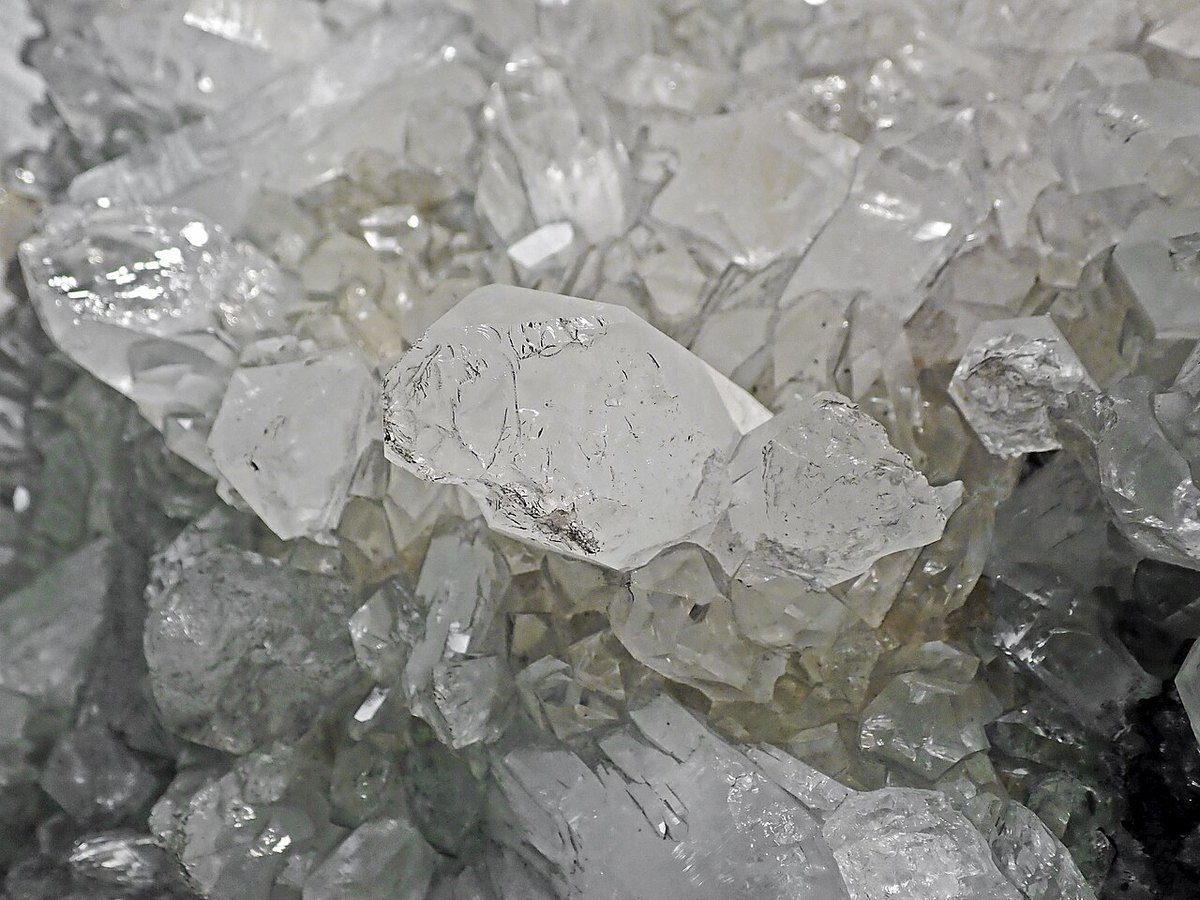
Mineralogically, jeremejevite crystallizes in the hexagonal system and forms as elongated prismatic crystals, sometimes with well-developed pyramidal terminations. The IMA symbol is Jer. Color ranges from colorless through pale blue to cornflower blue, with pale blue being the most common gem-quality variety.
Yellow and brownish stones have also been reported from Russia and Tajikistan. The stone has no cleavage and instead shows a conchoidal fracture, which makes it relatively stable during cutting despite its modest hardness.
Hardness is approximately 6.5 to 7.5 on the Mohs scale, refractive index approximately 1.640 to 1.653, and specific gravity about 3.28 to 3.31. Faceted jeremejevite is typically small, with most stones under one carat; anything above two carats is a significant specimen.
The stone is optically attractive with good transparency and a vitreous luster, which has made it a favorite among collectors of extreme-rarity species even though its color is often soft rather than dramatic.
How Jeremejevite Compares
| Property | Jeremejevite | Aquamarine | Blue Topaz |
|---|---|---|---|
| Hardness | 6.5 - 7.5 | 7.5 - 8 | 8 |
| Price / carat | $$$ Premium | $$ Mid-range | $ Budget |
| Rarity | Extremely rare | Common | Common (treated) |
| Best For | Collector cabinet | Daily wear | Budget blue |
Meaning and Symbolism
Jeremejevite has essentially no pre-modern cultural meaning because it was only described in 1883 and only became available in faceted gem quality after the 1970s. Its cultural weight is shaped entirely by collector communities and twentieth-century crystal writers.
The stone shares a name with its discoverer, Pavel Jeremejev, and part of its modern reputation rests on that Russian-Siberian origin story combined with the later Namibian mining history.
In contemporary crystal tradition, jeremejevite is traditionally associated with the throat and third eye chakras, matching its pale blue color in most specimens. Practitioners believe the stone supports clear, calm communication and quiet insight, framing it as a gentle rather than intense blue stone.
Many find jeremejevite useful during meditation practices that emphasize subtle rather than dramatic shifts, and some practitioners treat it as a stone of discernment suited to readers in academic, contemplative, or craft-focused paths.
Because jeremejevite is so rare and so visually soft, it has never become a mass-market crystal, which has kept its meaning tightly linked to the small circle of practitioners and collectors who actively work with it.
This rarity has in turn produced a modest mystique: many practitioners who own jeremejevite treat it as a single significant stone rather than one of many, and the stone's reputation for quiet, mature, patient energy echoes that collector context.
Historical Timeline
Healing Tradition
Emotional
Practitioners believe jeremejevite is a stone of gentle discernment and calm self-expression. In crystal healing tradition, it is said to support a wearer who needs to say something difficult but true, especially in low-stakes daily interactions where sharp words can escalate quickly.
Many find jeremejevite useful during long caregiving periods, academic study, or slow creative work, where a soft, steady clarity serves better than dramatic mood shifts.
Jeremejevite is often paired with rose quartz when tender honesty needs heart support, with smoky quartz when older fears of speaking up need grounding, and with clear quartz when a practitioner wants to amplify a specific communication-related intention.
Because the stone has a soft, almost whispered presence rather than a loud one, practitioners tend to recommend it for quiet daily carry rather than dramatic single-session work.
Spiritual
In crystal healing tradition, jeremejevite is said to bridge the throat and third eye chakras with a quiet, mature energy that suits long-term contemplative practice.
Practitioners believe the stone supports discernment rather than vision, and many readers use jeremejevite in meditation focused on listening, study, or the slow process of discerning a life direction.
Because jeremejevite is a modern discovery, it has no classical planetary assignment; contemporary practitioners often associate it with Uranus for its unusual rarity and its association with clear, independent thought.
Holding jeremejevite during journaling, intention-setting around communication, or during long study sessions are common practices among the small community of readers who work with the stone.
Physical
Practitioners believe jeremejevite supports what they describe as the throat and upper head in gentle, steady ways rather than in immediate bursts. Folklore around pale blue borate stones is modern and ties them to voice, nervous-system calm, and mental focus in metaphorical rather than clinical terms.
Many find wearing a small jeremejevite pendant near the collarbone supportive during long speaking days, vocal fatigue, or demanding mental work. Jeremejevite is not a substitute for medical care, and practitioners frame its role as supportive rather than curative.
Readers with thyroid concerns, chronic vocal strain, or migraine patterns are encouraged to rely on qualified medical guidance and treat crystal practice as one piece of a broader routine.
Zodiac, Birthstone and Gifts
Jeremejevite is a modern collector stone without any traditional birthstone role. In contemporary Western astrology, Aquarians drawn to unusual, rare, independently spirited gems often gravitate to jeremejevite for its extreme scarcity and its cool pale blue color.
Sagittarians with a scholarly bent sometimes adopt the stone for its reputation as a patient, discerning companion in long study. Because jeremejevite was only identified in the nineteenth century and only became gem-available in the late twentieth, it carries no Vedic assignment.
Contemporary practitioners treat it as an intention-based or temperament-based stone rather than a chart-driven prescription.
Care and Cleansing
Jeremejevite cleanses gently. Lukewarm soapy water and a soft brush are the standard daily maintenance for loose stones, and a brief rinse under running water is acceptable. Avoid ultrasonic and steam cleaners because of the risk to any internal inclusions and the general caution applied to rare collector stones.
Saltwater should be avoided entirely because of the stone's value and the risk to any fluorine-bearing crystal surfaces over time.
Moonlight is traditionally recommended for jeremejevite, and short morning sunlight exposure is safe because the pale blue color is stable. Smoke cleansing with palo santo or sage is common, as is sound cleansing with a singing bowl placed near rather than under the stone.
Many practitioners recharge jeremejevite passively, resting it on a clear quartz cluster or selenite slab overnight, which avoids any handling risk for a stone of this rarity and value.
- DO store jeremejevite in a padded box away from harder stones like sapphire and topaz.
- DO NOT use ultrasonic or steam cleaners on jeremejevite.
- DO handle jeremejevite by the edges and wipe with a soft cloth after wear.
- DO NOT soak jeremejevite in saltwater, household cleaners, or strong detergents.
- DO remove jeremejevite jewelry before sports, gardening, or housework.
- DO ask for a recent lab report confirming species, origin, and treatment.
- Note: because of extreme rarity, any unusually low-priced jeremejevite should be verified by a reputable lab before purchase.
Real vs Fake
Genuine jeremejevite is distinguished first by its pale blue color and strong transparency, combined with specific gravity and refractive index unique to aluminum borate. Common substitutes and accidental confusions include pale aquamarine, pale blue topaz, blue zircon, and pale-blue synthetic spinel.
Aquamarine is slightly harder but less dense; blue topaz is harder still and has different optical properties; blue zircon shows much stronger birefringence.
Under a gemological refractometer, jeremejevite reads approximately 1.640 to 1.653, close to some tourmalines but distinct from aquamarine (1.567 to 1.590) and topaz (1.609 to 1.643). Specific gravity of 3.28 to 3.31 is heavier than aquamarine and similar to tourmaline.
A reputable gem lab report from an independent gemological lab, a reputable lab, or AIGS is considered essential for any jeremejevite above half a carat or priced above a few hundred dollars.
Practical at-home clues include strong pleochroism (the stone looks almost colorless viewed along one axis and pale blue along another), the characteristic hexagonal prismatic crystal habit when rough is available, and the combination of modest hardness with good transparency.
Synthetic jeremejevite has not entered the commercial market in meaningful quantity, so the primary risk is species confusion rather than outright forgery. Because of jeremejevite's extreme price, always require documented lab reports before purchase.
Jeremejevite Jewelry & Gifts
Jeremejevite is among the most expensive faceted gemstones by per-carat price. Small stones under half a carat typically run $500 to $1,200 per carat, stones between one half and one carat run $800 to $2,000 per carat.
Clean stones above one carat reach $1,500 to $3,500 per carat for fine Namibian Erongo material. Exceptional larger stones above two carats can exceed $4,000 per carat in collector auctions.
Most gem-quality jeremejevite on the market today comes from Erongo, Namibia, with smaller quantities from Mile 72 (Skeleton Coast, Namibia), the Pamir range in Tajikistan, and Russia. Namibian Erongo material with documented origin is considered the benchmark for the variety.
Treatments are rare; the stone is typically sold untreated, and a recent laboratory report is considered essential for any purchase above a few hundred dollars. Buyers should also confirm the cutting style and proportion, since skilled lapidary is essential to display the stone's soft color and transparency.
Where to Buy Jeremejevite
Affiliate disclosure: Some links below earn us a small commission at no extra cost to you. See our affiliate disclosure page.
Handmade, raw, and tumbled pieces from independent sellers worldwide.
Shop Jeremejevite on Etsy →Accessories, tools, and specimen sets with fast Prime delivery.
Shop Jeremejevite on Amazon →Certified loose gemstones graded and photographed for online buyers.
Shop Jeremejevite on GemSelect →Pairs Well With



Where Jeremejevite Is Found


