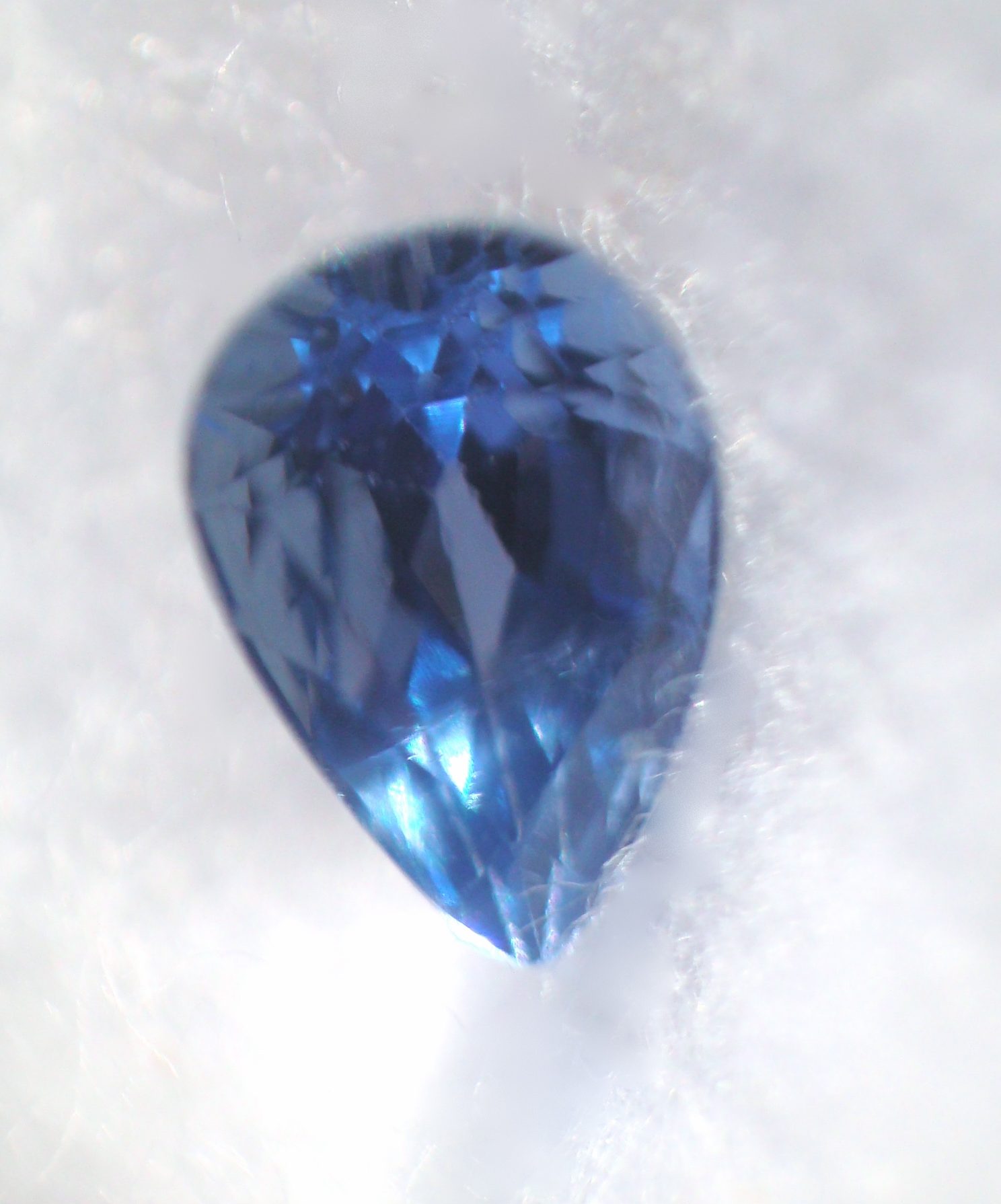
Montana Sapphire
America's only commercial sapphire source, Montana yields uniquely beautiful teal, steel-blue.
- Yogo sapphire is among the very few sapphires in the world that consistently requires no heat treatment to achieve vivid gem-quality color.
- Montana is the only US state with a commercially significant fine sapphire deposit; no other American state produces comparable material.
- Early Yogo sapphire rough was shipped to England where gemologists in London were reportedly shocked by its color quality in 1895.
- Rock Creek alluvial sapphires in Montana can be legally fossicked for personal use - one of the few places in the US where this is possible.
- Montana sapphire's characteristic teal color comes from an unusual iron-titanium ratio that produces blue-green rather than pure blue.
- US-origin enthusiasts who want an American-mined fine gemstone with documented provenance
- Buyers who love teal, steel-blue, and blue-green colors that differ from standard Ceylon or Burmese blue
- Collectors who value typically unheated natural stones with strong gem character and origin documentation
- Engagement ring shoppers wanting something patriotically American and completely distinctive
- Spiritual practitioners drawn to sapphire's Throat and Third Eye energy in a grounded, earth-connected American form
- Buyers wanting the classic deep royal blue of Burmese sapphire - Montana colors are distinctly different
- Bargain hunters - genuine Montana sapphire with documentation starts at $300 per carat and rises steeply
- Anyone who needs large clean stones in standard sizes - Yogo material in particular runs very small
What Is Montana Sapphire?
Montana sapphire is corundum (Al2O3) mined in Montana, USA - the only American state producing fine quality sapphire commercially. Two main types exist: Yogo sapphire from the Yogo Gulch formation in Judith Basin County, and alluvial sapphire from river gravel deposits along Rock Creek and the Missouri River system.
Each type has distinct characteristics, with Yogo producing small but exceptional stones and alluvial deposits offering a wider range of sizes and colors.
Yogo sapphire is famous among gemologists for a remarkable quality: it is naturally unheated yet achieves vivid, saturated cornflower-blue to blue-violet colors with exceptional clarity. This is unusual - most sapphire requires heat treatment to reach commercial color quality.
Yogo crystals form in a unique igneous dike formation and typically run small, under 1 carat, but their saturation and clarity are world-class for their size.
Alluvial Montana sapphire from Rock Creek and other placer deposits shows a much wider range of colors including steel blue, teal, green-blue, gray-blue, and occasionally parti-colored specimens. This material is often purchased by cutters and custom jewelers for its interesting color range and American origin story.
Heat treatment is more common with alluvial material, opening the color range further to pastel blues, pinks, and greens. Montana's sapphire country is also accessible to gem fossickers who can legally mine for personal-use specimens.
Montana Sapphire vs Ceylon Sapphire vs Burmese Sapphire
| Property | Montana Sapphire | Ceylon Sapphire | Burmese Sapphire |
|---|---|---|---|
| Color | Teal, steel-blue, blue-green | Cornflower blue | Royal blue, velvet |
| Hardness | 9 | 9 | 9 |
| Price / carat | $$$ Premium | $$ Mid-range | $$$ Premium |
| Heat treatment | Often unheated (Yogo) | Usually heated | Unheated most prized |
| Best For | US origin, teal aesthetic, collector | Classic engagement ring | Investment, prestige |
Meaning and Symbolism
Sapphire's ancient symbolism of wisdom, truth, and loyal devotion extends fully to Montana specimens - the mineral is identical to Burmese or Sri Lankan material, and practitioners who work with crystal energy consider these properties inherent to corundum itself.
What makes Montana sapphire's symbolic dimension unique is its specifically American origin: the stone comes from land that has supported life continuously for tens of thousands of years, from the Indigenous peoples of the Great Plains through the Lewis and Clark expedition and the mining era that followed.
Yogo sapphire in particular carries an interesting modern mythology: a stone that requires no heat treatment to achieve exceptional beauty, found in a remote Montana valley, mined from an unusual geological formation found nowhere else on Earth.
Many collectors describe Yogo sapphire as representing natural authenticity - a gem that needs no external enhancement to reveal its character. This resonates powerfully with practitioners who value stones in their most natural state.
In crystal healing tradition, sapphire's blue and blue-green spectrum is linked to honest communication, clear thinking, and alignment with higher wisdom. Montana's steel and teal tones are said by some practitioners to carry a more grounded, practical quality than the celestial depth of Burmese blue - a sapphire for people who are doing the daily, steady work of building authentic lives rather than seeking dramatic spiritual peaks.
Many find this earthier quality exactly right for regular wear and consistent energetic support.
Historical Timeline
Healing Tradition
Emotional
Practitioners believe Montana sapphire's grounded, earthy blue-green tones make it particularly effective for the kind of sustained emotional work that requires steady presence rather than dramatic breakthrough.
Many who work with this stone find it helpful for building emotional resilience over time - the patient, consistent development of clarity and calm in the face of life's complexity.
Is said to support the Throat chakra's function of honest communication with a specifically American directness: clear, practical, and free of unnecessary elaboration. Many find it a stone for authentic self-expression in everyday relationships.
Spiritual
In crystal healing tradition, Montana sapphire is associated with the Throat, Third Eye, and Heart chakras - a triple-chakra activation corresponding to its teal color range.
Practitioners believe it supports the alignment of thinking, feeling, and expression: the quality of acting and speaking from a place where mind and heart agree.
Is said to be particularly effective for people in teaching, counseling, or healing professions where this alignment is essential. The stone's naturally unheated quality - especially in Yogo material - resonates with practitioners who believe unaltered natural stones carry the purest energetic signature.
Physical
While no gemstone replaces medical care, sapphire is traditionally associated in Vedic practice with Saturn-governed body systems including bones, nervous system, and skin.
Practitioners use blue and teal sapphires in proximity to the head, throat, and chest to support mental focus, communicative ease, and clarity of thought.
Many describe working with Montana sapphire as having a particularly grounding quality that supports sustained concentration without overstimulation - a quality consistent with the stone's naturally balanced trace element composition. These are traditional associations and cultural practices, not medical claims.
Zodiac, Birthstone and Gifts
Montana sapphire serves as a September birthstone option for Virgo (August 23 - September 22) - the sign of discernment, precision, and practical wisdom. Virgo's earthy intellectualism aligns with Montana sapphire's grounded, unadorned character, especially the naturally unheated Yogo variety.
Sagittarius (November 22 - December 21), the philosophical truth-seeker, resonates with sapphire's traditional wisdom associations through a particularly American lens.
Aquarius (January 20 - February 18) connects through the stone's unconventional beauty and its teal color range - a hue that embodies Aquarian qualities of innovation, independence, and the courage to be different from the expected.
Many astrology practitioners choose Montana sapphire for Aquarius birthdays precisely because it breaks from the tradition of Burmese blue, representing the sign's characteristic refusal to follow conventional hierarchy.
Care and Cleansing
Montana sapphire is extremely durable and safe for all cleansing methods. Running water, sunlight, moonlight, selenite plate, and sound are all appropriate and effective. The stone's color is fully stable - no UV fading or water absorption concerns.
Mild soap and warm water with a soft brush is the recommended physical cleaning method for set jewelry.
Ultrasonic cleaning is safe for unfractured specimens in stable settings. For energetic cleansing, many practitioners favor running water for grounding-energy stones like Montana alluvial sapphire, imagining the stone returning to the river systems that carried it for millions of years.
Full moonlight on a windowsill is a popular alternative for Yogo specimens, honoring their unusually pristine natural origin with a gentle, pure method.
- DO store Montana sapphire separately from other stones to prevent contact scratching on surface.
- DO have set pieces professionally inspected annually for prong wear, especially ring settings.
- DO NOT use ultrasonic cleaners on included specimens or those with clarity-reaching features.
- DO request documentation of heat treatment status at purchase - especially for Yogo material where unheated status is a primary value driver.
- DO insure fine Montana sapphires for current replacement value; prices have increased significantly over the past decade.
- DO pair with a skilled custom jeweler who understands Montana sapphire color orientation for maximum visual impact.
Real vs Fake
Montana sapphire authentication has two layers: confirming genuine corundum (vs simulant), and confirming Montana origin (vs other sapphire origins). Hardness testing (Mohs 9) rules out common simulants including glass (5-6), blue topaz (8), and blue tourmaline (7-7.5). A refractometer reading of 1.762 to 1.770 with double refraction confirms corundum.
Lab-created sapphire is the most chemically identical simulant; under magnification it shows curved growth striations (Verneuil process).
Montana origin determination requires spectroscopic analysis from a recognized laboratory. The characteristic trace element profile of Montana sapphires - particularly the iron/titanium ratios that produce teal and steel-blue rather than standard blue - can be identified by trained gemologists with proper equipment.
gemological reports can confirm corundum but may not always specify Montana vs other US or foreign origin.
For alluvial Montana material, documentation from the mining operation or a trusted dealer with direct sourcing is the most practical authentication. Reputable Montana sapphire dealers - particularly those who work directly with Rock Creek or Yogo operations - provide the most reliable origin assurance.
Stones sold at extremely low prices as Montana sapphire warrant careful scrutiny.
Montana Sapphire Jewelry & Gifts
Montana sapphire prices range from $300 to $3,000 or more per carat depending on type, color, and heat treatment status. Yogo sapphire in vivid cornflower blue commands the highest prices for small stones; fine teal alluvial material from Rock Creek also commands strong premiums.
Naturally unheated specimens (particularly Yogo) carry significant collector premiums over heat-treated material.
Purchase from dealers with direct Montana sourcing relationships who can provide written origin documentation. Custom jewelry designers who specialize in Montana sapphire are among the most knowledgeable and reliable sources.
For alluvial material, the color range is wide - specify whether you prefer steel blue, teal, blue-green, or a particular hue and ask the dealer to show you options. Montana sapphire fossicking operations near Phillipsburg, Montana offer an experiential alternative for buyers who want to find their own stone.
Where to Buy Montana Sapphire
Affiliate disclosure: Some links below earn us a small commission at no extra cost to you. See our affiliate disclosure page.
Handmade, raw, and tumbled pieces from independent sellers worldwide.
Shop Montana Sapphire on Etsy →Accessories, tools, and specimen sets with fast Prime delivery.
Shop Montana Sapphire on Amazon →Certified loose gemstones graded and photographed for online buyers.
Shop Montana Sapphire on GemSelect →Pairs Well With


Where Montana Sapphire Is Found
