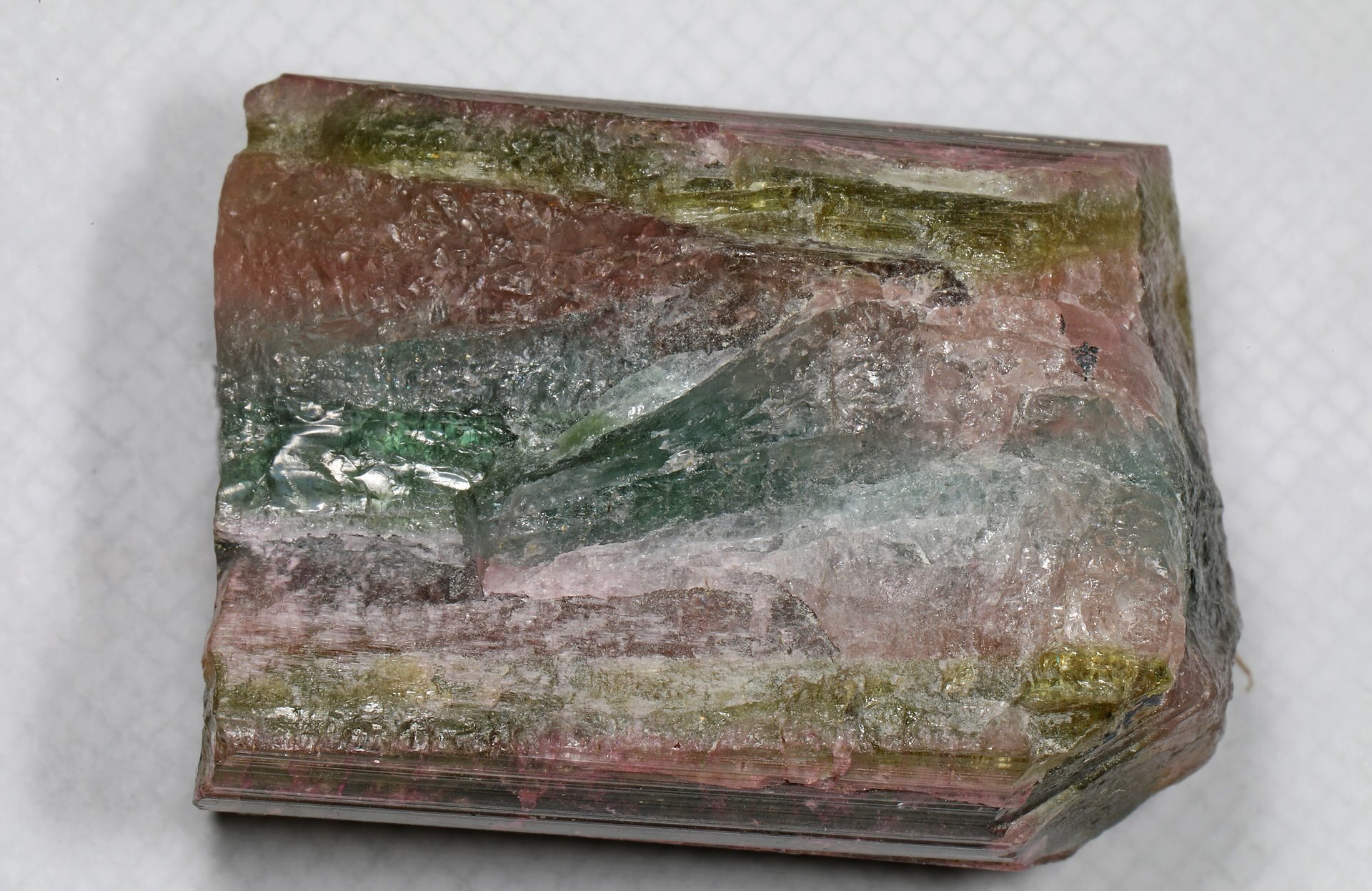
Bi-Color Tourmaline
Bi-color tourmaline holds two entirely distinct colors in a single crystal - a natural wonder that practitioners believe bridges.
- The chemical composition changes in bi-color tourmaline record geological events in real time - a dramatic change in color zone marks a change in the hydrothermal fluid composition that was feeding the growing crystal.
- Some bi-color tourmalines show not just two but three or four distinct color zones, technically making them multi-color or polychrome tourmaline.
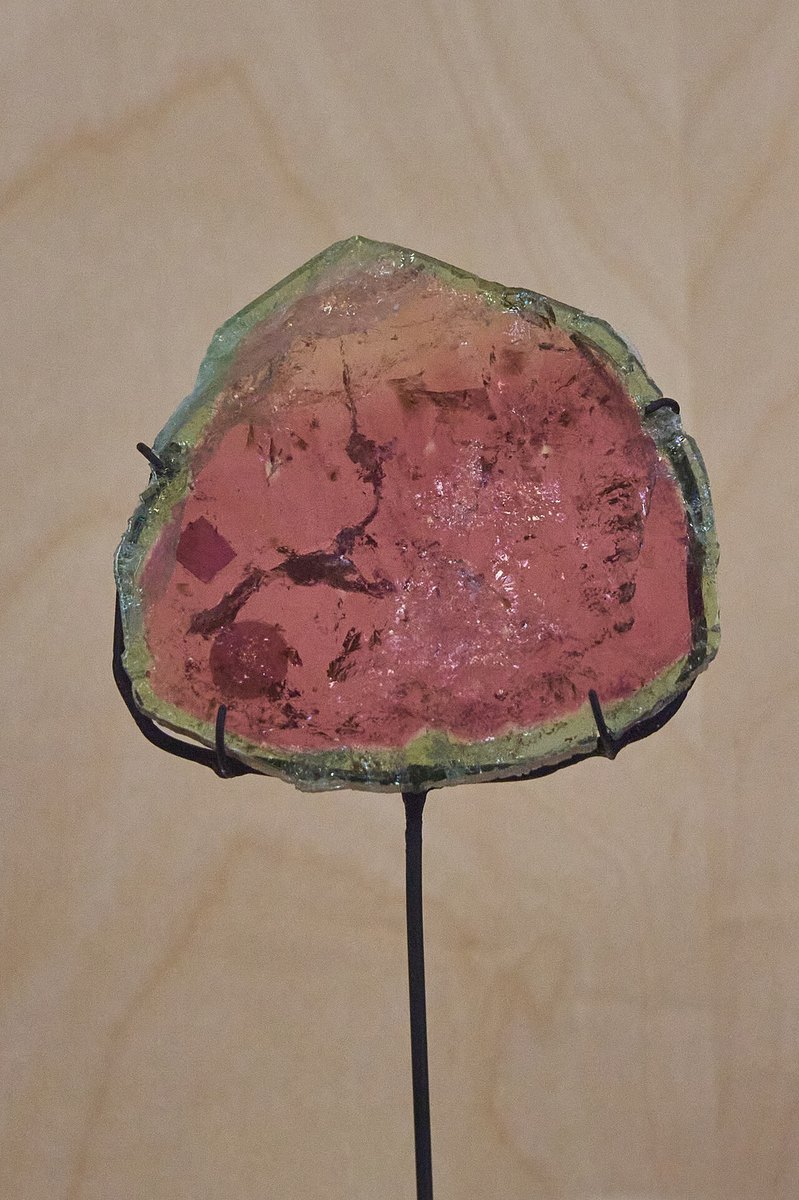
- The famous watermelon tourmaline is technically a bi-color tourmaline viewed from a specific angle - the same crystal shows different bi-color patterns depending on which face is cut.
- Tourmaline has the widest color range of any gemstone species - bi-color specimens represent two endpoints of this range simultaneously in a single stone.
- Some bi-color tourmalines show color separation so precise that the boundary appears almost drawn with a ruler - evidence of a sudden rather than gradual change in the crystal's growth environment.
- Anyone drawn to gemstones that are uniquely one-of-a-kind - no two bi-colors are identical
- Gemini individuals who resonate with the literal embodiment of dual nature
- Collectors seeking nature's artistic expression in a single crystal
- Those working on integration of opposites or complementary personal qualities
- Gift givers wanting a distinctive, visually striking gem that requires no explanation
- Buyers who need precise, consistent color matching across multiple stones
- Minimalist jewelry aesthetics that favor single-color simplicity
- Those wanting the most intense version of a single color - single-color tourmaline maximizes one hue
What Is Bi-Color Tourmaline?
Bi-color tourmaline is a single tourmaline crystal that displays two distinct, clearly visible color zones - typically divided either along the length (producing a “two-colored half and half” appearance) or in concentric zones (producing a center-to-rim color pattern). It rates 7 - 7.5 on the Mohs hardness scale.
The most famous bi-color arrangement is pink in the center graduating to green toward the edge, which when cut across the c-axis produces the famous watermelon tourmaline pattern.
The color changes in bi-color tourmaline occur because the chemical composition of the growing crystal changed during formation - as different concentrations of trace elements (manganese for pink, iron for green, lithium for blues) became incorporated at different stages.
These changes happened in the Earth's pegmatite environment as hydrothermal fluids carrying different mineral loads flushed through the crystal's growth zone at different times.
Bi-color combinations are virtually infinite: pink-green is most classic, but blue-green, yellow-orange, pink-yellow, purple-green, and many other combinations occur. Each unique specimen reflects the specific sequence of geological conditions during its formation, making every bi-color tourmaline a literal record of its particular geological environment - a fingerprint of one specific place and time in Earth history.
How Bi-Color Tourmaline Compares
| Property | Bi-Color Tourmaline | Watermelon Tourmaline | Parti Sapphire |
|---|---|---|---|
| Uniqueness | Every piece unique | Pink + green pattern | Blue-green zones |
| Price / carat | $ Budget | $$ Mid-range | $$ Mid-range |
| Hardness | 7 - 7.5 | 7 - 7.5 | 9 |
| Best For | Unique jewelry, collection | Spiritual, jewelry | Durable fine jewelry |
Meaning and Symbolism
Bi-color tourmaline embodies the principle of complementarity - the understanding that opposite qualities coexisting in one being create richness rather than contradiction. The same crystal that holds both pink warmth and green growth, or blue depth and orange fire, demonstrates that what appears to be opposition is actually the full expression of a broader wholeness.
In many spiritual traditions, the meeting point of complementary energies is where the most powerful transformations occur. Bi-color tourmaline's natural zonation - not mixed but distinctly itself in two modes - is seen by practitioners as a model for living with apparent contradiction gracefully: not blending opposing qualities into compromised gray.
Honoring both fully.
Crystal healing tradition associates bi-color tourmaline with Gemini's gift of holding duality and Libra's art of harmony between opposites. Many find it useful during periods of decision-making that feel like impossible choices, or when developing aspects of one's character that feel at odds with existing strengths - suggesting that both can coexist as fully as two colors in one crystal.
Historical Timeline
Healing Tradition
Emotional
Practitioners believe bi-color tourmaline supports the integration of apparently contradictory emotional qualities - being both strong and vulnerable, both giving and receiving, both confident and humble.
Crystal healing tradition associates it with emotional maturity: the capacity to honor the full spectrum of one's emotional nature rather than identifying only with one's “positive” qualities while suppressing the rest.
Many find that working with bi-color tourmaline during periods of inner conflict brings a sense of spaciousness - the recognition that apparently opposing inner voices or needs can coexist without either side needing to win. Its energy is described as reconciling without collapsing, integrating without blending into undifferentiated gray.
Spiritual
In crystal healing tradition, bi-color tourmaline embodies the spiritual principle of non-dualism made visible: the understanding that apparent opposites are expressions of a deeper unity. Practitioners believe it supports meditation practices focused on holding paradox consciously, seeing beyond either-or frameworks, and developing the capacity to contain multiple truths simultaneously.
The specific colors present in a specimen determine which chakra combination is activated - a pink-green bi-color works the heart in both its passionate (pink) and growth (green) aspects simultaneously, while a blue-orange specimen bridges third eye and sacral energies.
This specificity means choosing a bi-color whose color combination reflects the integration now needed is a meaningful spiritual practice.
Physical
Crystal healing tradition associates bi-color tourmaline with the body's natural regulatory systems - the mechanisms that maintain balance between complementary physiological processes. The specific physical associations depend on which colors are present in the specimen.
As with all tourmaline, it carries the mineral family's traditional piezoelectric associations, generating a slight electrical charge under pressure - a property occasionally referenced in crystal healing lore as supporting the body's own bio-electrical regulation. Always consult qualified medical professionals for health concerns.
Zodiac, Birthstone and Gifts
Gemini, the sign of dual nature and the gift of holding multiple perspectives simultaneously, finds in bi-color tourmaline a literal gemstone expression of its core nature.
Practitioners believe it amplifies Gemini's capacity to synthesize apparent contradictions into creative insight, while tourmaline's grounding earth energy helps the Twins' quicksilver intelligence settle into coherent action.
Libra, the sign of balance, harmony, and the art of bringing complementary elements into beautiful relationship, resonates with bi-color tourmaline's natural demonstration that two distinct qualities can coexist gracefully in one elegant form.
Crystal healers suggest Libra use it when navigating decisions requiring balance between genuinely different values, affirming that integration rather than compromise is possible.
Care and Cleansing
Bi-color tourmaline can be cleansed with water, moonlight, sunlight, or smudging. All tourmalines tolerate standard cleaning methods well. Avoid ultrasonic cleaners on specimens with significant inclusions or fractures.
For energetic cleansing, sound healing with a crystal bowl or tuning fork is particularly resonant for bi-color tourmaline - sound itself travels as waves that contain multiple frequencies simultaneously, mirroring the stone's dual-color nature. Full moon charging under open sky is another beautiful option.
- DO NOT use ultrasonic cleaners on included or fractured specimens.
- DO store away from harder stones that can scratch tourmaline.
- NOTE: The color zone boundary may influence how cutters orient a stone - ask your jeweler about optimal display.
- DO clean with warm soapy water and a soft brush.
- NOTE: Some bi-color tourmalines show more dramatic color separation under certain lighting conditions.
- DO handle natural specimens carefully - unset crystals can chip on impact.
Real vs Fake
Synthetic bi-color tourmaline is not commercially produced - the color zoning mechanism is too complex and chemically variable to replicate economically in a laboratory. Genuine bi-color tourmaline authenticity concerns center on whether the stone is natural tourmaline (versus glass or synthetic corundum) rather than whether the coloring is genuine.
A refractometer confirms tourmaline identity (doubly refractive, RI 1.624 to 1.644). Under 10x magnification, natural tourmaline shows typical inclusions - fine tubes, healing fractures, and growth planes - while glass imitations are visually clean but may show gas bubbles. Synthetic corundum (a very rare substitute) would show different RI values.
Value is determined primarily by the clarity and saturation of each color zone, the sharpness of the boundary between them, and the overall aesthetics of the color combination. A stone with muddy, unclear color zones is worth significantly less than one with clean, vivid, distinct zones even if technically the same mineral.
Bi-Color Tourmaline Jewelry & Gifts
Bi-color tourmaline pricing spans a wide range. Commercial pieces with interesting but less vivid color zones sell for $30 to $100 per carat. Fine specimens with vivid, clearly separated color zones and good clarity command $150 to $400 per carat.
Exceptional pieces with rare color combinations, perfect clarity, and clean zone separation can reach $500 to $800 per carat.
When evaluating bi-color tourmaline, prioritize: clarity and saturation of each color zone (both should be vivid and clean), distinctness of the boundary (sharp transitions are more dramatic), and the aesthetic appeal of the specific color combination. The best pieces tell a visual story that is instantly comprehensible and beautiful.
Origin matters for premium pieces: Brazilian Minas Gerais and Afghan material from Nuristan Province have historical prestige. Request treatment disclosure - most bi-color tourmaline is untreated, but heated material should be disclosed.
Where to Buy Bi-Color Tourmaline
Affiliate disclosure: Some links below earn us a small commission at no extra cost to you. See our affiliate disclosure page.
Handmade, raw, and tumbled pieces from independent sellers worldwide.
Shop Bi-Color Tourmaline on Etsy →Accessories, tools, and specimen sets with fast Prime delivery.
Shop Bi-Color Tourmaline on Amazon →Certified loose gemstones graded and photographed for online buyers.
Shop Bi-Color Tourmaline on GemSelect →Pairs Well With




Where Bi-Color Tourmaline Is Found


