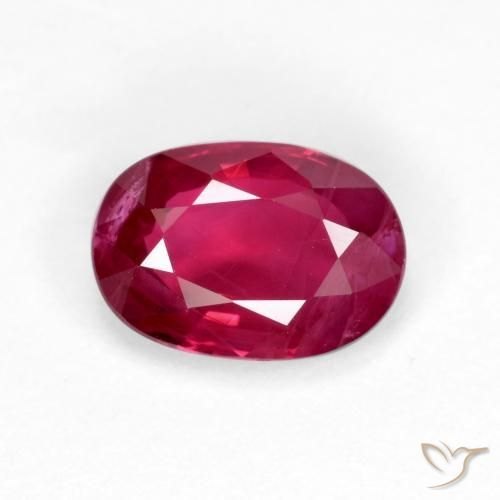
Burmese Ruby
Born in Mogok marble, Burmese ruby is the pigeon-blood benchmark of passion, power, and enduring heart fire.
- Burmese ruby from Mogok shows the strongest natural red fluorescence of any ruby origin.
- The term pigeon blood is now a controlled trade designation applied by major gemological laboratories.
- Mogok is the only gem region where rubies form primarily in marble host rock.
- Ruby and sapphire are the same mineral (corundum); only the red variety is called ruby.
- Burmese ruby has held the benchmark for finest color since medieval European royal courts first sourced it.
- Heirloom collectors seeking the historic pigeon-blood benchmark red
- Engagement shoppers investing in museum-grade durability and color
- Heart chakra practitioners drawn to ruby's passionate tradition
- July birthstone seekers wanting the most prestigious origin
- Investment buyers interested in unheated certified Burmese corundum
- Budget shoppers under $1,000 per carat (try Thai or Mozambique ruby)
- Ethical-sourcing purists concerned about conflict-origin provenance (research carefully)
- Minimalist wearers preferring subtle color (try pink spinel or morganite)
What Is Burmese Ruby?
Burmese ruby is the origin-specific trade designation for ruby mined in Myanmar (formerly Burma), particularly from the historic Mogok valley and the younger Mong Hsu deposit. Ruby is the red variety of corundum (aluminum oxide) colored by trace chromium, with all other corundum colors classified as sapphire.
At Mohs 9, Burmese ruby is one of the hardest and most durable natural gemstones.
Mogok rubies are celebrated for forming in marble host rock, which gives them a distinctive soft red fluorescence under ultraviolet light. This fluorescence intensifies the visible red color in daylight, producing the coveted pigeon blood grade: a pure vivid red with a slight bluish undertone.
Mong Hsu rubies, discovered in the 1990s, typically form in different host geology and show slightly cooler red tones.
The trade term pigeon blood originally referenced the vivid red drop visible in the eye of a freshly killed pigeon, and the term is now controlled by gemological laboratories (an independent gemological lab, a reputable lab) that apply it only to stones meeting strict saturation, hue, and tone criteria.
Fine Mogok rubies also typically show strong red fluorescence under both long-wave and short-wave UV. Most commercial Burmese ruby is heated to improve color and clarity, a standard industry treatment. Unheated stones with natural fine color command exceptional premiums and require laboratory verification.
How Burmese Ruby Compares
| Property | Burmese Ruby | Mozambique Ruby | Thai Ruby |
|---|---|---|---|
| Hardness | 9 | 9 | 9 |
| UV Fluorescence | Strong red | Moderate | Weak |
| Price / carat | $$$$ Luxury | $$$ Premium | $$$ Premium |
| Best For | Museum heirloom, investment | High-end jewelry | Mid-market daily wear |
Meaning and Symbolism
Ruby has been prized in Burma for more than two thousand years. The Mogok valley has been actively mined since at least the 6th century, and Burmese courts historically treated finest rubies as crown regalia.
Medieval Asian writings describe Mogok stones as the most vivid red known, and the region remains the benchmark for the finest ruby color today. Burmese rubies entered European courts through trade routes from the medieval period onward.
European royal collections from the Crown Jewels to the Russian imperial treasury contain significant Burmese pieces, including the Black Prince's Ruby (actually a red spinel but a historically important red gem). In India and Southeast Asia, Burmese rubies have long been considered the most powerful variety of the ruby family.
In crystal healing tradition, ruby is associated with the root chakra and the heart chakra, linking grounded vitality with passionate love. Practitioners describe Burmese material as carrying the most intense ruby frequency because of the marble host geology and fluorescence.
Many readers consider Burmese ruby the definitive stone of courage and sovereign presence. Crystal workers often pair it with emerald for balanced heart-chakra work or with black tourmaline for grounded protection during demanding phases.
Historical Timeline
Healing Tradition
Emotional
Practitioners believe Burmese ruby is the classic stone of passionate courage, associated with bold, honest-hearted action. Crystal healing tradition links the stone with emotional vitality after long depletion, and it is often recommended during periods of rebuilding confidence after major setbacks.
Many readers wear Burmese ruby during career transitions, creative breakthroughs, and relationship milestones where active rather than passive energy feels important. The deep saturation of fine Mogok material is traditionally associated with sovereign presence, a quality of being fully inhabited in one's own life.
Crystal workers often pair Burmese ruby with rose quartz for tender heart-activation balance or with emerald for classic heart-chakra work. The stone is considered a mature heart-chakra support rather than a youthful romantic stone.
Spiritual
In crystal healing tradition, Burmese ruby is linked with both the root chakra and the heart chakra, forming a bridge between grounded vitality and open-hearted passion. Practitioners describe the Mogok fluorescence as a symbol of inner fire, said to support sustained creative output without burnout.
Many readers use Burmese ruby during meditation focused on sovereign presence, leadership integrity, and heart-centered action. The stone has long been associated with the Sun in Vedic tradition (manikya) and with Mars in Western astrology, linking it with both warm vitality and courageous action.
Crystal workers often place Burmese ruby at the center of a grid with clear quartz points radiating outward for amplification, or pair it with black tourmaline for grounded protection during visibility phases.
Physical
Practitioners believe Burmese ruby supports what they describe as vital circulation, warm energy, and steady stamina. Crystal healing tradition associates the stone with the heart and blood symbolically, though the stone is not a substitute for medical care.
Many readers wear Burmese ruby as heart-level pendants during demanding seasons, a practice framed as supportive for sustained energy rather than therapeutic intervention. The stone is considered especially apt during seasonal transitions and recovery from physical exhaustion.
Crystal workers sometimes recommend Burmese ruby during root-chakra work involving grounded vitality and sleep quality. Traditional Vedic lore associates ruby with solar energy, making it a favored stone for early-morning meditation practices focused on physical vigor and clear-headed action.
Zodiac, Birthstone and Gifts
Burmese ruby is the modern US birthstone for July, shared by late Cancer and all of Leo. Astrologers traditionally associate ruby with the Sun, making it an especially apt stone for Leo solar return cycles.
For Leo, Burmese ruby is considered the premier birthstone, said to support the sign's natural warmth, creative drive, and leadership presence. For Cancer, the ruby red is associated with nurturing heart fire. Scorpio connects through the deep intensity of Mogok material.
In Vedic tradition, ruby (manikya) is set in gold and worn during Sun cycles for sovereign presence and vital authority.
Care and Cleansing
Burmese ruby is exceptionally durable and tolerates nearly all common cleaning methods. Warm soapy water with a soft brush is the standard approach, and ultrasonic cleaners are generally safe for stones without surface-reaching fractures. Steam cleaning is safe for most unheated stones and for heated stones without filler treatments.
Moonlight charging is widely recommended, especially during full moon cycles. Morning sunlight is safe and considered especially supportive for ruby because of the sun association. Smoke cleansing with palo santo or sage is excellent for daily maintenance.
Dry salt cleansing is safe; saltwater soaks are fine briefly though not ideal for settings. Many practitioners cleanse Burmese ruby by placing it briefly on a bed of clear quartz or selenite overnight, methods considered especially suited to fine heirloom stones because they avoid chemical or thermal stress.
- DO clean Burmese ruby with warm soapy water and a soft brush for routine maintenance.
- DO NOT use ultrasonic cleaners on stones with visible fractures or lead-glass filling treatments.
- DO use protected prong or halo settings for daily-wear rings to prevent girdle chipping.
- DO ask sellers for a GIA, Mindat, and USGS, a reputable lab, or a reputable lab lab report confirming Burmese origin.
- DO NOT wear Burmese ruby rings during heavy manual work despite the stone's hardness.
- DO verify ethical sourcing and Kimberley Process-equivalent documentation where applicable.
- Note: untreated Burmese ruby commands exceptional premiums; request heating disclosure.
Real vs Fake
Genuine Burmese ruby shows strong red fluorescence under both long-wave and short-wave UV light, a refractive index of 1.762 to 1.770, and specific gravity of 3.97 to 4.05. Natural Mogok stones often display distinctive silk inclusions (rutile needles), color banding, and two-phase inclusions under 10x magnification.
Mong Hsu material typically shows dissolved-looking internal growth structures and fewer inclusions.
Common imitations and treatments include synthetic ruby (flame-fusion, flux-grown, hydrothermal), red glass, red spinel, garnet, and heavily lead-glass filled natural ruby. Synthetic rubies chemically match natural but show distinctive curved growth lines (Verneuil) or flux fingerprints under magnification.
Lead-glass filled ruby is a significant concern; the filler can be damaged by ultrasonic cleaners, heat, and chemicals.
Practical at-home checks include UV fluorescence testing (Burmese material glows strong red), examination of inclusions under a 10x loupe, and testing color behavior under different light sources (daylight, incandescent, fluorescent).
For any Burmese ruby purchase above $500, a report from GIA, Mindat, and USGS, a reputable lab, or a reputable lab confirming country of origin, species, and treatment is essential. Burmese origin alone commands a significant premium, so lab verification protects buyer investment.
Burmese Ruby Jewelry & Gifts
Burmese ruby pricing spans an enormous range depending on color, clarity, size, and treatment status. Commercial heated Burmese stones start around $500 to $2,000 per carat in small sizes, mid-grade material runs $3,000 to $15,000 per carat, and fine pigeon-blood stones reach $20,000 to $100,000+ per carat.
Exceptional untreated Burmese rubies from Mogok with classic pigeon-blood color can exceed $300,000 per carat at auction, with record-breaking stones selling for over $1 million per carat.
When buying, insist on a report from an independent gemological lab, a reputable lab, or a reputable lab confirming Burmese origin and treatment status. Color is the primary price driver; pigeon-blood designation adds significant premium, as does unheated status.
Research ethical sourcing carefully because Myanmar's gem trade has been affected by sanctions; reputable dealers document the sourcing chain. Mogok material commands premium over Mong Hsu in high-end markets.
Where to Buy Burmese Ruby
Affiliate disclosure: Some links below earn us a small commission at no extra cost to you. See our affiliate disclosure page.
Handmade, raw, and tumbled pieces from independent sellers worldwide.
Shop Burmese Ruby on Etsy →Accessories, tools, and specimen sets with fast Prime delivery.
Shop Burmese Ruby on Amazon →Certified loose gemstones graded and photographed for online buyers.
Shop Burmese Ruby on GemSelect →Pairs Well With


Where Burmese Ruby Is Found
