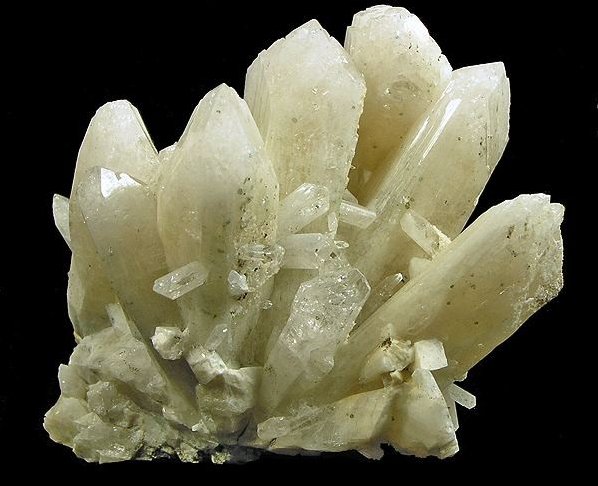
Danburite
A high-vibration silicate from Japan and Mexico, danburite is beloved by crystal workers for its gentle uplifting clarity and its resemblance to the finest topaz
- Crystal practitioners working with heart healing and angelic traditions
- Beginners in high-vibration crystal work seeking a gentle entry point
- Collectors building a clear and colorless gemstone suite
- Buyers seeking a meaningful gift for spiritual or wellness-oriented friends
- Buyers expecting a dramatic or intense crystal experience
- Those who prefer heavily colored gemstones
- Ring wearers without protective settings (hardness 7 to 7.5 needs care)
What Is Danburite?
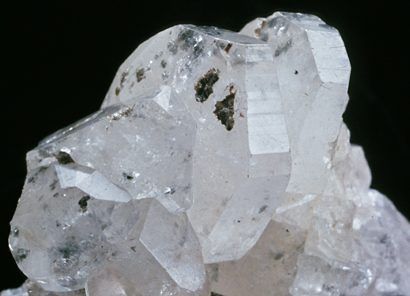
Danburite is a calcium borosilicate mineral (CaB2Si2O8) forming well-developed orthorhombic prisms with chisel-like terminations and a bright vitreous luster. Most gem-quality material is colorless to pale yellow or pale pink; Tanzanian material occasionally shows a stronger pink color. Hardness of 7 to 7.5 Mohs makes danburite suitable for jewelry, though it remains largely a collector and crystal wellness stone rather than a mainstream gemstone, with a prized Burmese example held at the Smithsonian’s National Gem Collection.
The mineral was first described from Danbury, Connecticut in 1839, giving it its name. The finest gem-quality danburite today comes from San Luis Potosi, Mexico, particularly the Charcas district, where long, transparent, striated prisms grow to impressive sizes. Other sources include Myanmar (Burma), Madagascar, Russia, Tanzania, and Japan.
Danburite holds a prominent position in contemporary crystal healing as one of the "angel stones" — associated with connecting to angelic realms, receiving divine guidance, and embodying pure love energy. Practitioners describe it as gentle and expansive compared to the intensity of phenacite, making it a popular entry point for high-vibration crystal work. These are sincere belief associations within the crystal community, not scientifically validated properties.
Meaning and Symbolism
Danburite is consistently described in crystal healing literature as one of the gentlest yet most powerful high-vibration stones. Practitioners associate it with angelic realms, divine love, and heart-centered consciousness. Unlike the intensity attributed to phenacite or the heat of moldavite, danburite is described as expansive and nurturing, making it accessible to practitioners at all experience levels.
The crystal is commonly used in meditation for connecting with guides or angels, releasing grief and emotional pain, and opening the heart to unconditional love. Some practitioners place danburite over the heart or hold it during prayer. The stone’s clear, translucent quality and bright luster lend themselves to the visual language of light and purity central to its spiritual associations.
From a scientific perspective, danburite is a borosilicate mineral with no biological activity that would explain therapeutic effects. The experiences practitioners report during danburite meditation are real subjective events; their mechanism is a matter of belief rather than established science.
Healing Tradition
Emotional
Associated with releasing grief, softening emotional pain, and opening the heart to forgiveness and compassion. Practitioners describe it as gentle and non-forcing in its action.
Spiritual
Widely used for angelic contact, divine guidance, and embodying unconditional love energy. Considered one of the premier "angel stones" in crystal tradition.
Physical
No physical healing properties have scientific support. Danburite is non-toxic and safe for normal handling and wearing.
Where to Buy Danburite
Affiliate disclosure: Some links below earn us a small commission at no extra cost to you. See our affiliate disclosure page.
Handmade, raw, and tumbled pieces from independent sellers worldwide.
Shop Danburite on Etsy →Accessories, tools, and specimen sets with fast Prime delivery.
Shop Danburite on Amazon →Certified loose gemstones graded and photographed for online buyers.
Shop Danburite on GemSelect →Pairs Well With

Where Danburite Is Found


