Dominican Amber
15–45-million-year-old fossil resin from Hispaniola - clearer, older, and rarer than Baltic amber.
- A single gram of Dominican amber can contain dozens of perfectly preserved insects, including species now completely extinct.
- Some Dominican amber fluoresces vivid blue under UV light - a phenomenon caused by the mineral perylene trapped in the resin matrix.
- The oldest known mushroom ever found was preserved inside a piece of Dominican amber, dating back roughly 100 million years (discovered in a related deposit).
What Is Dominican Amber?
Dominican Amber is *fossilized tree resin* from extinct Hymenaea protera trees that grew in what is now the Dominican Republic between 15 and 45 million years ago. Unlike most gemstones, it is entirely organic - hardened biology rather than crystallized minerals. It rates 2–2.5 on the Mohs hardness scale.
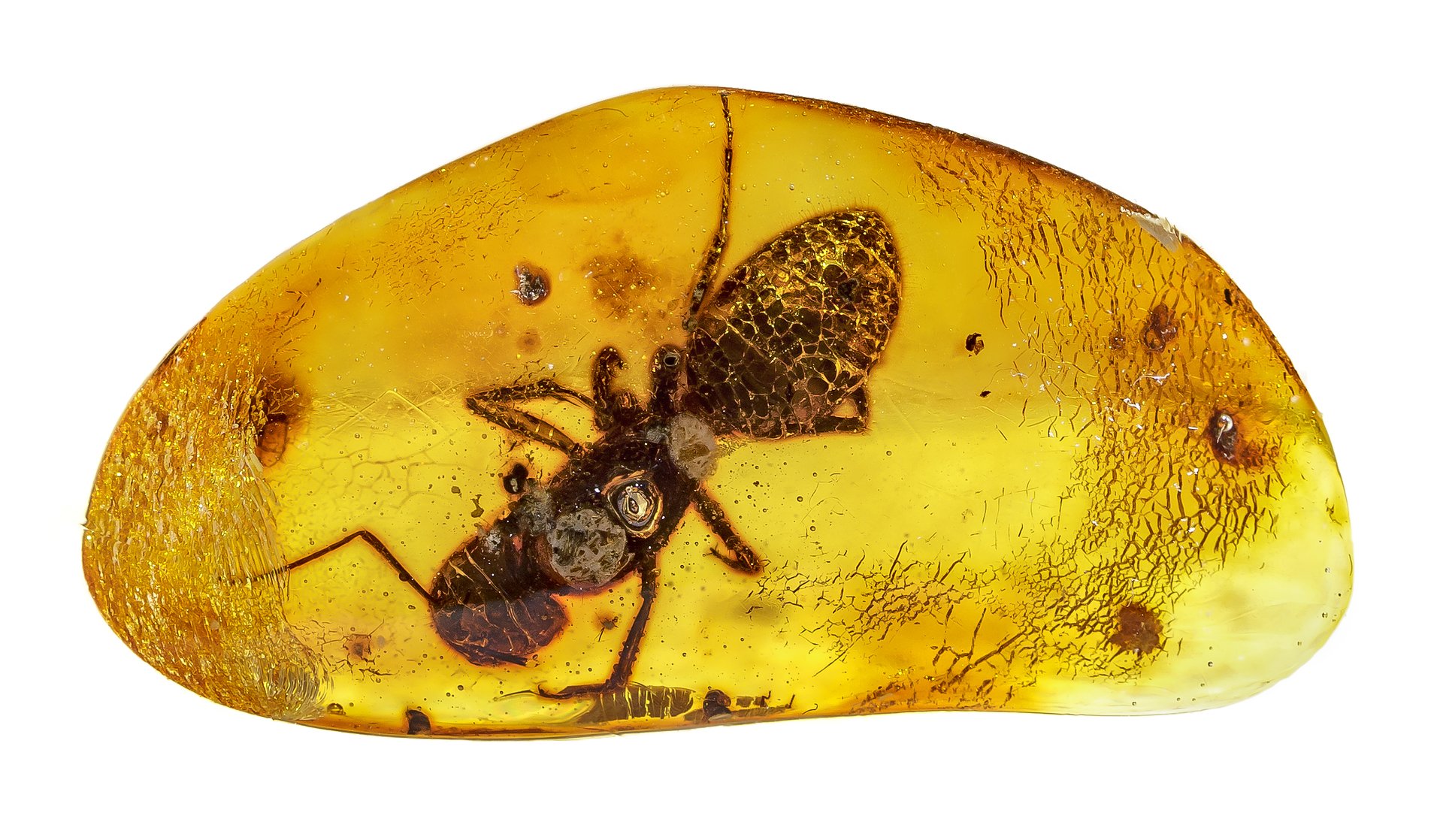
It is the most transparent amber in the world, which is why its inclusions - trapped insects, plant fragments, and air bubbles - are so breathtakingly visible. **Roughly 10 percent of Dominican amber contains inclusions**, a far higher rate than Baltic amber.
The resin formed when ancient trees oozed sticky sap to seal wounds. Over millions of years, the sap polymerized, hardened, and was buried in sediment, eventually becoming the warm golden gem collectors and spiritualists prize today.
Meaning and Symbolism
Dominican Amber is considered a stone of ancient wisdom, carrying within it a literal snapshot of life from tens of millions of years ago. Practitioners believe it connects the wearer to deep ancestral memory and the continuity of life.
Many find it useful for grounding and calming anxiety, its warm golden light said to carry the warmth of ancient sunlight. **It is often called a stone of protection**, thought to shield its keeper from negative energies.
In spiritual traditions across the Caribbean and Latin America, amber has long been used in healing rituals and worn as protective amulets. Its organic origin is believed to bridge the mineral and living worlds.
Historical Timeline
Healing Tradition
Emotional
Practitioners believe Dominican Amber calms the nervous system and soothes worry, its warm solar energy said to uplift depression and restore optimism.
Spiritual
Many traditions hold that amber connects the wearer to ancestral guides and the accumulated wisdom of past lives, acting as a bridge between time and spirit.
Physical
In folk medicine, amber has been worn near the throat for teething discomfort and respiratory wellness, though these uses are traditional and not medically verified.
Zodiac, Birthstone and Gifts
Leo's bold solar energy resonates with amber's warm golden light, amplifying confidence and creative self-expression. **Amber is considered a Leo power stone** across many Western crystal traditions.
Cancer benefits from amber's nurturing, protective qualities, which are said to ease emotional sensitivity and strengthen the sense of home and belonging that Cancer craves.
Care and Cleansing
Wipe Dominican amber with a dry or slightly damp soft cloth - never soak it in water, which can cause surface crazing over time. Avoid ultrasonic cleaners entirely.
Cleanse energetically by passing amber through sage or palo santo smoke for 30 seconds, or by placing it on a selenite charging plate overnight. **Do not use salt water or saltwater baths**, as salt can erode the resin surface and dull its famous clarity and luster.
- Dominican amber is very soft at Mohs 2–2.5, softer than your fingernail. **Keep it away from keys, coins, and any hard surfaces** that will scratch it instantly.
- Heat, direct sunlight, and chemical exposure (perfume, hairspray, cleaning products) all degrade amber rapidly. Apply cosmetics before putting on amber jewelry, and remove amber before swimming or showering.
Real vs Fake
The most common amber imitation is *copal*, a young resin (under 10,000 years old) that looks nearly identical but is chemically unstable and will crack and craze within years.
Press a hot needle to an inconspicuous spot - copal melts easily and smells like fresh pine resin; true amber resists more and smells faintly medicinal.
Plastic imitations are widespread. Rub the piece briskly with a cloth - genuine amber builds a static charge and will attract small bits of paper. Plastic does not generate the same charge.
The saltwater float test works reliably: mix 1 cup of salt into 2 cups of water. **Genuine amber floats; glass and most plastic sinks.** Copal also floats, so this test confirms organic material but not age.
Under UV light, authentic Dominican amber typically fluoresces blue or blue-green. Copal fluoresces white or pale yellow. This is one of the fastest and most reliable field tests.
Inclusions should always be examined carefully under magnification. Fakes often contain mass-produced insect molds that look perfect and centered - real inclusions are always asymmetric, with natural trapped-in-resin positioning and sometimes air bubbles nearby.
Dominican Amber Jewelry & Gifts
Dominican amber commands premium prices over Baltic amber of similar size - its superior clarity and higher inclusion rate justify the markup. Always buy from dealers who can document country of origin.
**Inclusions dramatically increase value.** A clean amber cabochon might sell for $5–$20 per gram, while the same piece with a clearly visible ant, fly, or plant fragment can multiply that price by 10x or more.
Color matters: golden yellow is standard; rare red and blue Dominican amber (especially pieces that fluoresce under UV) commands the highest premiums. Blue Dominican amber is among the rarest natural amber in the world.
Ask for a UV flashlight test at point of sale. Any reputable dealer will oblige. Strong blue fluorescence confirms authenticity and commands a premium; most copal and plastic shows white or no fluorescence.
For jewelry, insist on Sterling or gold settings - amber's softness means prong and bezel settings must be protective, with no hard metal edges pressing directly onto the stone's surface.
Where to Buy Dominican Amber
Affiliate disclosure: Some links below earn us a small commission at no extra cost to you. See our affiliate disclosure page.
Handmade, raw, and tumbled pieces from independent sellers worldwide.
Shop Dominican Amber on Etsy →Accessories, tools, and specimen sets with fast Prime delivery.
Shop Dominican Amber on Amazon →Certified loose gemstones graded and photographed for online buyers.
Shop Dominican Amber on GemSelect →Pairs Well With