Scheelite
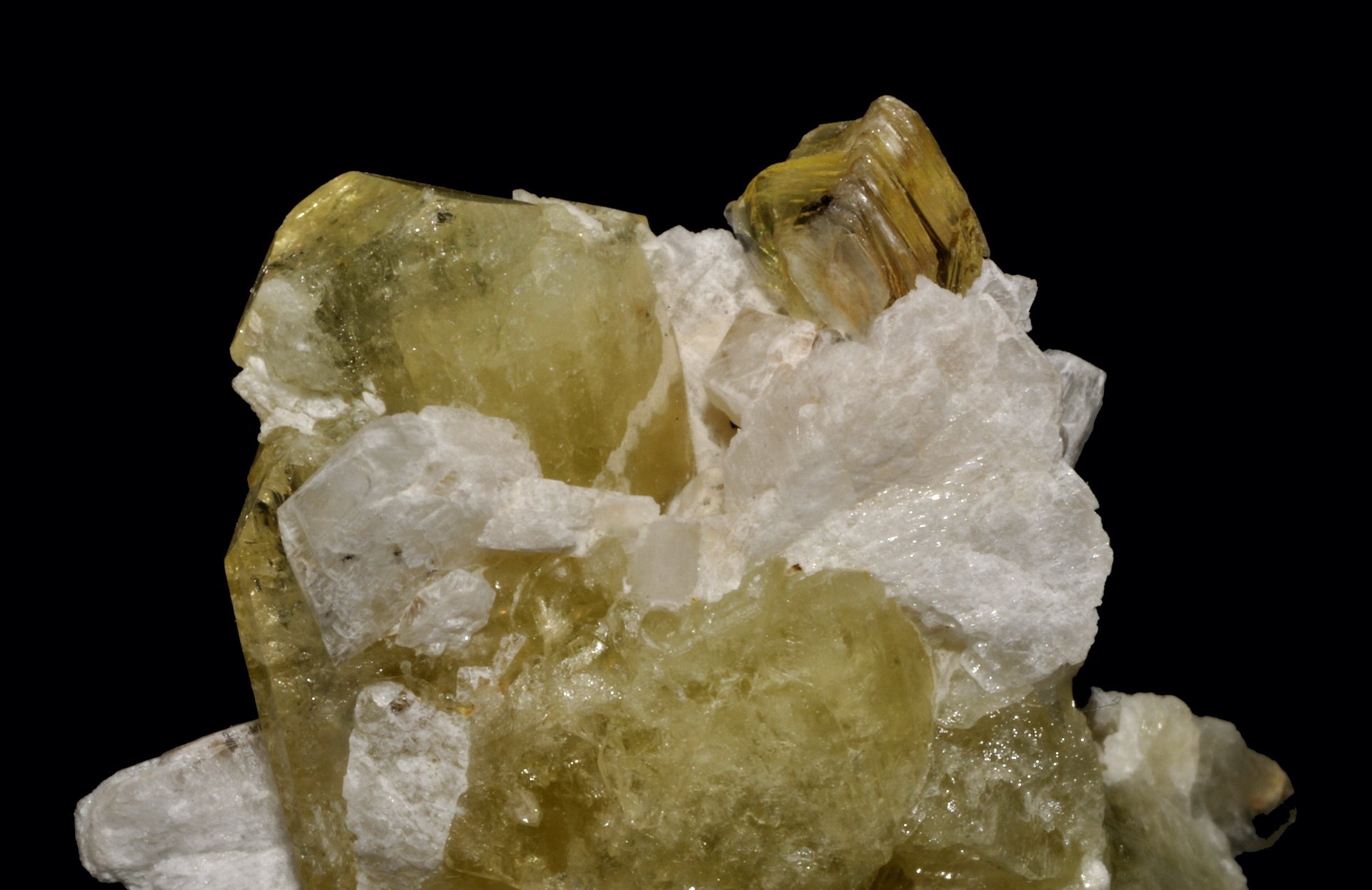
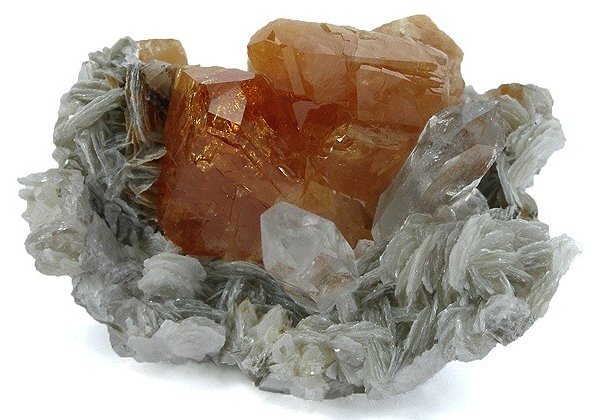
A calcium tungstate mineral forming diamond-shaped crystals in warm honey to orange tones - scheelite is a rare collector gem that fluoresces brilliant blue-white under UV
- Scheelite's UV fluorescence is so reliable and intense that geologists use UV lamps to prospect for scheelite-bearing tungsten ore deposits in the field - the glowing blue-white spots reveal ore that would otherwise be invisible at the surface.
- Scheelite is one of the heaviest gemstone minerals that can be faceted, with specific gravity around 6 - nearly as dense as metallic iron.
- The tungsten in scheelite has the highest melting point of any element (3,422 degrees Celsius), making it essential for lightbulb filaments, rocket nozzles, and cutting tools.
What Is Scheelite?
Scheelite belongs to the tungstate mineral family and crystallizes in the tetragonal system with the chemical formula CaWO4. Its distinct cleavage and adamantine to resinous luster create brilliant optical effects. Rated 4.5 to 5 on the Mohs hardness scale, scheelite is moderately durable for display and collection purposes.
Yellow scheelite displays warm golden to orange hues that captivate collectors worldwide. The stone's refractive index ranges from 1.918 to 1.938, producing exceptional sparkle and fire. Transparency varies from fully transparent to translucent specimens, each offering unique visual character. Its specific gravity of 5.9 to 6.1 reflects its dense tungstate composition.
Scheelite forms in granite pegmatites, quartz veins, and contact metamorphic zones where molten rock meets limestone. Major deposits occur in China, Austria, Kazakhstan, Brazil, Korea, California, and Portugal. These diverse geological environments produce the gem-quality specimens prized by mineral enthusiasts and collectors everywhere.
Meaning and Symbolism
Scheelite is calcium tungstate, named in 1821 to honor Carl Wilhelm Scheele, the Swedish chemist who discovered tungsten in 1781. Scheelite was one of the primary ores from which tungsten was extracted for industrial use, and its strategic importance made it one of the better-studied tungstate minerals of the nineteenth century, documented in Britannica.
During both World Wars, scheelite was strategically critical because tungsten was essential for tool steel, armor-piercing ammunition, and incandescent lamp filaments. Intensive scheelite prospecting in Austria, Portugal, the United States, and China during those periods incidentally improved scientific understanding of its geological occurrence and crystal chemistry.
Gem-quality scheelite - transparent yellow, orange, and brown - occurs in skarns and hydrothermal veins worldwide. Fine facetable material from Sonora, Mexico, Sri Lanka, and China entered the collector market in the late twentieth century. Its adamantine luster and fire make cut scheelite striking, though Mohs 4.5 limits jewelry use.
Historical Timeline
Healing Tradition
Emotional
Practitioners believe scheelite encourages clarity of personal values and the disciplined pursuit of what genuinely matters. It is said to cut through distraction and surface desires to reveal the deeper motivations beneath, supporting practitioners in aligning daily choices with authentic long-term intentions and the steady, patient commitment that meaningful personal achievement always requires.
Spiritual
Traditionally associated with mental clarity and spiritual discernment in crystal healing practice, scheelite is said to illuminate the practitioner's genuine spiritual purpose among the competing claims of daily life. Crystal healing tradition holds that it supports the serious practitioner who seeks alignment between inner knowing and outer action through consistent, reflective spiritual discipline.
Physical
Some practitioners believe scheelite supports the skeletal system and physical structure, associations drawn from its calcium tungstate composition and the traditional crystal lore connecting calcium-bearing minerals to structural physical support. These claims are not medically verified and should not replace professional care. Scheelite is used in wellness settings as a companion during practices focused on physical strength and structural grounding.
Care and Cleansing
- Hardness 4.5 to 5 - extremely soft for a gemstone; scratches easily from almost any other stone or hard surface.
- High specific gravity makes specimens surprisingly heavy; handle with care to avoid dropping.
- Distinct cleavage means impact can shatter faceted stones; store in padded individual compartments.
- Do not use water or salt cleansing; avoid chemical cleaners.
- Keep away from children and pets as a general precaution given tungsten heavy metal content.
Where to Buy Scheelite
Affiliate disclosure: Some links below earn us a small commission at no extra cost to you. See our affiliate disclosure page.
Handmade, raw, and tumbled pieces from independent sellers worldwide.
Shop Scheelite on Etsy →Accessories, tools, and specimen sets with fast Prime delivery.
Shop Scheelite on Amazon →Certified loose gemstones graded and photographed for online buyers.
Shop Scheelite on GemSelect →Pairs Well With