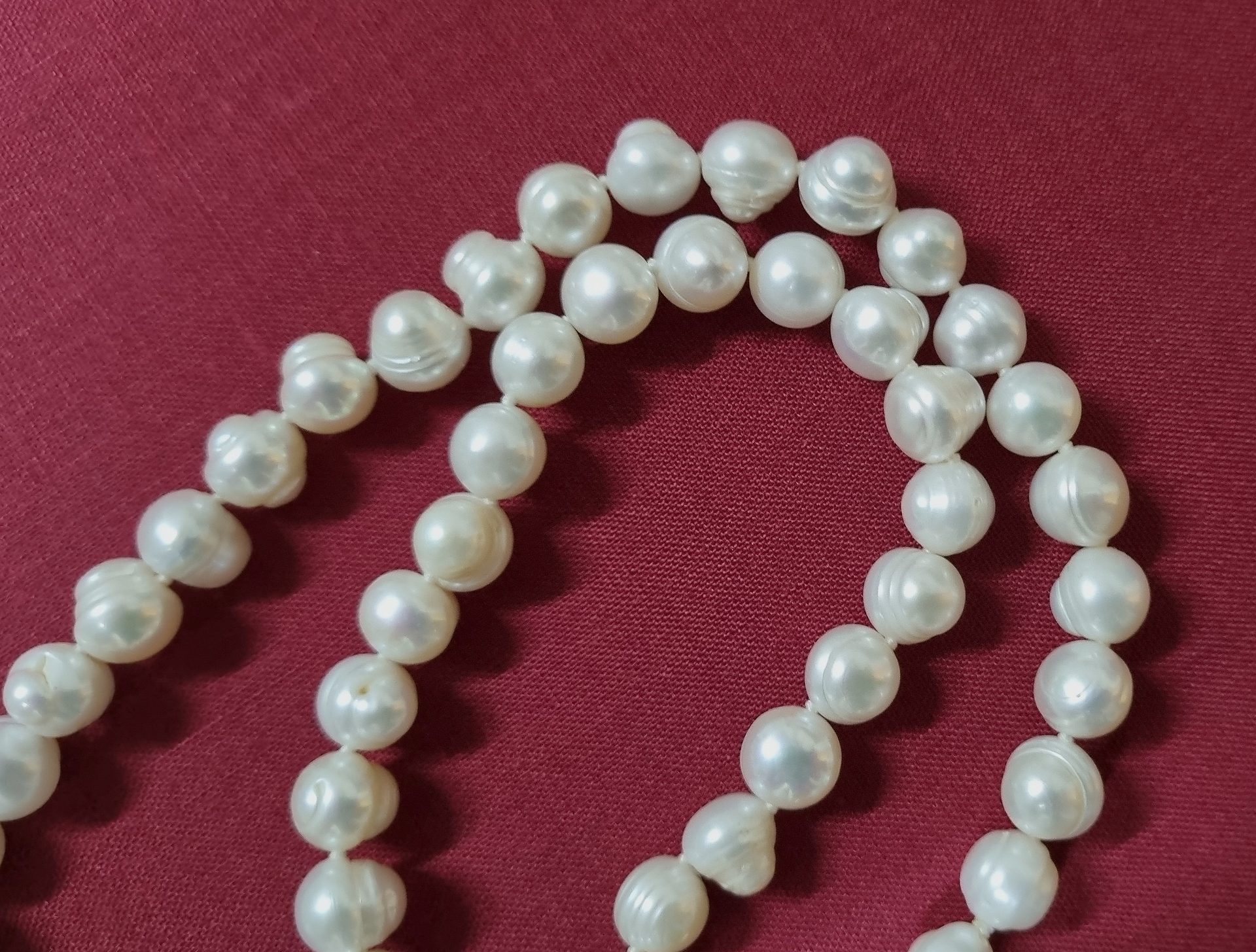
Freshwater Pearl
Genuine pearls grown in freshwater mussels - lustrous, durable, and beautifully accessible to every budget.
- A single Hyriopsis cumingii mussel can produce up to 32 pearls in a single 2–3 year harvest cycle, compared to a single pearl per Akoya saltwater oyster.
- The 'orient' - the iridescent sheen visible just below a pearl's surface - is caused by light interfering between the thin layers of nacre, similar to the way light plays in a soap bubble.
- China produces roughly 95 percent of the world's freshwater cultured pearls, primarily from the provinces of Jiangsu, Zhejiang, and Anhui.
What Is Freshwater Pearl?
Freshwater Pearls are *cultured pearls* grown in freshwater mussels, primarily the species Hyriopsis cumingii in Chinese lakes and rivers. Unlike saltwater pearls, freshwater mussels can produce multiple pearls per mussel per harvest cycle - often 24 to 32 pearls from a single shell. It rates 2.5–4.5 on the Mohs hardness scale.
The pearl forms when the mussel coats an irritant - today typically a small piece of mussel tissue implanted by pearl farmers - with layer after layer of *nacre*, the same mineral mixture of aragonite and organic protein that lines the shell. **Freshwater pearls are often composed almost entirely of nacre**, unlike saltwater pearls which have a bead nucleus.
This nacre-rich composition gives freshwater pearls excellent durability and deep luster. They come in a remarkable range of shapes - rounds, near-rounds, ovals, drops, buttons, coins, and free-form baroques - and a broad palette of natural colors from white and cream to pink, lavender, and peach.
Meaning and Symbolism
Pearls have been associated with lunar energy, emotional wisdom, and the power of patience across virtually every culture that has encountered them. Freshwater pearls carry these associations fully - they are considered a symbol of inner truth and emotional integrity.
In many traditions, wearing pearls is said to calm emotional storms and bring clarity to feelings that have become muddled by circumstance or anxiety. **Pearls are the gem of tears transformed** - the ancient mythology that pearls are solidified moonlight or tears of the gods speaks to their association with emotional depth and purification.
Practitioners believe freshwater pearls specifically carry gentle, accessible lunar energy suited to everyday wear - less intense than saltwater pearl energy, but consistently nurturing and emotionally supportive throughout a normal day.
Historical Timeline
Healing Tradition
Emotional
Practitioners believe freshwater pearls soothe emotional reactivity, support self-acceptance, and help the wearer process grief, transition, or emotional confusion with calm clarity.
Spiritual
Pearls are strongly associated with lunar cycles, intuition, and the subconscious mind. Wearing them is said to deepen connection to inner wisdom and spiritual truth.
Physical
Folk traditions across Asia and the Mediterranean have associated pearls with skin health and the digestive system. These uses are traditional in nature and not medically substantiated.
Zodiac, Birthstone and Gifts
Cancer's deep emotional sensitivity and connection to lunar rhythms makes freshwater pearl its most natural gem ally. **Pearls have been Cancer's birthstone across multiple ancient and modern traditions**, and the association feels intuitively right - both are creatures of water who create beauty from vulnerability.
Gemini's dual nature is said to be balanced by the pearl's unifying warmth. Practitioners believe pearls help Gemini integrate their two sides, bringing the mind and heart into harmonious conversation.
Care and Cleansing
Wipe freshwater pearls with a soft, slightly damp cloth after every wearing, before storage. The acids in perspiration slowly damage nacre over time; this simple habit dramatically extends the life of pearl jewelry.
Energetically cleanse with moonlight - place pearls on a windowsill during a full moon, or simply in indirect moonlight. Avoid direct sunlight and salt, both of which damage the organic surface.
**Never use ultrasonic cleaners, steam, or chemical cleaning solutions** on freshwater pearls. The nacre is surprisingly delicate against anything stronger than a soft cloth and plain water.
- Pearls are the last jewelry you put on and the first you take off. **Apply perfume, hairspray, sunscreen, and cosmetics at least a minute before wearing pearls** - these chemicals degrade nacre over time, causing the surface to dull, pit, and eventually peel.
- Pearls in necklaces should be restrung every few years, especially if worn regularly. Silk thread used in pearl stringing absorbs perspiration and body oils, weakening and discoloring over time. Always knot between each pearl to prevent loss if the string breaks.
Real vs Fake
The classic tooth test remains reliable: gently rub a pearl across your front tooth. **Genuine pearls feel slightly gritty** due to the microscopic ridges in the nacre layers. Plastic and glass imitations feel perfectly smooth.
Examine the drill hole under magnification if the pearl is drilled. Real pearl nacre shows the same layered, shell-like structure at the drill hole that the surface shows. Fakes show a smooth, plastic-like interior.
Look at the surface texture in raking light. Real pearls show subtle surface features - tiny ridges, occasional surface irregularities, and the gentle depth of nacre. Perfect, flawless surfaces with no depth should raise suspicion on 'pearl' jewelry under $20.
**Weight matters**: genuine pearls are noticeably heavier than plastic imitations of the same size, because aragonite (specific gravity 2.60–2.78) is denser than plastic.
The orient - the iridescent sheen just beneath the surface - is difficult to fake convincingly. Tilt the pearl under a single light source and watch for the subtle rainbow interference pattern. Imitations show a flat, single-color shine without depth.
Freshwater Pearl Jewelry & Gifts
Freshwater pearl quality is graded primarily on luster, surface cleanliness, shape, size, and nacre thickness. **Luster is the most important factor** - a pearl with brilliant, mirror-like reflections outranks a larger, duller pearl at any price point.
Grade designations vary by seller, but AAA typically denotes round or near-round shape, mirror-bright luster, less than 5 percent surface blemishes, and thick nacre. This is the grade to seek for gifts and heirloom pieces.
Size matters more for necklace strands than for single pendants. A 7–8mm round freshwater pearl is standard for a quality everyday necklace; 9–10mm enters premium territory; Edison pearls at 11–15mm compete with saltwater pearl sizing at a fraction of the price.
Natural color variety in freshwater pearls includes white, cream, pink, lavender, and peach. These are genuine natural colors, not dyed. Avoid heavily dyed pearls (look for dye concentrating around the drill hole) unless you specifically want non-natural colors.
For wedding jewelry and heirloom pieces, invest in the best luster you can afford rather than the largest size. A strand of perfectly lustrous 7mm AAA freshwater pearls will outlast and outshine a strand of larger, lower-luster specimens for decades.
Where to Buy Freshwater Pearl
Affiliate disclosure: Some links below earn us a small commission at no extra cost to you. See our affiliate disclosure page.
Handmade, raw, and tumbled pieces from independent sellers worldwide.
Shop Freshwater Pearl on Etsy →Accessories, tools, and specimen sets with fast Prime delivery.
Shop Freshwater Pearl on Amazon →Certified loose gemstones graded and photographed for online buyers.
Shop Freshwater Pearl on GemSelect →Pairs Well With


