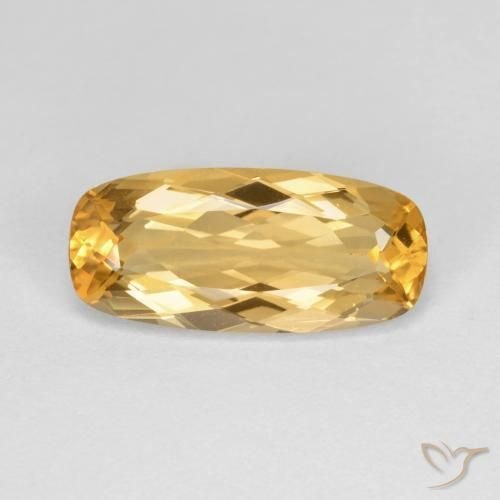
Imperial Topaz
Mined beneath the red hills of Ouro Preto, imperial topaz glows in sherry, peach, and pink tones
- Imperial topaz is named after nineteenth-century Russian royalty, who reserved the stone's best colors for the imperial family.
- Essentially all true imperial topaz comes from a small mining district near Ouro Preto in Minas Gerais, Brazil.
- The El-Dorado Topaz, a 31,000 carat crystal, is one of the largest ever mined and was displayed internationally.
- Imperial topaz is the traditional gift for the 23rd wedding anniversary in American tradition.
- Most pink imperial topaz receives mild heat treatment to develop its color from natural orange or yellow rough.
- November birthstone seekers wanting a warm, refined alternative to citrine
- Collectors drawn to stones with a single named mining district (Ouro Preto)
- Jewelry buyers looking for warm sherry-peach color with engagement durability
- Practitioners working with solar plexus confidence and creative warmth
- Anniversary gift buyers for milestones requiring a distinctive stone
- Budget shoppers under $100 per carat (consider citrine or yellow sapphire)
- Readers who want strong ancient tradition (imperial topaz's tradition is late nineteenth century)
- Buyers requesting lab-certified unheated with deep red color (that is precious topaz, extremely rare)
What Is Imperial Topaz?
Imperial topaz is a trade name for a distinct range of warm-color topaz varieties: sherry, peach, pink-orange, and reddish-orange. Unlike the much more common blue topaz (which is usually heat-and-irradiation-treated colorless topaz) or the citrine-colored treated material sometimes sold as golden topaz. It rates 8 on the Mohs hardness scale.
imperial topaz is naturally colored and comes almost exclusively from a single region: the Ouro Preto district of Minas Gerais in Brazil. The color is caused by color-center defects and chromium substitution in the crystal lattice.
Topaz is aluminum fluorosilicate (Al₂SiO₄(F,OH)₂) and crystallizes in the orthorhombic system with distinctive prismatic crystals. The IMA symbol is Tpz. Imperial topaz has a refractive index of approximately 1.609 to 1.643 and specific gravity of 3.49 to 3.57.
Hardness is 8 on the Mohs scale, making it highly durable, though topaz has perfect basal cleavage that can be a concern under sharp impact, which is why most fine topaz is set in protective mountings.
The name imperial topaz is said to date to nineteenth-century Russia, when rare pink-orange stones were reserved for the Russian royal family. Today the trade name applies specifically to warm-color Brazilian topaz from Ouro Preto and its immediate surroundings.
Stones from other origins and colors (sky blue, Swiss blue, London blue, colorless, treated yellow) are not imperial topaz regardless of marketing. Reputable dealers and major gem laboratories reserve the name for true Ouro Preto material.
How Imperial Topaz Compares
| Property | Imperial Topaz | Citrine | Yellow Sapphire |
|---|---|---|---|
| Hardness | 8 | 7 | 9 |
| Price / carat | $$ Mid-range | $ Budget | $$$ Premium |
| Rarity | Rare (fine color) | Common | Moderate |
| Best For | Engagement, milestone | Everyday yellow gem | Fine yellow jewelry |
Meaning and Symbolism
Topaz has a long history in gem culture; the ancient Greeks and Romans used the name topazion, and Pliny the Elder described a green gem from the Egyptian island Topazos (now St. John's Island), though modern scholars suspect Pliny's topazion was actually peridot or chrysolite.
True topaz in the mineralogical sense became clearly defined in eighteenth-century European gemology. The name imperial topaz emerged in nineteenth-century Russia, associated with the Ural Mountain stones reserved for the royal family.
The modern trade term evolved to describe warm-color Brazilian material beginning in the 1760s when Portuguese colonists discovered topaz near Ouro Preto.
In contemporary crystal tradition, imperial topaz is traditionally associated with the solar plexus and sacral chakras. Practitioners believe the stone supports warm confidence, creative manifestation, and steady personal power linked to self-worth rather than ego.
Because the color range includes sherry, peach, and pink-orange, imperial topaz has become popular with practitioners who want a solar plexus stone that also carries heart-warming tenderness, bridging root-heart work through a single gem.
The imperial name and the single-district origin have given imperial topaz a collector mystique rare among topaz varieties. Many practitioners treat it as a special-occasion stone rather than a daily carry, and November birthstone jewelry often features imperial topaz as the high-end alternative to citrine.
The stone's reputation for warm, steady encouragement has earned it a specific role in modern crystal kits: the stone for rebuilding self-worth without cooling the reader's ambition.
Historical Timeline
Healing Tradition
Emotional
Practitioners believe imperial topaz is a stone of warm, steady confidence and creative self-worth. In crystal healing tradition, it is said to support a wearer who is rebuilding self-esteem after setback, returning to creative work, or stepping into new leadership without losing warmth.
Many find imperial topaz a useful companion during major career transitions, artistic relaunches, or periods where a reader is learning to say yes to their own ambitions.
Imperial topaz is often paired with rose quartz when self-compassion needs to rise with ambition, with smoky quartz when old shame or self-doubt needs grounding, and with citrine when abundance themes are part of the work.
Practitioners tend to describe imperial topaz as encouraging rather than pushing, which is part of why it has a reputation as a patient, sustaining stone rather than a sharp energizer.
Spiritual
In crystal healing tradition, imperial topaz is said to bridge the solar plexus and sacral chakras, linking creative life force to steady personal power. Practitioners believe the stone supports readers whose spiritual path involves building something concrete over time: craft, business, teaching, or long-term art practice.
Imperial topaz is traditionally associated with the Sun in modern Western astrology, echoing its warm color and its reputation for encouragement. Many find the stone useful in morning meditation or during new-moon intention-setting on themes of vocation and self-worth.
Because imperial topaz carries nineteenth-century royal associations, some practitioners also use it for dignity work, which they describe as the recovery of personal authority after experiences of shrinking or silencing.
Physical
Practitioners believe imperial topaz supports what they describe as digestive warmth, endocrine balance, and steady metabolic rhythm, with folklore tying the stone to the solar plexus region of the body in gentle, general ways.
Crystal healing tradition associates topaz as a broader species with clarity of mind and steady vitality, and imperial topaz inherits these associations while adding the warming qualities of its orange and peach tones. Many find wearing an imperial topaz pendant or ring comforting during long projects, seasonal transitions, or creative recovery periods.
Imperial topaz is not a substitute for medical care, and practitioners frame its role as supportive rather than curative. Readers with digestive conditions, blood sugar concerns, or endocrine issues are encouraged to rely on qualified medical guidance and treat crystal practice as one element of a broader routine.
Zodiac, Birthstone and Gifts
Imperial topaz is the modern November birthstone (alongside citrine), so Sagittarians born in the later part of the month and Scorpios in the earlier part often adopt it.
Leos drawn to warm solar stones are a natural match as well, especially those in leadership or creative roles where imperial topaz's reputation for encouragement fits their themes. Modern Western astrology associates imperial topaz with the Sun for its color and warmth.
Vedic astrology (Jyotish) treats yellow topaz (pushkaraj) as a substitute stone for yellow sapphire, prescribed for Jupiter's influence; imperial topaz is sometimes included in this substitution when the warm-sherry color is desired.
Care and Cleansing
Imperial topaz cleanses easily with gentle care. Lukewarm soapy water and a soft brush remove skin oils and cosmetics, and short rinses under running water are safe for loose stones.
Avoid ultrasonic and steam cleaners because topaz's cleavage can propagate under vibration, and avoid sudden temperature changes that can stress the crystal structure. Saltwater is tolerable in brief contact but prolonged soaks are discouraged for metal settings.
Moonlight cleansing is traditionally recommended for imperial topaz, partly because long direct sunlight can slightly fade some specimens over time. Smoke cleansing with palo santo or sage is common, as is sound cleansing with a singing bowl. Dry salt placement is acceptable.
Many practitioners recharge imperial topaz overnight on a clear quartz cluster or selenite slab between uses, avoiding any vibration or UV exposure.
- DO rinse imperial topaz in lukewarm soapy water and dry with a soft cloth.
- DO NOT use ultrasonic or steam cleaners on imperial topaz due to its cleavage.
- DO store imperial topaz separately to avoid scratching softer stones.
- DO NOT leave imperial topaz in long direct sunlight; some stones fade slightly over time.
- DO remove imperial topaz rings before sports and heavy housework to protect both stone and setting.
- DO ask for disclosure of heat treatment; mild heating for pink topaz is standard and should be noted.
- Note: topaz has perfect basal cleavage; a sharp knock at the wrong angle can cause a clean break.
Real vs Fake
Genuine imperial topaz shows warm sherry, peach, pink-orange, or reddish colors with good transparency and the characteristic orthorhombic crystal habit of topaz when rough is available.
Common substitutes and misrepresentations include citrine (softer, different optics), heat-treated yellow quartz sold as topaz, synthetic cubic zirconia in orange, and occasionally treated yellow-orange sapphire marketed under a similar trade name. Citrine is the most frequent substitute because it is much less expensive.
Under a gemological refractometer, imperial topaz reads approximately 1.609 to 1.643, distinct from citrine (1.544 to 1.553). Specific gravity of 3.49 to 3.57 is also higher than citrine's 2.65, so a calibrated balance can distinguish the two.
Under magnification, natural imperial topaz shows characteristic two-phase (liquid-and-gas) inclusions and occasional growth tubes, while synthetic substitutes show curved growth patterns and bubbles.
A reputable gem lab report from GIA, Mindat, and USGS, or similar confirms species, origin (Ouro Preto, Brazil, where possible), and treatment. For any imperial topaz above one carat or priced above approximately $300 per carat, a lab report is considered standard.
The most reliable protection against mislabeled stones is buying from established dealers who reserve the imperial topaz name for genuine Ouro Preto material. Be skeptical of “imperial topaz” marketed from unusual origins or at citrine-level prices; it is almost certainly not genuine Ouro Preto topaz.
Imperial Topaz Jewelry & Gifts
Imperial topaz pricing depends on color, clarity, size, and origin documentation. Small pale sherry or peach stones under one carat start around $150 to $300 per carat. Mid-grade stones in the one to three carat range with good saturated sherry or peach color typically run $400 to $900 per carat.
Top-quality pink-orange and reddish imperial topaz above three carats with good clarity can exceed $1,500 per carat, and exceptional large specimens can reach $3,000 or more in collector channels.
Essentially all genuine imperial topaz comes from the Ouro Preto district of Minas Gerais, Brazil. Heat treatment is common for pink imperial topaz (original rough is typically orange-yellow and develops pink hues with mild heating), and reputable dealers disclose it. Untreated natural pink stones command a premium.
For any imperial topaz above one carat, a recent gem lab report confirming species and treatment is standard practice; reports that confirm Ouro Preto origin support the imperial topaz name and help justify the price.
Where to Buy Imperial Topaz
Affiliate disclosure: Some links below earn us a small commission at no extra cost to you. See our affiliate disclosure page.
Handmade, raw, and tumbled pieces from independent sellers worldwide.
Shop Imperial Topaz on Etsy →Accessories, tools, and specimen sets with fast Prime delivery.
Shop Imperial Topaz on Amazon →Certified loose gemstones graded and photographed for online buyers.
Shop Imperial Topaz on GemSelect →Pairs Well With




Where Imperial Topaz Is Found
