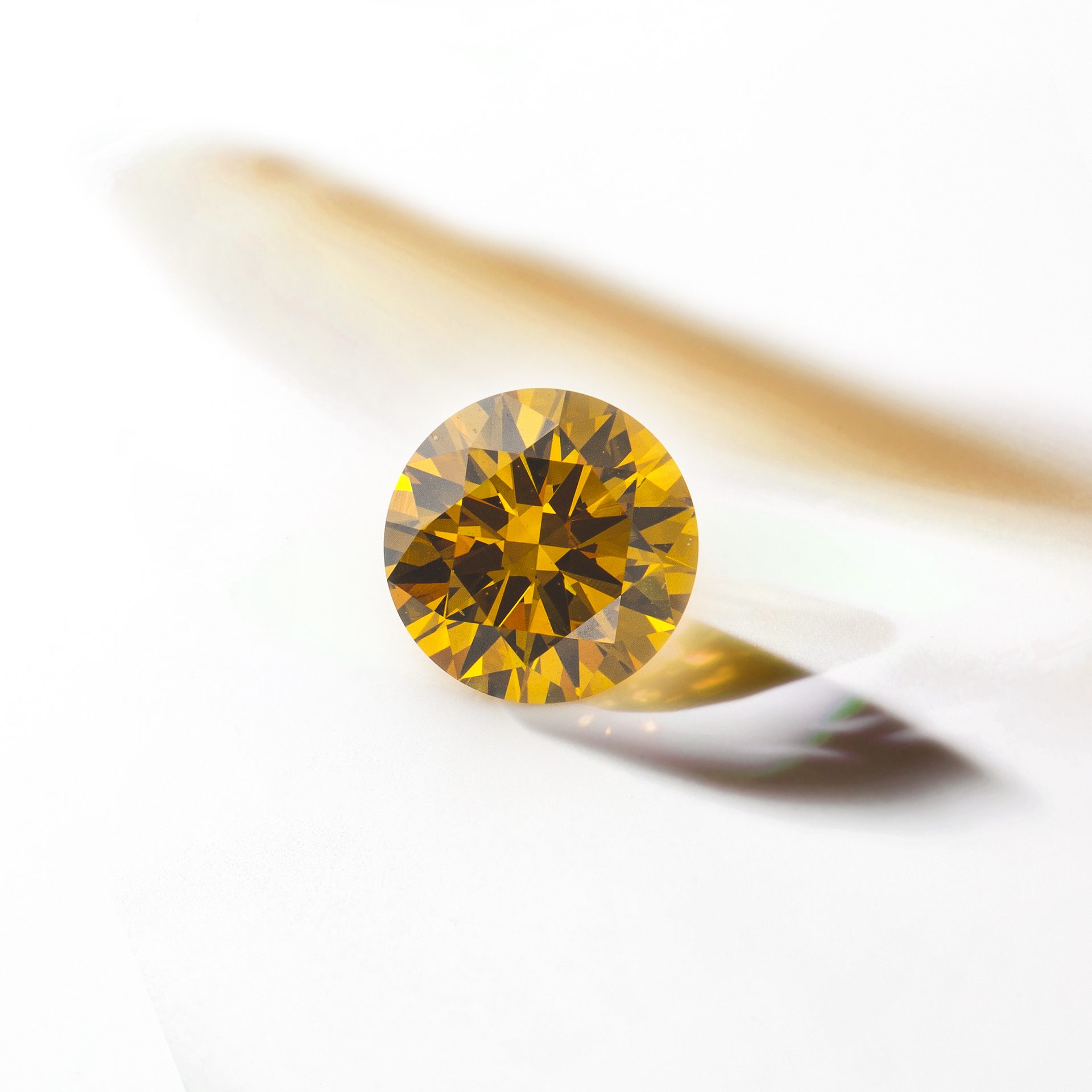
Lab Created Diamond
Lab Created Diamond is pure carbon in the same cubic lattice as natural diamond - indistinguishable to the eye.
- Lab diamond is the same material as natural diamond - not harder, not softer, not different in any physical property. The atoms are in the same arrangement.
- General Electric produced the first reproducible synthetic diamonds in 1954 using a press that could generate 100,000 atmospheres of pressure - equivalent to the pressure inside the Earth's mantle.
- A CVD diamond grows at about 1 micron per hour - to grow a 1-carat rough diamond takes approximately 4 to 6 weeks.
- The 'Adia de Savoy' - a famous historical pear-shaped diamond - would cost several million dollars as a natural stone. An equivalent lab-grown pear-shaped diamond would cost tens of thousands - still significant, but a fundamentally different scale.
- Diamond is the April birthstone, making lab diamond the most durable birthstone gift option available - and one that is now accessible in meaningful sizes at mainstream jewelry price points.
- Engagement ring buyers who want the brilliance and durability of diamond without natural diamond's price premium or ethical concerns
- Those who specifically want a conflict-free, traceable gemstone with full transparency about its origin
- Fine jewelry buyers wanting a large, high-quality diamond center stone at a price previously inaccessible
- April birthday celebrants who want a birthstone gift with genuine diamond quality at a reasonable investment
- Environmentally conscious consumers who want reduced mining footprint alongside traditional diamond aesthetics
- Investors who want diamond for wealth storage or appreciation - lab diamond prices have fallen significantly and offer minimal resale value
- Those who specifically want a stone with billions of years of Earth history embedded in it - lab diamond lacks this geological narrative
- Buyers who must have a professionally graded natural stone for insurance or estate jewelry purposes
What Is Lab Created Diamond?
Lab Created Diamond is pure carbon in a cubic crystal lattice - the same atomic structure as natural diamond. It has the same Mohs hardness of 10 (the hardest natural substance on Earth), the same refractive index of 2.417 producing diamond's characteristic fire and brilliance, and the same specific gravity of 3.52.
No instrument used to test gemstones can distinguish lab from natural diamond based on physical properties alone. Only advanced spectroscopic analysis and examination for specific growth features can identify laboratory origin.
Two main production methods create gem-quality lab diamonds. *High Pressure High Temperature (HPHT)* replicates the natural diamond formation conditions - intense pressure (around 5 GPa) and heat (around 1300-1600°C) are applied to a small diamond seed crystal and a carbon source (often graphite) until new diamond crystallizes. *Chemical Vapor Deposition (CVD)* takes a different approach: a diamond seed is placed in a chamber filled with carbon-rich gas (methane), energized by microwaves to deposit carbon atoms onto the seed layer by layer, growing a diamond plate without extreme pressure.
Lab diamond has become one of the most significant disruptions in the fine jewelry industry in decades. In the early 2000s, a 1-carat lab diamond might have cost 80% of the natural price. By the mid-2020s, prices had fallen to 50% to 80% below comparable natural stones.
This dramatic price decline reflects increasing production efficiency and scale. The FTC expanded its diamond definition in 2018 to include lab diamonds as genuine diamonds - a landmark regulatory recognition.
Lab Diamond vs Natural Diamond
| Property | Lab Diamond | Natural Diamond | Cubic Zirconia |
|---|---|---|---|
| Hardness | 10 | 10 | 8 - 8.5 |
| Price / carat (1ct, VS1, G) | $$$ Premium | $$$$ Luxury | $ Budget |
| Chemical identity | C (identical) | C | ZrO₂ (different) |
| Resale value | Low and declining | Moderate to high | Negligible |
| Geological origin | Laboratory | 1-3 billion years old | Synthetic only |
Meaning and Symbolism
Diamond's meaning is the oldest and most cross-culturally consistent in the gemstone world. The word 'diamond' derives from the Greek 'adamas' - unconquerable. Across cultures from ancient India (where diamonds were associated with the god Indra and lightning) to ancient Rome (where they were worn as love amulets) to medieval Europe (where they symbolized courage, invincibility.
Eternal love), diamond has consistently carried associations with the indestructible, the eternal, and the absolute.
Lab Created Diamond carries this meaning in its atomic structure - the same carbon lattice that makes natural diamond the hardest substance on Earth is present identically in lab diamond.
Crystal healing practitioners who work with diamond for amplification, clarity, and the activation of pure consciousness find lab diamond a fully valid working stone. The FTC's formal recognition of lab diamonds as genuine diamonds in 2018 aligned regulatory reality with gemological reality that had long been established.
A distinct meaning layer has emerged for lab diamond specifically: the meaning of human mastery, innovation, and the capacity to create what was once only possible through billion-year geological processes.
For practitioners who resonate with the human story of diamond - the idea that we have become sophisticated enough to grow the hardest substance in the universe in a laboratory - lab diamond carries a uniquely contemporary meaning about the meeting of human creativity and natural law.
Historical Timeline
Healing Tradition
Emotional
Diamond in crystal healing tradition is considered the stone of absolute clarity - the stone that strips away pretense, illusion, and the accumulated emotional fog that prevents a person from seeing their situation, themselves, and their choices with genuine clarity. Lab diamond is said to carry this quality fully.
Practitioners use it for clients who are avoiding seeing the truth about a situation - a relationship that is not what they hope it is, a pattern of behavior they have been unwilling to examine, or a life direction that no longer aligns with their genuine values.
Diamond does not soften what it reveals, but it does illuminate it - and the quality of its light is said to be encouraging rather than harsh.
Spiritual
Diamond is associated in crystal healing with amplification of all energies - the idea that it makes everything it comes into contact with more of what it already is. This makes it a stone to work with carefully: it amplifies positive qualities and difficult ones with equal efficiency.
Practitioners who use diamond for spiritual work tend to use it after significant inner clearing, not before - when the qualities being amplified are genuinely aligned with the practitioner's highest intentions. Lab diamond is said to carry this amplifying quality identically to natural.
Crown chakra activation and the experience of pure, undistorted awareness are the primary spiritual applications.
Physical
Crystal healing tradition associates diamond with the brain, nervous system, and the overall vitality of the energy field. It is sometimes used in layouts at the crown or forehead with the intention of maximum clarity and activation.
Some practitioners use it for chronic fatigue work, placing it at the crown to stimulate the body's highest vital frequencies. Diamond's extreme hardness is metaphorically associated with invincibility and the body's capacity to resist illness. These are traditional metaphysical associations and should never replace qualified medical care.
Zodiac, Birthstone and Gifts
Diamond as April birthstone connects it primarily to Aries (the dominant April sign) and Taurus (the transitional sign from late April). Aries, the first sign, ruled by Mars and associated with fire, initiative.
The courage to act, finds in diamond a stone that matches its energy - cutting, clear, and uncompromising in its brilliance. Diamond's associations with courage and invincibility are Aries qualities rendered in mineral form.
Taurus, the earth sign that enters in late April, brings a different relationship with diamond - one of appreciation for lasting beauty and material quality. Taurus understands intuitively that diamond's value is not just in its price but in its permanent durability - a Taurean virtue made concrete.
Care and Cleansing
Lab Created Diamond is chemically inert and physically indestructible under any normal cleansing conditions. All methods work - water, salt, sunlight, moonlight, sound, smoke, earth.
Warm water with mild dish soap and a soft brush is the most effective physical cleaning method and can be used as frequently as needed without any concern.
For energetic cleansing, moonlight and sound are traditional choices. Given diamond's reputation as an amplifier, thorough cleansing between uses - especially after intensive healing or emotional work - is recommended to ensure the stone's field is clear for the next application.
Visualization is particularly powerful for diamond: imagine a brilliant white light entering through the top of the stone and streaming out through every facet, carrying away all accumulated energies.
- DO wear daily - there is no harder gemstone; lab diamond scratches nothing except other diamond.
- DO clean regularly with warm water, mild soap, and a soft brush - diamond attracts oils and grease which dull brilliance.
- DO disclose as lab created when selling, insuring, or appraising - required by FTC regulations and important for insurance accuracy.
- DO NOT assume lab diamond holds investment value - prices have fallen significantly and continue to do so; buy for love, not financial return.
- Note: Lab diamond may show different internal growth features than natural diamond under gemological examination - these are identification markers, not quality defects.
- DO have significant lab diamond jewelry insured - the replacement cost for a well-made piece is significant even with lab stones.
- Note: Some CVD lab diamonds may show a slight strain pattern under polariscope - this does not affect the stone's appearance or durability.
Real vs Fake
Lab diamond is real diamond - not a fake. The identification challenge is distinguishing lab-grown from natural-origin diamond. This requires advanced spectroscopic equipment; no standard gemstone test (hardness, specific gravity, refractive index) can distinguish the two.
gemological laboratories and other major laboratories can identify lab-grown diamonds using photoluminescence spectroscopy and microscopic growth pattern analysis.
Common diamond simulants (not lab-grown) include cubic zirconia (CZC, Mohs 8-8.5, much lighter), moissanite (Mohs 9.25, shows doubling of facets under magnification), and white sapphire (Mohs 9, lower brilliance). These are not diamond and are easily distinguished by gemologists.
A diamond tester (thermal conductivity probe) will register both natural and lab diamond as diamond - and will distinguish them from simulants.
For significant purchases, request a grading report from gemological laboratories, IGI, or another recognized laboratory. The report will confirm whether the stone is lab-created or natural, and provide full quality grades. Any credible seller of lab diamond will support this verification and will provide clear disclosure on sales documents.
Lab Created Diamond Jewelry & Gifts
Lab diamond pricing has fallen dramatically. In the early 2020s, a 1-carat round brilliant G/VS2 lab diamond cost approximately $1,500 to $2,500. By mid-decade, comparable stones were trading at $500 to $1,000. This trend is expected to continue.
Lab diamonds are graded using the same 4C system as natural diamonds - cut, color, clarity, and carat weight - and should always come with a grading certificate from gemological laboratories, IGI, or GCAL.
Cut quality has the largest impact on visual appearance - a well-cut lab diamond at G/SI1 will look better than a poorly cut D/IF. For round brilliants, look for Excellent or Ideal cut grades.
Color grades D-G (colorless to near-colorless) are recommended for white metal settings; I-J grades can work beautifully in yellow gold where warmer color reads as a plus.
Major lab diamond retailers include Brilliant Earth, Clean Origin, Ritani, and many others. All reputable sellers provide grading certificates and clear lab-created disclosure.
For engagement rings, compare total price (stone + setting) across at least 3 retailers and ask for specific grading report numbers to verify you are comparing equivalent quality.
Where to Buy Lab Created Diamond
Affiliate disclosure: Some links below earn us a small commission at no extra cost to you. See our affiliate disclosure page.
Handmade, raw, and tumbled pieces from independent sellers worldwide.
Shop Lab Created Diamond on Etsy →Accessories, tools, and specimen sets with fast Prime delivery.
Shop Lab Created Diamond on Amazon →Certified loose gemstones graded and photographed for online buyers.
Shop Lab Created Diamond on GemSelect →Pairs Well With


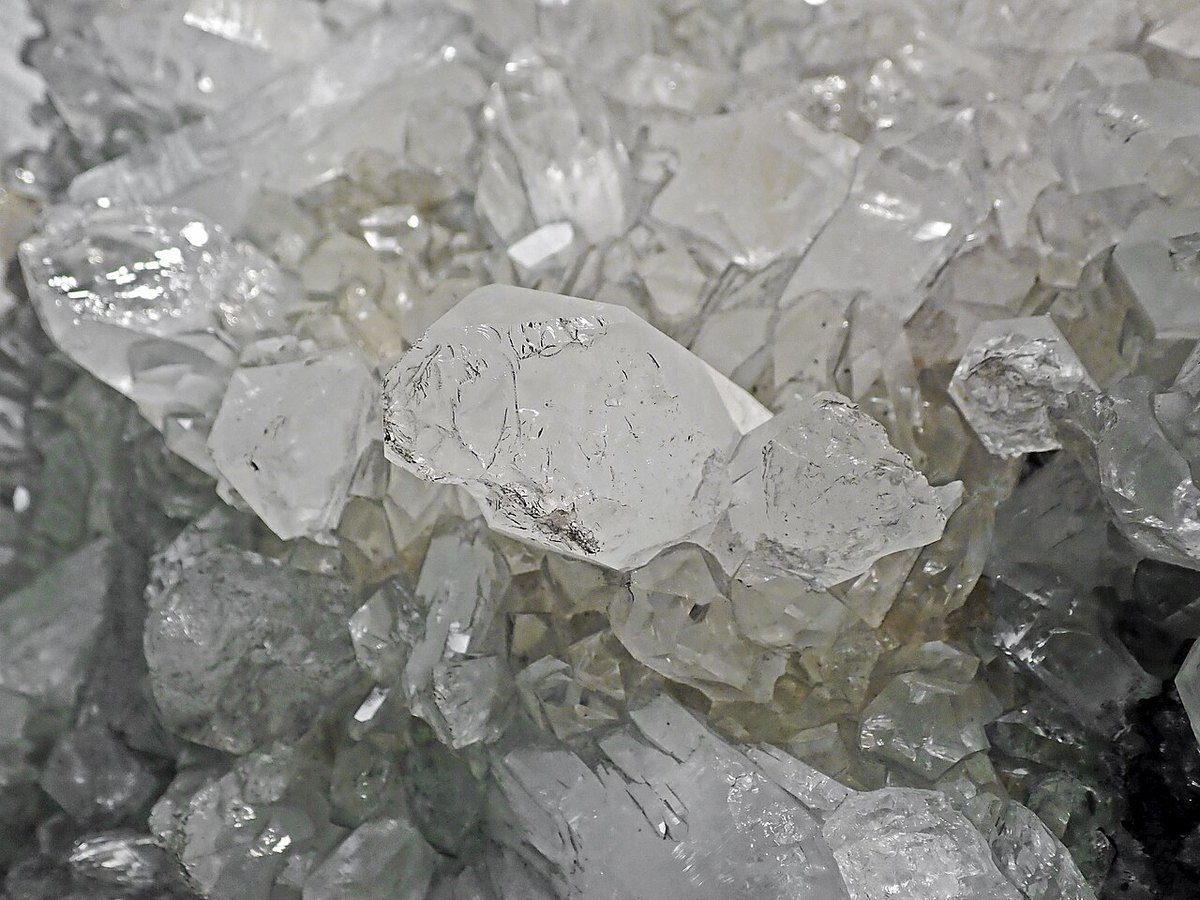
Where Lab Created Diamond Is Found


