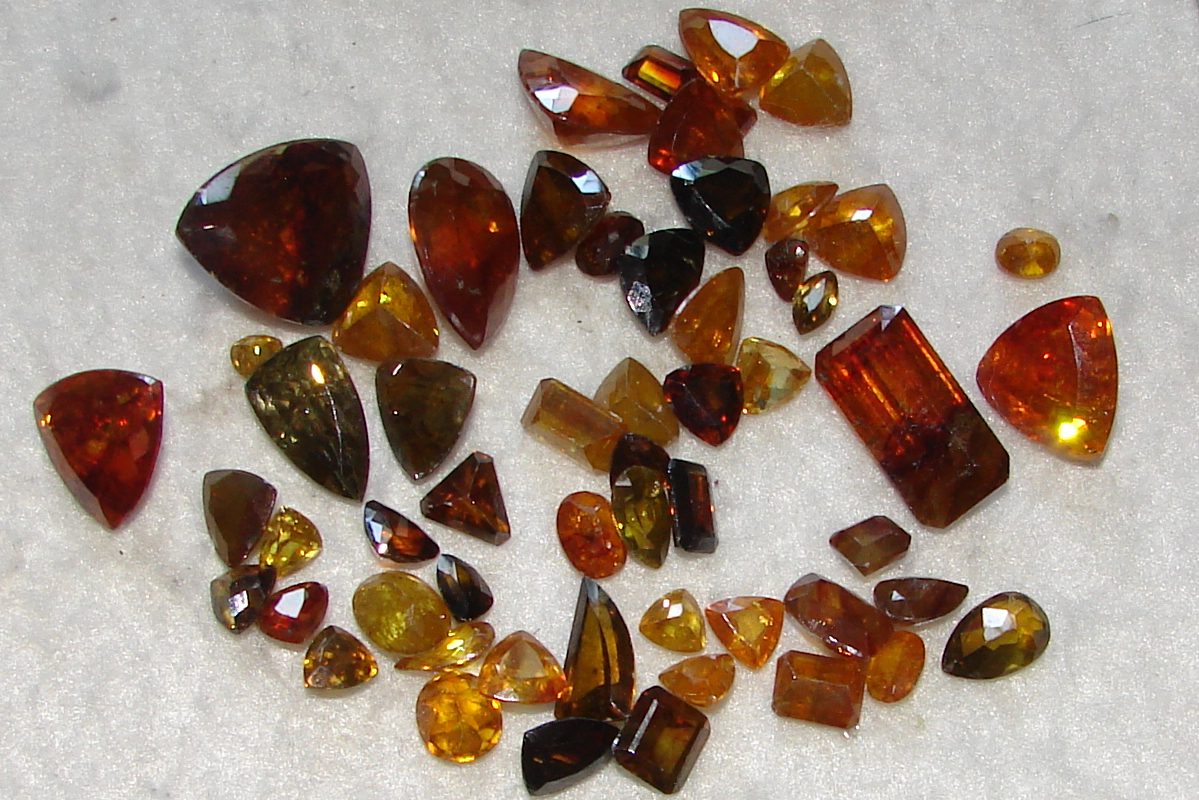
Sphalerite
- Collectors seeking extreme dispersion and optical spectacle
- Crystal enthusiasts drawn to solar plexus energy work
- Mineralogy students studying sulfide crystal systems
- Display-piece buyers who prioritize visual impact over wearability
- Everyday ring or bracelet wearers (hardness 3.5 to 4)
- Parents buying gemstones for young children
- Buyers expecting durability comparable to quartz or corundum
What Is Sphalerite?
Sphalerite is a zinc sulfide mineral belonging to the sulfide family, prized by collectors for its stunning color range and brilliant resinous to adamantine luster. This isometric crystal system stone forms in hydrothermal environments worldwide, making each specimen unique.
On the Mohs hardness scale, sphalerite rates between 3.5 and 4, meaning it's relatively soft and best suited for display rather than daily wear jewelry. Its brittleness requires careful handling to prevent damage during cutting and setting.
Sphalerite displays an impressive spectrum of colors including yellow, orange, red, green, colorless, and black varieties. Major deposits occur in Spain's Picos de Europa, Mexico's Chivato district, and Idaho in the United States, each producing distinct quality specimens.
Yellow-orange to red specimens represent the most sought-after sphalerite varieties for gem collectors. The stone's vibrant hues result from trace elements and impurities within its crystal lattice, creating nature's own colorful palette.
Meaning and Symbolism
Practitioners in crystal healing traditions associate sphalerite with vitality, confidence, and the ability to distinguish reality from illusion. The stone is said to ground scattered energy and help people act on ideas rather than simply collecting them. Its fiery dispersion is interpreted as a metaphor for transforming raw potential into brilliant action.
Energy workers sometimes work with sphalerite during periods of creative stagnation, believing it sparks motivation and mental clarity. Some traditions link it to the root and solar plexus chakras, associating it with physical energy and personal power. These associations belong to belief systems; no clinical studies support healing claims for any gemstone.
Healing Tradition
Emotional
Practitioners associate sphalerite with dissolving self-doubt and building confidence to act on creative ideas without second-guessing.
Spiritual
Said by some traditions to help distinguish genuine spiritual insight from wishful thinking, cutting through confusion with clarity.
Physical
Traditionally linked to vitality and stamina in folk wellness systems; all such associations are belief-based and not medically substantiated.
Where to Buy Sphalerite
Affiliate disclosure: Some links below earn us a small commission at no extra cost to you. See our affiliate disclosure page.
Handmade, raw, and tumbled pieces from independent sellers worldwide.
Shop Sphalerite on Etsy →Accessories, tools, and specimen sets with fast Prime delivery.
Shop Sphalerite on Amazon →Certified loose gemstones graded and photographed for online buyers.
Shop Sphalerite on GemSelect →Pairs Well With


Where Sphalerite Is Found


