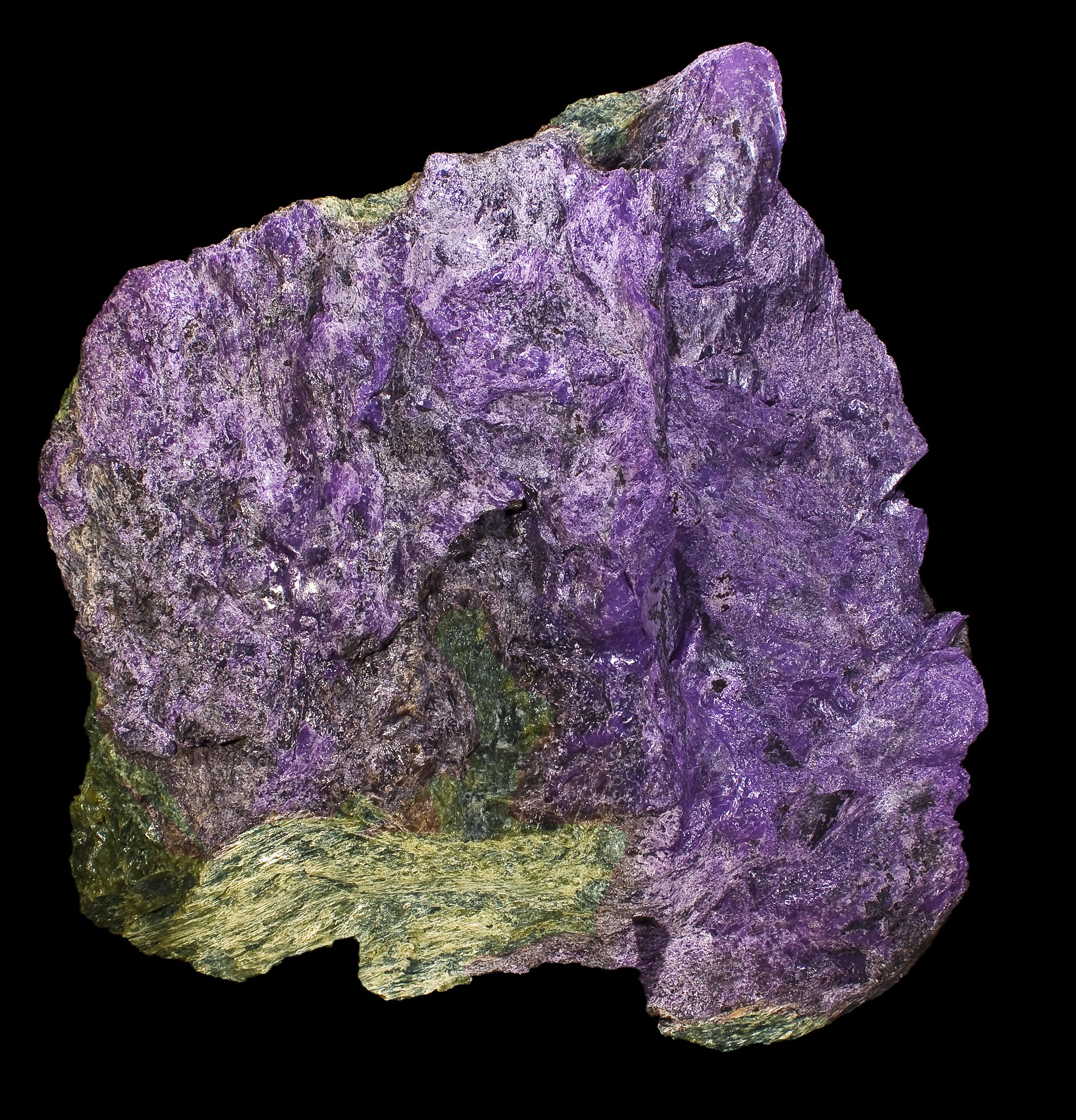
Stichtite
- Stichtite is softer than a human fingernail - its extreme softness of 1.5 to 2 means it can be scratched by almost any material.
- The trade name 'Atlantisite' for purple stichtite combined with green serpentine was invented to evoke the mythical sunken continent, boosting its appeal in new age markets.
- Stichtite gets its vivid purple from chromium - the same element that makes emeralds green and rubies red, just in a completely different crystal structure.
What Is Stichtite?
Stichtite belongs to the hydrotalcite supergroup within the carbonate mineral family. Its chemical formula, Mg6Cr2(OH)16(CO3)·4H2O, reveals magnesium, chromium, hydroxyl groups, and carbonate combined with water molecules. This composition creates the stone's distinctive purple coloring through chromium content.
This mineral crystallizes in the trigonal crystal system, displaying perfect basal cleavage that reflects its layered atomic structure. Stichtite ranks 1.5 to 2 on the Mohs hardness scale, making it quite soft and delicate. Its waxy to silky luster and translucent to opaque appearance characterize its visual beauty.
Stichtite forms in metamorphic rocks rich in magnesium and chromium, primarily in serpentinite deposits. Major sources include Tasmania's famous localities, British Columbia, South Africa, and Zimbabwe. The mineral typically occurs as compact masses or thin scales intergrown with host rock, rarely forming large pure crystals suitable for jewelry.
Meaning and Symbolism
Stichtite was first described in 1910 from specimens collected at the Sticht Range in Tasmania, Australia, named after Mount Lyell Mining manager Robert Carl Sticht. The mineral typically occurs as soft, waxy purple to lilac masses intergrown with serpentine in nickel-bearing ultramafic rocks, making its occurrence highly distinctive and visually recognizable, with full gemological data at the International Gem Society.
The combination of stichtite and serpentine is marketed as 'atlantisite' in the gem trade - a trade name created in the 1990s without historical basis but with commercial success. South African stichtite from Mpumalanga's Barberton Greenstone Belt often shows particularly vivid purple against pale green serpentine.
Stichtite's vivid purple, caused by chromium impurities in the magnesium carbonate hydroxide structure, attracts collectors despite its low hardness. Its heart and crown chakra associations derive from the combination of its purple color with accompanying green serpentine, interpreted in crystal practice as bridging earthly and spiritual dimensions in a single stone.
Historical Timeline
Healing Tradition
Emotional
Practitioners believe stichtite combines heart-opening green serpentine energy with crown-activating purple stichtite vibration, creating a stone said to bridge emotional warmth with spiritual wisdom simultaneously. It is described as particularly supportive during periods of healing from emotional wounds, offering both the compassion of the heart and the larger perspective of spiritual understanding.
Spiritual
Traditionally associated with the heart and crown chakras in crystal healing practice, stichtite is said to support the integration of earthly emotional experience with spiritual awareness. Crystal healing tradition holds that it dissolves the perceived separation between physical life and spiritual reality, encouraging practitioners to find the sacred within ordinary emotional experience rather than above or apart from it.
Physical
Practitioners traditionally associate stichtite with supporting the nervous system and reducing tension held in the body during periods of stress, though no medical evidence supports these claims. It is used as a gentle companion stone during relaxation and recovery practices.
Care and Cleansing
- Extreme softness of 1.5 to 2 - scratches from almost any contact; store only on soft padded surfaces.
- Never use water, salt, or steam cleaning - the mineral will deteriorate.
- Prolonged sunlight fades the vivid purple color; store in a shaded location.
- Not suitable for any jewelry application; display and meditation use only.
- Handle with clean dry hands and avoid dropping - stichtite is brittle.
Where to Buy Stichtite
Affiliate disclosure: Some links below earn us a small commission at no extra cost to you. See our affiliate disclosure page.
Handmade, raw, and tumbled pieces from independent sellers worldwide.
Shop Stichtite on Etsy →Accessories, tools, and specimen sets with fast Prime delivery.
Shop Stichtite on Amazon →Certified loose gemstones graded and photographed for online buyers.
Shop Stichtite on GemSelect →Pairs Well With
