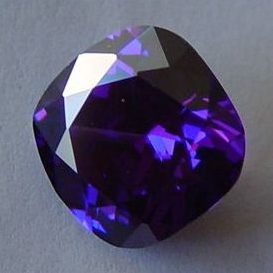
Zambian Amethyst
From the shores of Lake Kariba, Zambian amethyst shows a deep, inky blue-violet color that has quietly become the connoisseur's choice for.
- Lake Kariba, one of the among the largest known man-made lakes, was created in 1960 by damming the Zambezi River. The flooding exposed geological formations that turned out to contain Zambia's amethyst deposits.
- Zambia is already home to the Kagem emerald mine - the world's single largest emerald mine by volume. The country has quietly become one of Africa's most important gemstone-producing nations.
- Zambian amethyst's blue-violet color is produced by a different balance of iron impurities than Brazilian material - the deeper blue component comes from a slightly different trace element profile in the host rock.
- The Copperbelt region of Zambia, famous for its copper deposits, also produces amethyst from primary deposits in metamorphic rocks that differ geologically from the alluvial Lake Kariba material.
- Zambian amethyst is cut primarily in Lusaka and Ndola before export, supporting local lapidary expertise and creating skilled cutting jobs in the country of origin - a growing priority in ethical gemstone trade.
- Collectors seeking the finest-color faceted amethyst available
- February birthstone buyers who want premium over accessible
- Jewelry designers creating rich violet pieces for fine settings
- Crystal enthusiasts who have worked with Brazilian and want deeper energy
- Buyers who appreciate African gemstone heritage and Gemfields provenance
- Budget buyers seeking maximum size per dollar (consider Brazilian amethyst)
- Geode and cluster collectors (Zambian amethyst is primarily faceted gem material)
- Investment buyers expecting strong appreciation (colored quartz does not typically appreciate significantly)
What Is Zambian Amethyst?
Zambian amethyst is quartz (SiO2) colored by iron impurities and natural irradiation, mined primarily from alluvial deposits near Lake Kariba and from primary deposits in the Copperbelt region. It was discovered commercially in the 1970s and has become recognized as producing some of the finest faceted amethyst available.
The stone's distinctive deep blue-violet color - often described as having a more bluish component than Brazilian amethyst's pure violet - combined with high clarity and excellent transparency makes it particularly valued for fine jewelry.
Zambian material typically shows less color zoning than Brazilian, delivering more even color saturation throughout the cut gem.
Gemfields PLC, which also operates the Montepuez ruby and Kagem emerald mines in Africa, has a significant presence in the Zambian amethyst sector, providing certified ethical sourcing documentation that appeals to responsible luxury buyers.
How Zambian Amethyst Compares
| Property | Zambian Amethyst | Brazilian Amethyst | Uruguayan Amethyst |
|---|---|---|---|
| Color | Deep blue-violet, even | Medium violet, often zoned | Deep violet-red, even |
| Price/ct | $ Budget | $ Budget | $ Budget |
| Clarity | Typically eye-clean | Variable | Typically eye-clean |
| Best For | Fine faceted jewelry | Fashion, décor, beginners | Warmest deep violet |
Meaning and Symbolism
Zambian amethyst carries all the traditional metaphysical properties associated with amethyst, with practitioners who distinguish between origins believing its deep blue-violet adds an additional quality: greater depth of third-eye penetration and a more intense connection to the higher spiritual frequencies amethyst is associated with.
The blue component in Zambian amethyst's color is said by some practitioners to add throat chakra resonance alongside the standard third-eye and crown activation, creating a more comprehensive communication-and-clarity combination than pure violet Brazilian material.
Crystal healing traditions value Zambian amethyst for what practitioners describe as its clean, clear energy - stones with less zoning and fewer inclusions are said to produce a less fragmented, more pure energetic signal. This perceived clarity makes Zambian material particularly valued for focused meditation work.
Historical Timeline
Healing Tradition
Emotional
Zambian amethyst is said by practitioners to carry all of amethyst's calming and clarifying properties in their most intense, deep, and even form. The high clarity and deep even color of the best Zambian material is believed to produce a correspondingly focused, undivided calming energy - particularly useful for those working with significant emotional turbulence.
It is traditionally associated with the same properties as all fine amethyst: mental clarity, protection, and the support of honest, courageous self-examination. These are personal wellness accounts, not medically verified claims.
Spiritual
Practitioners who work specifically with Zambian amethyst describe its third-eye activation as particularly penetrating and clear compared to more common amethyst, attributing this to the higher saturation and lower zoning of the material.
The blue component in Zambian color is said to add a throat chakra dimension to the standard amethyst crown-and-third-eye profile, making it useful in practices that combine clarity, communication, and spiritual protection. For meditation dedicated to developing intuitive perception, practitioners frequently prefer Zambian material to other origins.
Physical
As with all amethyst, crystal healing traditions associate Zambian material with nervous system support, sleep quality, and mental clarity - none of which have medical support. Individual experiences vary widely and crystal healing practices are best understood as complementary wellness rituals rather than medical interventions.
Zodiac, Birthstone and Gifts
The same three signs most attuned to amethyst find in Zambian material the most potent expression of their stone's gifts. Pisces, whose deep emotional and spiritual sensitivity finds in Zambian amethyst's even, deep energy a particularly stable and penetrating support.
Aquarius's visionary capacity is said to be amplified by the concentrated third-eye activation of deep Zambian material. Capricorn's bridge between material and spiritual realms is supported by what practitioners describe as the focused, unambiguous clarity of high-grade Zambian amethyst - no scattered zoning, just clean depth.
Care and Cleansing
Follow the same gentle protocols as all amethyst: brief running water, moonlight, sound, or smudging. The primary care concern unique to premium Zambian material is protecting it from prolonged sunlight which can fade its distinctive deep color.
Moonlight recharging under a full moon is particularly popular for Zambian amethyst given its traditional third-eye and spiritual associations. Leave on a dark surface (not white - to protect the subtle blue shift in its color) under moonlight overnight.
Sound cleansing with high-quality crystal singing bowls is considered by many practitioners to be especially resonant for fine Zambian amethyst, producing what they describe as a vibrational reset that honors the stone's crystalline clarity.
- DO NOT leave Zambian amethyst in direct sunlight for extended periods - the deep color is an investment worth protecting from UV fading.
- DO store in a light-protected box or case when not wearing - even ambient indoor light over long periods can contribute to gradual fading.
- DO clean with warm soapy water and a soft cloth - the stone itself is durable but the premium justifies extra care.
- NOTE at 7 Mohs hardness, Zambian amethyst can scratch softer stones and be scratched by topaz, corundum, and diamond - store separately.
- DO insure significant Zambian amethyst jewelry - the premium over commercial material makes it worth financial protection.
Real vs Fake
Since Zambian amethyst is a quality designation for naturally occurring quartz, the primary fraud is commercial Brazilian material sold at Zambian prices. Evaluate the stone itself: genuine Zambian grade shows deep, even blue-violet color with minimal zoning.
Color test: Zambian amethyst retains its deep color face-up in bright lighting. If a stone appears washed-out or pale when face-up under bright light, it is likely commercial-grade material regardless of origin claims.
Ask for origin documentation. Gemfields-certified Zambian amethyst comes with chain-of-custody documentation. For premium prices, some form of provenance documentation is reasonable to request.
Synthetic amethyst is genuine quartz but must be disclosed. Under magnification, synthetic material shows different growth patterns - look for chevron banding in hydrothermal synthesis or curved striae in flame-fusion material.
Color-enhancement treatments (irradiation to restore faded color) should be disclosed. Natural deep Zambian color does not typically require enhancement; treated material should be priced accordingly.
Zambian Amethyst Jewelry & Gifts
Zambian amethyst retails from $5-80 per carat for fine faceted material - a significant premium over commercial Brazilian ($2-30) that is justified by the deeper, more even color and typically higher clarity. Investment in quality over quantity is the Zambian value proposition.
Deep blue-violet color with minimal zoning and high transparency is the quality target. The best Zambian stones maintain their color depth face-up in bright lighting without appearing pale or washed-out.
Clarity grade matters more for Zambian than Brazilian: the market pays for clean, transparent material. Eye-clean to loupe-clean specimens are standard for quality Zambian material.
Oval, cushion, and round cuts showcase Zambian color most effectively. The depth of color means cut proportions significantly affect face-up appearance - well-cut stones show even deep color across the table.
Purchase from dealers who specify origin and ideally provide documentation. Reputable colored stone dealers in the US, UK, and EU often carry certified African gemstone supply with clear provenance.
Where to Buy Zambian Amethyst
Affiliate disclosure: Some links below earn us a small commission at no extra cost to you. See our affiliate disclosure page.
Handmade, raw, and tumbled pieces from independent sellers worldwide.
Shop Zambian Amethyst on Etsy →Accessories, tools, and specimen sets with fast Prime delivery.
Shop Zambian Amethyst on Amazon →Certified loose gemstones graded and photographed for online buyers.
Shop Zambian Amethyst on GemSelect →Pairs Well With


Where Zambian Amethyst Is Found
