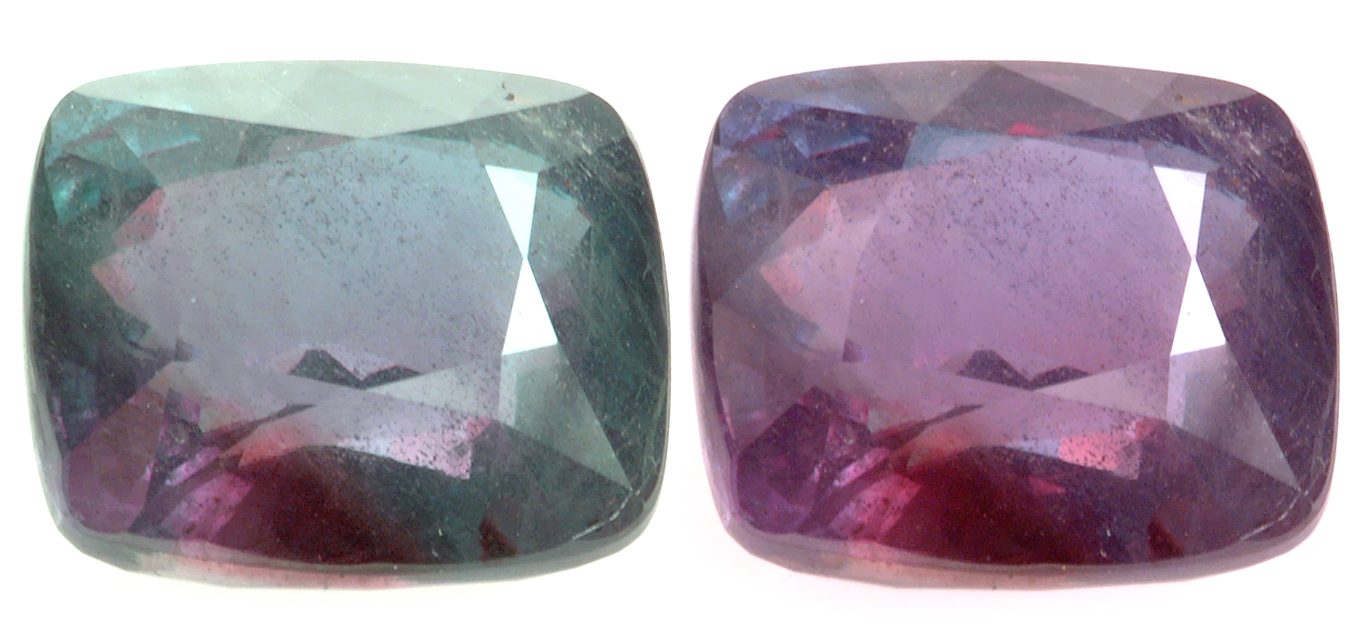
Alexandrite Cat Eye
Twice miraculous - the stone that changes color and displays a silver eye simultaneously, nature's rarest optical wonder
- A fine alexandrite cat eye can show distinct color transformation AND the chatoyant eye moving across the surface as the stone rotates - watching both phenomena simultaneously in one gem is an extraordinary optical experience.
- Natural alexandrite's color change is caused by chromium's unique property of absorbing yellow-green light in the visible spectrum - the same range of light sensitivity that the human eye is most sensitive to, making alexandrite's change maximally perceptible to human vision.
- Sri Lanka (historically known as Ceylon) has been one of the world's primary gemstone sources for over 2,000 years - alexandrite cat eye is just one of dozens of rare gems found in the country's ancient metamorphic and alluvial deposits.
- The chatoyancy in chrysoberyl cat's eye (the basis for alexandrite cat eye's eye effect) is so distinctive that chrysoberyl cat's eye is simply called 'Cat's Eye' in gemology without further qualification - the standard by which all other cat's eye gems are compared.
- Many alexandrite cat eyes on the market are synthetic or color-change sapphire with chatoyancy - the market has significant misrepresentation. Only spectroscopic analysis reliably distinguishes natural alexandrite from synthetic and color-change sapphire.
- serious gemstone collectors with significant budgets
- those working with transformation and dual-nature spiritual themes
- practitioners of advanced crystal work seeking maximum rarity
- jewelry designers creating exceptional pieces
- investors in rare gemstones
- crystal beginners or those with limited budgets
- those wanting affordable everyday stones
- buyers expecting the physical color change without understanding the lighting requirement
What Is Alexandrite Cat Eye?
Alexandrite Cat Eye is the rarest combination of optical phenomena in the gemstone world: a chromium-bearing chrysoberyl (alexandrite) that simultaneously shows color-change (green in daylight, red-purple in incandescent light) AND chatoyancy - the silver "cat's eye" band that moves across a cabochon surface caused by perfectly aligned microscopic hollow channels or needles parallel to the crystal's length.
Each phenomenon on its own represents exceptional rarity. Alexandrite with good color-change is one of the most valuable gemstones in the world. Chatoyant chrysoberyl cat's eye is also rare and valuable.
Finding both in the same stone requires extraordinary geological luck: the chromium incorporation that creates the color-change AND the aligned tube inclusions that create the chatoyancy must occur simultaneously during crystal growth.
Sri Lanka is the primary source, though Brazil, India, and Madagascar also occasionally produce material. A genuine fine alexandrite cat's eye with strong color-change and a well-centered, distinct eye is among the most expensive natural gemstones available - prices for fine 1-2 carat examples routinely exceed $50,000, with exceptional specimens reaching six figures.
Alexandrite Cat Eye vs. Similar Rare Stones
| Property | Alex. Cat Eye | Regular Alexandrite | Chrysoberyl Cat Eye |
|---|---|---|---|
| Hardness | 8.5 | 8.5 | 8.5 |
| Price/ct | $$$$ Luxury | $$$ Premium | $$ Mid-range |
| Rarity | Extreme | Very rare | Rare |
| Phenomena | Color change + chatoyancy | Color change only | Chatoyancy only |
Meaning and Symbolism
Alexandrite cat eye combines the metaphysical profiles of both parent phenomena in a stone that practitioners describe as embodying the principle of dual transcendence - the capacity to be fundamentally two things simultaneously, neither one hiding or diminishing the other.
This makes it uniquely valued for work related to holding paradox, integrating apparent opposites, and the spiritual maturity required for genuine complexity.
The color-change quality of alexandrite carries the ancient symbolic weight of transformation across contexts - the stone that adapts its presentation to match its environment while remaining internally the same stone.
Combined with the cat's eye's traditional association with psychic protection, supernatural perception, and the watchful awareness of the liminal spaces between states, alexandrite cat eye is said to represent the highest form of alert, adaptive spiritual awareness.
Many practitioners work with alexandrite cat eye specifically at moments of major life transformation - when old identities are genuinely dissolving and new ones have not yet crystallized. The stone is said to hold the transformative liminal space with grace, maintaining clear perception (the eye) through radical change (the color-shift).
Historical Timeline
Healing Tradition
Emotional
Practitioners describe Alexandrite Cat Eye as one of the most powerful stones for navigating identity transformation - the emotional and psychological terrain of genuine change rather than change as performance.
The stone is said to provide what might be called watchful grace: the ability to observe one's own process with clarity (the cat's eye) while fully experiencing the genuine shift in progress (the color change).
Many crystal healers use it for clients in major life transitions - career changes, spiritual crises, significant relationship endings, or any process where who one is being asked to become feels radically different from who one has been.
Spiritual
In spiritual practice, alexandrite cat eye is associated with some of the most advanced spiritual themes: the integration of paradox, the maintenance of clear awareness through transformation, and the capacity to be simultaneously grounded in physical reality and open to spiritual dimensions.
Practitioners believe it activates crown, third eye, and heart chakras simultaneously - a rare triple activation that reflects the stone's unusual combination of properties.
It is said to be particularly supportive for those in spiritual teacher, healer, or guide roles where maintaining clear perception while facilitating transformation for others is a regular professional requirement.
Physical
Some crystal wellness practitioners associate Alexandrite Cat Eye with the nervous system, the pineal gland, and the adrenal system's capacity for adaptive response to changing conditions. It is associated with resilience and adaptive vitality in holistic frameworks. No scientific evidence supports these associations. Always consult a qualified healthcare provider for health concerns.
Zodiac, Birthstone and Gifts
Scorpio's comfort with transformation, depth, and the liminal spaces between states makes it one of the signs most naturally aligned with alexandrite cat eye's dual phenomena.
Gemini's comfort with duality, paradox, and the multiplicity of self resonates with a stone that is simultaneously two different things - both expressing the same gemstone nature.
Care and Cleansing
Alexandrite cat eye is exceptionally durable (8.5 hardness) and water-safe - brief rinsing under cool running water is safe and effective. Dry thoroughly. The stone's stability makes physical cleansing practical and reliable.
Moonlight and sunlight cleansing are both safe and effective for alexandrite cat eye. The stone is not color-sensitive under UV. Many practitioners use a moonlight-to-sunrise sequence, representing the full transformation cycle from dark to light that the stone embodies.
Sound cleansing with crystal bowls or tuning forks is excellent for regular maintenance between more intensive practices. The stone's sensitivity to sound vibrations is said to make this method particularly effective for resetting its perceptive clarity.
- DO clean with warm soapy water and a soft brush - the 8.5 hardness makes it highly resistant to damage.
- DO NOT use ultrasonic cleaners if the stone has inclusions (many do) that could expand under vibration.
- NOTE the market has significant misrepresentation - synthetic alexandrite and color-change sapphire are widely sold as natural alexandrite cat eye. Always require spectroscopic certification.
- DO NOT store with diamonds which could scratch the girdle despite alexandrite's hardness.
- DO NOT purchase significant alexandrite cat eye without independent gemological certification from gemological laboratories, AGL, or GRS.
Real vs Fake
The most important authentication point for alexandrite cat eye is spectroscopic analysis. Color-change synthetic corundum (sapphire) is widely sold as alexandrite. Under a spectroscope, alexandrite shows a characteristic chromium absorption pattern different from corundum.
Natural alexandrite's color change goes from green (daylight) to red-purple (incandescent). Color-change sapphire typically shifts from blue-violet to purple rather than green-to-red. The color shift direction is the first quick check.
The cat's eye line quality in natural alexandrite should be distinct, well-centered, mobile (moves as the stone is rotated), and sharp. Very sharp, perfectly centered, or artificially bright eyes may indicate synthetic material or assembled stones.
Natural alexandrite frequently has inclusions - fingerprints, needles, two-phase inclusions - visible under magnification. Perfectly inclusion-free material at large sizes is more likely synthetic than natural.
For any alexandrite cat eye purchase above $500, insist on a laboratory report from gemological laboratories, AGL, GRS, or another internationally recognized lab specifying: chrysoberyl species, color-change quality, chatoyancy assessment, origin (if determinable), and absence of treatments.
Alexandrite Cat Eye Jewelry & Gifts
Natural alexandrite cat eye with good color change and distinct cat's eye is priced by carat weight in the $5,000-$30,000/ct range for fine material from Sri Lanka. Smaller stones with less defined color change or eye quality run $500-$5,000/ct. This is unambiguously a luxury acquisition.
The quality factors in order of importance: (1) color change intensity and quality (strong alexandrite effect), (2) cat's eye sharpness and centering, (3) color quality in both daylight and incandescent light, (4) clarity and overall transparency, (5) origin (Sri Lanka commands premiums).
For collectors on more accessible budgets, small alexandrite cat eye specimens in the 0.5-1 carat range with moderate phenomena ($300-$2,000) represent genuine natural alexandrite cat eye that displays both effects, just less dramatically.
Laboratory certification is non-negotiable for significant purchases. Gemological laboratories, AGL (American Gem Lab), GRS, and SSEF are the most respected labs for alexandrite. Lab fees are typically included in premium dealer pricing.
The secondhand and estate jewelry market can be a source of genuine alexandrite cat eye pieces at prices reflecting previous owner acquisition rather than current market. Antique dealers specializing in gemstone jewelry and major auction houses (major auction houses, major auction houses) are reliable sources.
Where to Buy Alexandrite Cat Eye
Affiliate disclosure: Some links below earn us a small commission at no extra cost to you. See our affiliate disclosure page.
Handmade, raw, and tumbled pieces from independent sellers worldwide.
Shop Alexandrite Cat Eye on Etsy →Accessories, tools, and specimen sets with fast Prime delivery.
Shop Alexandrite Cat Eye on Amazon →Certified loose gemstones graded and photographed for online buyers.
Shop Alexandrite Cat Eye on GemSelect →Pairs Well With



Where Alexandrite Cat Eye Is Found


