Amber with Inclusions
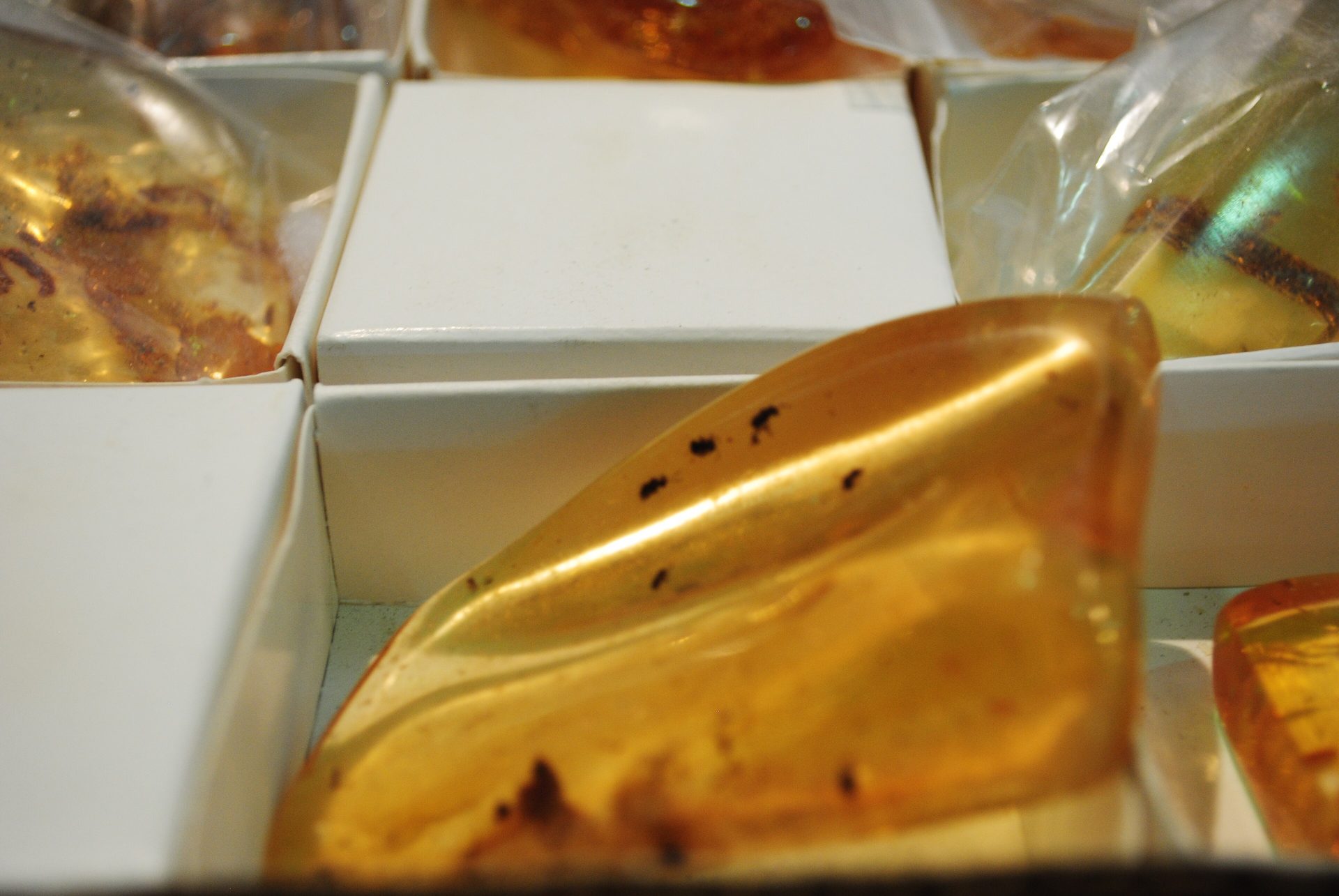
Amber with inclusions captures prehistoric life in golden resin - insects, plant matter, and ancient air frozen for millions of years inside a warm gemstone
- The word 'electricity' derives from the Greek 'elektron' (amber), because rubbing amber with cloth creates a static charge that attracts feathers - noted by Thales of Miletus around 600 BCE.
- A complete spider in amber can be worth thousands of dollars; a spider in the act of catching prey in a web is among the rarest and most valuable inclusion types.
- Burmese amber from the Cretaceous period (99 million years ago) has yielded a partial dinosaur tail with feathers, described in a 2016 paper in Current Biology.
What Is Amber with Inclusions?
Amber with inclusions belongs to the organic gem category as fossilized plant resin from ancient forests. Its chemical composition is a complex mixture of terpene polymers with no fixed molecular formula. The amorphous crystal system means it lacks ordered atomic structure, distinguishing it from traditional minerals completely.
This gemstone rates 2 to 2.5 on the Mohs hardness scale, making it relatively soft and requiring gentle care. Golden yellow, honey, and cognac hues dominate, though rare blue and green specimens exist. Inclusions of insects, plant matter, and air bubbles create each piece's unique character and scientific value.
Amber with inclusions formed from tree resin in ancient forest ecosystems spanning 15 to 320 million years ago. Primary sources include the Baltic coast, Dominican Republic, Myanmar, and Mexico. Over geological time, polymerization hardened the sticky resin into the warm, translucent gemstone we cherish today.
The refractive index ranges from 1.539 to 1.545, while specific gravity measures 1.05 to 1.09, making it lightweight. Conchoidal fracture and absence of cleavage planes characterize its physical behavior when cut or broken. These properties help gemologists distinguish authentic amber from imitations and synthetic alternatives.
Meaning and Symbolism
Ancient Baltic peoples revered amber as solidified sunlight, gifted by the sea according to Lithuanian legend, with the full natural history covered in the International Gem Society’s amber guide. Roman legions traded it along the Amber Road from the Baltic to the Mediterranean, where it was carved into amulets and jewelry prized by emperors and merchants alike.
Greeks named amber 'elektron' - their word for gold. Pliny the Elder noted that inclusions of insects and plant matter were prized curiosities across the Roman world, valued both as natural wonders and as protective talismans worn by soldiers and travelers on long journeys.
In Northern European folk traditions, amber with inclusions is considered a stone of deep memory and ancestral connection, believed to carry the life force of trapped organisms across millions of years. Baltic healers historically used amber in protective amulets and folk teething remedies for centuries.
Historical Timeline
Healing Tradition
Emotional
Practitioners associate amber with warmth, protection, and the soothing of anxiety. Inclusion amber specifically is said to carry the settled, preserved energy of ancient life, offering a sense of deep stability and continuity. It is described as a comfort stone for grief and loss.
Spiritual
In crystal traditions, amber is associated with solar plexus activation and is considered a purifying stone that transmutes negative energy into positive. Inclusion amber is said to amplify this quality by carrying the life force of ancient organisms, connecting the holder to the continuity of life across deep time.
Physical
Traditional lore, especially from Baltic cultures, associates amber with relieving joint pain, teething discomfort, and respiratory issues. These associations are not scientifically validated and should not replace professional medical care. Note: amber teething necklaces for infants pose documented choking and strangulation hazards and are not recommended by pediatric organizations.
Care and Cleansing
Wipe amber with a soft damp cloth and mild soap if needed; dry immediately and thoroughly. Never use ultrasonic cleaners, steam, alcohol, or harsh chemicals, which damage the organic material. Smudging is gentle; sunlight exposure should be limited as prolonged UV can yellow or cloud amber. Selenite charging is a safe option.
- Mohs 2–2.5: scratches from fingernails, dust, and all common surfaces. Store in individual padded pouches.
- Never use ultrasonic, steam, or chemical cleaners.
- Avoid perfume, hairspray, and hand lotion contact.
- Prolonged direct sunlight exposure can cause surface cracking and color change.
- Amber is flammable at high temperatures - keep away from flames.
Where to Buy Amber with Inclusions
Affiliate disclosure: Some links below earn us a small commission at no extra cost to you. See our affiliate disclosure page.
Handmade, raw, and tumbled pieces from independent sellers worldwide.
Shop Amber with Inclusions on Etsy →Accessories, tools, and specimen sets with fast Prime delivery.
Shop Amber with Inclusions on Amazon →Certified loose gemstones graded and photographed for online buyers.
Shop Amber with Inclusions on GemSelect →Pairs Well With