Benitoite
Born in the serpentine hills of San Benito County, benitoite is a sapphire-blue rarity that glows sky-violet under ultraviolet light.
- Benitoite's dispersion of 0.046 exceeds diamond's 0.044, giving faceted stones strong fire.
- Under shortwave ultraviolet light, benitoite glows a bright sky-blue to violet.
- The San Benito gem mine is the only historically productive facet-grade source worldwide.
- Benitoite shares its rare ditrigonal-dipyramidal crystal class with almost no other natural mineral.
- Most faceted benitoite stones are under one carat, and anything over three carats is a notable collector piece.
- Collectors seeking a genuinely rare American-origin gem with a single commercial source
- Readers drawn to sapphire-blue stones with exceptional dispersion rivaling diamond
- Californians wanting the official state gem as jewelry or a specimen
- Mineralogy students studying a barium titanium silicate of hexagonal symmetry
- Practitioners working with throat chakra communication and spiritual perception
What Is Benitoite?
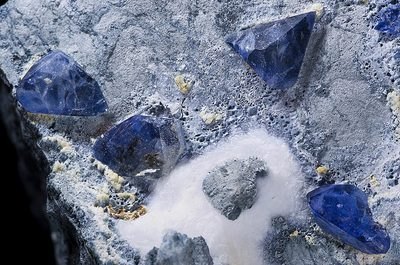
Benitoite is a barium titanium silicate mineral with a striking sapphire-blue color and dispersion higher than diamond. It forms in tiny ditrigonal-dipyramidal crystals, a symmetry found in only one other mineral species, and is classed among the world's rarest transparent gems. It rates 6 - 6.5 on the Mohs hardness scale.
The stone's name traces to San Benito County in California, where the only commercially productive deposit was discovered in the early twentieth century by prospectors searching for sapphire.
Rough benitoite grows in natrolite seams inside blueschist and serpentinite host rock, usually alongside white natrolite and black neptunite crystals. The California mine reached commercial exhaustion in the early twenty-first century, and subsequent production is sporadic at best.
Small finds in Arkansas, Japan, and Myanmar are documented but have not yielded facet-grade material in meaningful quantity, which keeps clean faceted benitoite squarely in the collector tier.
At Mohs 6 to 6.5, benitoite is softer than sapphire and not recommended for daily-wear rings without protective settings. Its refractive index of 1.757 to 1.804 is unusually high, and combined with strong dispersion this gives faceted stones a brilliant fire under bright light.
Benitoite also fluoresces a characteristic bright sky-blue to violet under shortwave ultraviolet, a diagnostic feature used to identify cut stones and natural crystals in mineral displays.
How Benitoite Compares
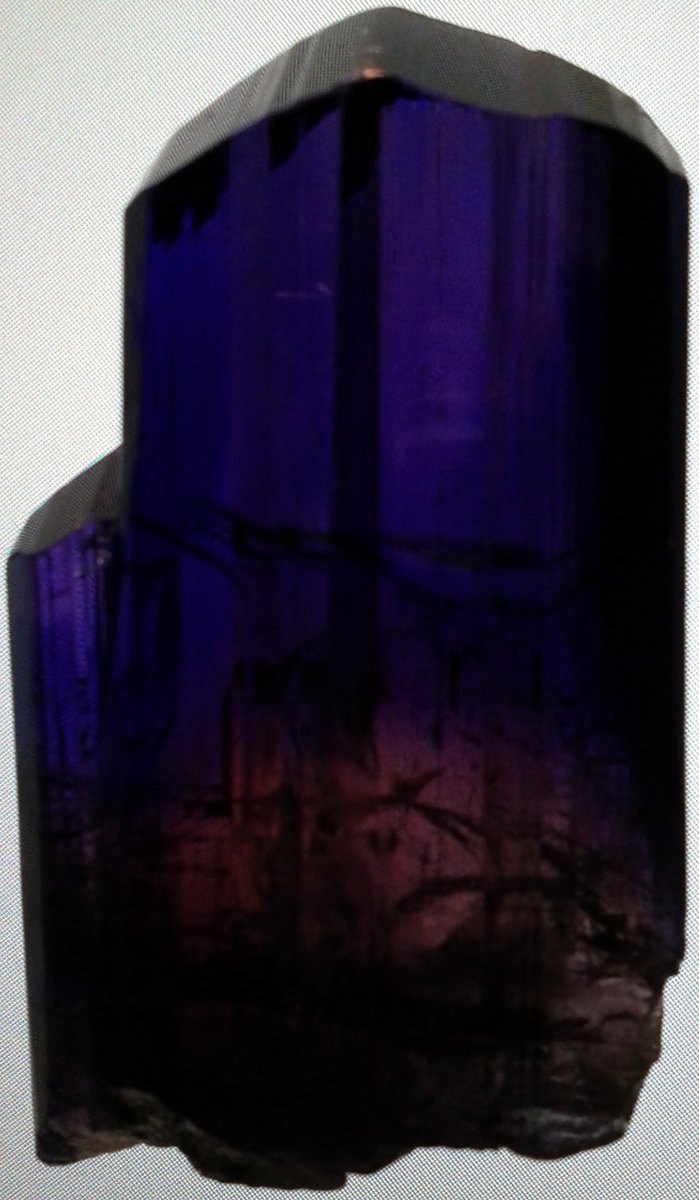
| Property | Benitoite | Blue Sapphire | Tanzanite |
|---|---|---|---|
| Hardness | 6 - 6.5 | 9 | 6 - 7 |
| Price / carat | $$$$ Luxury | $$$ Premium | $$$ Premium |
| Rarity | Extremely Rare | Widely Available | Single-Source |
| Best For | Collector specimens | Engagement jewelry | Statement pieces |
Meaning and Symbolism
Benitoite entered gemological literature only in the early twentieth century, so it lacks the ancient folklore that surrounds stones like sapphire or amethyst. Its meaning has been built in modern times, drawing on its Californian origin, its exceptional rarity, and its striking sapphire-blue color.
Practitioners often describe benitoite as a stone of clear communication and mental focus, with some traditions associating its fluorescence with heightened spiritual perception.
In 1985 the California Legislature designated benitoite the official state gem, recognizing its uniqueness to the region. The stone's connection to a specific valley of serpentinite has given it a place in American mineralogical identity that few other gems share.
For collectors, owning a faceted benitoite carries a small piece of that localized geological story. Modern crystal workers have assigned benitoite to the throat and third eye chakras, drawing on its blue-violet color family.
The stone is said to support clear speech and what practitioners describe as honest perception. As with many newer stones, these associations are recent rather than traditional, and writers tend to acknowledge the lineage openly.
Historical Timeline
Healing Tradition
Emotional
Practitioners believe benitoite is a stone of clear expression, traditionally associated with speaking one's truth and releasing mental noise. In crystal healing tradition, it is said to support people who struggle to articulate boundaries or feelings during stressful conversations.
Many readers describe benitoite as a calming companion during negotiations or difficult family discussions, with its sapphire-blue color linked to cooler, steadier emotional states. Aquamarine is frequently paired with benitoite for the same reason.
Practitioners often recommend benitoite for writers, teachers, and therapists who work professionally with language, and it is sometimes kept on a desk during composition.
Because benitoite is rare, a small faceted stone or a specimen in its natrolite matrix is typically the practical form, rather than larger tumbled pieces more common with other stones.
Spiritual
In crystal healing tradition, benitoite is linked with the throat and third eye chakras, zones many practitioners associate with communication and inner sight. The stone's characteristic blue fluorescence has contributed to a reputation for revealing what is hidden, and practitioners sometimes describe benitoite as a clarifying presence during meditation.
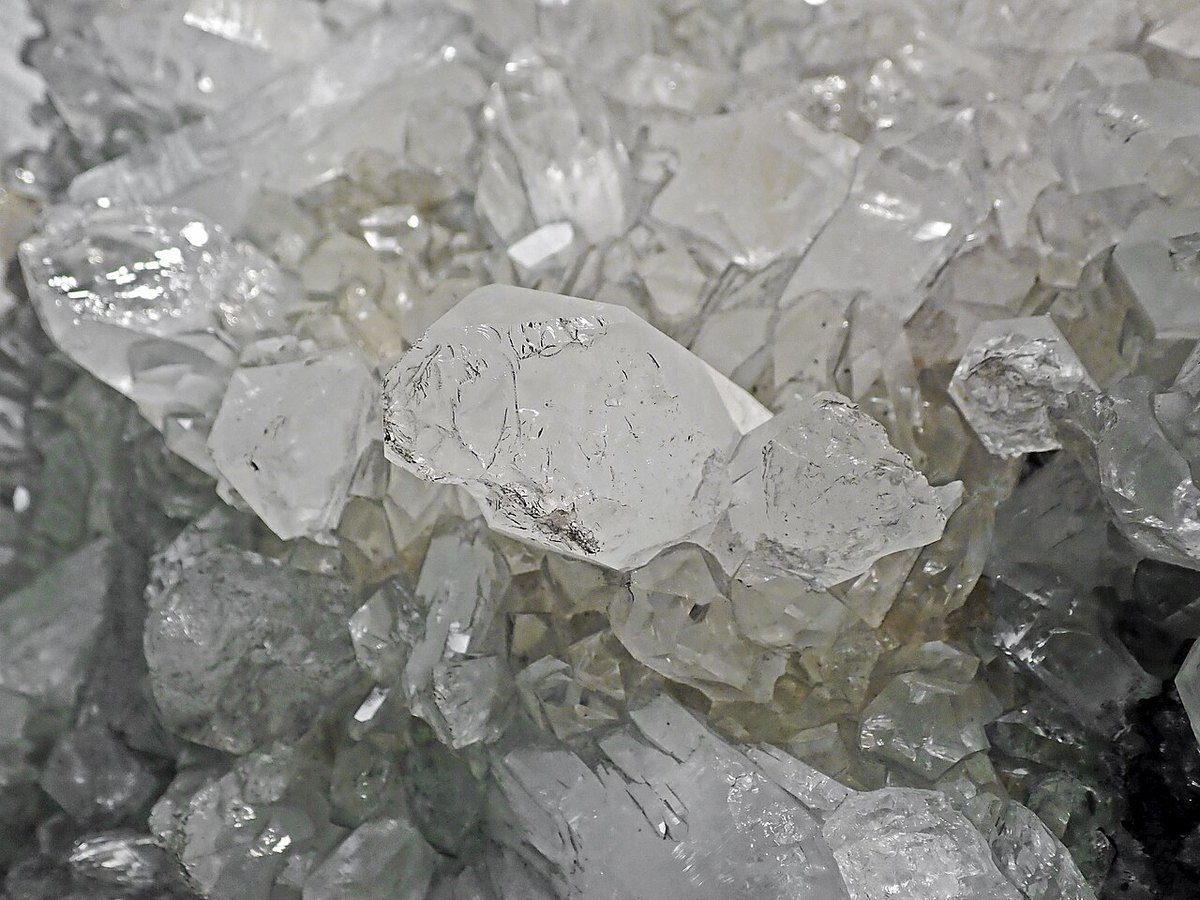
Many readers work with benitoite during new-moon intentions around honesty and creative voice. Because the stone is so scarce, it is uncommon in large grids, and practitioners often treat a single faceted stone as a focal anchor paired with clear quartz amplifiers.
Benitoite is also associated in some modern traditions with connection to higher realms of perception. Its sky-violet glow under ultraviolet light has made it a favorite with practitioners who use stone fluorescence as part of ritual work, though the color itself has no measured spiritual property beyond tradition.
Physical
Practitioners believe benitoite offers what they describe as subtle support for the throat, vocal cords, and the muscles of communication. Folklore associates the stone with steady speech and comfort during presentations or public events, though it is never positioned as a medical intervention.
Many readers wear benitoite as a small pendant near the throat rather than as a bracelet, given its moderate Mohs hardness and collector price.
Some crystal workers suggest benitoite for people recovering vocal stamina after illness, alongside aquamarine or blue lace agate as more affordable pairings. It is not a substitute for medical care and practitioners are careful to describe its role as accompanying rather than treating.
Given its fragility, benitoite is rarely used in gem elixirs.
Zodiac, Birthstone and Gifts
Benitoite is not a traditional birthstone, but modern astrologers often suggest it for Aquarius and Pisces, signs associated with communication and intuition respectively. Its deep blue color and unusual fluorescence echo the mystical, forward-looking qualities many astrologers attribute to these signs.
For Aquarius readers drawn to unconventional stones, benitoite's California origin and extreme rarity tend to fit an independent, curious temperament. For Pisces, the stone's watery blue saturation feels at home alongside aquamarine and moonstone in a zodiac collection.
Care and Cleansing
Benitoite is moderately durable but requires careful cleansing because of its collector value. A soft brush with lukewarm water and mild soap handles light dust and body oils without risk. Avoid ultrasonic and steam cleaners, which can stress included or slightly fractured material, and do not soak set stones with vintage mountings.
Moonlight, sound cleansing with a singing bowl or chime, and brief smoke cleansing with palo santo or sage are all traditional and safe for benitoite. Dry salt cleansing is acceptable for a few hours but saltwater soaks should be avoided because they can corrode metal settings and are risky on valuable stones.
Ultraviolet charging is popular among collectors who enjoy activating the fluorescence.
Sunlight is tolerated but prolonged exposure is unnecessary and adds no benefit for such a collector-tier stone. Many practitioners simply rest benitoite on a piece of selenite overnight as a gentle energetic reset, which avoids any mechanical handling risk.
- DO store benitoite in an individual soft pouch to prevent scratches from harder stones.
- DO NOT use ultrasonic or steam cleaners on benitoite, especially on fracture-filled material.
- DO wear benitoite in protective bezel settings rather than prong-set rings for daily wear.
- DO NOT leave benitoite loose in a jewelry box with diamond or sapphire pieces.
- DO remove benitoite rings before housework, gardening, or sports activities.
- DO keep an insurance appraisal and provenance papers for any benitoite over one carat.
- Note: California Benitoite Gem Mine material is the most collectible origin and commands a premium.
Real vs Fake
Genuine benitoite shows a distinctive saturated sapphire-blue color with strong dispersion and almost always exhibits bright sky-blue fluorescence under shortwave ultraviolet light. This fluorescence is the single most reliable at-home diagnostic, since few blue stones share the same glow.
Refractive index, specific gravity, and inclusions visible under a 10x loupe all confirm the identification in a laboratory setting.
Common imitations include blue topaz, synthetic blue spinel, tanzanite, and cobalt-doped glass. Blue topaz does not fluoresce like benitoite, and synthetic spinel shows a different refractive index and lacks the characteristic dispersion fire. Cobalt glass tends to show curved growth lines and gas bubbles under magnification, tells natural benitoite does not exhibit.
For any significant purchase, a report from a recognized gemological laboratory is essential given benitoite's price tier. Reputable sellers should provide origin documentation, ideally naming the California source, and should confirm natural origin with any treatments disclosed.
Because synthetic benitoite has been produced experimentally but not at scale, laboratory confirmation is the safest identification path.
Benitoite Jewelry & Gifts
Benitoite is one of the priciest collector gems by carat in the modern market. Small faceted stones under half a carat typically run $500 to $1,500 per carat, while clean stones between half a carat and one carat reach $2,000 to $6,000 per carat.
Larger stones above one carat routinely command $5,000 to $10,000 per carat and beyond for top color. Matrix specimens with benitoite crystals on natrolite are separately collectible, often priced similarly to faceted stones of the same weight.
Treatment is uncommon in benitoite because the natural sapphire-blue color and dispersion need no enhancement, though extremely rare heated examples have been documented.
Buyers should favor sellers who disclose origin and provide a lab report, and should expect honest conversation about inclusions, which are common in even top-grade benitoite rough.
Where to Buy Benitoite
Affiliate disclosure: Some links below earn us a small commission at no extra cost to you. See our affiliate disclosure page.
Handmade, raw, and tumbled pieces from independent sellers worldwide.
Shop Benitoite on Etsy →Accessories, tools, and specimen sets with fast Prime delivery.
Shop Benitoite on Amazon →Certified loose gemstones graded and photographed for online buyers.
Shop Benitoite on GemSelect →Pairs Well With



Where Benitoite Is Found


