Blue Amber
The only amber that glows electric blue - a 15–45-million-year-old optical phenomenon found almost nowhere else on Earth.
- Blue amber is so rare that it accounts for only about 0.01 percent of all amber mined from Dominican deposits.
- The same blue glow can be seen in sunlight if you hold the amber over a dark background - no UV light needed, just the right angle.
- Blue amber was reportedly treasured by pre-Columbian Taino people specifically for its light-transforming properties, used in ceremonies centered on the sun and sky.
What Is Blue Amber?
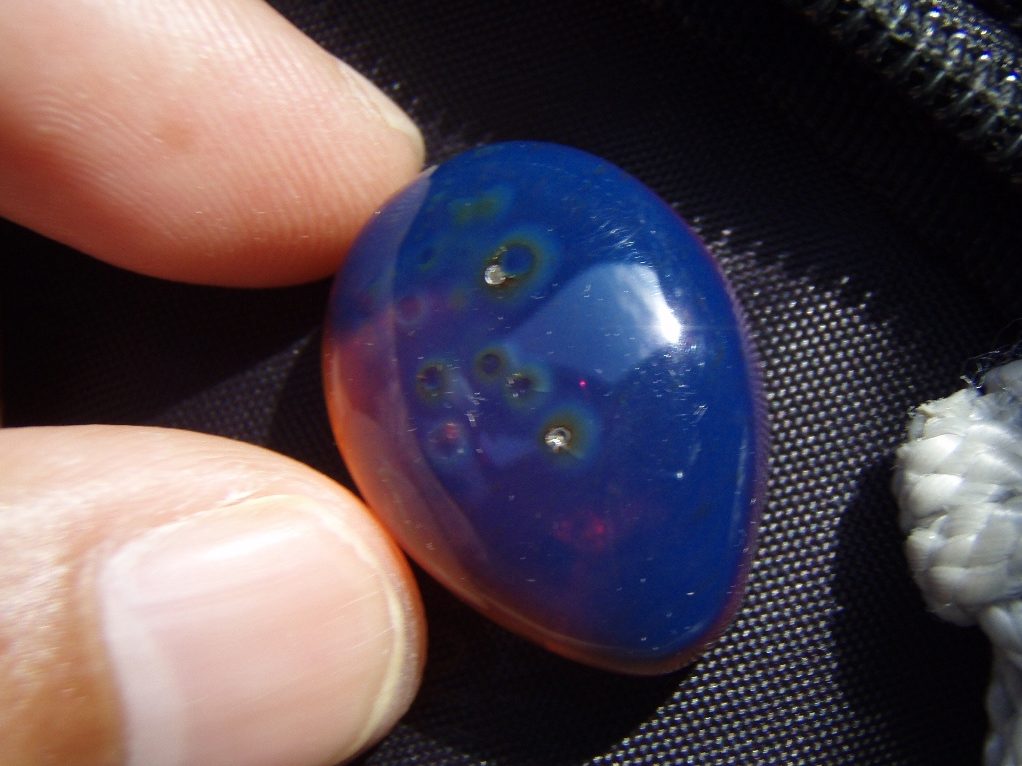
Blue Amber is a variety of Dominican amber that appears golden-yellow in reflected light but emits a vivid electric-blue glow when light passes through it or under UV illumination. This optical transformation is one of the most spectacular phenomena in the natural gem world. It rates 2–2.5 on the Mohs hardness scale.
The blue color comes from *perylene*, a polycyclic aromatic hydrocarbon created when organic compounds in the original tree resin underwent chemical changes over millions of years. **Perylene is the same compound used in high-performance blue pigments for industry**, which explains the intensity of the color.
Blue amber forms the same way as regular Dominican amber - fossilized resin from Hymenaea protera trees - but only in deposits where the chemical conditions during fossilization allowed perylene to accumulate. This makes it genuinely rare, not just marketed as rare.
Meaning and Symbolism
Blue Amber is considered a stone of extraordinary transformation - its golden exterior that reveals a hidden blue inner fire is a powerful metaphor for the depth that lies beneath appearances. Practitioners believe it reveals hidden truths.
Many spiritual traditions hold that blue amber bridges the solar plexus and throat chakras, helping practitioners communicate their deepest wisdom with confidence. **It is called a 'double-natured' stone** in some Caribbean healing traditions.
Its rarity makes it a stone of wonder for spiritually minded collectors, said to amplify intuition and open the mind to perspectives that ordinary perception cannot reach. Holding it is described as touching deep time itself.
Historical Timeline
Healing Tradition
Emotional
Practitioners believe blue amber helps overcome self-doubt and illuminates hidden emotional blocks, much like the way it reveals hidden blue light within a golden exterior.
Spiritual
Many find blue amber a powerful tool for meditation on transformation and hidden potential, said to activate higher intuition and facilitate communication with spiritual guides.
Physical
In folk traditions, amber of all kinds has been associated with throat and nervous system wellness. Blue amber specifically is said by practitioners to calm overstimulated senses.
Zodiac, Birthstone and Gifts
Aquarius, the sign of innovation and hidden truths, resonates deeply with blue amber's optical duality - the golden surface concealing an electric blue core mirrors Aquarius's paradox of conventional exterior and revolutionary interior.
**Gemini's dual nature finds a kindred spirit** in blue amber's twin identities. Many practitioners work with this stone to help Gemini energy integrate apparent contradictions into unified wisdom.
Care and Cleansing
Cleanse blue amber with smoke only - sage, palo santo, or cedar. Wipe gently with a dry soft cloth after smoke cleansing to remove any residue.
**Never use water, salt, or crystal bowls** for blue amber. Its soft surface (Mohs 2–2.5) and organic chemistry make it vulnerable to all moisture and mineral abrasion.
For energetic recharging, practitioners place blue amber on a selenite slab overnight - the gentle cleansing frequency of selenite is considered safe and compatible with amber's organic nature.
- Blue amber is one of the softest gemstones available and will scratch with the gentlest contact. **Store it alone**, never with other jewelry, and wrap it in soft velvet or microfiber when not in use.
- Extended UV exposure - from sunlamps or prolonged strong sunlight - can degrade the perylene fluorophore over decades. Normal indoor handling and brief natural sunlight viewing are safe; dedicated UV light boxes used for extended periods are not.
Real vs Fake
The most critical test for blue amber is its UV behavior: genuine blue Dominican amber glows vivid electric blue or blue-green under long-wave UV (365nm). Regular amber fluoresces pale blue-white; copal fluoresces yellow-white; glass and plastic show no fluorescence or an unnatural color.
In sunlight against a dark background, genuine blue amber shows the blue glow without any UV device. Hold the specimen at various angles near a window - if the blue comes and goes with the light angle, the phenomenon is real.
**The saltwater float test applies**: dissolve 8 tablespoons of salt in a cup of water. Genuine amber floats. Glass sinks. Most plastic sinks. Copal also floats, but will not show the correct UV response.
Check the interior for *flow patterns* - the wavy laminar lines created as resin flowed and pooled over millions of years. Fakes have uniform interior texture. Genuine amber always shows subtle flow variation under 10x magnification.
Blue amber priced under $50 for a significant specimen should raise immediate suspicion. Genuine blue Dominican amber is exceptionally rare; competitive market pricing reflects that rarity, and bargain-priced 'blue amber' is almost certainly misidentified or treated.
Blue Amber Jewelry & Gifts
Blue amber is among the most faked gems in the market. Buy only from dealers who demonstrate the UV glow in person or on video and who can provide provenance documentation linking the stone to Dominican Republic mines.
**Weight per carat is your baseline**: clean blue amber without inclusions starts around $30–$80 per gram at retail. Pieces with inclusions or exceptional UV intensity command multiples of that price.
Color intensity under UV matters enormously. Grade-A blue amber glows electric cobalt or royal blue; grade-B shows teal or blue-green. Color photographs well but video showing the UV transformation is the gold standard for remote purchases.
Rough blue amber is available and considerably more affordable than cut and polished pieces. Rough suits collectors and spiritual practitioners equally well - the glow is identical in unworked material.
Work with established dealers specializing in Dominican amber, such as those with long-standing presence at gem shows or verified seller histories on reputable platforms. Ask for documentation of mine of origin whenever possible.
Where to Buy Blue Amber
Affiliate disclosure: Some links below earn us a small commission at no extra cost to you. See our affiliate disclosure page.
Handmade, raw, and tumbled pieces from independent sellers worldwide.
Shop Blue Amber on Etsy →Accessories, tools, and specimen sets with fast Prime delivery.
Shop Blue Amber on Amazon →Certified loose gemstones graded and photographed for online buyers.
Shop Blue Amber on GemSelect →Pairs Well With